Hi, I am going to buy my very first car. Is it a good idea to buy a classic car?

1975 PONTIAC GRANDVILLE
Avatar
DREWBROTHER
  • MEMBER
  • 16 POSTS
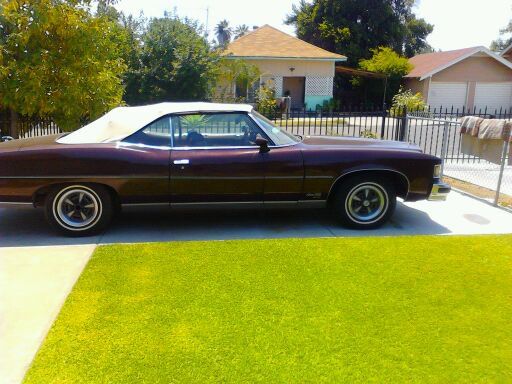
I was looking on Craigslist and found a car I was interested in. It's a 1975 Pontiac Grand Ville Convertible. The owner said that he recently rebuilt the original motor. Everything in the car is original interior.
Apr 2, 2012 at 9:38 PM
Advertisement
Avatar
CARADIODOC
  • CERTIFIED EXPERT
  • 34,306 POSTS
I love classic cars with their lack of unreliable, expensive computers, but you won't want to drive it in winter if you live in a road salt state. Be sure to test drive it, and consider paying for an independent inspection at a shop of your choice, not one recommended by the seller. An unscrupulous seller could have friends at a nearby shop who will overlook known problems and not tell you about them. They will look at brakes, steering and suspension components, exterior light operation, tire wear patterns, and the exhaust system.

Keep in mind that finding replacement engine and electrical parts will not be a problem, but body and trim parts will be if you need to replace something. Check out Year One Company for replacement parts.
Apr 2, 2012 at 10:04 PM
Avatar
DREWBROTHER
  • MEMBER
  • 16 POSTS
Thank you. If I buy the car, I was thinking about using it as my primary car. I'm very new to cars and feel lost. I don't know if buying a car in the 1975's are a good idea. Personally, would you buy it?
Apr 2, 2012 at 10:13 PM
Advertisement
Avatar
HMAC300
  • CERTIFIED EXPERT
  • 48,601 POSTS
the biggest thing here is lack of parts and the expense. I would not buy this as a primary car . a part time one it's fine but look for a newer model that will give you better gas mileage and parts would be readily available instead of having to wait a few days for parts .
Apr 2, 2012 at 11:32 PM
Avatar
DREWBROTHER
  • MEMBER
  • 16 POSTS
Okay, I think I made up my mind not to buy a classic car. I'll buy one of the newer models and when I'm financially stable, I'll buy a classic car as my second car. Thank you for helping me make such a big decision.
Apr 2, 2012 at 11:41 PM
Avatar
CARADIODOC
  • CERTIFIED EXPERT
  • 34,306 POSTS
I have a different take on it. My daily driver is an '88 Grand Caravan. Parts availability has never been a problem except for the odd size larger front brake rotors, but that hasn't changed since it was new. It has power windows, seat, brakes, locks, and mirrors, an automatic transmission and air conditioning, and none of those things has a computer involved. Gas mileage is better than my '95 Grand Caravan with numerous computers.

If you want good fuel mileage, consider that a '68 Buick Wildcat was so big you needed binoculars to look in the mirror and see the tail lights, it weighed around 5,000 pounds, could seat six people comfortably, and easily got 23 miles per gallon. What you DO get with newer fuel injected cars is much cleaner exhaust but at a cost of higher repair bills.

I have a '72 Challenger in the restoration shop right now. New body panels and head liner were readily available. My students rebuilt the 340 c.i. engine. Those parts were also easy to find locally. In the summer I often drive an '80 Volare that I bought new. Brake and suspension parts are still in stock locally at all the auto parts stores because Chrysler was famous for parts interchangeability between various models and years. Even though most of those cars are gone up here in Wisconsin due to the insane use of road salt, there's enough of them around yet that it pays to stock parts for them.

For the car you're looking at, you aren't going to have a problem finding new engine, transmission, and tune-up parts, but you WILL find that there aren't many of them to be found in salvage yards. Scrap metal prices were very high a few years ago so many old cars got crushed.

If you do a parts search on rockauto.com, you'll see that replacement parts are often less expensive than for newer cars. You must remember though that you'll have to add in the cost of shipping.

Keep in mind you'll be spending lots of money on repairs no matter which car you buy. The more you learn about them, the more repairs you can do yourself to save money. Newer cars starting around the mid '80s typically require the use of a scanner to see what the computers are seeing so you can make a diagnosis. That requires a trip to a mechanic. Older cars are pretty easy to diagnose without expensive equipment. You're smart to be asking these questions before you buy something. You can come back here for advice. I'm biased toward older Chrysler products and I have a few brands I really don't like. Other people here will have different opinions. If you want a really tough little car that's easy to fix, look at a Dodge Shadow / Plymouth Sundance. Stay away from a Neon. Grand Ams and Cavaliers are also good to stay away from. Probably the least safe cars were the Ford Escorts and Tempos. Those have a lot of designed-in suspension and steering problems that can't be corrected.

Also keep in mind that many newer cars have problems designed in to cost you money from simply disconnecting the battery to replace it. Volkswagen and GM are the worst offenders. That is not a concern with most cars from the '80s and '90s. This was done in part to prevent you from buying a good used computer from a salvage yard. You're forced to buy new ones from the dealer and often you must have them installed there and have the software installed too. Tricks like that are why I can't promote manufacturers of certain brands of cars.
Apr 3, 2012 at 2:05 AM
Avatar
DREWBROTHER
  • MEMBER
  • 16 POSTS
Cardiodoc, You made my day. I'm reconsidering buy the classic car. It's a real beauty and I don't think I will be happier with any other car. Thank you for providing me answers on a professional level. I will show my dad the info and maybe he will reconsider it as well. Much thanks, and I will definitely come back to ask questions in the future.
Apr 3, 2012 at 11:28 AM
Avatar
HMAC300
  • CERTIFIED EXPERT
  • 48,601 POSTS
everyone has a different take on classic cars. yes parts are available like Hard parts and it's easy when students can do stuff for you right away and not have to pay for them to work on it. but you are talking a kid with little to no experience and the parts that will be hard to get are body parts including interior as well as exterior. The vehicle Cardiodoc refers to are readily avialbale through catalogs, Grand Ams weren't the most popular car tobegin with and parts like exterior or interior will be harder to find, not so much stuff like alternator or brakes, etc. or stuff that is easily rebuilt.
Apr 3, 2012 at 1:34 PM
Avatar
WRENCHTECH
  • CERTIFIED EXPERT
  • 20,761 POSTS
I have yet another opinion. Classic cars are fine if the right person owns them. They require nearly constant tinkering and repair to keep them reliable and if you are not at least a decent mechanic yourself this car ill be in the shop more than you drive it and the cost will skyrocket. They don't drive like anything you are used to either. They have no computer to make it purr and if you have never owned a car with a carburetor, you are in for an experience you may not like. Us old guys that drove these cars when they were new know what to expect.
Apr 3, 2012 at 2:24 PM
Avatar
CARADIODOC
  • CERTIFIED EXPERT
  • 34,306 POSTS
Yup. I hadn't considered the carburetor issue as far as repairs, but I've had GMs, Fords, and lots of Chryslers, and rarely had a carburetor problem. They're relatively simple devices. It's the adjustments that can get complicated or confusing.

Part of the attraction to these older cars is the nostalgia. We drove them when they were new and fell in love with some of them and the time they represent. I have little to no interest in '50s and '60s cars as they were before my time.

As for the tinkering that Wrenchtech mentioned, half of that is because we want to tinker and we look hard to find something that "needs" tinkering. I tend to ignore small things until they become big things. For sure I'll start to think about repairing something after a part falls off on the highway! That is not the way you want to take car of a car.

Something else to think about is breaker points. If I remember correctly, GM's High Energy Ignition (HEI) system showed up in the '76 model year. It was a very nice system and it can be converted to older cars but that might detract from the value if you want to keep it as original. Breaker points require periodic maintenance and adjustment. GM made that very easy by providing a means of adjusting them with the engine running. You can find more information on how points work and how to adjust them here:

http://randysrepairshop.net/basic-ignition-system-theory-of-operation-how-it-works.html

It's geared toward automotive students and covers electrical theory that is typically hard for hands-on people to understand. You can use a dwell meter that doesn't cost very much. "Dwell" is explained too.

As a former suspension and alignment specialist, I can tell you that these cars are by far the easiest to set the wheels precisely to where you want them to be when doing an alignment. Most other brands of cars use adjustment methods that are somewhat hit or miss, and you finally take what you get when it's "good enough". There are a few common wear items that I can share how to inspect and replace, but there is nothing known to be a common safety issue as on some newer models of other brands. Looking at your photo of this car, I wouldn't mind having it in my garage. I would certainly trust it to get me back home more than some of the other cars I have right now.

As a side note, we have the nation's second largest old car show and swap meet, after Carlisle, PA, 50 miles from me in Iola, WI and you can find just about any parts there. We also have two shows three hours away in Jefferson, WI that is big enough that you can barely see everything in an entire day. There's a lot more new stuff at that show and it's very heavy on GM stuff. There's a lot of vendors that have new sheet metal, new chrome, and new wiring harnesses. You can even find new windshields, gas tanks, and interior parts. It looks like the car you're looking at doesn't need stuff like that, but at least you know it's available.

Most of us learn the best by taking things apart and peeking inside, but I should warn you that this isn't a good way to learn on a car you have to rely on to get you to work, school, and home. Too many things get broken in the process. I learned a lot this way but left a trail of undrivable cars behind. With the internet, you have the luxury of being able to read up on something before you tackle a repair. We would hate to see you turn this car into junk from misguided repair attempts. Between all of us here, we can tell you what to look for and how to repair just about any problem you can come up with.
Apr 3, 2012 at 7:09 PM
Avatar
WRENCHTECH
  • CERTIFIED EXPERT
  • 20,761 POSTS
I didn't say anything about carb repairs. I mean just driving a car with a carb through different seasons. The tinkering part isn't just being anal. A car that old has constant electrical issues and rubber seal issues. I have a 78 Vette and every single time I use it, a new electrical issue shows up. I have repaired leaks from nearly every ofifice in the engine. No a big deal for me but could be a real pain for someone that doesn't do their own repairs
Apr 3, 2012 at 7:52 PM
Avatar
HMAC300
  • CERTIFIED EXPERT
  • 48,601 POSTS
what cardiodoc is forgetting this is a FIRST CAR and someone with little or practically no experience and is trying or wants to use it as a DAILY DRIVER.The guy probably doesn't do his own repairs and has little or no money. this isn't a guy that should be looking at this vehicle for a DAILY DRIVER. he needs something that parts are READILY AVIALABLE and not having to go to some swap meet once or twice a year to get the parts he'll need to fix it and haveto pay a pro to do.
Apr 3, 2012 at 8:58 PM
Avatar
DREWBROTHER
  • MEMBER
  • 16 POSTS
Wow, very interesting. It's true what hmac300 says. I am still a senior in High school. I'm going to move out of my parents apartment in a couple of months with a job. I have this thing for classic cars and I wish that buying one or having one wouldn't be so hard. My dad told me that it will definitely be harder because warehouses may not have the parts I need when it breaks down. I am new to cars and don't know how to fix them. Cardiodoc makes me smile, because his take on classic cars gives me hope that I could finally get a classic car, but will it really give me more trouble then buying a car that is a newer model? Say that a newer car model breaks down, it will be most likely that warehouses has the parts for it, but will it cost more than a classic car parts? Am I really asking for trouble if I buy a classic car? Would it really be better for me to buy a car that is a newer model? Would I suffer the same penalty from buying a newer model? It's a hard decision.
Apr 3, 2012 at 11:44 PM
Avatar
WRENCHTECH
  • CERTIFIED EXPERT
  • 20,761 POSTS
There's no problem owning a classic car as a 2ND PART TIME vehicle. Cars were much different back then and were much less forgiving to flooding, cold temps, braking, and handling. Driving a car with a carburetor is nothing like the modern, computer controlled cars. They don't run any where near as well. Wait until you can afford to own one as a hobby and not your every day driver that you depend on. You will soon see what i'm talking about.
Apr 3, 2012 at 11:49 PM
Avatar
DREWBROTHER
  • MEMBER
  • 16 POSTS
I think that's what I'll do then. I really wanted one as my primary car. It's just so beautiful, but I guess I'll just get one of the newer models. When I have a job that pays good money then I'll probably buy a classic for a part time. Thanks for everyone's take on this. Very much appreciated.

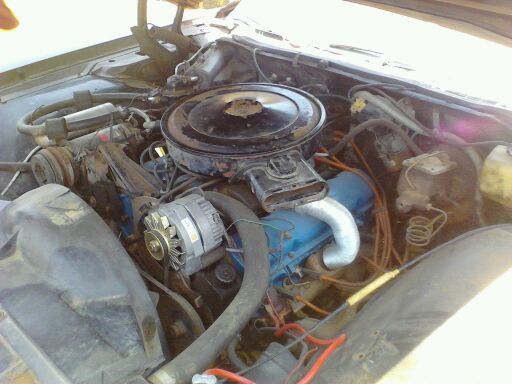
The first image is the inside of the '75 Pontiac Grand Ville, which I probably won't buy based on the answers here.

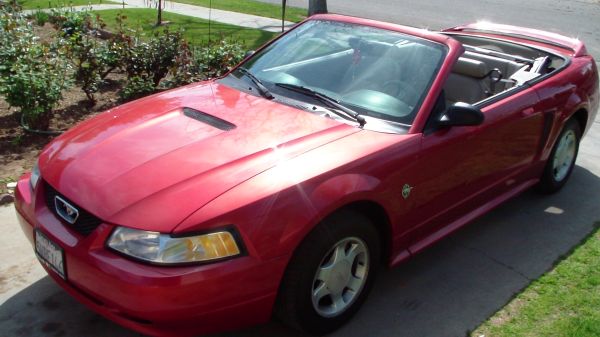
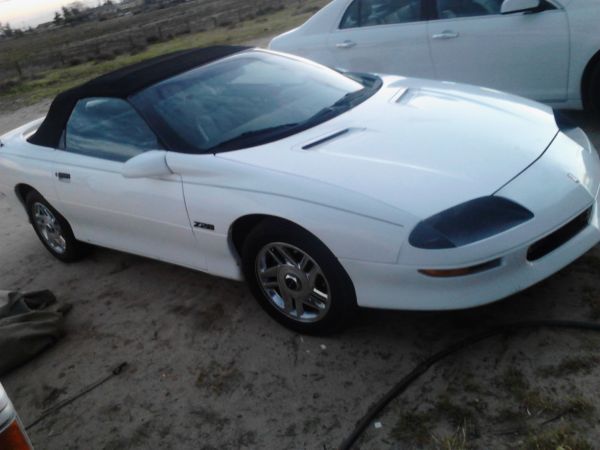
The other two images are my other car choices.
The red one is a 1999 Ford Mustang and the white one is a 1996 Camaro. What do you guys think?
Apr 4, 2012 at 12:03 AM
Avatar
WRENCHTECH
  • CERTIFIED EXPERT
  • 20,761 POSTS
It appears that one has not been restored either..... big headache
Apr 4, 2012 at 12:06 AM
Avatar
DREWBROTHER
  • MEMBER
  • 16 POSTS
Which one? And I'm not considering buying the classic car anymore.
Apr 4, 2012 at 12:09 AM
Avatar
HMAC300
  • CERTIFIED EXPERT
  • 48,601 POSTS
hey go by price and miles they both look good.
Apr 4, 2012 at 12:10 AM
Avatar
WRENCHTECH
  • CERTIFIED EXPERT
  • 20,761 POSTS
Have it checked out by a shop before buying it.
Apr 4, 2012 at 12:12 AM
Avatar
DREWBROTHER
  • MEMBER
  • 16 POSTS
Okay thank you guys. I'll keep you guys updated and I'll remember to ask further questions in the future. :)
Apr 4, 2012 at 12:18 AM
Avatar
CARADIODOC
  • CERTIFIED EXPERT
  • 34,306 POSTS
Of the three, I'd go with the Grandville. I will never own another Ford. First of all, while we're calling this a "classic" car, that's more for its age, not its desirability among collectors. Perhaps "popularity" would be a better word. As a result, it's going to cost you less than the other two. Those other two are going to have numerous computers that can provide neat features but they also lead to expensive repairs that you can't work around except to replace them when they cause a problem. Newer cars have a lot more problems than older ones but it's partly because there's a lot more stuff in them that can develop those problems. You'll find very few newer cars broken down on the side of the road but that doesn't mean the owners aren't driving with the Check Engine light on, the air conditioning doesn't work because of a computer malfunction, or the radio quit so they have to sing to themselves. Read through these forums and you'll see the kinds of problems that keep on popping up over and over. In probably 95 percent of the problems, people are still able to drive the car.

I misunderstood Wrenchtech's comment about carburetors. It's true the newer cars with electronic fuel injection are going to run smoother, (when everything is working properly), and I like it that they're much cleaner but there hasn't been the same increase in fuel mileage as there was with a decrease in emissions. I would never want to go back to a carburetor if I had a choice, but I have three cars with them and operating them is just the "nature of the beast". You get used to them, then when you hop into something newer, you just appreciate it that much more.

Wrenchtech is thinking more about the pleasure of driving a newer car that you start up and go. I personally can put up with a lot of inconvenience. My interest lies in making repairs, and can I do them in my driveway? Every car is going to need them sooner or later, and there's not much you'll be able to do yourself on the newer cars until you learn more about how the systems work.

Look at how easily accessible everything is under the hood. It's hard enough learning how to maintain and repair a car without adding in another dimension of difficulty right away. As for the parts, hmac300 is right. You don't want to go all over the country looking for parts, but I really doubt that is going to be a problem. I plowed into a girl who turned in front of me a few years ago. I flattened the right rear suspension on her Taurus and pushed the wheel and strut half way to the other side of the car. Had I known at the time I could have pulled the fender away from rubbing on the right front tire, I could have driven my Challenger home. The headlights didn't even get broken. I can't make the argument that old cars were safer, but her car was totaled and mine needed a new fender, hood, and bumper. I had no trouble finding used parts. With this Pontiac, you are going to have WAY less trouble finding those kinds of parts new. A number of companies make reproduction body parts for older GM cars and trucks. I only mentioned the old car show swap meets to point out that the stuff is readily available, but we should probably talk about that only if the need arises. I doubt you're planning on piling into someone.

You will not have a problem finding the normal maintenance items at any auto parts store. Stop in by one and ask if they have brake pads, air filters, water pumps, and fuel pumps in stock. You'll find out how inexpensive those parts are for that car. Fuel pumps and water pumps fail just as often on newer cars but they're harder for a do-it-yourselfer to replace.

By the way, the Grandville appears to have a new generator on it. (Wrenchtech is rolling his eyes now). That was a very good design and easy to diagnose and repair. I have a few pages on repairing it on my web site. The generator on the Camaro is going to cost a lot more and fail much more often.

I suspect insurance is going to cost less for the Grandville. You may not be able to get collision coverage due to the age. That covers the cost of repairs only to your car if the crash is your fault. THAT'S when you need to be concerned with the availability of body parts. Chrysler never licensed anyone to make reproduction fenders for my Challenger, but I found a used one. GM DID license other companies to make stuff, so between that, and the ease of finding normal parts, I wouldn't have the slightest concern about finding parts. Shoot, there's a lot of unhappy Ford owners with five to seven-year-old cars who can't find suspension parts at a reasonable cost.

Another one of my arguments against newer cars is their insufferable use of anti-theft systems. Every manufacturer has their share of systems that are very effective at keeping owners from driving their cars. I only have one car with an anti-theft system but I only drive it about once every other year so it's not a concern. None of my other cars will ever let me sit because the computer doesn't recognize they key I've always been using, or there's a broken wire in the steering column, or a voltage spike tricked two computers into self-installing the anti-theft programming when it doesn't exist on the car. (That's an older Chrysler problem). Of course, few people would care to steal the kind of cars I drive. In fact, I could leave the keys in my rusty trusty '88 Grand Caravan daily driver with the windows rolled down, and a full tank of gas, and still no one would swipe it!

If my vote were to count for anything, I wouldn't even consider looking at the other two cars. We're all assuming the Grandville is going to need repairs, but the reality is all three of them are going to need repairs. Do you want to spend lots or little for parts? Do you want to be able to get to those parts and work on the car yourself, or do you plan on taking it to a shop every time something comes up. Most reputable shops are charging around $100.00 per hour for labor, and if you could see my list of expenses, taxes, regulations, and other costs of doing business, you'd wonder how they could afford to stay in business by charging so little. Just had a visit today from a friend who took his truck in for just a diagnosis of a running problem. No repairs, just a "guess" on what he should try first. Cost him $198.00 for an opinion and a few sheets of paper!

I had a lot of former students who seemed to have $800.00 repair bills every six months on their Grand Ams, and they seemed to think that was normal. It's not. I only started to pay attention because there were so many of them, (the cars AND the repair bills). My Caravan cost me 45 bucks for a muffler that I wasn't happy about, and nine bucks for a brush assembly for the alternator. That's what I spent on repair parts in the last three years. I wouldn't be the least bit surprised if you spent the same amount on the Pontiac.

I mentioned I can put up with a lot, but one thing I can't tolerate is torn seat covers. At that point the car becomes a personal transportation device to get me somewhere faster than walking, but it's no pleasure to be in it. Look at the upholstery, then look at the wear on the carpet under the brake pedal and look at the wear on the pedal pads. That will give you some idea of how the car was cared for. I've even seen pens and pencils stabbed into the foam on the front of dash boards. Normal wear is one thing but that screams of not caring one bit about even trying to take care of the car.

There's two sides to the argument of electrical problems. There's going to be a ton of them on newer cars with lots of computers, but when you consider the miles of wire and the complexity, it's a wonder there aren't way more problems than we already see. I don't know what Wrenchtech was thinking when he mentioned that, but there are some things that come to mind. First of all, around that time period, (or perhaps a little later), GM tried using aluminum wire to save weight or cost or both. It's always a no-no to pierce wire insulation to take voltage readings but if you do that with aluminum wire, you can be sure it will corrode there within a few months. I worked on one Firebird that had intermittent tail lights. That ended up being a corroded wire where it was exposed at a brass rivet in the fuse box right in front of the driver's feet. Right where the salt ran off his shoes in winter. The salt caused the corrosion. Finding problems like that will be a lot easier than on newer cars, but repairs can be a little tricky when the wire just crumbles away.

The other thought is we used to see a lot of overheated terminals in electrical connectors. Back then it was due to a less than perfect connection that caused a little heat buildup which got progressively worse until you smelled smoke and connectors melted. That was somewhat common on early '70s Chrysler products. Don't know if that was an issue on other car brands. The good news is that once those problems are fixed, you go back to driving. When computers are involved, you have to wonder if one got damaged from arcing connections and voltage spikes.

Those are MY wondrous opinions. Others will disagree because we value different parts of car ownership differently, so ultimately you have to decide what you want to drive around in. You know you can always come back here for information and advice. I'll be adding some web pages soon on the HEI and Chrysler ignition systems as soon as I make up some drawings and take some photos. If there's other circuits you're interested in, let me know and I'll try to add them.
Apr 4, 2012 at 2:05 AM
Avatar
DREWBROTHER
  • MEMBER
  • 16 POSTS
Yeah, Caradiodoc. The question really is, should someone having no car experience buy the classic car as a their first? I'm undecided. I'm afraid that with modern cars, it will cost a fortune to repair it, then with classic cars it will be less expensive for repairs. But for classic cars it will be harder to find parts. You see there are pros and cons. But what will be better for me? As I explained I will be moving out of my parent's apartment and be independent. What would you tell your son? Go with the classic or go with the modern?
Apr 6, 2012 at 9:41 AM
Avatar
WRENCHTECH
  • CERTIFIED EXPERT
  • 20,761 POSTS
[quote]I'm afraid that with modern cars, it will cost a fortune to repair it[/quote]

There is no reason to think that. Modern cars are much more reliable than their "low tech" predecessors. Worn parts is not your big concern, it's 40 year old wiring and switches and the finicky requirements those cars had in every day use, even when they were new. Don't let anyone try to convince you that technology is bad, too expensive or unreliable because none of that is true. Find a good reliable used car and have it inspected by a mechanic before buying it.
Apr 6, 2012 at 10:05 AM
Avatar
DREWBROTHER
  • MEMBER
  • 16 POSTS
I heard that classics are safer because of the material they were made in. I need a safe car. I need a car that won't cost me a lot for repairs. I also need a car that will get me to work, school and home. I do not know what to pick. Right now I'm leaning more towards the classic car.
Apr 6, 2012 at 10:36 AM
Avatar
WRENCHTECH
  • CERTIFIED EXPERT
  • 20,761 POSTS
[quote]I heard that classics are safer because of the material they were made in.[/quote]

Don't believe that. Yes, they are made with heavier steel but that's not necessarily a benefit. They handle like tanks and will not stick to the road or have any stability at all. The braking systems are primitive and inadequate and they will not handle well at high speed at all. Newer vehicles have collision crush zones and are engineered to protect the passenger compartment while sacrificing exterior sheet metal. A classic car is good for a Sunday driver to take a quiet cruise but not an every day driver in today's world. It's a good hobby to tinker with and have fun or show off on weekends but don't rely on it.
Apr 6, 2012 at 10:53 AM
Avatar
DREWBROTHER
  • MEMBER
  • 16 POSTS
Okay let's talk about modern cars. What if I get a modern car? What will I be dealing with? Will it be much more reliable just because of the age?
Apr 6, 2012 at 11:07 AM
Avatar
WRENCHTECH
  • CERTIFIED EXPERT
  • 20,761 POSTS
It's not the age. It's the technology used in it's construction. A 5 year old Camry will be much more reliable than a 30 year old Camaro all day.
Apr 6, 2012 at 11:21 AM
Avatar
WRENCHTECH
  • CERTIFIED EXPERT
  • 20,761 POSTS
And safer
Apr 6, 2012 at 11:24 AM
Avatar
DREWBROTHER
  • MEMBER
  • 16 POSTS
I've been doing my research. hmac300 and Wrenchtech, you guys have been giving me good and logical reasons to buy a modern. Caradiodoc has been giving me good and logical reasons to buy a classic. Every car has it's pro and cons. I really am undecided. Does better technology really mean better. Compare a cassette player to an ipod, they both can play music. They both can also break down. Undecided.
Apr 6, 2012 at 11:36 AM
Avatar
WRENCHTECH
  • CERTIFIED EXPERT
  • 20,761 POSTS
At your age you have never driven a car with a carburetor through 4 seasons of weather change and how that effects the way the car runs. You may be in for a bit of a surprise if you are accustomed to computer controlled cars that adapt automatically. This isn't any kind of competition. You can buy whatever you want.
Apr 6, 2012 at 12:09 PM
Avatar
SATURNTECH9
  • CERTIFIED EXPERT
  • 30,869 POSTS
I have to get in on this one i bought a 1969 caddy sedan deville many years ago as a familly car for me the wife and kids before i got divorced.Bought it from my cousin who got it from the oringal owner.It was a pretty clean car being iam in california.I know it gets horrible gas mileage because of its cruise ship size and construction and a 472 cu in engine lol.But my dad loved caddys i grew up riding around in the old ones as a kid.So i really like it also worked for me i got it for 200 and didnt have to drive it far at all.When i got it i had to go thru it the blower motor was inop then the air still didnt come inside the car.I got a factory caddy shop manual found out there was a air inlet door.Only allowed air inside the car when vacuum was applied to the inlet door diaphram.Well no vacuum was getting to the inlet door diaphram the vacuum nipple tree was rotted away it was plastic.No longer around to buy had to custom make and the worst part is it had different sized hoses going in and out of it.So that got tricky had to get creative it also had a vacuum check valve so i got a for distributor vacuum check valve.Then i got vacuum to the inlet diaphram sucess right?Nope the inlet diaphram didnt hold vacuum anymore.Got lucky there a place called caddy daddy had a new old stock one or a repop one.So i got it and carefully pulled apart the ac heater box trying to fix more then i broke.Then it worked like a champ even the climate control worked you set the temp and blower fan would come on and off.I also had to replace the exhaust carb plugs wires cap rotor points and condesor.I had to keep replacing the points and condesor every 3,000 miles.Till i replaced them with a petronix electronic ignition upgrade.Also the distribtor was right up front by the belts so when it rained hard it would stall while driving lol.I also had to get the radiator rebuilt replace the water pump all the belts.Then the front was wore out so it keep eating tires.So i replaced upper and lower ball joints control arm bushings tie rods idler arm sway bar bushings.I got a whole big kit from kanter.Then i tried getting the ac working charged it up the ac hose blew then the compressor froze.Hoses drier compressor etc later cold air.I was always doing some repairs not fully restoring it lol.I didnt even drive it that far it was a family only car.I had a 1992 chevy S-10 i drove to work that got all the miles.Rewind before the caddy wife and kids and S-10 had a 1978 chevy camaro that i had as my every day driver.I had to do a lot of work to that also front end door bushings carb etc it was a labor of love i would call it lol.I was also mantaining my sisters 1972 chevy malibu what a nightmare.The good news was i used to use my camaro to tow my sisters malibu back to my moms house where i lived to fix it.When it broke down multiple times and left her stranded that was a love hate i loved my sister but hated her car lol.I drove my S-10 many more trouble free miles then my sister did her malibu or my camaro or my caddy.I. Have owned all different year saturn S model cars since those days and have loved them.Iam pro saturn worked for the saturn dealers for over 16yrs.I currently own a 1999 saturn SL2 that replaced my 1994 saturn SL2 that was stolen in 2006.I had to do some work to it when i got it but have driven 100,000 miles since i got it.It has served me well the only security it has is a rke module which is pretty relaible.They go bad you replace the module and reprogram the fob no specail tools.You can get a computer for them at pick apart no programing.The computers dont fail often on the S model saturns.I would love to get a classic car for a sunday driver to church etc.But for a everyday no way iam too spoiled by the reliablity of the car starting when i turn the key lol.You can get what ever car you want thats your choice but my opion is a new car is my choice for a everyday driver.I agree with wrenchtech which i dont always do lol.He is wise good hearted person.
Apr 6, 2012 at 2:04 PM
Avatar
SATURNTECH9
  • CERTIFIED EXPERT
  • 30,869 POSTS
I ment newer car not new car i wouldnt buy a new car too many payments and too many computers.
Apr 6, 2012 at 2:11 PM
Avatar
CARADIODOC
  • CERTIFIED EXPERT
  • 34,306 POSTS
Sorry to hear about your Caddy troubles, but look at how much of those problems were related to what was new technology at the time. How many GM cars have we seen with HVAC computers with the lights blinking on and off and the thing won't turn the heater on? My '88 Grand Caravan has air conditioning and a heater and not a single computer is needed to run it. I DO have to reach over and push a button, and if I feel warm or chilly, I'm smart enough to move a slide lever to change the temperature. The '96 Caravan, which I would never own, needs a computer to run all the heater controls because it is vitally important that we be able to blow 10 percent of the air from one place, 20 percent from another place, and 70 percent from somewhere else, all at the same time. If that's what technology has done for us, I have to roll my eyes. It's a car. It's winter. I expect to be cold at times. I've heard butt warmers in the seats are nice but how many times have I heard of people ordering new seat covers because the wires broke? I will never spend a penny repairing such a gimmick, and a cold butt is the last thing on my mind in winter. Build me a nose warmer and we'll talk.

What moronic engineer decided to hang a computer onto power windows? GM made them complicated enough with relays built into the switches. I'm probably biased because the power windows on three of my vehicles have never caused a problem but I can bet the first one that will is going to be the car with 4,200 miles on it because the regulator is made of cheap plastic pulleys and little wire "strings". I like power windows, but I guarantee the window regulators in the Grandville aren't going to break.

Water pumps fail WAY more often on newer cars than on old GM cars, and are often driven by the timing belt. With that rebuilt engine in the Grandville, the timing chain will last for many years. Even if it had the old cam sprocket with nylon teeth, and the chain jumped a few teeth, no valves would be damaged. We didn't even know at the time that there was such a ridiculously poor design as an "interference" engine.

I think we're overplaying the role of the carburetor in this story. So you hop in the car and have to press the gas pedal. If that is too big an ordeal, turning the ignition switch and pulling the door closed is probably also too much to ask of the driver. Sure I love my fuel injection, but remember those old boats from the '60s that got in the low 20s for fuel mileage and weighed twice as much as today's cars that seat four people? Carburetors can only be made perfectly efficient at idle and at high speed. In between the mixture is a compromise that must not be allowed to go lean or there'll be a stumble or hesitation. That means more than likely much of the time extra fuel is being wasted. Computer engine controls takes care of that so the mixture is exactly perfect at every speed, load, air temperature, etc. Why then if it's never wasting fuel, does a 2,000 pound Neon or Grand Am get worse fuel mileage than my '80 Volare that weights 4,000 pounds? That car gets consistently 28.3 in the summer. Now, to be fair, it drops to around 19 mpg in the winter for those first two winters I drove it, but for half of those trips it wasn't warmed up yet. I often wonder what that car would get if it had electronic fuel injection. Logic dictates mileage would go up, but then logic also suggests the Neon pile should get at least twice the fuel mileage that it does.

How much trouble have we ever heard about with GM distributors? None. How many people are writing in here who have bad crankshaft position sensors. Bunches. How many times every week are we telling people that "fault codes never say to replace parts; they just indicate the circuit that needs further diagnosis"?

Bad switches? ANY ignition switch on any car in the 70s will cause fewer problems than on newer cars. The old car show swap meets are full of new-old-stock switches because nobody is buying them. Nobody needs them. This is probably more of a Chrysler thing because GM builds about 80 percent of their own parts and buys the rest from other suppliers. Chrysler buys about 80 percent of their parts from other companies and they're constantly squeezing them to build them cheaper. The result is intermittent problems and switches that melt. How many garage fires have we heard about started by newer Ford suvs? How about the one caught on camera in a company parking lot that started on fire four hours after it was parked there? Nobody even knows how to change the ignition switch on my Challenger because no one has ever had to do one. Corroded door switches have to be sanded clean about once every ten years. How many dozens of newer minivan sliding door switches have I modified so the "automatic adjusting feature" can no longer over-adjust and cause problems?

These are all nit-picky things, but they're the types of things we see over and over. It doesn't matter if this is "brother Drew's" first car. If he can't fix the simple things on a classic, he sure as heck isn't going to fix anything that is more complicated with all the silly computers hanging onto every conceivable part of the newer car. Both cars are going to need repairs. How important is it that you can replace parts yourself, they're relatively inexpensive, they have lots of interchangeability, and are easy to find? Is it more important that your favorite mechanic is experienced on the newer models, knows how to diagnose and repair them, and has access to accurate service information? How important is handling and response? Do you drive mostly on the highway where quick steering maneuvers aren't so common? Is parking an issue? With an old car you can shove other cars out of your way and "make" a parking spot. With little cars you don't have to.

I know people today have to be entertained every waking hour, but when in a car, a simple radio is sufficient. Your job is driving, not relaxing. GM had a 100 percent failure rate with their cd players in the '90s. They saw fit to stop allowing us to buy radio service manuals and parts, so it's guaranteed getting the original cd player fixed will cost a lot more than buying an aftermarket replacement from Best Buy. Chrysler has three radio suppliers and for one of them, I have never run into or heard of a bad cd laser in over 20 years of fixing radios for dealers around my state. If Mitsubishi can do it, why can't other companies?

All of the talk about replacement parts is also a non-issue. If breaker points are a concern, upgrade to GM's HEI distributor. It's a dandy system and it will drop right in.

I think "reliability" means different things to many of us. To me it means can I fix it on the side of the road so I don't have to walk home? To some people it just means "do I have to fix it"? I can still drive with a leaking mechanical fuel pump on my Challenger or Volare. There's not much chance of getting home with a failed in-tank electric fuel pump on my five newer cars and vans. Mechanical pump: $18.00; one hour to change. Electric pump: at least $100.00, and a lot more than an hour to replace it.

Keep in mind too that if you've ever worked in a dealership, what are you mostly working on? New cars still under warranty. My perception is all new cars have problems because that's all I saw was new cars. We did get the occasional older car but thanks to lots of previous experience, diagnosis and repairs were real easy. Drew hasn't really said that he wants to be a mechanic. He just said he doesn't know much about cars yet. The same can be said about 95 percent of the driving public. Why do you think we have such a hard time convincing people they need that expensive repair, and why do so many people assume we're ripping them off? They know more about their bodies so they don't assume their doctors are fraudulent. If someone desires to learn about their car and do simple repairs, what would you have them start with, a car with windows, wipers, fuel and ignition systems, brakes, steering, and tires, or a car with all those things with computers added in for good measure, and packed into places much harder to access?

Finding parts is not an issue. Finding parts for newer cars is often an expensive issue. Chalk one up for old cars. Brakes are not an issue. Every manufacture spent lots of time and research to build a carefully-balanced system capable of stopping that car. Every brake system can lock up the wheels and make the tires skid. You can't really do better than that. Newer cars with anti-lock brakes offer a real benefit but it depends a lot on the system and vehicle. Drive a Caprice Classic with the Bendix-9 system, typically found in police cars. Then drive a Dodge Dynasty with the Bendix-10 system. The difference in systems is insignificant but with the Caprice Classic, you go and go and go, and they find you in the next county before the car finally stops, . . . BUT, you maintained steering control which is the sole purpose of anti-lock brakes. With the Dynasty, you still maintain steering control but you'll tear the seat belts off the hinges. You wouldn't believe how fast the car stops. So, which is better? My vote is for the newer car with anti-lock brakes, but you wouldn't agree if all you ever drove was the Caprice Classic. By the way, Chrysler offered anti-lock brakes on the '69 Imperial and from what I've been told, that was nothing to be proud of. My feeling is brakes is one of the systems the engineers haven't messed up too badly on newer cars, but in the '70s, they worked just fine, so it's a horse apiece.

Steering and suspension is hard to compare because the cars are so different. A 4,000 pound hunk of steel will never respond as quickly as a 2,000 pound toy with styrofoam bumpers, (that's not sarcasm), and plastic bumper covers. Old cars rode smoother because the weight absorbed much of the road bumps. New cars ride smoother because thanks in part to computer-aided-design, steering and suspension systems can be tweaked and tuned for the best performance. Unfortunately, some manufacturers care more about selling new cars than how long their tires last after you got suckered into buying it, (are you listening, Ford?), so they tip their tires to weird angles so they ride smoother than other brands of small cars. They just don't tell you that front tires last 15,000 miles, then they're chewed to shreds on the outer edges. The Grandville has more parts in the steering and suspension systems, it's a heavier system that will hold up better to pot holes, and all parts can be replaced by a careful do-it-yourselfer. About half of the parts can be replaced without the need for an alignment after. Newer cars have just as many worn steering parts but many are not really suited for do-it-yourselfer replacement. Ball joints for every single one of my cars and minivans cost $30.00 or considerably less. Ball joints for many newer cars cost over $100.00 because they're built in as part of the control arm. Saves manufacturing cost but costs you more in repairs. What's more important to you? My vote is for the newer car's steering and suspension, but I have the tools and experience to make any needed repairs. If you have to pay someone else to do work you would rather be able to do yourself, go with the older cars. Until just a few years ago most newer trucks had steering and suspension systems similar to '70s cars, and people were buying them like crazy so they must be satisfied with the handling and response. I don't want my cars to feel like a truck, but I'm quite satisfied to drive a truck that doesn't feel like a car.

One point no one has mentioned is noise. You're going to hear every little thing in a newer car because they are very quiet. You won't hear the wind noise from air flowing over the side mirrors and wiper arms on older cars, . . . because it's drowned out by all the other noise! You can talk in a normal voice with your passenger in the newer car. Go with the older car if your girlfriend is always angry with you! She won't hear you mutter under your breath.

Some people got sick from head liners in Honda minivans. Some people say vinyl seat covers give off toxic fumes, and there's other reasons we don't see vinyl seat covers anymore. I prefer cloth anyhow.

Are you able to reach up and flip the day / night lever on the mirror when YOU want it dimmed, or do you need the help of a computer to decide when you want it dimmed?

Safety is a stunner. We all believed older, heavier cars were safer because of all the weight, and they might be the "winner" in a crash with something half the weight, but I saw a video clip of a comparison between about a '58 or '59 Chevy compared to a little puddle-jumper car, and the newer car won easily. More people are dying today in car crashes but a REAL lot more people are driving today and for longer distances and they're going a lot faster. Anti-lock brakes help you avoid some crashes. Air bags handle most of what you didn't avoid. Old cars relied on brute strength, but they did have primitive crumple zones. Look at the odd, "unnecessary" dents and curves in the frames. New cars have more sophisticated crush zones, and more technology and research has gone into designing for safety. The engine lifting bracket on the back of a Dodge Cummins diesel engine is unbolted and flipped over upside down after it's installed so in a crash that pushes the engine back, the bracket won't shove the wiper motor into the middle front seat passenger's face. That's the one tidbit of information I know. Every newer car has hundreds of little things like that which we never learn about. For safety, I'd have to vote for a newer car, but there are exceptions. I would not feel unsafe in the Grandville.

So there's my opinions. Your decision depends on what characteristics of car ownership are most important to you. Anyone can own a newer car and be one of the crowd. Not everyone can own an old car or appreciate the nostalgia. Not many people are going to stop you on the sidewalk and strike up a conversation about your Neon, Grand Am, or Escort.

Keep in mind too that you're going to pay more for a newer car, and as you make those monthly payments, the value will be going down rapidly. There's little chance you're going to lose money on the Grandville should you decide to sell it.
Apr 6, 2012 at 6:29 PM

Avatar
WRENCHTECH
  • CERTIFIED EXPERT
  • 20,761 POSTS
OK, I didn't even bother to read the last encyclopedia because I already know what it says.

OK, so you have 3 experienced techs all telling you the same thing sand one guy that has a history of knocking technology and GM products with a totally different opinion. What he isn't readily admitting is that his truck runs off a computer. It's time for you to make up your own mind on this.
Apr 6, 2012 at 6:48 PM
Avatar
SATURNTECH9
  • CERTIFIED EXPERT
  • 30,869 POSTS
Amen brother wrenchtech lol.Cardiodoc you saw a 1997 dodge caravn with a computer running the heater?It must have had auto climate control.I recently worked on one of my church members 2002 dodge caravans i fixed the blower fan so he would have heat it was a bad resistor didnt see any computer in the wire diagram.Also 15,000 miles for front tires no rotations huh?My 1999 saturn SL2 had used tires when i got it ran those tires another 70,000 plus miles.Some of what you say cardiodoc is true and will agree with like the body control module theh suck and have replaced tons of them.They also store the vechiles mileage and have to be programed when replaced at the dealer.My 1999 Saturn SL2 had 126,000 miles on it when i had to replace the water pump.Now 100,000 miles later the pump is still good.I have replaced a lot of the water pumps on the older cars at less then 100,000 mile on them.Fuel injection is way better then carbs any day of the week for diagnoses fuel economy etc.Now the manual fuel injection back in the day was junk people took them off there cars and threw them away and put a carb back on.Thats why there worth so much to collectors.Also parts arent that expensive on the newer cars especially when we have places like amazon rock auto etc.Also not a big fan of onstar those onstar modules get logic locked and have to be reset causing the mirror light to turn red instead of green.If you worked at a car dealership and had to work on the really new stuff who didnt hate it.Warranty labor rates and sure your going to see the worse of the worsed.But thats not the norm not every new car came thru with all these crazy problems.Most came thru for maintance and minor things and picky customers.I respect your opion and love for the old cars i share the love also.But as a hobbie or sunday driver.Someday when i get some extra monday i will get a classic car but to me there is no doubt its better to get a newer car for everyday driver.He doesnt have to get a super new car nor could he probably afford one.Iam happy with my 1999 its cheap to fix reliable and paid for.So what ever you decide its your descison you have heard what we all have to say on the matter.
Apr 6, 2012 at 8:02 PM
Avatar
CARADIODOC
  • CERTIFIED EXPERT
  • 34,306 POSTS
I don't believe it. Even when I say good things about GM and new cars, Wrenchtech is still mad. Oh well. That's what happens when you have your mind made up without even taking the time to listen or read.

As for heater control computers in Caravans, they all have them starting with the '96 models. They're built into the bezel around the radio and were EXTREMELY frustrating to reprogram after the battery was disconnected or run dead. Another common problem was liquid splashing into the buttons from the cup holders and making them stick. They came out with a service bulletin telling how to disassemble them to clean the buttons because it was costing too much for warranty replacements. There were black ones on the base models, wood grain on the higher end models, and then they came out with dual zone controls because heaven forbid one person should not be at the exact perfect temperature. I left the dealership in '99 so if a 2002 model no longer has that computer, it's probably because they caused so much trouble. I say good riddance. There's a ray of hope on the horizon.

And Wrenchtech, I DID say I love my Engine Computers, but carburetors just don't cause all the trouble you're implying. They certainly caused less trouble in their day than sensors cause today.

Darn it! Just had a visit an hour ago from a friend whose digital dash went out, AGAIN! Just six months out of the one-year warranty from the last repair. Technology sure isn't on his list of top ten things he likes about his car.
Apr 6, 2012 at 10:54 PM
Avatar
WRENCHTECH
  • CERTIFIED EXPERT
  • 20,761 POSTS
Some people learn to understand technology and embrace it and some just never get past their phobia. I see them every day with the black tape over the check engine light and telling me their mechanic told them it was just a mistake on the computer's part........LOL
And Doc, I'm not that young that I don't remember having to re-setup the choke on most carbed vehicles every time the season changed because it just started stalling when it's cold because the temp changed by extremes. All the things people take for granted now when the computer does it all for them. You haven't had fun until you try driving in the snow with a car with front drum brakes but now we have anti-lock brakes and traction control. Another thing that people take for granted and we won't forget the Airbag now will we? How many lives has that saved.
Apr 6, 2012 at 11:15 PM
Avatar
HMAC300
  • CERTIFIED EXPERT
  • 48,601 POSTS
will you guysjust contact each other instead of useing this as a personal forum? this is getting way to crazy. Aftr having been in this busines for nearly 50 years earning a living repairing cars today are much more safer,crashworthy,run better and stop better. you dont' have to tune the damn things up every 30,000 or less miles and with the alcohol run special parts in fuel pump fuel lines and carb so it won't get ate up and replaced every cople of years . Classic cars are NOT for the beginning driver which this started out as. keep that in mind not aruge over which is the best car, thats why there are so many makes so people can drive one that they think will get them the best fuel mileage as well as maintainence costs. young drivers want something that looks half ways decent, gets decent fuel mileage and doesn't cost much to operate as they normally dont' have alot of funds.
Enough already.
Apr 6, 2012 at 11:24 PM
Avatar
WRENCHTECH
  • CERTIFIED EXPERT
  • 20,761 POSTS
And the post you just made is somehow different?

I didn't realize i needed your permission to post..... OH, that's right.... I don't
Apr 6, 2012 at 11:35 PM
Avatar
HMAC300
  • CERTIFIED EXPERT
  • 48,601 POSTS
no my ost isn't different but gees contact each other lol...don't get mad about it
Apr 6, 2012 at 11:37 PM
Avatar
CARADIODOC
  • CERTIFIED EXPERT
  • 34,306 POSTS
The only person who hasn't weighed in recently is Drew. We don't even know for sure which of our arguments is more important to him. Does he want to learn to fix cars? Start with old and simple, but that doesn't mean he has to own the car he's learning on. Is safety his first concern? Buy something newer. Does he want to look cool as he's sailing off into the sunset? Don't know of any car in the last many years that will fit that bill. If he wants a car that tells him why it hurts, he needs a newer car.

As I told my students every year, "you're more than welcome to prefer any car you want to; just don't tell me yours is better than mine unless you tell me WHY you thinks it's better". That's not for argument. That's just preference.
Apr 6, 2012 at 11:59 PM