P0102 Mass Air Flow Low Frequency code with good MAF

1997 CHEVROLET LUMINA
933,000 MILES • 3.1L • 6 CYL • 2WD • AUTOMATIC
Advertisement
Avatar
ASEMASTER6371
  • CERTIFIED EXPERT
  • 52,796 POSTS
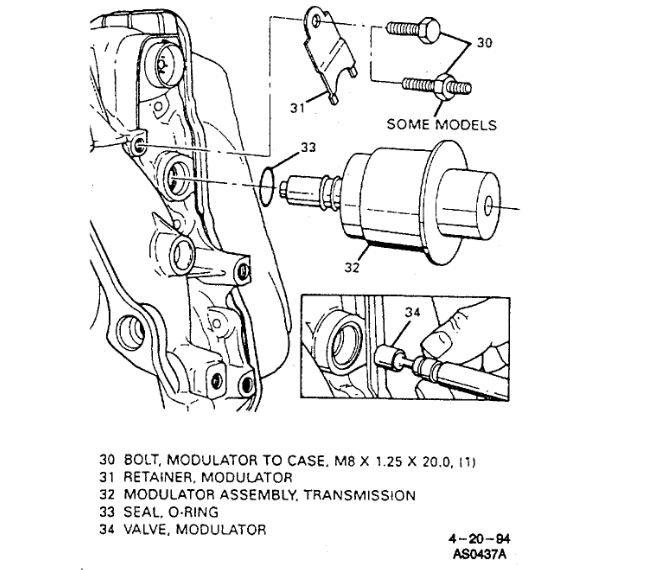
Yes, it could be a vacuum leak. Check for manifold vacuum to the modulator.

Yes, it could be the throttle valve inside the valve body as well.

When was the last time it was serviced?

Roy
Mar 19, 2020 at 7:47 AM
Avatar
CLANOFWOLVES
  • MEMBER
  • 33 POSTS
Other than me replacing the fluid and filter a month ago, nothing has been done to the transmission via work or service.
Mar 19, 2020 at 8:27 AM
Advertisement
Avatar
ASEMASTER6371
  • CERTIFIED EXPERT
  • 52,796 POSTS
Okay, do the checks for the modulator.

Roy
Mar 19, 2020 at 8:31 AM
Avatar
CLANOFWOLVES
  • MEMBER
  • 33 POSTS
So I pulled the vacuum modulator and it was certainly bad as the piston was lose and the replacement one had a tight piston.

Although the car shifted better in accelerating, it still had the moments of 'drag' or whatever and I had to mash the accelerator to push through it.

What is the throttle valve and how can I test it or how hard is it to access?

Thanks... the journey continues, whether I want it to or not, haha.
Mar 21, 2020 at 3:23 PM
Avatar
ASEMASTER6371
  • CERTIFIED EXPERT
  • 52,796 POSTS
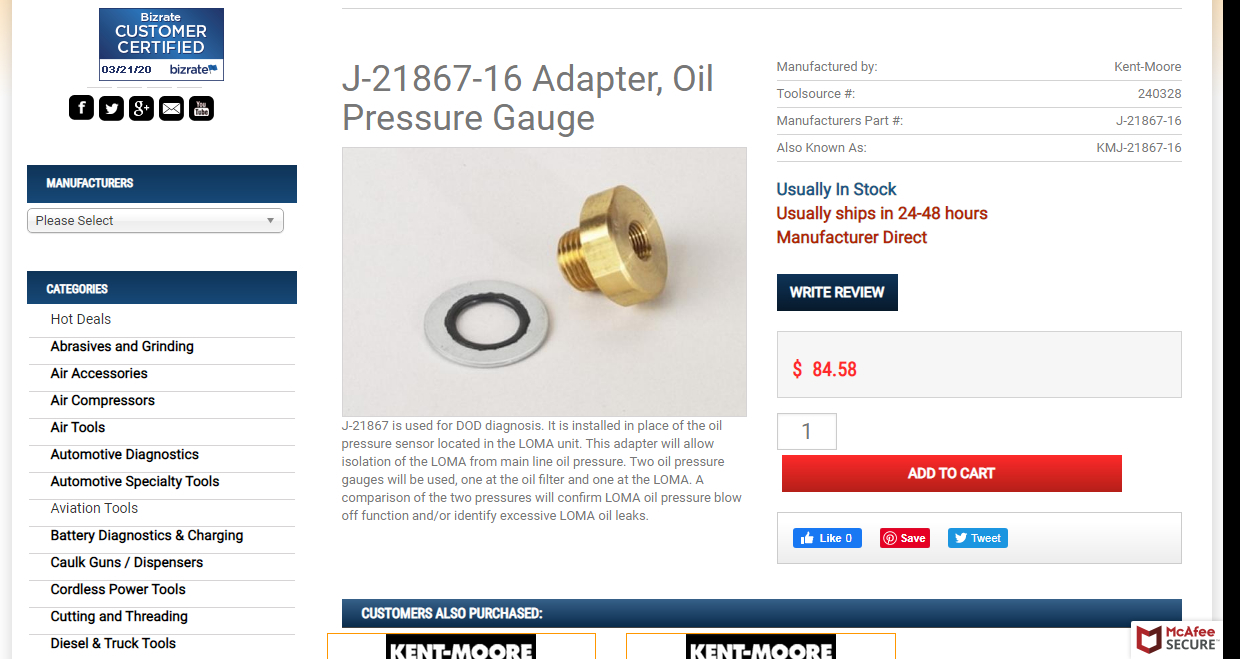
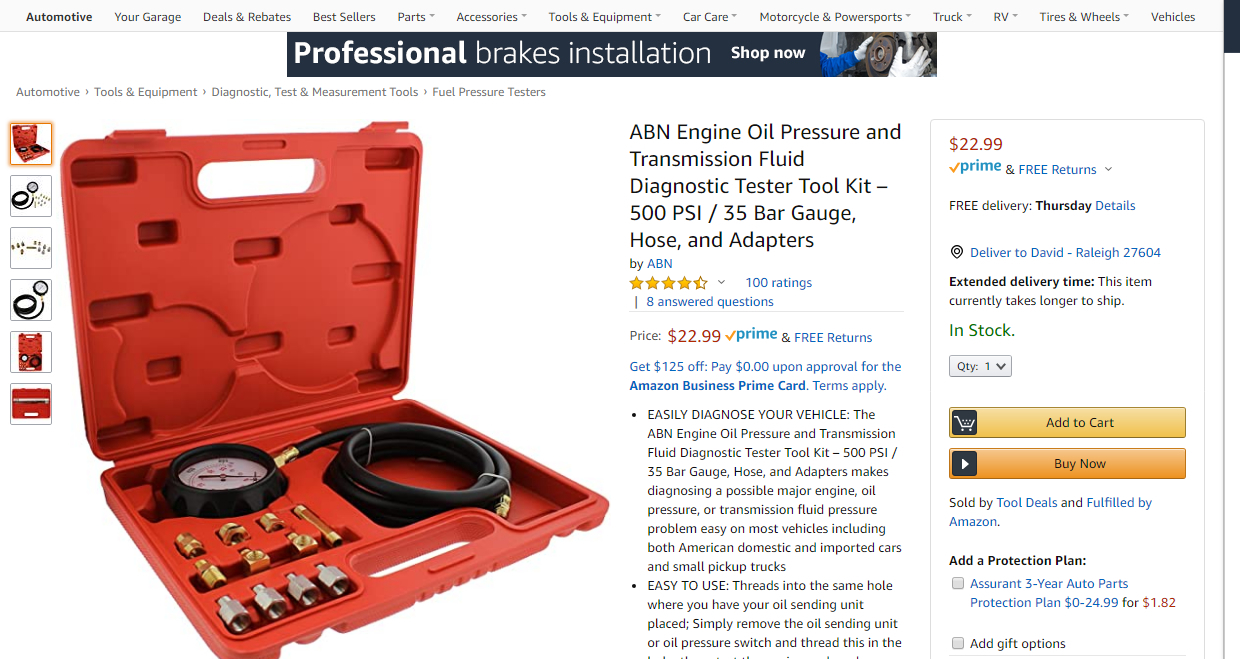
You would need a set of pressure gauges and tap into the plugs in the transmission and monitor the pressures to check the valve.

Roy

1. Check the fluid.
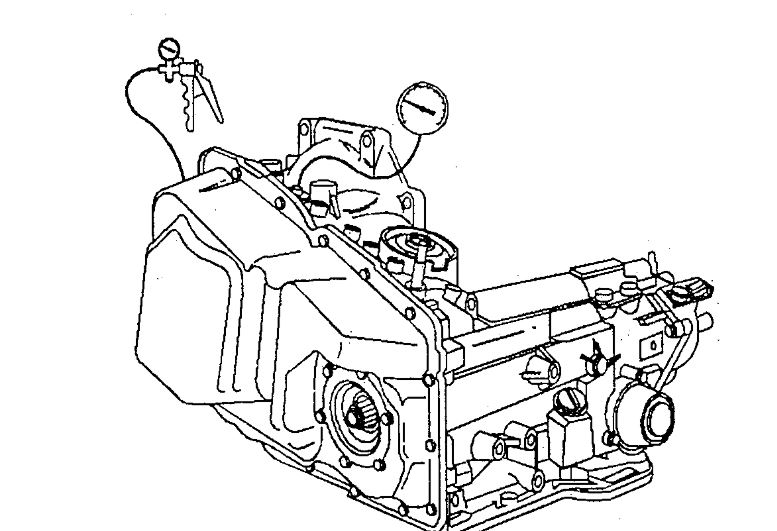
2. Remove the line pressure plug and install J 21867 Pressure Gage (A).
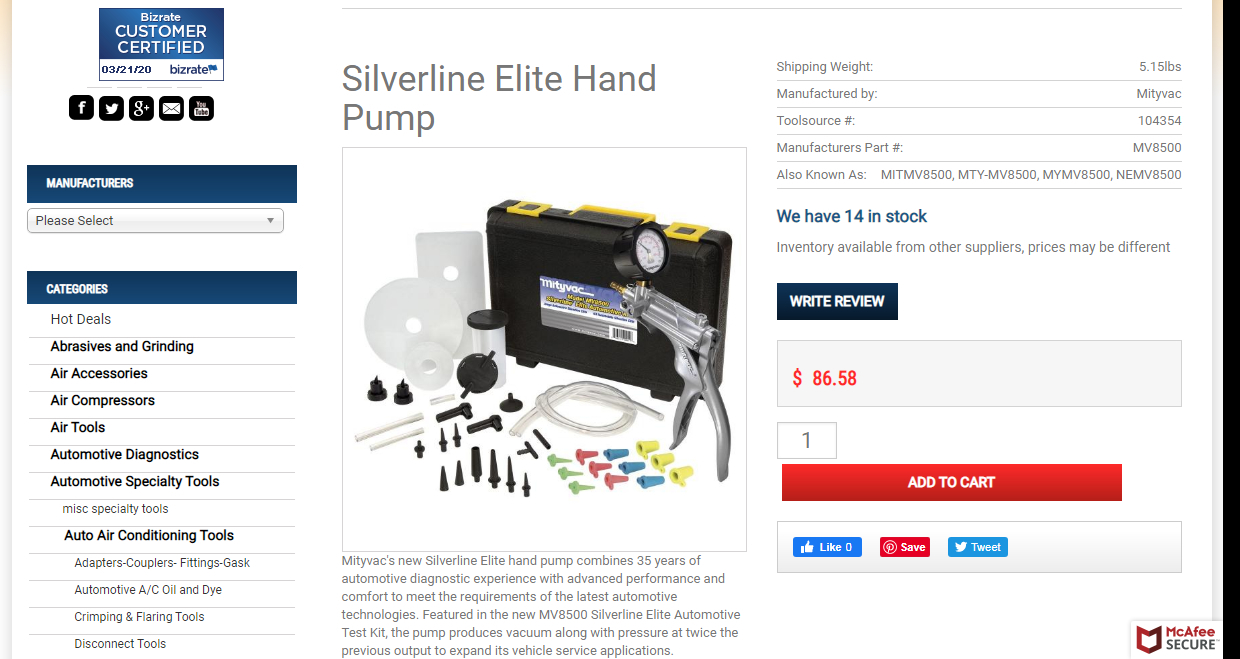
3. Disconnect the vacuum line from the transaxle modulator and connect J 23738-A Vacuum Gage/Pump (B) to the engine vacuum line.

CAUTION: Keep the brakes applied at all Ames in order to prevent unexpected vehicle motion.

NOTICE: Total test running time should not be longer than two minutes, or else transmission damage could occur.

4. Start the engine and set the parking brake.
5. Note the vacuum pump gage:
At sea level, the engine vacuum should be at least 61 kPa (18 in Hg).
Engine vacuum will drop about 3.5 kPa (1 in Hg) for every increase in altitude of 305 m (1000 ft).
If the engine vacuum is low, refer to Powertrain for diagnosis.
6. Disconnect J 23738-A vacuum gage/pump (B) from the engine vacuum line. Connect J 23738-A vacuum gage/pump (B) to the transaxle modulator. Install a plug in the engine vacuum line to prevent a vacuum leak.
7. Raise the engine speed to 1250 RPM.
8. Check the transaxle line pressure:
Minimum Line Pressure-provide 61 kPa (18 in Hg) of vacuum to the modulator with J 23738-A gage/pump (B).
Full Line Pressure-provide 0 kPa (0 in Hg) of vacuum to the modulator with J 23738-A gage/pump (B).
Note the pressure readings in all gear ranges for both Minimum and Full Line Pressure. Compare these readings with the information in the Line Pressure.
9. Refer to the HIGH OR LOW OIL PRESSURE CONDITION DIAGNOSIS chart in order to diagnose the line pressure readings that are too low or too high. See: Automatic Transmission/Transaxle > Symptom Related Diagnostic Procedures
10. Reconnect the engine vacuum line to the transaxle modulator. Remove J 21867 pressure gage (A) with the engine off. Install the line pressure plug.
Mar 21, 2020 at 3:30 PM

Avatar
CLANOFWOLVES
  • MEMBER
  • 33 POSTS
Looks like I'm going to drop about $250.00 to even test this part? Uggggg. How much is the part to begin with?
Mar 21, 2020 at 4:34 PM
Avatar
ASEMASTER6371
  • CERTIFIED EXPERT
  • 52,796 POSTS
It was behind the modulator you removed. I posted a picture way back.

It would be cheaper to have someone check it for you.

Roy
Mar 21, 2020 at 4:37 PM
Avatar
CLANOFWOLVES
  • MEMBER
  • 33 POSTS
I'll take it to Cottman Transmission right near my residence tomorrow. Have any idea what the cost of this might be?
Mar 22, 2020 at 11:45 AM
Avatar
ASEMASTER6371
  • CERTIFIED EXPERT
  • 52,796 POSTS
$75.00 to $100.00 would be in line for this check.

Roy
Mar 22, 2020 at 11:48 AM
Avatar
CLANOFWOLVES
  • MEMBER
  • 33 POSTS
Cool.

What about a guesstimate about the possible replacement of said Throttle Valve?
Mar 22, 2020 at 2:14 PM
Avatar
ASEMASTER6371
  • CERTIFIED EXPERT
  • 52,796 POSTS
The valve would be a couple of bucks, if it was the issue.

I would be more concerned about the bore in the valve body that it rides in. If it is worn or not clean, the valve will not move freely.

The transmission shop should have some 440 laying around that they could get one .

Roy
Mar 22, 2020 at 2:43 PM
Avatar
CLANOFWOLVES
  • MEMBER
  • 33 POSTS
The transmission shop checked it and stated, "the transmission is working within spec and the delay in acceleration was an engine issue, though no code is being thrown. You can come get the car when you can."

Back to old "Square One"...
Mar 23, 2020 at 7:09 AM
Avatar
ASEMASTER6371
  • CERTIFIED EXPERT
  • 52,796 POSTS
Okay, back to the engine.

Did you try disconnecting the EGR valve and seeing it still hesitated?

A worn timing chain could also do this. If the valve timing is off, it will hesitate.

Fuel pressure, again will cause this as well.

Roy
Mar 23, 2020 at 7:12 AM
Avatar
CLANOFWOLVES
  • MEMBER
  • 33 POSTS
I pulled the EGR connector from the valve, and the engine still had that power reduction thing go on when I drove it a bit. To be specific, it's not really a delay -at least not at throttle response- the retarding of the motor output occurs after the normal acceleration is underway, as if someone pulled the throttle back while your pedal stayed in a constant position.

The timing chain... I can wrap my head around the timing chain creating a consistent lack of power that is easily repeatable, and not an intermittent one, but I may be wrong. Guess I can pull the cover and check it in detail.

The fuel pressure at the rail was within spec on ignition only and during running, but due to the fuel gauge not working, I replaced the fuel pump and the filter too about a month ago now.

What controls the fuel injectors? The PCM? Wouldn't I get a code if something was not working correctly there? Or was the self check ability of a '97 Computer simply not all that?

Thanks again for your knowledge, it's been quite helpful.

Dave
Mar 23, 2020 at 10:16 AM
Avatar
ASEMASTER6371
  • CERTIFIED EXPERT
  • 52,796 POSTS
The ECM controls the injectors.

That was next on my list. If they are dirty or the pindles are not spraying the correct pattern, it could cause this.

Additives have no effect on cleaning.

You need to have the cleaner directly injected into the injectors to get them cleaned out.

Roy
Mar 23, 2020 at 10:41 AM
Avatar
CLANOFWOLVES
  • MEMBER
  • 33 POSTS
I recall reading up on fuel injectors and how they fail or show failure and it seems that they usually go bad one at a time and that cylinder will be consistent in its error. I remember tapping on them to see if anything changed momentarily on the smoothness or the idle speed or sound with not alterations noted. But, I'll admit, I'm no fuel injector expert in the least.

If a constant throttle is somehow reduced without driver alteration, it must be spark or fuel as the air is controlled by the throttle.

As far as spark: I know all of the coils are firing at idle strong, and the plugs and wires are new, so the only possibility here is that the timing of that spark is somehow altered during driving by some controller of that which is not mechanical.

As far as fuel, if it is some or all of the injectors, then it is something that causes the amount of fuel to be retarded without input from the driver or the amount of air flow into the engine (MAF being taken out of the equation).

Sorry, just thinking, err, typing out loud.

Would a dealership (though expensive) be able to diagnose the issue better than independent shops. In other words, do you think is it worth the time, effort and money to enlist a dealer's technician?

Mar 23, 2020 at 11:12 AM
Avatar
ASEMASTER6371
  • CERTIFIED EXPERT
  • 52,796 POSTS
The theory on the injectors is good only for electrical issue, not a mechanical issue. Being clogged is not electrical at all, it is mechanical and will not change with tapping on them.

I would have them cleaned to be sure the spray patterns are correct.

Roy
Mar 23, 2020 at 11:16 AM
Avatar
CLANOFWOLVES
  • MEMBER
  • 33 POSTS
Though there is no timing indicator on the harmonic balance and the timing cover, I used my timing gun and a few adhoc marks ad determined that the timing looks steady and therefore I think I can eliminate the timing chain.

I pulled the EGR and drove it and there was no change to the acceleration lull during load.

I guess I now look at the injectors.

Since it idles fine and drives nice under really no load, then has the issue after load and power and put through the engine to the wheels, is there a way to test these at all? Or should I simply pull them an then ultrasonically clean them?
Mar 24, 2020 at 10:29 AM
Avatar
ASEMASTER6371
  • CERTIFIED EXPERT
  • 52,796 POSTS
They need to be puled and cleaned internally.

A special fluid is injected under pressure into the injector and then the injector opened electrically and make sure there is a nice conical pattern.

Roy
Mar 24, 2020 at 10:39 AM
Avatar
CLANOFWOLVES
  • MEMBER
  • 33 POSTS
I have a friend who told me it could be the "knock sensor". if those send the wrong info, the ECM then retards the ignition to make up for the alleged advance which seemingly is exactly what the car is doing. I'm going to disconnect it tomorrow and drive it since no signal makes the ECM send default signals to the coils. Worth a shot anyway, 'eh?
Mar 25, 2020 at 5:52 PM
Avatar
ASEMASTER6371
  • CERTIFIED EXPERT
  • 52,796 POSTS
If it was a knock sensor, it would code.

Roy
Mar 25, 2020 at 5:56 PM
Avatar
CLANOFWOLVES
  • MEMBER
  • 33 POSTS
So my friend has some awesome equipment to test Hz and other sensor feedback and we looked at the Knock Sensor and the O2 Sensors (much more sensitive than mine as well as had the exact ranges of signal that should be expected). The Knock Sensor and the O2 Sensors both looked slightly out of speck, enough to do a test drive with first the Knock Sensor disconnected and then a drive with both the Knock Sensor as well as the upstream O2 Sensor disconnected.

With the Knock Sensor disconnected the drag or delay in acceleration under load was gone, though it wasn't completely smooth. With both disconnected, it drove really well and there was no drag or delay or alteration of power during driving. I replaced both the Knock Sensor as well as the upstream O2 Sensor and tested the car again. It drives as it should.

So, in the end, the car had these issues:
1) The #1 cylinder had a head gasket leak, fixed with head gaskets replaced.
2) The MAF sensor was sending inaccurate info and had a damaged wire, replaced.
3) The vacuum Transmission Modulator was broken, replaced.
4) The upstream O2 Sensor was not within spec, replaced.
5) The Knock Sensor was sending wildly inaccurate info, replaced.

Interestingly, only item #2 above was determined by the PCM to be in error and would throw a Service Engine Soon light or throw a code, the PCM was silent on the other errors. I guess a 1997 GM PCM was not very sophisticated.

Anyway, thanks for your help!!!
Mar 26, 2020 at 11:41 AM
Avatar
ASEMASTER6371
  • CERTIFIED EXPERT
  • 52,796 POSTS
You are welcome.

Always glad to help.

Roy
Mar 26, 2020 at 11:42 AM