Rough idle that becomes worse in drive, reverse

1986 TOYOTA PICKUP
125,000 MILES • 2.4L • 4 CYL • 2WD • AUTOMATIC
Avatar
TRISCUIT
  • MEMBER
  • 76 POSTS
I've done a lot of work on this truck over many years attempting to get it to a smooth running, reliable machine. I've currently (still) got a rough idle that has become smoother/quieter as I've repaired and changed things but still isn't where it should be. The idle becomes more intense when shifted to anything other than Park of Neutral.

I have done the following over the years (some multiple times, some once. I do not currently drive the truck. It's been driven about 3,000 miles in 6.5 years):

1. Rebuilt engine with metal-backed timing chain guide (the motor mounts look fine)
2. Machined and rebuilt the cylinder head and adjusted the valve lash on intake and exhaust (cold and warm) = no change.
3. Installed all new vacuum hoses = no change.
4. Sprayed the vacuum hoses, intake manifold, etc with carburetor cleaner checking for changes in idle = Nothing.
5. New (installed years ago, but again, I barely drive the truck) spark plugs (NGK's, just like the 22REs like).
6. Recently checked the plugs for signs of engine health = they look fine/normal.
7. Put in 4 new Toyota OEM spark plug wires (no cheap wires) + ignition wire = No significant change.
8. Pulled each plug wire at the spark plug/engine = all 4 produced an engine stumble.
9. New distributor and cap (quality, not cheap) = No noticeable change.
10. New OEM TPS installed and meticulously adjusted via 4crawler.com directions = slight power increase, slight idle improvement.
11. New transmission mount (old one was falling apart) = the shake at idle is less jarring but still as active.
12. New marine battery cables.
13. Tested VAFM while installed. It passed every test except for the last one. (Write-up of instructions are at 4crawler.com) Not sure about the last test; waiting for outside input on replacing it because it's an expensive part.
14. R and R Oxygen sensor with OEM Denso sensor. Previous once was a Bosch which does not work well for the 22RE. New Denso sensor has produced a noticeable power gain, improved responsiveness, and the "rich" burning gasoline smell has been lessened; rough idle still present.
15. Pulled spark plugs again, checked and re-gaped them = small increase in power; idle still the same.
16. Checked for engine timing with sensor jumpered. It was coming in around 14 BTDC so I adjusted the distributor to get 5 BTDC. The distributor is NOT swung all the way to one side, rather it's pretty centered, so I don't think it's off a tooth but I don't have a tach so I can't check the idle RPMs. I'm going to buy a handheld one in the next week and re-check the timing.
17. Adjusted the valve lash on both intake and exhaust to spec listed on 22reperformance.com.
18. Removed the charcoal canister and attempted to "clean" it. Improved airflow from bottom spout through top ones but not vice-versa. I'd noticed that there's a lot of off-gasing when I open my gas cap at all.
19. Oh yeah, the intake manifold was thoroughly cleaned when I rebuilt the engine. I also adjusted the stop screw for the accelerator cable (the one that goes from the throttle body to the accelerator pedal). I do need a new detent cable because it's completely overstretched.

I believe I have a misfire but I don't know what I should be hearing. I remember reading somewhere that holding a towel in front of the exhaust pipe should show a smooth flow and that the towel shouldn't be sucked in or be "puffing" back and forth like someone is blowing small puffs of air at it, repeatedly. No idea if that's true but a towel held there responds like small puffs are being blown at it.

I've had an injector replaced professionally which immediately produced a complete, overnight parasitic drain from the alternator. I've since fixed it after much hunting for the source. Nothing else has been done by anyone other than me in about 3 years.

My next steps are to try to jiggle the intake connectors to see if the engine stumbles, do another timing adjustment once I get the handheld tachometer, test the pickup coil(s) and ignition coil(s), and I may also try spraying carburetor cleaner for leaks one more time.

I'm really wondering about the engine idle and timing. It seems to need to idle high (it sounds high/fast, but what do I know?) so it doesn't stumble. But I'm running out of things to do and need help. What am I missing?
Sep 7, 2020 at 5:33 PM

Advertisement
Avatar
JACOBANDNICKOLAS
  • CERTIFIED EXPERT
  • 110,175 POSTS
Hi,

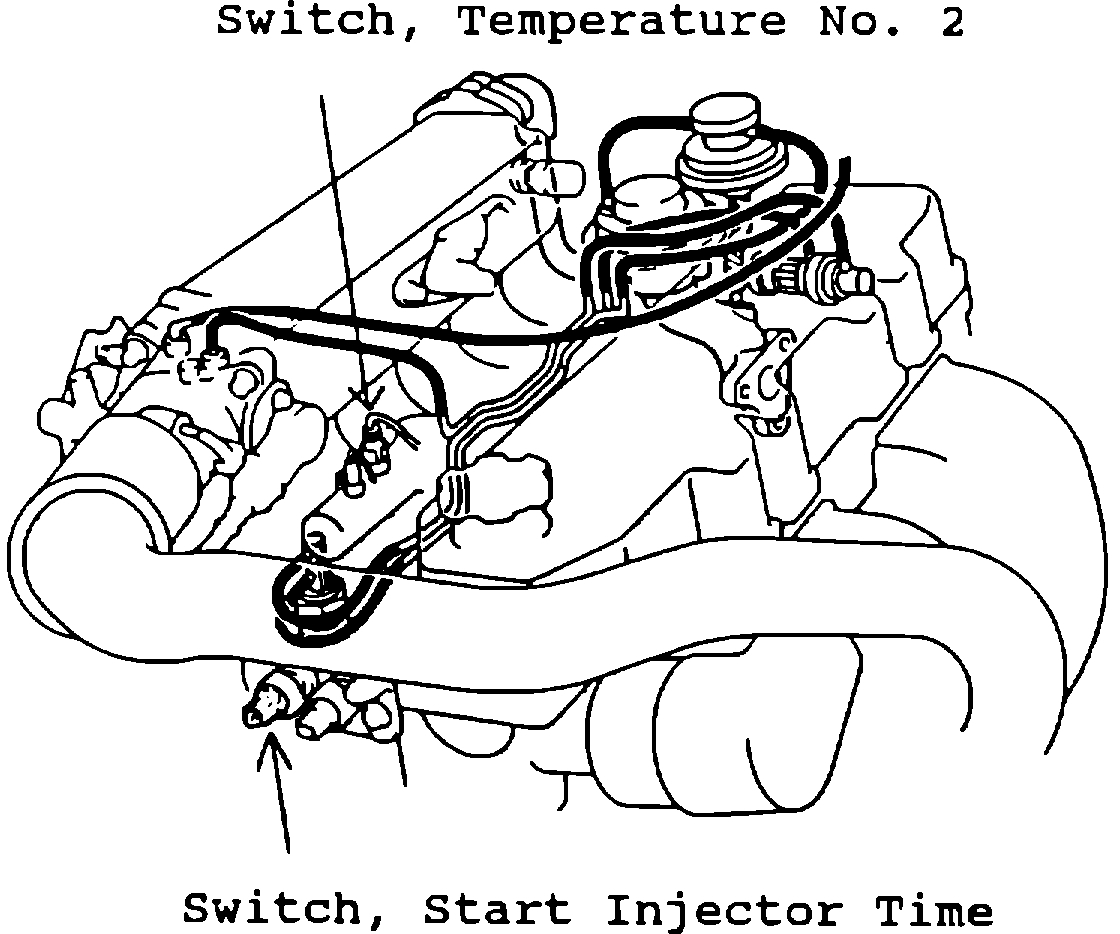
You have done a lot of work on this. Everything that you mentioned is what I would have suggested to check. However, I found an old technical service bulletin that could be relevant for you. It deals with hard start and rough idle. Take a look through this and let me know your thoughts. The attached pics correlate with the directions.

_________________________________________________

1986 Toyota Truck Pickup 2WD L4-144.4 2366cc 2.4L SOHC (22R-E)
Engine Control - Hard Starting/Rough Idle
Vehicle Power-train Management Sensors and Switches - Power-train Management Engine Control - Hard Starting/Rough Idle
ENGINE CONTROL - HARD STARTING/ROUGH IDLE
89toyota10

REFERENCE ENGINE
NUMBER 011
DATE 10-20-89
MODEL RN
TITLE 22R-E, 22R-TE HARD STARTING/ROUGH IDLE

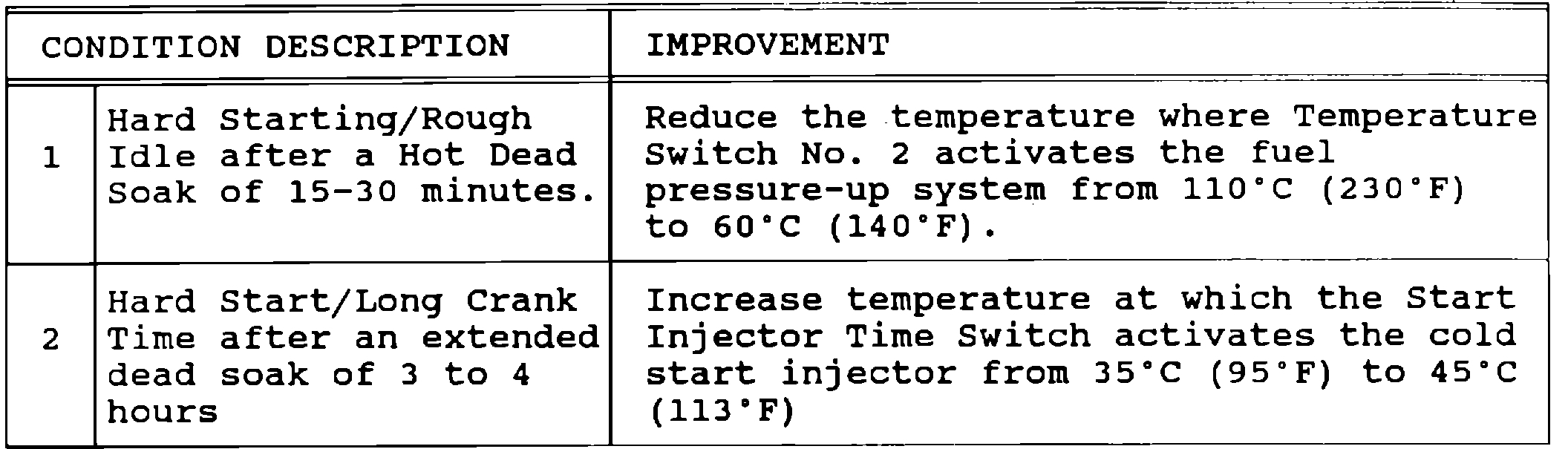
The following parts are now available to improve the start-ability and idle stability after a hot dead soak or an extended dead soak.

pic 1

MODIFICATION INFORMATION:

pic 2

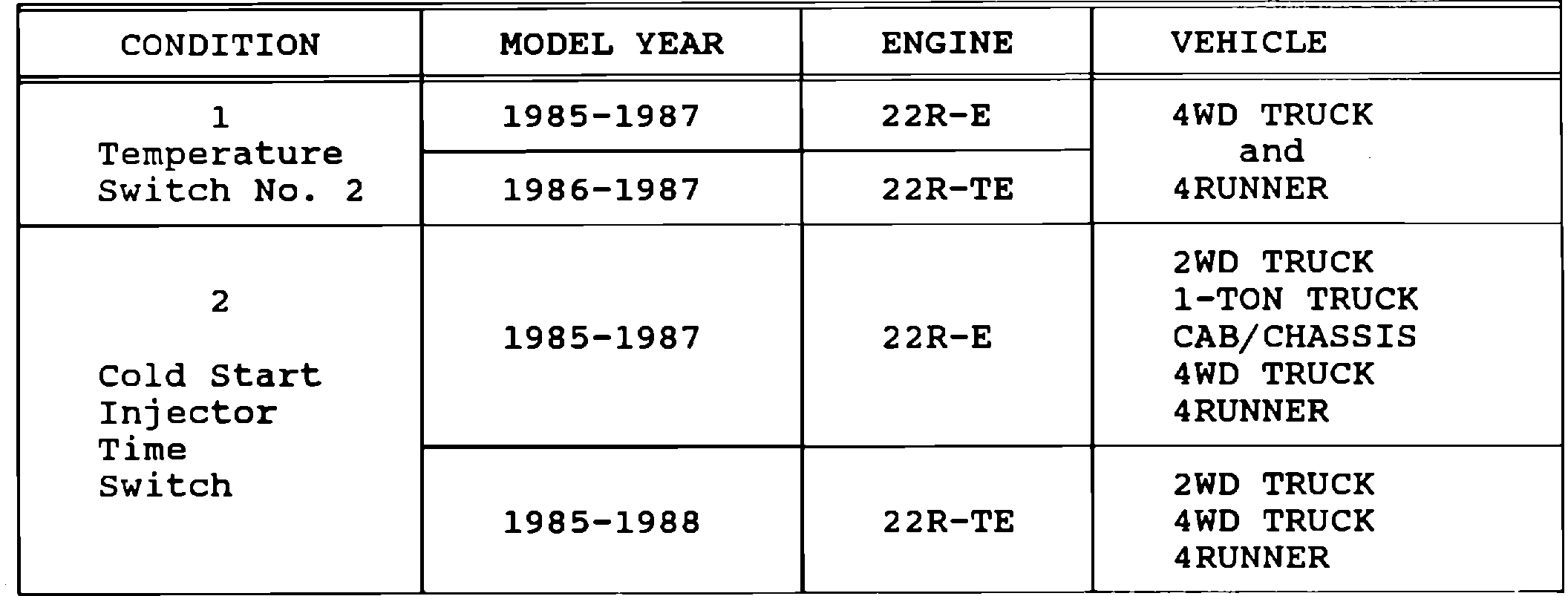
YEAR/MODEL APPLICATION:

pic 3

PART NUMBER INFORMATION:
PRODUCTION CHANGE INFORMATION:

CONDITION 1: Temperature Switch No. 2 specification (same as

field fix) changed at beginning of 1988 model year.

CONDITION 2: ECU modification at beginning of 1988 model year to
activate cold start injector at higher temperature (22R-E only).

REPAIR PROCEDURE:

1. Replace cold start injector time switch with the new part.

pic 4

2. On vehicles equipped with a pressure-up system, (see application chart on page 1) also replace Temperature Switch No. 2 with the modified one.

pic 5

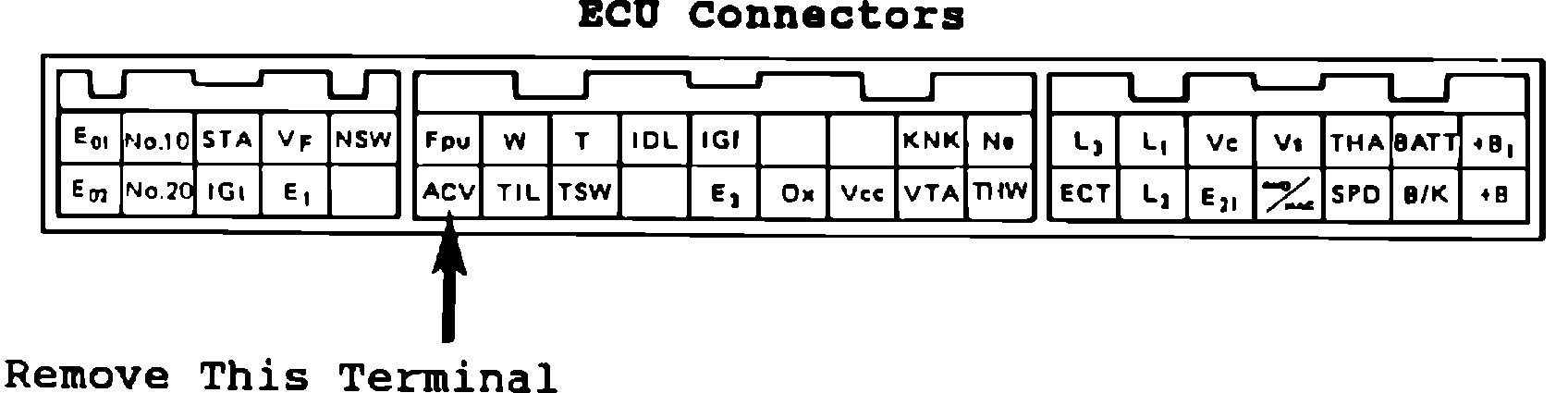
3. For vehicles equipped with Air Conditioning, the ACV terminal must be disconnected from the ECU when installing the modified Temperature Switch No. 2 (Condition 1). This is necessary to prevent the Engine Idle-Up from working continuously after warm up.
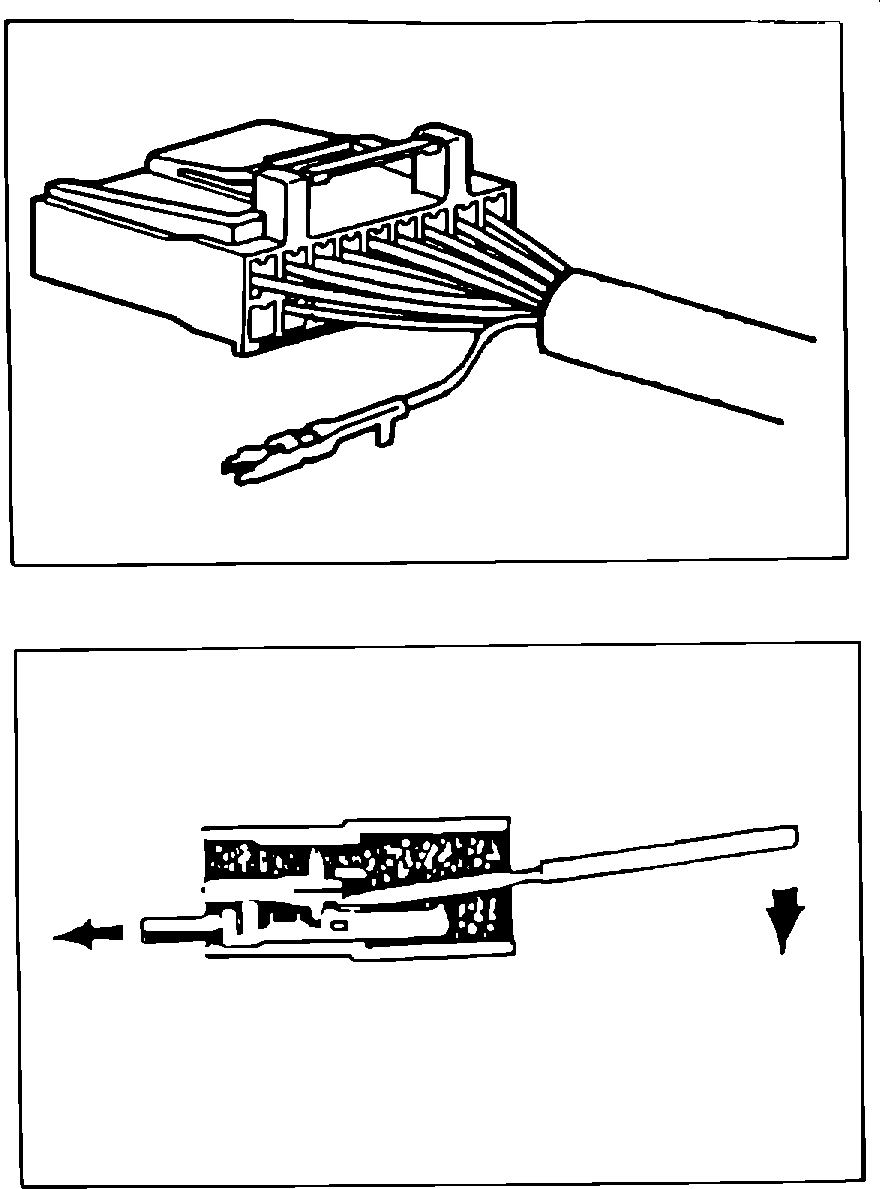
HOW TO REMOVE THE WIRE TERMINAL

pic 6

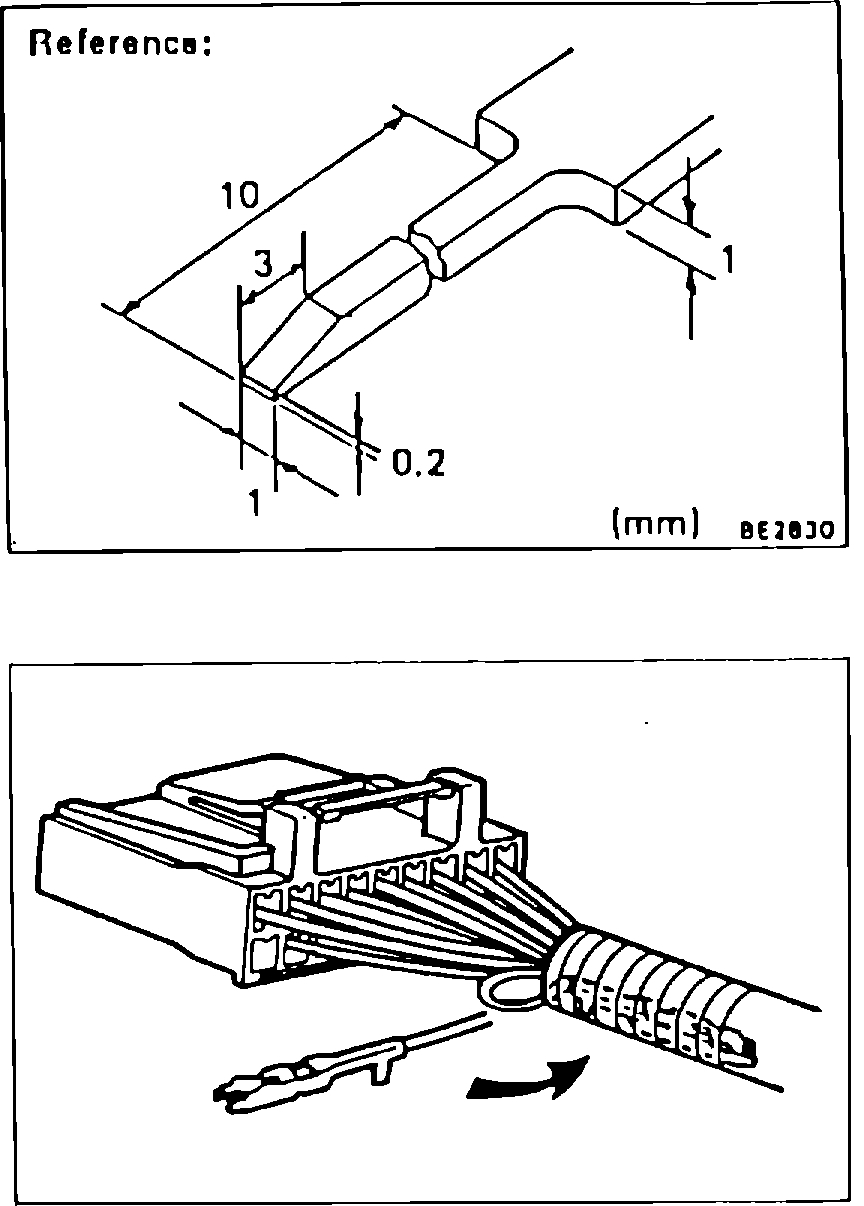
1. Insert a miniature screwdriver from the open end. Move the locking clip to the unlocking direction ( ) and hold it in this position.

Do not apply excessive force to the terminal.

Do not pry the terminal with the screwdriver.

2. Carefully remove the terminal without using excessive force.

pic 7

3. Wrap the removed wire terminal with electrical tape. Tuck the terminal into the harness protector and secure with electrical tape.

_______________________

Let me know if this helps.

Joe
Sep 7, 2020 at 7:49 PM
Avatar
4DRTOM
  • CERTIFIED EXPERT
  • 467 POSTS
Hello I'm Tom.

I'm not sure I understand the actual symptom. Whether it's an engine with poor idle or a engine/transmission mounting issue. You said the replacing a mount made it better but still not right. Can you upload a video of the issue your trying to address?
Tom
Sep 7, 2020 at 7:51 PM
Advertisement
Avatar
TRISCUIT
  • MEMBER
  • 76 POSTS
Hey Joe, thanks for chiming in. I received my handheld tachometer today. It's nothing super expensive but it helps. I was able to adjust the air gap on the distributor to 0.12mm and get it put back in by checking for TDC on the compression stroke with the distributor rotor pointing to the #1 plug on the cap. Then I went to an online class.

An hour and 45 minutes later I went out and tried to start the truck twice - it didn't want to turn over. I let it sit for a couple of minutes and tried again with success while waiting for the engine to warm up it started to hesitate and sounded like it was going to turn off, then it did. I was able to start it up again with no problem immediately, race the engine a few times, and then measured the RPM's around 850-880. While racing the engine I could feel it dropping out for a split second. It did that two or three times over about 6-8 seconds.

I then checked the timing and it was reading 8 BTDC. I adjusted the idle to around 800 RPM's and then jumpered the diagnostic connector and adjusted the timing to 5 BTDC. The RPM's seemed to stay the same but as I was getting ready to take the truck for a spin around the block it up and shut off. It stumbled a bit in there but the engine shake seemed smoother overall.

I tried to start it up again but now it's mad at me so I called it a night. *eye roll* The video is of my last attempt to start it. I'm not receiving any diagnostic codes.
Sep 9, 2020 at 8:06 PM
Avatar
TRISCUIT
  • MEMBER
  • 76 POSTS
Tom, the engine's rough idle is the problem. An idle can be perceived as too rough if mounts aren't dampening the vibrations adequately which is why I changed the transmission mount and did everything else engine-related.
Sep 9, 2020 at 8:07 PM
Avatar
TRISCUIT
  • MEMBER
  • 76 POSTS
I went back out today and pulled out the ignition coil and igniter assembly, tested them and cleaned up the contacts. It tested within spec for both the primary and secondary readings and the truck started when I got it put back in and connected. Cool.

I noticed the engine idle slowed and smoothed out a bit once the truck warmed up, for a second I thought it was going to start sputtering and hesitating but it never did. I pulled out my test light to check the timing again and it’s holding steady at 12 BTDC and 5 BTDC - jumpered. Then I decided to move the spark plug pickup connector to all four wires and watch the light fire. My number two spark plug is firing much faster than the other 3. That’s the fuel injector that got a new connector and I noticed the spark plug Itself is slightly off center like a PO may have cross threaded it. It still seats fit and looks the same as the others.

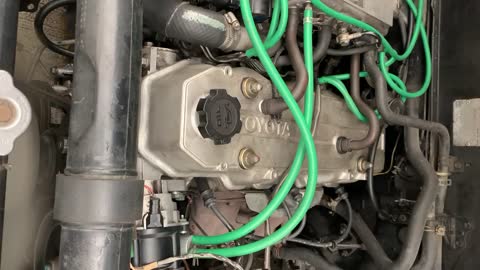
Below is a video of the engine idling. I tried to get one of the timing light going but the camera wasn’t picking up the light’s firing frequency accurately at all. The second video is of the idle change when I switch out of Park/Neutral into any other gear. Again the roughness of the idle isn’t given justice in the video but you still see and hear some of it.
Sep 10, 2020 at 5:48 PM
Avatar
JACOBANDNICKOLAS
  • CERTIFIED EXPERT
  • 110,175 POSTS
Hi,

I did watch the video and understand what you mean. Tell me, is the temperature gauge always on hot? Also, the idea that the one cylinder seems to be firing faster than the others is odd. Are you sure there isn't a crack in the distributor cap or wires arcing at some point?
Sep 10, 2020 at 7:22 PM
Avatar
4DRTOM
  • CERTIFIED EXPERT
  • 467 POSTS
Hi,

Hmm, I think I'm hearing a valve tick. On rigs like this I usually would get out the stethoscope and listen to the internal sounds of the head. You want to have no change between valve sounds as you probe down the valve cover bolt heads and various places around the block head seam. I bet if you did that you'll find that one or more is louder than the others. I think you have something going on with the head. Namely its just old, so nothing is really wrong but everything is worn a little bit and all together its just not smooth, only 125,000 miles seems low because it has the sound of an engine with a lot of time on it. It is pushing 35 years. What are your compression readings? Are they consistent and all about the same? How does it drive, does it have power? Are you getting any water out the tail pipe, not vapor but drips? A perfect burn will make water. Does it have any visible emissions? How about the underside of the oil cap, check to see if there's any dried carbon on it. I'm asking these questions just to try to determine how it was taken care of over all these years.
Tom
Sep 10, 2020 at 10:42 PM
Avatar
TRISCUIT
  • MEMBER
  • 76 POSTS
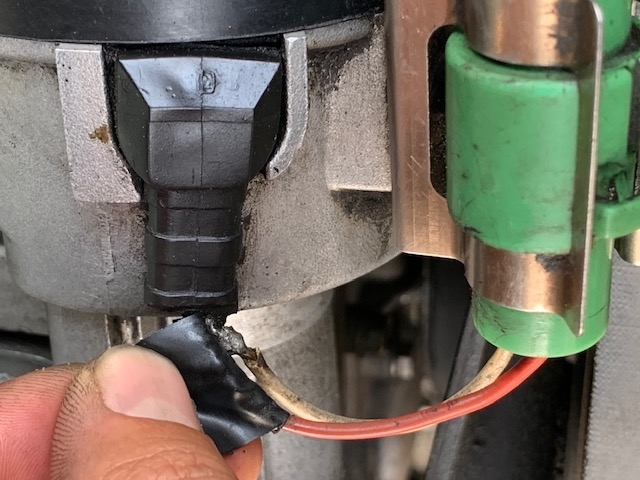
Joe: the temperature gauge is not on hot, it never is. It actually barely moves up beyond the minimum line when it's completely warmed up. I think you saw the top mark of the gauge, not the actual needle. I went out today and accidentally bumped the external part of the pickup coil (that is exposed on the distributor case) and guess what? the engine stumbled a bit then came back. So, i just got a clue that it needs to be replaced. The wires are a bit too exposed so that may be causing a problem and i'm going to go out tonight and see if i can spot any arcing on the wires despite the fact that they're brand new. I wrapped a piece of electrical tape around one of the pickup coil wires and it seems like the idle had smoothed out a bit. I'll include a picture below.

Tom: the engine and head have been machined and rebuilt. The valve tick is the result of my adjusting the valves and tightening the cover too much. I loosened it and the tick is gone. This still doesn't explain the drastic change in vibration between unloaded and loaded, ie., park/neutral and all other gears. I'll do a compression check soon just for some new numbers. The last time i did it the compression was fine on all 4 cylinders but it was years ago and the truck has been driven some since then. The power level is much better since readjusting the TPS after timing the engine then installing an appropriate o2 sensor. Previously it felt extremely sluggish and weak. Then after the new #2 fuel injector connector install is gained some power and the idle chilled out a bit more. There is no visible emission from the tailpipe, or water, and both the oil and exhaust smell rich. I'm going to change the oil soon for a fresh start and a more clear picture of what's what since it's feeling and sounding better than it did before. Truly, every thing seems to help a small amount but by now i feel the truck should be darn near sounding like a purring kitten.

I can tell you this with certainty (because i have done so much work over the years and corrected a lot of what was previously done): the vehicle was not well cared for by one or more of the previous owners. This is why i have done everything listed in my original post and more. Even things like the ignition switch had clearly been messed with an soldered in weird places and the original fusible link housing was melted. It wasn't well very loved. But i love it and would like to be able to drive around a healthy, happy truck.

Does it seem like that wire exposure on the p/u coil could be the problem?? Thanks, again.
Sep 13, 2020 at 4:43 PM
Avatar
JACOBANDNICKOLAS
  • CERTIFIED EXPERT
  • 110,175 POSTS
Hi,

Anything is possible. Since it was soldered it concerns me.

Let us know what you find.

Joe
Sep 13, 2020 at 8:26 PM
Avatar
TRISCUIT
  • MEMBER
  • 76 POSTS
Hi Joe,

I installed the new distributor pickup coil, changed the oil, and did a dry compression test. The new coil provides a more powerful start and I've noticed water coming out of the tailpipe now. There was an 8" x 3" area that was wet below the tail pipe but it didn't help to i smooth out the idle.

The compression test gave me the following:
Cylinder 1 - 158
Cylinder 2 - 160
Cylinder 3 - 168
Cylinder 4 - 155

I did some reading regarding your suggestion about the Cold Start Injector and the CSI Time Switch and it seems like it could be an issue, but not explicitly. Ill test the Time Switch soon but I don't have the symptomatic hard starts in the morning/when it's cold and it's rarely below 65 degrees where I live. The truck has an exhaust leak at the manifold/cylinder head so I smell more than I should coming from the engine but noticed the old oil smelled like gasoline as well but I don't have any smoke coming from the exhaust pipe, I don't lose acceleration when driving and the spark plugs look normal. The MPG was low but since changing the O2 sensor, readjusting the TPS and changing the oil I haven't driven the truck around to see if the MPG has changed.

It seems like something is up with the exhaust or the fuel system so I'm going to look back through my record of things I have done over the years and will send a message about that soon, as well. Would an exhaust leak cause these symptoms? And, why would water come from the tailpipe after installing the new pickup coil?
Sep 26, 2020 at 4:41 PM
Avatar
JACOBANDNICKOLAS
  • CERTIFIED EXPERT
  • 110,175 POSTS
An exhaust leak can cause issues. If it is pre catalytic converter, it can allow air into the system causing the O2 sensor to think the engine is running lean. As a result, the computer compensates by adding fuel. That could be a big part of what you are experiencing.

As far as the water, that simply sounds like condensation. Honestly, I wouldn't be too worried about it. The compression looks good as well.

Let me know how bad the exhaust leak at the manifold is.

Take care,
Joe
Sep 26, 2020 at 6:19 PM
Avatar
TRISCUIT
  • MEMBER
  • 76 POSTS
Joe,

I can feel exhaust puffing out at 3 different points around the top and sides of the manifold. I have been looking into an aftermarket manifold and exhaust over the years but was hoping something else would fix the issue in the meantime but it looks like that should be my next priority from what you have mentioned. I know two of the bolt holes are stripped and one has been tapped to the next larger size. I've been doing a little research and think that I can helicoil the original sized holes and use some JB Weld (high heat) to fill in the larger hole so I can drill it back to the original size. I know the OE exhaust manifold bolts are too short on this engine and very prone to falling out. After-market bolts are a little longer from the source I'm checking which is good.
Sep 26, 2020 at 9:02 PM
Avatar
JACOBANDNICKOLAS
  • CERTIFIED EXPERT
  • 110,175 POSTS
I think it is something to consider. The best way to fix it would be a helicoil. Once they are in, they work great.

Let me know what you decide.

Joe
Sep 26, 2020 at 9:42 PM
Avatar
TRISCUIT
  • MEMBER
  • 76 POSTS
I've begun saving for a new exhaust manifold. I'd previously had my current manifold machined flat hoping to fix the leak but no luck. The new one will cost about $450 so I may disappear for awhile while I accumulate the money.

Can helicoils be used to reduce the diameter of a bolt hole as well? I'm concerned about using one on the exhaust bolt hole that was tapped to a larger size.
Sep 27, 2020 at 8:57 PM
Avatar
JACOBANDNICKOLAS
  • CERTIFIED EXPERT
  • 110,175 POSTS
Yes, they can be used to reduce the hole size. You will need to determine the hole size and then what is needed. They make all different sizes. When you get the set, it will come with its own tap. You will need to use what is provided.

Are you able to find a used manifold at a salvage yard?

Joe
Sep 28, 2020 at 6:08 PM
Avatar
TRISCUIT
  • MEMBER
  • 76 POSTS
Joe, alright, I'll look (harder) for an appropriate Heli-coil set. I could find a used manifold from a salvage yard but considering I have already had my current one machined flat I'd prefer to get a new one since it will be in better shape overall. You actually just made me realize that I could just Heli-coil everything right now and continue to save up for a new manifold over time. Unless the current one has warped again this would allow me to get some more feedback about the state of the engine when the manifold seals more tightly. Thanks! Haha.
Oct 2, 2020 at 3:51 PM
Avatar
STEVE W.
  • CERTIFIED EXPERT
  • 15,113 POSTS
If the hole is far oversized you may want to look at using a time-sert or e-zlok instead of a helicoil, Those are both thicker walled inserts instead of just the coil of threads, because they are thicker they can easily return the bore back to the original size.

http://www.timesert.com/
https://www.ezlok.com/
Oct 4, 2020 at 5:30 AM
Avatar
TRISCUIT
  • MEMBER
  • 76 POSTS
Steve, I’ll look into both of those as well. Thank you.
Oct 4, 2020 at 6:52 AM
Avatar
TRISCUIT
  • MEMBER
  • 76 POSTS
Update: I’ve got two of the three stripped bores drilled and ready to tap. The last one is close to the firewall and I can’t get my drill in there straight. I saw a 90 degree angle tool that would work except for it it wasn’t large enough to hold the drill bit. Do you all know of any that may? Or another option? If I can’t figure anything out I’ll tow the truck to a shop to have them drill it out. Thanks!
Nov 9, 2020 at 6:59 PM
Avatar
JACOBANDNICKOLAS
  • CERTIFIED EXPERT
  • 110,175 POSTS
Hi,

What you described sounds like a right angle drill. How big is the drill bit? You may need to get one with a 1/2" chuck or get an adapter to change the one you have to a 1/2" chuck. I've seen them online for under $20.00.

Let me know.
Joe
Nov 9, 2020 at 8:37 PM
Avatar
STEVE W.
  • CERTIFIED EXPERT
  • 15,113 POSTS
As Joe said, what size is the drill? There are quite a few right angle drills available, I've used the attachments but normally I just grab the right angle air drill I have, it's almost as small as the attachments but can use up to 1/2" drills. There are electric ones as well, even the lower end Harbor Freight electric would likely work if the bit is under 3/8" I wouldn't get a cordless because they are usually long and take up a lot of space.
Nov 10, 2020 at 5:37 AM
Avatar
TRISCUIT
  • MEMBER
  • 76 POSTS
Alright, hey Joe (et al), I'm back. After finally getting the stripped stud bores drilled out and getting the Big-Serts put in and everything bolted back up the engine sounds a bit better and no longer has the gas-forward smell to it which is great.

The other side is that the significant/rough idle change when the vehicle is put into any gear is still present. I've checked the timing and idle again and have noticed that the idle seems too low when the engine is first started (even though it's set to 750-800 at operating temperature), either begins to stutter somewhat or sounds like it might, and takes a long while to smooth out despite the engine reaching operating temperature. Even still, it kind of sounds like there's a miss. If I drive the truck around the block a bit it speeds up the process of bringing the engine up to operating temperature. The truck starts up just fine so I don't believe its the Cold Start Injector. Perhaps the Idle Air Control Valve? I'm at a lost as to how many things have been replaced or fixed and the engine somehow still has issues.

The engine holds steadily at 5 degrees BTDC (terminals jumpered) and 12 degrees BTDC once warmed up sufficiently and moves around a little when still warming up.

What would effect the idle intensity when changed from neutral or park to drive or reverse? I'm on the hunt for a new detent cable because mine is overstretched and the transmission doesn't shift properly. Would this effect the idle smoothness? Is it time to light the truck on fire?
Dec 2, 2020 at 5:46 PM
Avatar
STEVE W.
  • CERTIFIED EXPERT
  • 15,113 POSTS
When you shift into any gear from park or neutral you are placing a load on the engine, because it is running at idle is doesn't produce much power and anything wrong will get magnified by a high amount. You say you don't drive the truck much, if it runs okay except for the idle I would take it out for a drive and drive it like you stole it. Run it hard for a bit and get it warmed up and make it work. If it has fuel in it that is over 90 days old and has ethanol in it then either run that out and fill it with new or use a pump on a fuel line to empty the tank and refill. Then drive it some more. Setting around will do bad things to a vehicle and you get corrosion in places it shouldn't be. Plus being a vintage 4 cylinder it is not going to idle as smooth as a modern engine with a balance shaft and modern timing and fuel controls.
Dec 3, 2020 at 8:13 AM
Avatar
TRISCUIT
  • MEMBER
  • 76 POSTS
Hey Steve, the truck does run pretty fine except for the idle and a bit of sluggish shifting which I believe is related to the stretched detent/kickdown cable. Today I took it out and did what you said - I gunned it down streets! Haha. It was fun. I then took it to be smogged and the tech pushed it at 25MPH for a while as well. I noticed that the shifting, power and acceleration were all significantly better after my first jaunt and still good after the smog check. The truck failed the smog so tomorrow Tuc (the truck) is getting a new catalytic converter.

The current fuel is probably about three months old so when it runs lower I'll put in some fresh stuff and gun it some more as you suggested. Hopefully the idle gets even better; I realize it'll never be as smooth as modern cars which is fine. It's still too rough to be normal though and I'm plum out of ideas. I even changed the transmission mount hoping that was the problem because the old one was shot. At one point the idle was so severe I couldn't see out of the side mirror because everything was seriously blurred. it's tolerable now. I have seen Fords from the 1960's with smoother idles. I may just have to live with it or succumb to taking it into a shop. I have attached another video that I took today after the new exhaust manifold, O2 sensor, and speedy driving of today.
Dec 3, 2020 at 6:02 PM
Avatar
STEVE W.
  • CERTIFIED EXPERT
  • 15,113 POSTS
Sounds like you are on the right track. If the converter is bad that could be part of the problem, also I would put a mechanical temperature gauge on it and see what it shows, if the temp sender was bad and telling the ECM that the coolant is always cold it will run the mix very rich just like it had a choke on. That will cause the converter to fail and give a poor idle because of the rich mix.
Dec 3, 2020 at 7:29 PM
Avatar
TRISCUIT
  • MEMBER
  • 76 POSTS
Update/Check In: The new catalytic converter is installed and I passed CA emissions! Woot Woot!!

12/14: Idle is still rough and after driving about 35 miles on the freeway (at varying speeds). I noticed that the truck felt like it was lurching when I pulled in to park at my location. 6 hours later, the same thing. I thought maybe it was low on ATF so I put more in (it needed some) but no change in the lurching until I'd hit about 20-25 mph then it would feel more normal.

12/15: I installed a new 2-stage thermostat, new Coolant Temperature Sender (to ECU), and burped the cooling system well. The engine temp gets very slightly higher now but there's been no change in the idle or engine performance.

12/16: I pulled off the Auxiliary Air Control valve to make sure it was clean. I'd cleaned it really well when I rebuilt the engine but checked it again and it's still spotless. I also pulled off my air inlet hose and noticed a small amount of surface moisture and a few drops in the throttle-side elbow; the exterior was bone dry. The throttle body itself has a small amount of moisture as well, similar to the sheen/greasy feel of a surface after wiping coolant off of it well, but not also using brake cleaner or something so there is a slightly slick feeling.

So tomorrow I'm going to attempt to check the fuel pressure regulator and injector harness connections. Fingers crossed.

This idle issue is so strange. If I figure it out, hopefully it will save someone else a lot of headaches in the future.
Dec 16, 2020 at 9:04 PM
Avatar
STEVE W.
  • CERTIFIED EXPERT
  • 15,113 POSTS
Lunging could be transmission related as it sat for a while. The fluid drains away and seals can get sticky. Then you get strange shifting and behavior. Just need to determine if it's the engine causing the lurching or something else. Easy way to do that is to take the thing up to an rpm level where you can feel the lurching, then note that and stop, now manually shift into low and go to the same rpm, then manually shift to second and run it to the same rpm again. If it is engine related the lurching should stay about the same, if it's elsewhere the lurching may be gone in one or two gears as the internals of the transmission will be using different pieces in each gear. Have you put in new fuel as well?
Dec 17, 2020 at 7:03 PM
Avatar
TRISCUIT
  • MEMBER
  • 76 POSTS
Steve,

I'll do exactly as you suggested later today or tomorrow to narrow down the lurching/lunging motion and yes, I have put in new, higher octane fuel from 76.

I may have a definite clue about the idle problem. Yesterday I pulled off my EGR valve and modulator to clean them. The modulator had nice flow through each post and the filter pack looked pretty good. The EGR valve I continuously sprayed with carb cleaner and brake cleaner until it would become clear, then I'd scrub out as far as I could inside of each and repeat the process. I let it sit for hours with carb cleaner in each area and reinstalled it today. I first checked for vacuum and the diaphragm moved and seemed to hold just fine. When I pulled the vacuum hose off the valve and sucked on it while the engine was idling there was no response so apparently the valve is still dirty and is causing a vacuum leak.

Should I continue to soak it for another night? I felt like I got it pretty clean but apparently not clean enough. It's not an inexpensive part and it seems like cleaning it should work.

Dec 18, 2020 at 3:32 PM
Avatar
STEVE W.
  • CERTIFIED EXPERT
  • 15,113 POSTS
EGR could cause a problem if it is sticky. Testing is easy though, apply a vacuum to the valve and see if it opens, then let it close and then see if fluid passes through it easily, if it does then it's sticking. Cleaning it sure won't hurt. A way to test if the EGR is causing a problem is to install it with the port on the intake side blocked with something solid to prevent any flow, if it starts and runs fine and the issue is gone, it's leaking a bit. Then you need to check the vacuum flow modulator valve and the control solenoid.

Two Port
1. Disconnect both vacuum hoses from modulator.
2. With engine stopped, block either port of modulator and blow through remaining port.
3. Air should be discharged from modulator filter with little resistance.
4. Start engine and set to run at speed specified under ``System Testing,'' block either port of modulator and blow through remaining port.
5. Air should be discharged through modulator filter with great resistance.
6. If valve fails to perform as outlined, valve is defective.

Three Port
1. Disconnect vacuum hoses from EGR vacuum modulator.
2. Place finger over the two end ports.
3. Blow air into the single port.
4. Ensure air passes through the air filter side freely.
5. Start the engine and maintain engine speed at 3000 RPM.
6. Repeat test and ensure there is a strong resistance to air flow.

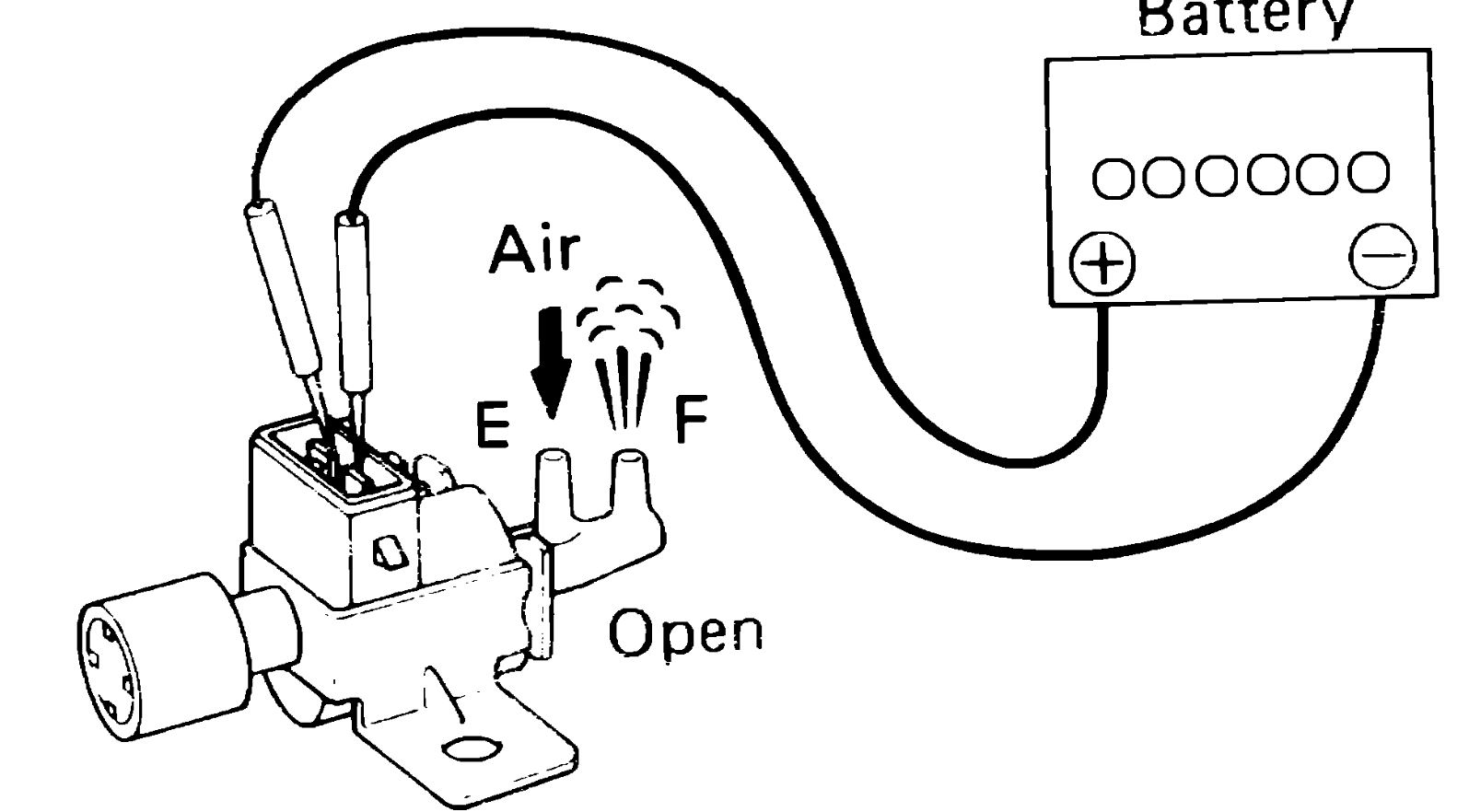
Vacuum solenoid test. Image below.
1. Apply battery voltage to vacuum switching valve terminals.
2. Blow air into pipe ``E,'' Fig. 34, and ensure air flows from pipe ``F.''
3. Disconnect voltage from valve, then blow air into pipe ``E,'' and ensure air flows from air filter at bottom of valve.
4. If air flow is not as described, replace valve.
5. Check for continuity between terminals and valve body and replace valve if continuity exists.
6. Measure resistance between valve terminals and replace valve if resistance does not measure 33-39 ohms at 68°F.

Dec 18, 2020 at 5:38 PM
Avatar
TRISCUIT
  • MEMBER
  • 76 POSTS
I actually blocked the EGR port at the intake manifold right after sending you the last message per the instructions at LC Engineering, 22RE specialists. It starts fine like usual and runs a tad smoother but nothing extreme. I'm going to go buy more carb cleaner tomorrow, remove the EGR again, and clean it for another 10+ hours. Ill also recheck the modulator per your instructions. My BVSV is new (I broke the nipples on the last one) and I sprayed brake cleaner through the metal pipes connecting the vacuum lines at both ends for both ports to the EGR. The cleaner was crystal clear and blasted right through.

My engine is still not coming up to operating temperature and after blocking the EGR it seems like the missing goes away or reduces significantly. I'm noticing that my cold-start idle is working but the engine never seems to drop back to a warm temperature idle. The idle actually seemed smoother but much too fast. Something is up with the engine not reaching operating temperature. The thermostat and sender to ECU are new, the upper radiator hose heats up slowly and gets hot, there are no leaks, and the heater in the truck gets hot. I burped the cooling system again and will do it one more time in hopes that there are still trapped air bubbles. The temperature gauge's position in the truck varies ever-so-slightly but barely moves past the minimum temp line. When it does it's only by about 1/8" which is too low, then it'll go back down to the minimum line and my previous thermo read the same.

I suppose testing the sender to gauge and ECU readings are next? I'm also looking into how to find out if my fan is turning on too soon. If the engine isn't coming up to temperature that could certainly be why the idle is rough and too fast.

Oh! I knew nothing of the jiggle valve on thermostats until I stumbled on a thread discussing position and temperature variance. I have no idea how I installed the thermostat in relation to the jiggle valve but it seems that having it installed correctly cools the engine down more so even if mine is not at the 6 o'clock position I'd have a warmer engine, not a cooler engine. I'm inclined to leave it for now.
Dec 19, 2020 at 1:20 PM
Avatar
STEVE W.
  • CERTIFIED EXPERT
  • 15,113 POSTS
If the PCM thinks it always cold it will hold the rpm high and richen the mix both of which can cause issues. The catch now is to determine if it's the wiring or sender unit, or is the engine really staying cold. Air in the system could cause a bad reading if the sender had an air pocket around it. What you can do is use an IR thermometer and measure the temperature of the various parts of the system. The fans shouldn't even turn on if the engine isn't getting hot, they respond to the sender unit and activate only at high coolant temperatures or if you are turning the AC on.
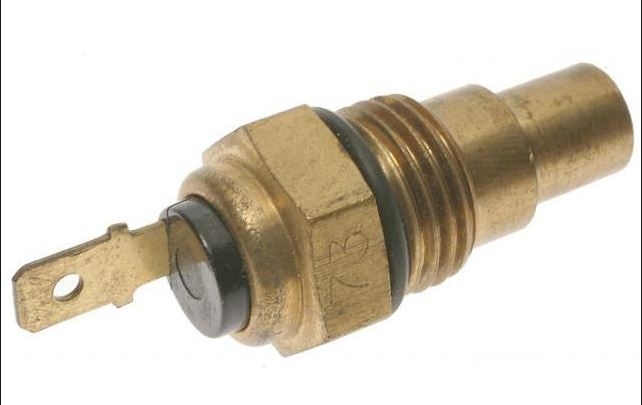
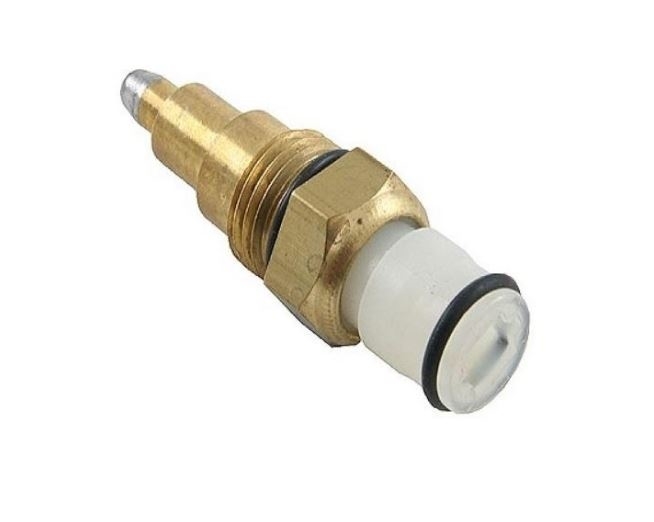
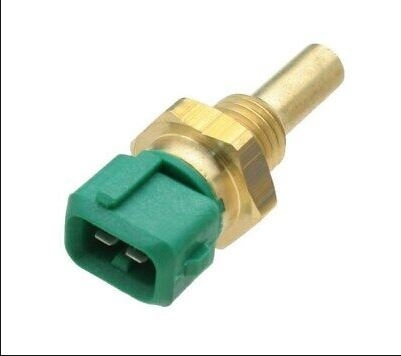
Depending on the emissions package you can have 2 or three temperature sending units. The California versions have 3 while the rest of the country got 2, on the Cali models two are just switches with the third being the sender for the dash. On the federal versions, one is a switch while the other is the dash sender.
The one for the dash unit will have a single slip on connector like the first one. The others will look like the second two pictures. Which did you change out?

Dec 19, 2020 at 7:58 PM
Avatar
TRISCUIT
  • MEMBER
  • 76 POSTS
I changed out the sender to the ECU which is the third picture with the green plug. It was pretty inexpensive so I just replaced it altogether.

I am thinking of pulling the sender to the gauge to check it, but honestly I doubt it’s that. I was looking for an IR thermometer last night and think I found one near by that’s affordable. I’ll shoot different parts of the cooling system when I get the thermometer and report back.

I believe the fan turns on (but doesn’t pull air) when the vehicle is started, regardless of temperature because it’s belt driven and on the same loop as the water pump, if I recall correctly. I was researching because my fan always turns on, I thought that maybe it’s indicative of a faulty fan clutch however I only found blogs saying it turns on regardless though I'm open to checking the fan as being the issue; I’m so perplexed by this idle issue.
Dec 19, 2020 at 8:13 PM
Avatar
STEVE W.
  • CERTIFIED EXPERT
  • 15,113 POSTS
Okay, forgot this is a "vintage" vehicle. A manual fan will always pull air but the cooling system is designed to deal with that. The thermostat hold the coolant in the engine until it gets warm enough that it starts to open, but it doesn't generally stay open for a while. The coolant gets hot, the thermostat cracks open and some coolant flows through, but as it flows it draws in colder coolant and the thermostat closes and lets the coolant heat up again, that cycle continues a while until the coolant is finally carrying enough heat to keep it open, even then it won't be fully open until the coolant reaches the full temperature that the cooling system is designed for. The fan being on doesn't really hurt that because it was factored in during the design.
If it has a fan clutch it will generally come on for a few seconds at initial start until the bimetal control on it determines the engine isn't hot and then it will more or less freewheel.
Dec 19, 2020 at 10:34 PM
Avatar
TRISCUIT
  • MEMBER
  • 76 POSTS
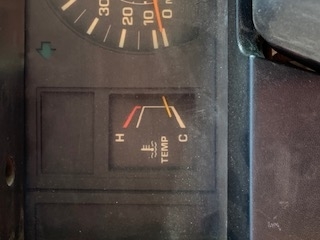
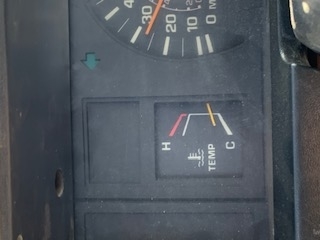
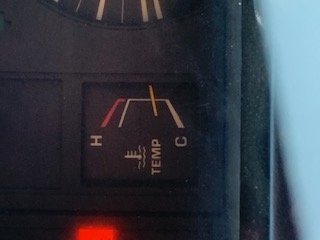
I found some of the problem. I removed my fan and the clutch and the engine temp gauge came up to the level it used to years ago (second picture). The fan clutch is part of the problem. The idle feels smoother now most of the time but still much too fast, as though the computer isn't receiving the signal saying the engine is up to operating temperature.

The Cold Start Injector Timing Sender ohms at about 31 when cold and 55 when hot so it's within spec. I started the truck cold with the CST unplugged and it started only slightly worse so I'm going to check the Cold Start injector tomorrow to see if it's firing when cold.

The engine temperature gauge stayed nearly 100% steady for all of my driving which included the freeway and street. After a couple of errands I headed home and only then the gauge start to creep up, so I turned on the heat until getting onto the freeway and it came down to the normal level again, still without the fan installed. Once I got off of the freeway the gauge took longer to drop and made it to as high as a third of the way to red. Once I parked I let the truck idle and the gauge rose slowly until about halfway to red and then I turned the engine off.

The following are different temperature readings I got as the engine cooled. By the time I finished the temp gauge was at about 1/4 and still dropping so it's safe to say the thermostat, sender to gauge and sender to ECU are all working just fine.

First picture - after idling for 9 minutes.
Second picture - as high as the gauge went before heading home.
Third picture - the gauge after driving on the freeway and letting the truck sit and idle for a few seconds after getting home.

Thermostat Housing: 215
Thermostat Neck: 192
Upper Radiator Hose at thermostat housing side: 201
Upper Radiator Hose at radiator side: 152
Valve Cover: 167
Exhaust Manifold: 268
Dec 22, 2020 at 4:14 PM
Avatar
STEVE W.
  • CERTIFIED EXPERT
  • 15,113 POSTS
Those temperatures look good. I would say the fan clutch is locked. On some a simple test it to spin the fan on a cold engine, it normally will go about 2-3 turns and stop. However that is on a fan that isn't cooling. You have the opposite issue, the fan isn't unlocking when it's cold and warming up. To test them you can usually run the engine for a few minutes until the coolant just starts to warm up. Shut the engine off and try to spin the fan now. It should spin 2-3 turns at least and be somewhat easy to move. If it won't spin at all the clutch is bad internally and not responding to the temperature change.
Dec 22, 2020 at 4:54 PM
Avatar
TRISCUIT
  • MEMBER
  • 76 POSTS
I wanted to post a follow-up for my initial question since I’d gone through so much (and received a lot of insight and help) to solve the really rough idle. Everything I did previously helped but didn’t cure the problem.

I ended up changing the fan clutch as well and the overcooling problem has stopped. Now the temp rises too high when I’m driving up hills and I’m nearly certain it’s the transmission - it’s on it’s way out and I’ll be swapping to a manual in the next few months.

I put in new OEM (Toyota) motor mounts yesterday and the truck is much smoother now. It feels like a normal idle. So, it was the mounts. When I took the old ones off they were both slightly compressed compared to the new ones and the rubber on one of the old ones had separated from the top. The key here is that in just looking at them while installed, they looked fine. So, lesson learned. I should’ve replaced them when I rebuilt the engine. Now I know and hope this helps someone else out in the future.

Mount part number is: 12361-65011.
Jun 5, 2021 at 12:09 PM
Avatar
STEVE W.
  • CERTIFIED EXPERT
  • 15,113 POSTS
Thanks for the update. Temperature rise on hills is common with an automatic as they have to work harder. To test your theory you could add an external trans cooler. I add them on virtually every automatic I own just to keep the heat out of the transmission. Usually just in series after the OE unit makes a difference. Plus the extra fluid is a good thing as well.
Jun 5, 2021 at 5:14 PM