Shakes at idle in drive

1999 PONTIAC GRAND AM
Avatar
IMGUMBY
  • MEMBER
  • 11 POSTS
Four cylinder front wheel drive automatic 124,000 miles.

My car is the 2.4L. When idling in drive with the A/C on and sitting still at a light, the whole car shakes. The steering wheel vibrates, the floor vibrates, and the dash shakes up and down. The engine is at 600 rpm under these conditions, and if raised slightly to around 750 or so, the shakes go away. If you put the transmission into neutral or reverse, the shake will also go away. If you turn the A/C off, the shake is still there, but much less so.

I checked the motor and transmission mounts, and found the front transmission mount cracked. I replaced it, but the shake is still there. I also noticed that when I drive into the driveway, which has a slight uphill slope, and park with the trans in drive the shake is there. Put it into neutral, or reverse, it is gone. When in park it is gone, until you take your foot off the brake pedal. At that point the car coasts back slightly until the transmission is holding the car, and the vibration comes back. This had me convinced that the front trans mount was the culprit, but as I said, replacing it made no difference.

The engine runs fine otherwise, and performs well under acceleration. There is no check engine light or codes. It is not a problem in the tires, wheel bearings, suspension, or any of that, because it only does it sitting still.

Is it possible that the rear transmission mount has gotten weak with age? It looks okay, and does not have any cracks that I can see, but is the only logical answer that I can come up with. If it was anything in the engine itself causing the shakes, why would it only do it in park once the transmission is holding the car? The driveway only has a slight incline, but it is enough for the car to roll back if put in neutral. Putting it in park does put slight pressure on the trans mount, but not much.

I would just change the rear mount, but it is $60.00, and does not look to be any fun to get to either. I am sure that this is not a normal condition, and that someone else has already had the same problem. Hopefully that person will be willing and able to help me. Thanks in advance.
May 7, 2010 at 7:00 PM
Advertisement
Avatar
MMPRINCE4000
  • CERTIFIED EXPERT
  • 8,548 POSTS
Mounts may look good, but put a large screwdriver between mount and frame, see how much play there is.

It is also possible your idle is too low. Idle specs should be on label in engine compartment.
May 8, 2010 at 8:50 AM
Avatar
IMGUMBY
  • MEMBER
  • 11 POSTS
Thanks, mmprince4000, for the response. The rear mount has exactly the same movement as the new one that I just installed on the front, so that does not appear to be the culprit. I pulled out the mount on the right side of the engine near the strut tower, since it is relatively easy to do, but it appears to be fine also. The mount on the left side is a lot more difficult to remove, so I gave it a close examination with a mirror and light, and it too looks in great shape. No signs of cracking or excessive movement.
As for the idle speed, that is controlled by the engine ECM, and is not adjustable. The IAC (idle air controller) on the throttle body which is used by the ECM to set idle speed is working fine, so that is not causing it either. Any other ideas? This thing is making me pull out the few remaining hairs on my head.
May 11, 2010 at 9:50 AM
Advertisement
Avatar
MMPRINCE4000
  • CERTIFIED EXPERT
  • 8,548 POSTS
If you rule out engine then you have to look at transmission.

Excessive hydraulic pressure will cause a shake, but a transmission shop can measure hydraulic pressure.
May 12, 2010 at 8:53 AM
Avatar
IMGUMBY
  • MEMBER
  • 11 POSTS
Excessive hydraulic pressure may cause the shake in drive, but that would not account for the shake in park when I take my foot off the brake pedal, and the car comes to rest against the parking pawl inside the transmission. (please refer to paragraph two of my original posting). The fact that the transmission shifts perfectly, and smoothly, and drives completely normal otherwise leads me to believe that hydraulic pressure is not causing this. Excessive pressure should cause harsh shifting, like a shift kit does. The clutch pack is applied in drive, even when you are stopped at a light. At that point, the torque converter slips, effectively disconnecting the engine from the transmission. As long as the engine is at idle, it really does not have much forward force on the vehicle. If the lock up clutch in the converter was staying applied at the stop light, the engine should stall, and this is not the case either. If the converter clutch was applying and releasing rapidly while at the light, that could cause the shaking, but then it should have converter clutch chatter when it engages while driving. Plus the converter clutch is not used when in park. Loosing still more hair.
May 12, 2010 at 2:53 PM
Avatar
MMPRINCE4000
  • CERTIFIED EXPERT
  • 8,548 POSTS
TCC is possible cause. if locked in park you would get some shaking, but if fully locked it would shut off when put into drive, so it may be the solenoid is partially locked.

Try disconnecting the electrical connector to it.
May 13, 2010 at 10:31 AM
Avatar
IMGUMBY
  • MEMBER
  • 11 POSTS


Disconnecting the connector to TCC made no difference at all. Still shaking.
May 13, 2010 at 11:31 AM
Avatar
MMPRINCE4000
  • CERTIFIED EXPERT
  • 8,548 POSTS
Then the TCC will have to be changed, although I would have a transmission shop or dealer test the solenoid.

They can isolate the circuit and see if it is working.
May 14, 2010 at 7:53 AM
Avatar
IMGUMBY
  • MEMBER
  • 11 POSTS
I am not sure that I understand. I thought that disconnecting the TCC connector eliminated the TCC as the cause of the shaking, because it made no difference. If it would have been the cause, the shake would have gone away. Even if the TCC was locked in park, how would this cause shaking?
The TCC eliminates the fluid coupling between the engine and transmission
by engaging a clutch inside the torque converter, making a direct mechanical link between the engine and transmission. It should not matter if the TCC clutch is engaged when in park, since all the other clutches are disengaged. In effect, the transmission is in neutral, except that the output shaft is not allowed to rotate. The car does not shake in neutral, and only shakes in park once the transmission is holding the car.
If the TCC was engaging and disengaging at a rapid rate, why would it not shake when the car is rolling? It only shakes while sitting still. If the car is moving, even at a very slow rate, the shake is not there.
May 19, 2010 at 12:24 PM
Avatar
MMPRINCE4000
  • CERTIFIED EXPERT
  • 8,548 POSTS
TCC is a solenoid, so even though power is off, solenoid could be stuck "on".
Solenoid shaft could be binding in "on" position.
May 20, 2010 at 8:35 AM
Avatar
IMGUMBY
  • MEMBER
  • 11 POSTS
I got it solved. Just in case anyone else has this problem. Here is what I did: I replaced the rear motor mount, even though it looked fine. I found that the local auto parts store has an insert for only $17.00 rather than the whole mount for over $60.00. Not exactly a fun do it yourself project, but it can be done. Replacing the insert was the easy part, getting the mount out of the car was the hard part. This still did not fix the problem though. It still had the shakes in drive while sitting still, and in park when the transmission was holding the car.

I could see that the inner part of the mount was very close to hitting the pad inside the mount, and that a very small amount of pressure on the mount would cause it to contact. This would transfer the natural vibrations of the engine to the chassis, like a drumstick hitting a drum. I unbolted the right side motor mount, and inserted two extra thick flat washers between the studs and mount. (you could use two or three standard half inch flat washers on each stud). This effectively raised the engine just high enough so that it would no longer contact the pad inside the mount when the transmission was in drive and the car was sitting still, or when in park holding the car. The vibration is completely gone!
Jun 5, 2010 at 12:34 PM
Avatar
RKOS
  • MEMBER
  • 1 POST
Wow! I have been looking for someone that had an answer to this same problem for months! I hope you are still checking this thread.

I am not exactly car savvy but would love to fix this problem I am having with my Grand am, I was afraid the transmission was going out. Could this be done by myself out in my drive way? Do I need any special equipment? Could you go into a little more detail on what exactly you did?

Like I said I hope I hear something back from you. Thanks in advance.
Jun 5, 2010 at 4:14 PM
Avatar
MMPRINCE4000
  • CERTIFIED EXPERT
  • 8,548 POSTS
Glad you solved the problem. Mounts can look okay, but still collapse.
Jun 6, 2010 at 7:06 AM
Avatar
IMGUMBY
  • MEMBER
  • 11 POSTS
This is a very easy fix! Yes, it can be done in your driveway, by yourself. That is where I did mine. Just to clarify things, the problem is not with the front or rear motor mounts. It is with the passenger's side motor mount.
The only tools needed are a floor jack, a block of wood, a ratchet, socket, and extension. Place the floor jack with the block of wood on top of it under the passenger side of engine, and raise the jack until it supports the engine. Do not get too carried away here. You do not want to raise the car with the jack, just support the engine. Next, remove the bolts and nuts from the right side motor mount. (the one near the strut tower on the passenger's side). Then place 1/2" flat washers that are 1/8" to 3/32" thick on the studs, and reinstall the mount bracket. This raises the engine just enough so that when it idles in drive, the torque does not make the rear mount contact the pad inside of it. It is much more difficult to explain than it is to do it. The whole procedure took less than fifteen minutes. I no longer have the car, or I would take a picture. If you still have questions, reply to this thread, and include a digital picture of the right side motor mount. I can take the picture and insert an arrow to indicate where I put the washers.
Hope this helps. imgumby!
Jun 7, 2010 at 1:58 PM
Avatar
GTZ411
  • MEMBER
  • 9 POSTS
Is anyone still checking this thread? I have been baffled by this issue for two years and is awesome to see this answer. woohoo
Jun 9, 2011 at 1:29 AM
Avatar
IMGUMBY
  • MEMBER
  • 11 POSTS
I do not monitor the thread anymore, but I got an email that someone (you) had entered a response. Let me know if the washer trick fixes your problem too. Sure beats replacing the motor mounts. If you have any problems understanding exactly what I did, just reply to this thread, and I will see if I can clear things up for you. imgumby!
Jun 9, 2011 at 4:18 PM
Avatar
GTZ411
  • MEMBER
  • 9 POSTS
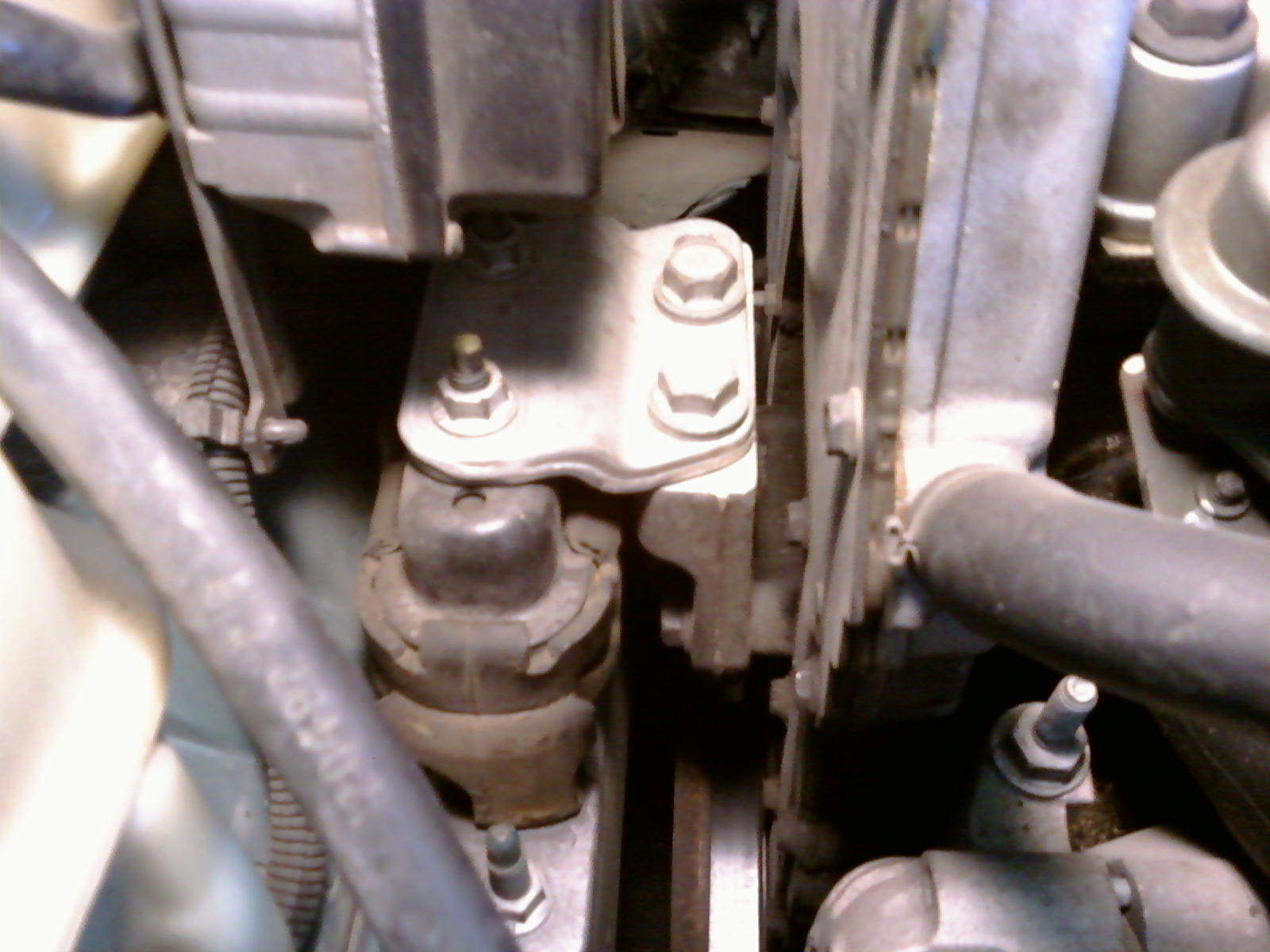
Glad that you responded. I could not have written the description of this issue better. So in trying to discern where the washers should go; starting from the frame, there is a metal bracket bolted there and then the vulcanized rubber bushing. Then there is the another metal bracket sitting on top with two bolts and then it connects to another bracket attached to the engine near the cover with two bolts fastening that. So, where in that scheme do I insert the washers? hopefully that is descriptive enough and here is a picture just to make sure we are talking about the same mount. I am just trying to be perfectly clear so that I just do not have washers in random places. Thanks.
Jun 9, 2011 at 5:31 PM
Avatar
IMGUMBY
  • MEMBER
  • 11 POSTS
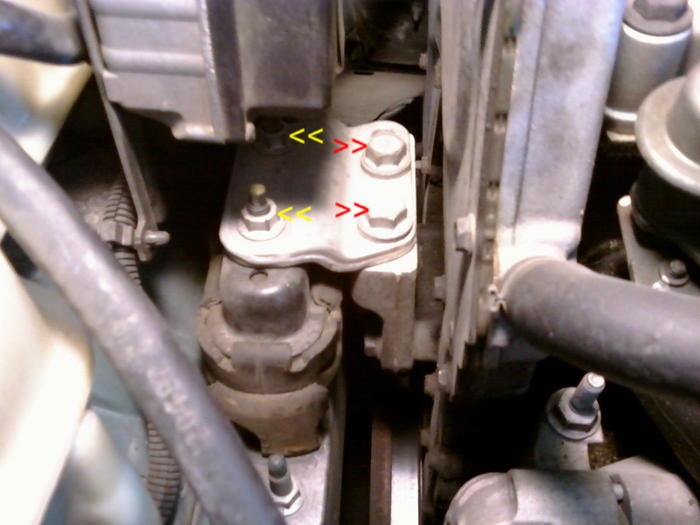
A picture is indeed worth a thousand words! Thanks for including it. I have added arrows to a copy of your picture to make it easier. After jacking the engine, remove the two bolts indicated by the red arrows. Then remove the two nuts on the other side of this bracket indicated by the yellow arrows. One is completely in the shadow, and the other is mostly exposed to the light in the picture. Lift off the bracket, and place the washers on the studs sticking up from the vulcanized rubber bushing. (where the yellow arrow nuts were removed) Reinstall the bracket and the bolts indicated by the red arrows. Lower the engine making sure that the studs line up with the holes in the bracket. Reinstall the nuts indicated by the yellow arrows. Start the engine and verify the repair is complete. The washers should be half an inch flat washers about 1/8 to 3/16 inch thick. Depending on the thickness of the washers, you may need to put two on each stud to eliminate the noise.
Note: If you were to put washers under the bolts with the red arrows, it would make the problem worse by lowering the engine instead of raising it slightly. imgumby!
Jun 9, 2011 at 10:51 PM
Avatar
GTZ411
  • MEMBER
  • 9 POSTS
Cool, I understand exactly. I will do this in the next couple of days and hopefully make my ride less annoying. haha. Just wondering, why did you get rid of your Grand Am? How long did you have your automobile with the repair you made that fixed the vibration issue? Just seeing if it may be a recurring issue. Would you suggest just making the 'fix' without purchasing the insert? Last time I had my car at a mechanic for transmission issues, he said all mounts were good. I was thinking that this might be an issue over looked by mechanics. Anyways, thanks again.
Jun 10, 2011 at 12:45 AM
Avatar
GTZ411
  • MEMBER
  • 9 POSTS
Oh yea, do the bolts require locktight or a specific torque setting?
Jun 10, 2011 at 12:46 AM
Avatar
GTZ411
  • MEMBER
  • 9 POSTS
So after more examining, the idea is to keep that top bracket from making a metal to rubber contact? Would that be correct? At first I was thinking it was the rubber to the metal on the bottom half of the bushing. Sorry for all of the inquiry.
Jun 10, 2011 at 12:57 AM
Avatar
GTZ411
  • MEMBER
  • 9 POSTS
Another one, when you jacked up the engine did you put your block under the edge of the oil pan to lift?
Jun 10, 2011 at 1:23 AM
Avatar
IMGUMBY
  • MEMBER
  • 11 POSTS
If the mounts are in good shape, just do the fix. The bolts did not have Locktite on them, but you could use it if it makes you feel safer. I would use the blue rather than the red. The red can be very hard to remove in the future. I am sure that somewhere there is a torque spec for every nut, bolt, and screw used in the car, but I do not have it available to me. I just put it about as tight as it was when I took it apart.
The top bracket does not contact the rubber. It sits on the metal inverted cup with the studs that is the top of the motor mount itself. Just follow the instructions step - by - step, and you cannot go wrong. It really is very simple.

1. Place the floor jack with the block of wood on top of it under the passenger side of the engine near the edge of the oil pan. Raise the jack until it supports the engine. Do nott get too carried away here. You do not want to raise the car with the jack, just support the engine.

2. After jacking the engine, remove the two bolts indicated by the red arrows.

3. Then remove the two nuts on the other side of this bracket indicated by the yellow arrows. One is completely in the shadow, and the other is mostly exposed to the light in the picture.

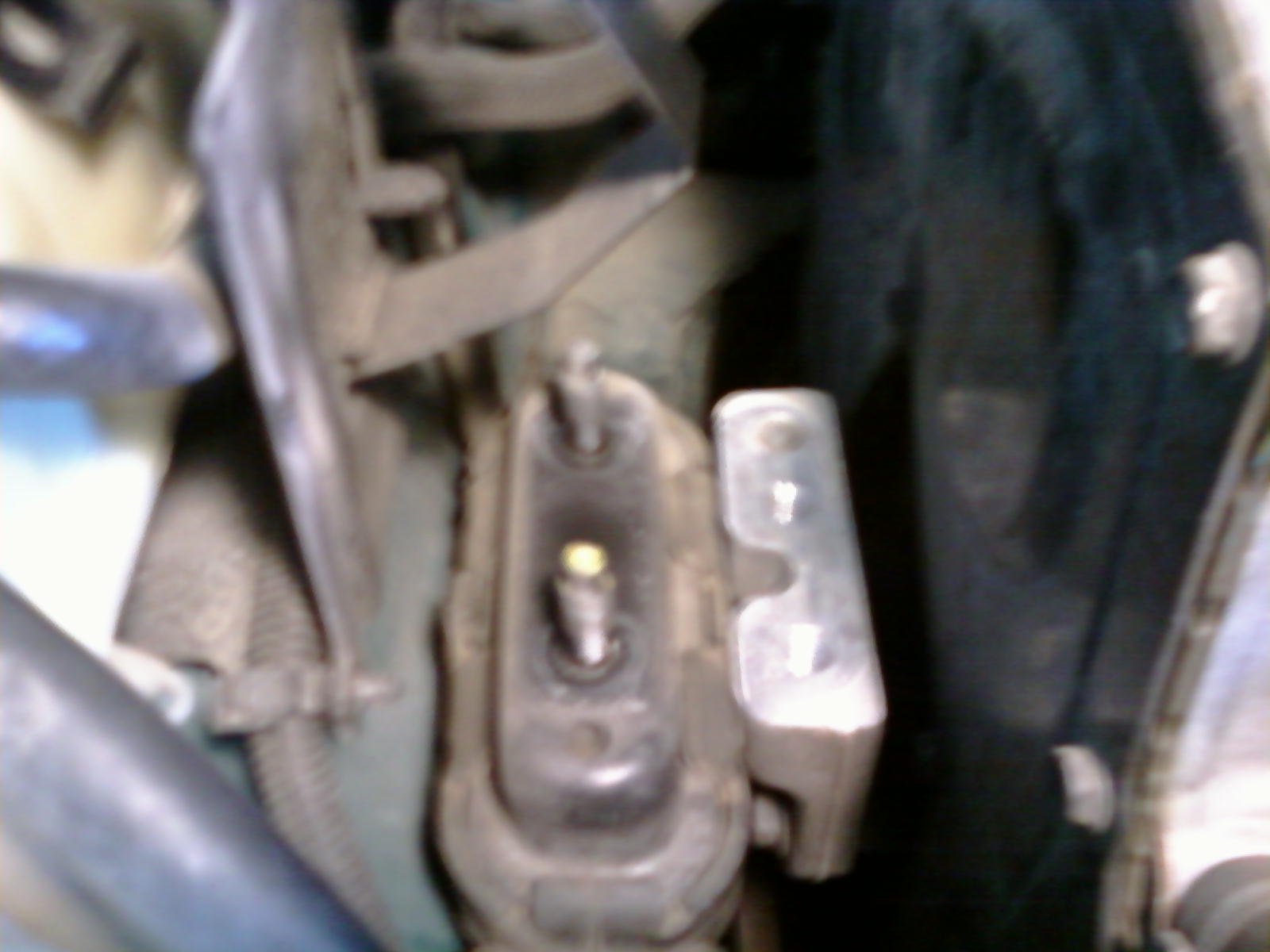
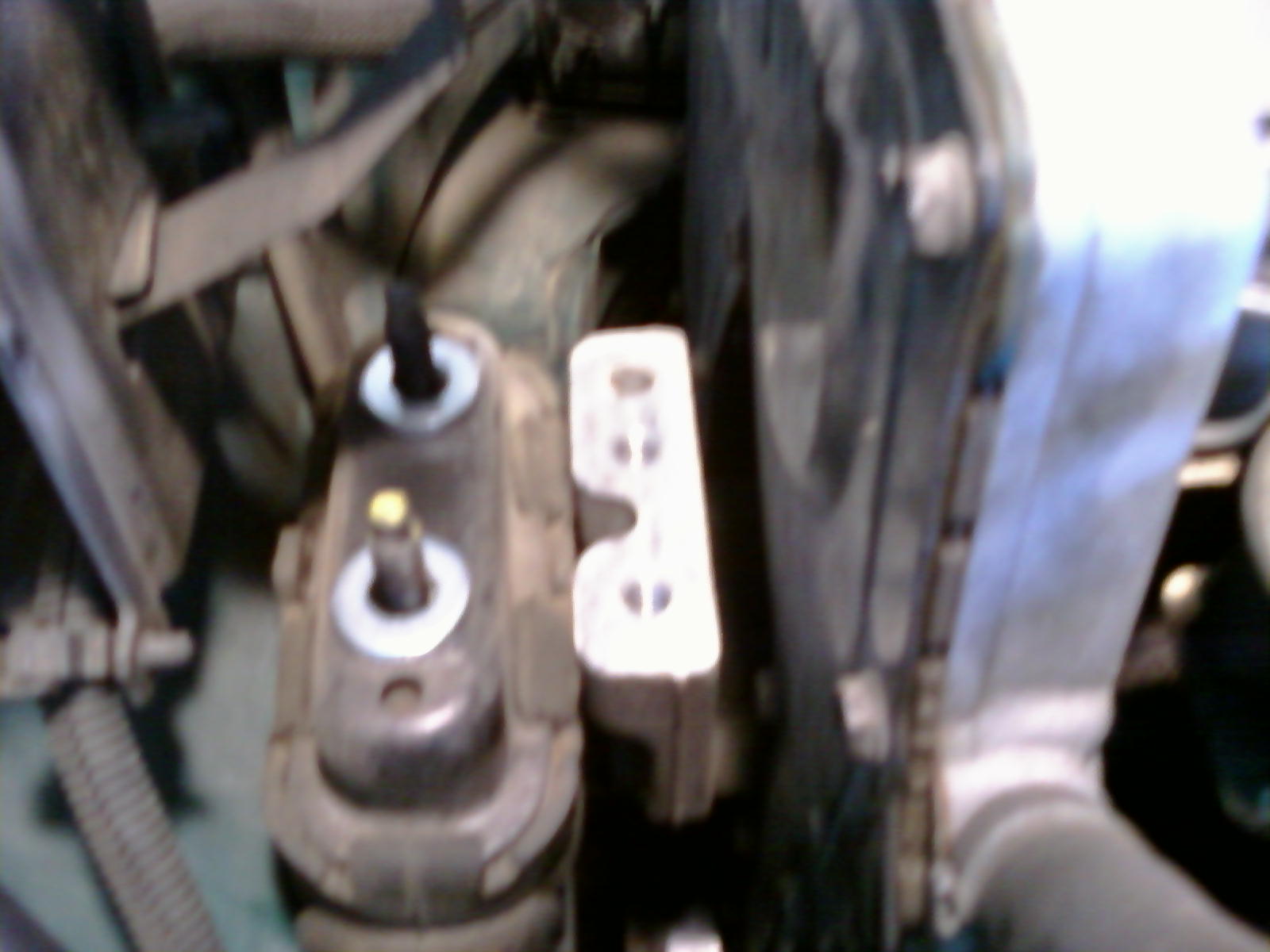
4. Lift off the bracket, and place the washers on the studs sticking up from the vulcanized rubber bushing. (where the yellow arrow nuts were removed)

5. Reinstall the bracket and the bolts indicated by the red arrows. Tighten the bolts.

6. Lower the engine making sure that the studs line up with the holes in the bracket.

7. Reinstall the nuts indicated by the yellow arrows, and tighten them.

8. Remove the floor jack and block of wood from under the car.

9. Start the engine and verify the repair is complete.

The washers should be half an inch flat washers about 1/8 to 3/16 inch thick. Depending on the thickness of the washers, you may need to put two or three on each stud to eliminate the noise.

If you take a picture of the mount after the bracket has been removed and post it to this article, it may make it easier for the next guy to understand exactly where to put the washers.
imgumby
Jun 10, 2011 at 3:47 PM
Avatar
GTZ411
  • MEMBER
  • 9 POSTS
Alright, new pictures.
Jun 11, 2011 at 10:55 PM
Avatar
GTZ411
  • MEMBER
  • 9 POSTS
Another where the washers go.
Jun 11, 2011 at 10:56 PM
Avatar
GTZ411
  • MEMBER
  • 9 POSTS
Okay, after doing the job, which only took like fifteen minutes like you said, the vibration still exist and hard to tell if it is better. I just put one half an inch flat washer because when I put two I did not feel comfortable with the amount of threads for the bolt to catch. I also did assume you were talking about metal washers and not rubber. You may have mentioned that but that is where I stand as of now. Let me know if you have anymore feedback. Thanks
Jun 11, 2011 at 11:20 PM
Avatar
IMGUMBY
  • MEMBER
  • 11 POSTS
I would try two, three, or even four washers on each stud, just to see if we are on the right track. Do this in progressive steps, one more pair at a time. What this fix does is to compensate for the natural age compression of the rubber in the motor mount. Years of having the weight of the engine sitting on the rubber causes it to eventually compress. Do not worry about the amount of threads for the nuts to engage for now. For example, if you find that three washers on each stud cures the vibration, you know that you have pinpointed the problem. At that point, you have basically three options.

1. Leave things as they are, and do not worry about the thread engagement. Locktite the nuts in place, and run it. The engine weight is pushing down on the mounts, not pulling up on it, so the nuts are not doing very much work anyway. (unless you roll the car upside down, and then you have bigger things to worry about than the engine falling out.)
2. Replace that motor mount. However, this might not cure the problem, since the driver's side has probably compressed with age also. That one does not look to be very easy to replace. At that point, you could still go with the washers, and you might need less than before, since the new mount is not compressed.
3. You may be able to unbolt the mount from the body, and place the washers under the mount rather than on top of it. I have not removed that mount, so I am not sure how it is fastened to the body, or if the washers would work under it. It would probably be better to use a piece of flatstock steel of the right size and thickness instead of washers under the mount. The washers may concentrate all of the weight on too small of an area on the body under the mount, and eventually cause it to bend or crack. Remember the body subframe is just sheetmetal bent and welded together to give it structural strength. This is not a problem on the top of the mount, since the bracket is made from much thicker material.

Let me know what you find, and I will see if I can come up with any other alternatives.
imgumby
Jun 12, 2011 at 6:22 PM
Avatar
ROUGHNECKRX
  • MEMBER
  • 1 POST
I went through this exercise of replacing all kinds of things trying to figure it out how to stop this torture of a vibration, until i paid a well know auto repair shop to do a analysis. They told me it was the front and rear transmounts. Cost to replace, about $500.00. So I bought the parts and went about find a place to do the work for a reasonable price. This guy that could barely speak English, expressed to me, it may be the mounts, but probably the passenger motor mount. I was reluctant to listen to him, but had him replace the passenger mount mount, and the rear transmission mount first. Well, it worked. He actually said, he felt it was just the passenger side motor mount and not the transmount at all. So I cant say what one it was, but I would suggest to replace the passenger side motor mount first. Oddly, it is the easiest to replace.
Dec 14, 2019 at 11:44 AM