Oil pump replacement

2004 FORD EXPEDITION
175,000 MILES • 4.6L • V8 • 2WD • AUTOMATIC
Avatar
DARRELL BISHOP
  • MEMBER
  • 16 POSTS
Need to know if oil pump is in oil pan or above oil pan at front of engine? What steps do I take to replace oil pump? It is a "2004 Triton V8 4.6 liter" on a Ford Expedition XLT.
Jun 19, 2019 at 3:12 PM
Advertisement
Avatar
JACOBANDNICKOLAS
  • CERTIFIED EXPERT
  • 110,175 POSTS
Welcome to 2CarPros.

The actual pump is on the front of the engine but the pickup tube runs to the rear in the oil pan. So, basically, you need to remove the timing chains, which is basically the entire front of the engine, and the oil pan. The pump is behind the crankshaft timing gear. That's why this all needs done.

_______________________________________

Here are the actual directions for the pump. The attached pictures correlate with the directions. I will also add timing chain removal and replacement after this so you have it.

_______________________________________

PROCEDURES
Oil Pump

Removal
1. Remove the timing chains.
2. Remove the oil pan.


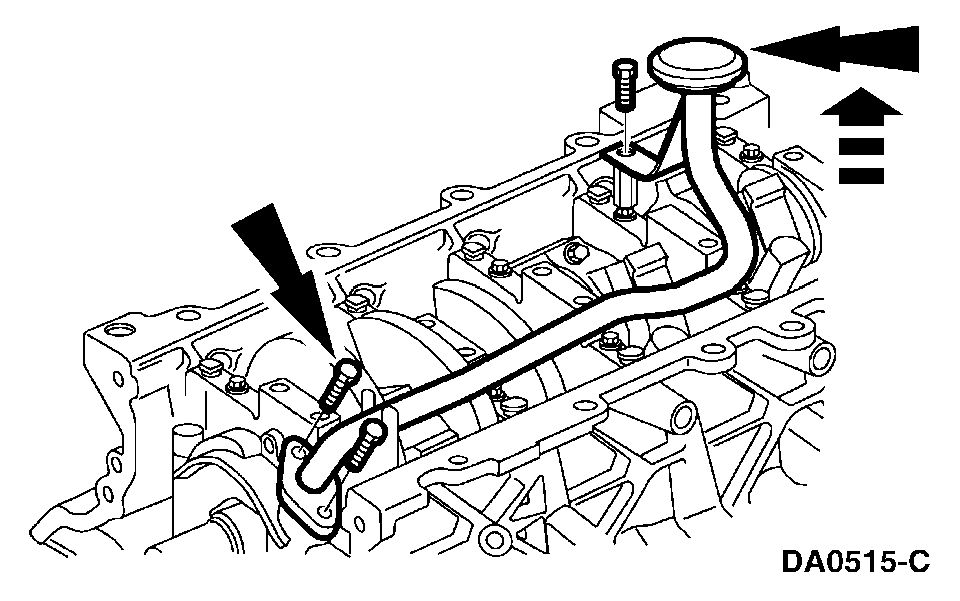
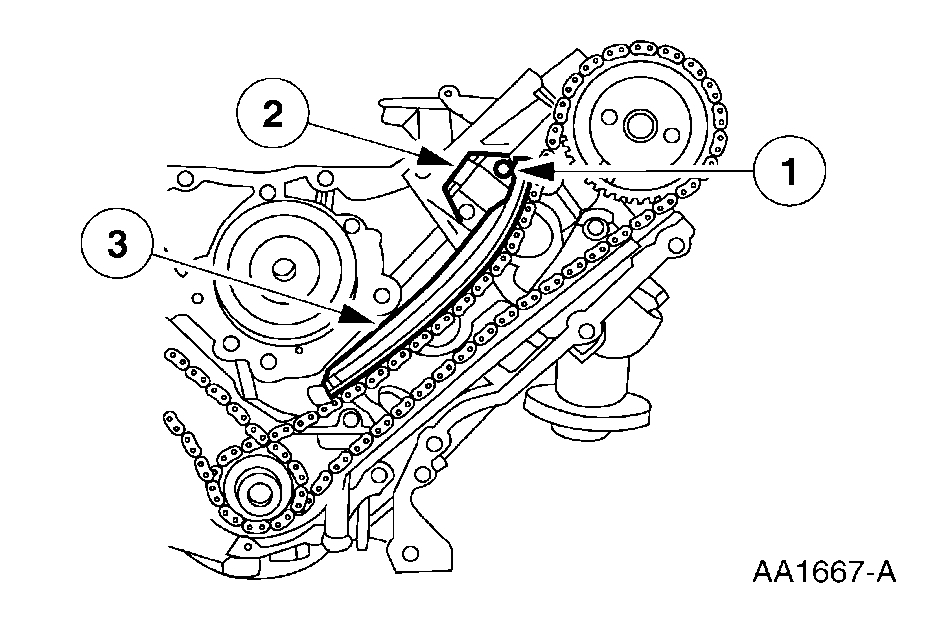
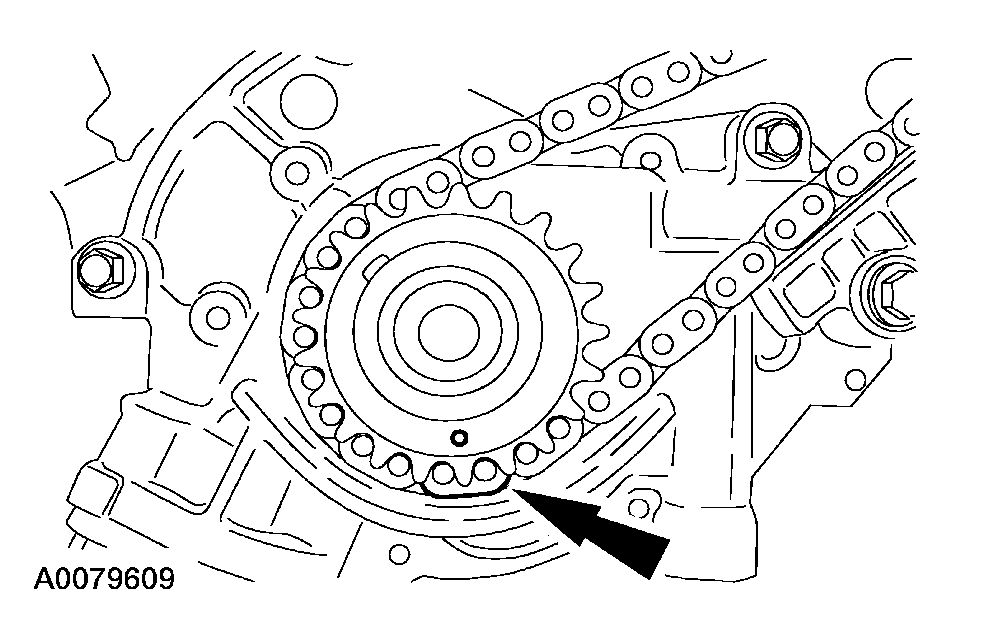
pic 1


3. Remove the three bolts and the oil pump screen and pickup tube.


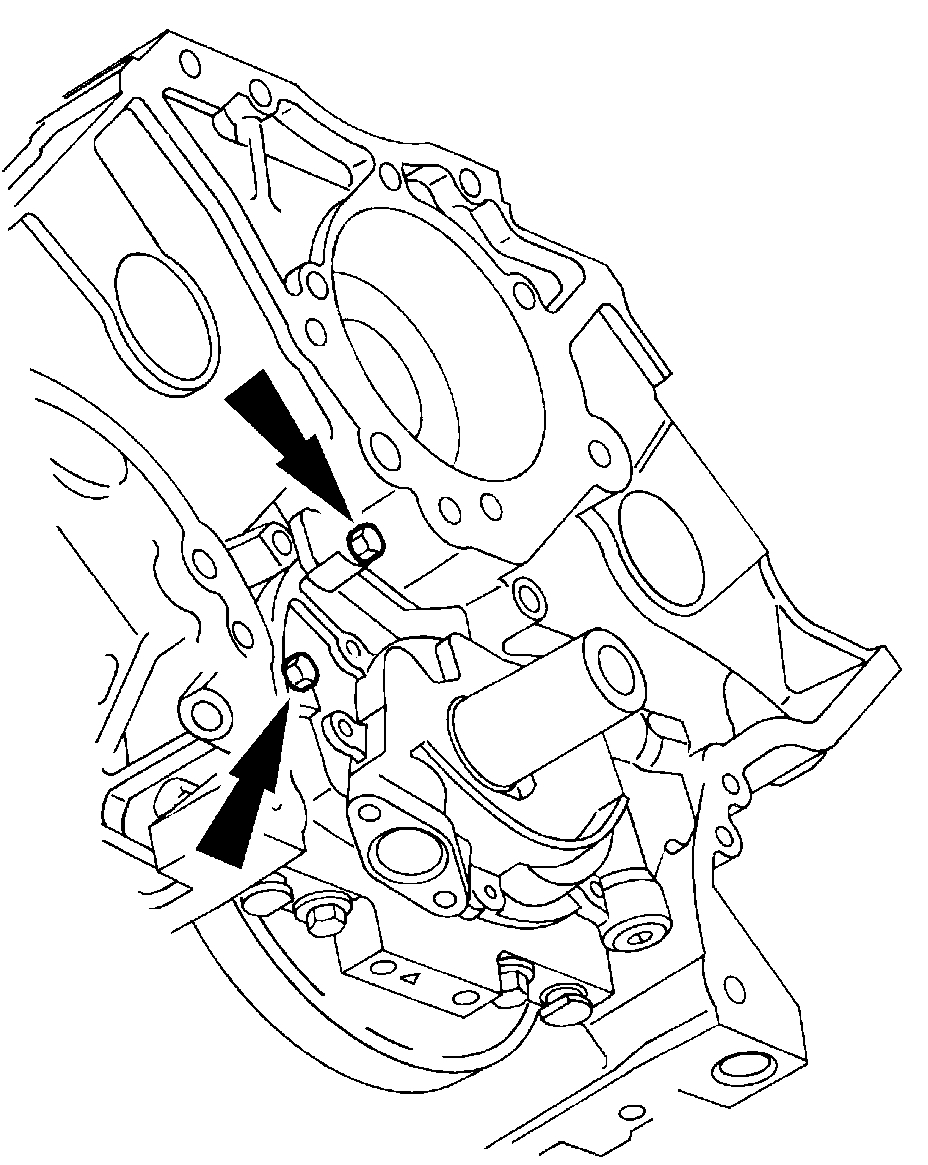
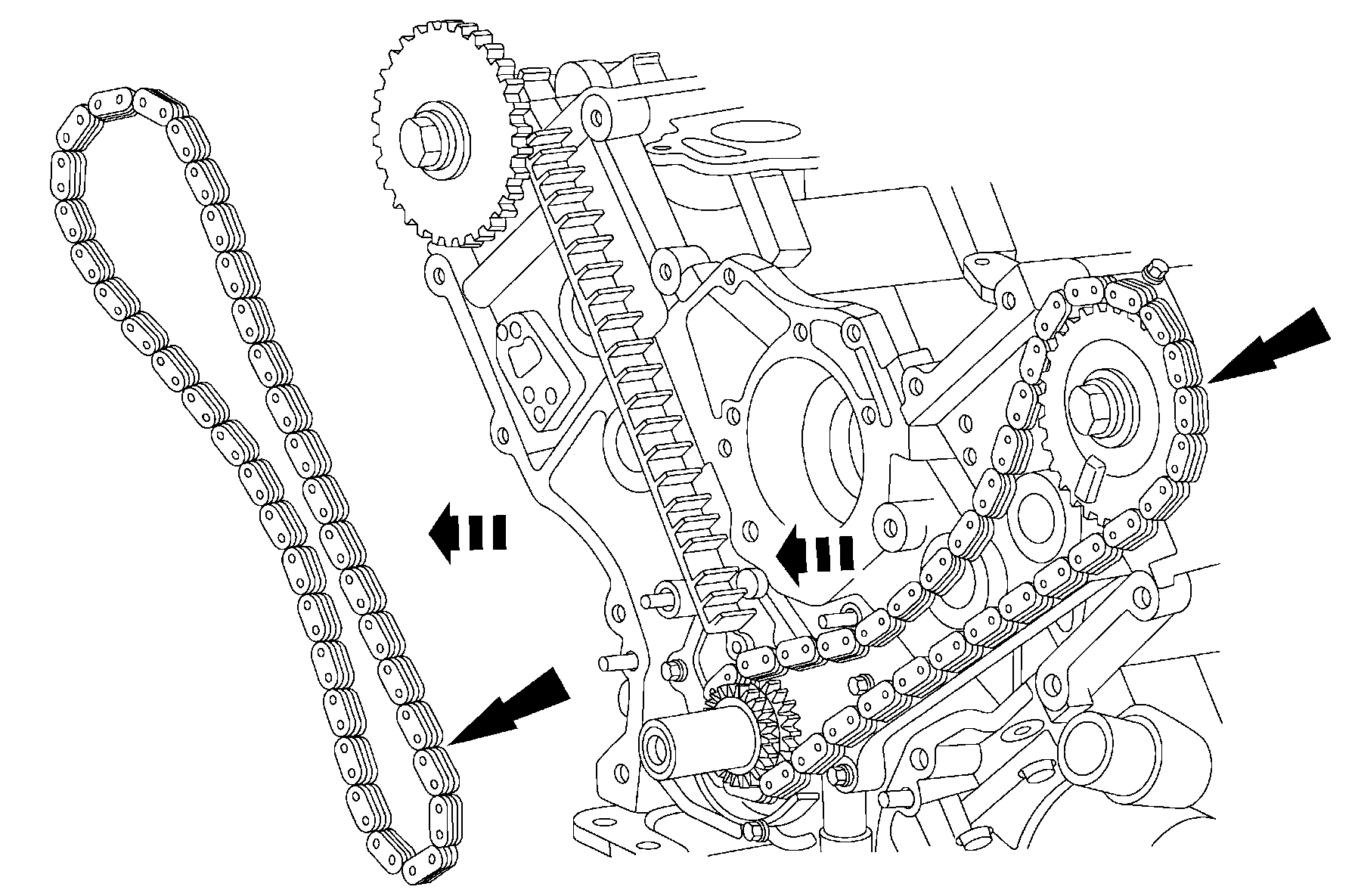
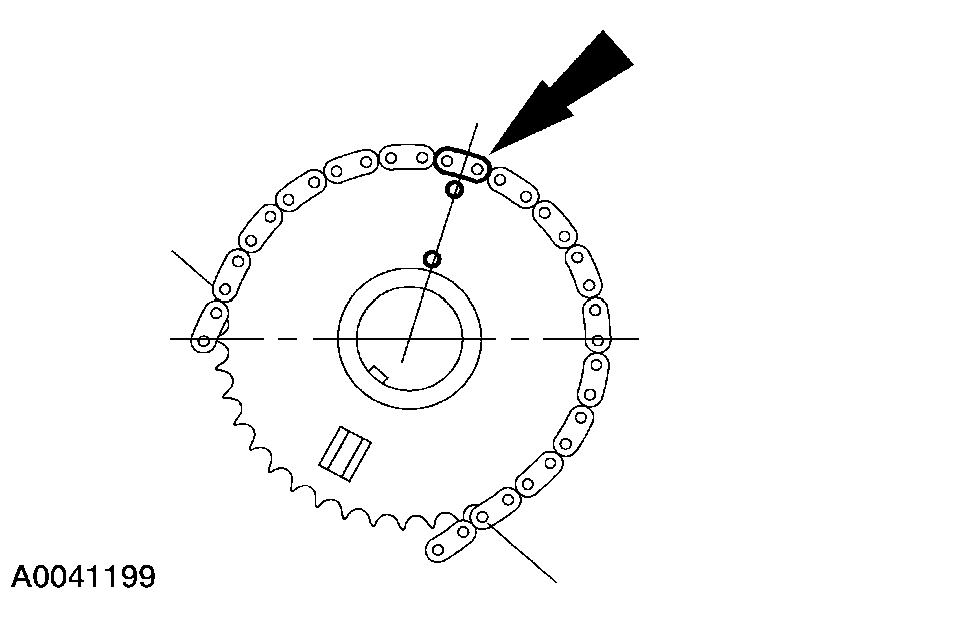
pic 2


4. Remove the oil pump.
^ Remove the three bolts.
^ Remove the oil pump.


Installation

1. NOTE: Lubricate the new O-ring seal with clean engine oil.

Clean and inspect the mating surfaces and install a new O-ring seal.


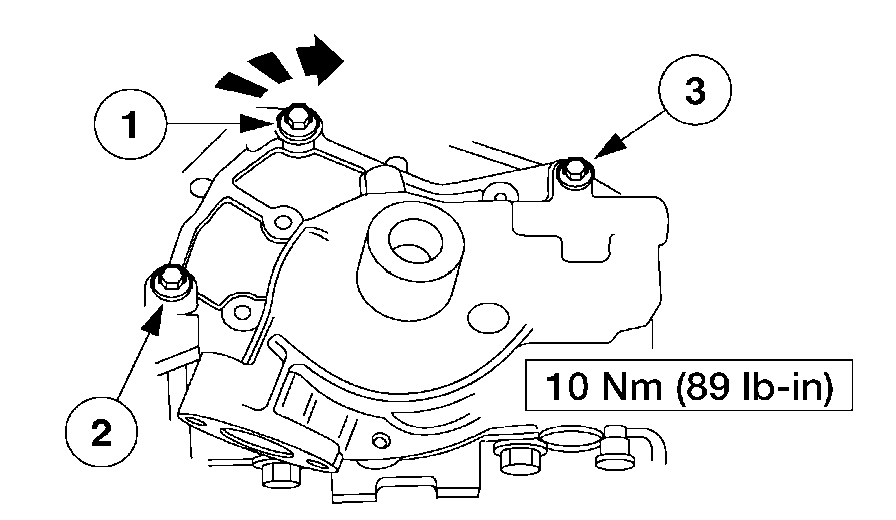
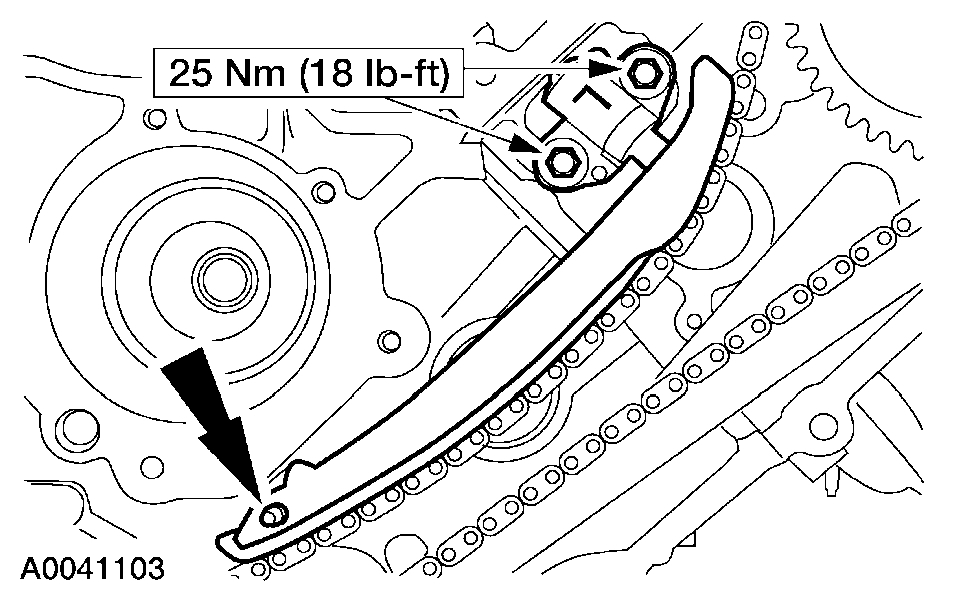
pic 3


2. Install the oil pump and loosely install the bolts.
^ Position the oil pump.
^ Loosely install the bolts.
^ Tighten the bolts in the sequence shown.


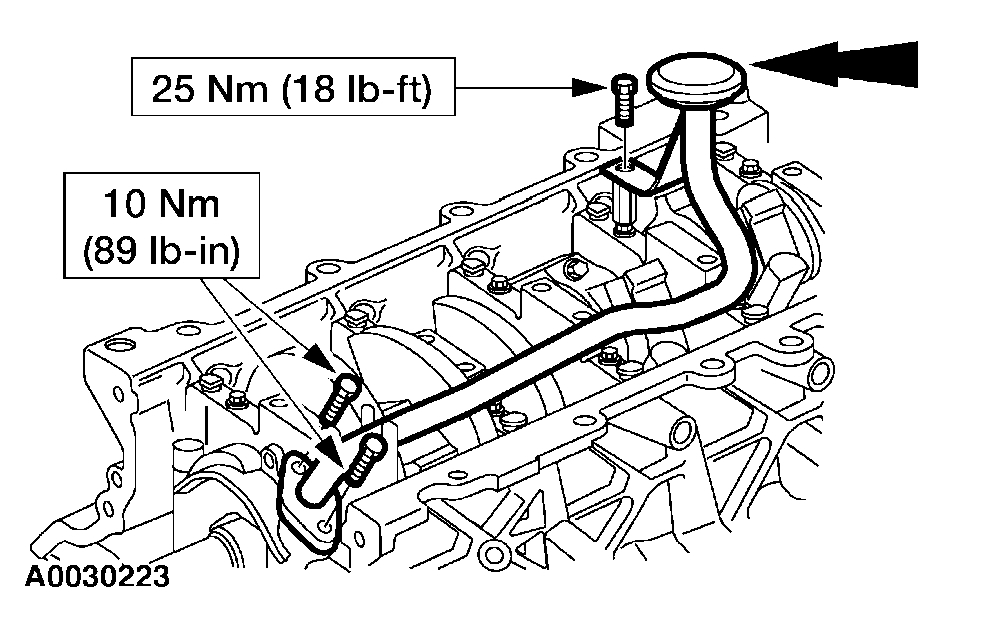
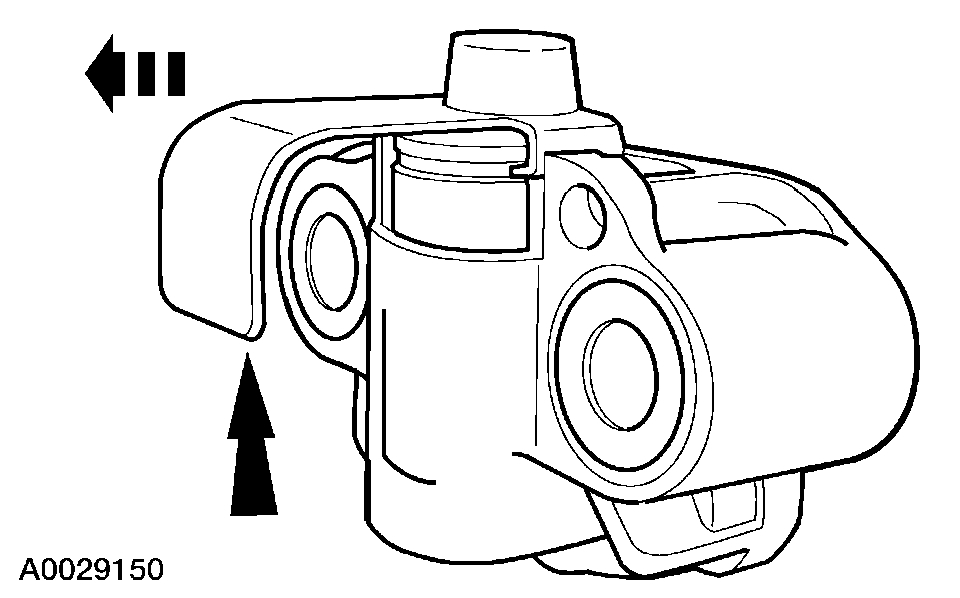
pic 4


3. CAUTION: Make sure the O-ring is in place and not damaged. A missing or damaged O-ring can cause foam in the lubrication system, low oil pressure and severe engine damage.

NOTE: Install a new O-ring and lubricate with clean engine oil.

Position the oil pump screen and pickup tube and install the bolts.
4. Install the timing chains.

5. CAUTION: The oil pump must be primed prior to starting the engine.

Install the oil pan.

___________________________________

Timing chain information. Please remember this is an interference engine and you must have the timing correct when you reinstall the chains or internal damage will occur to the engine.

__________________________________

PROCEDURES
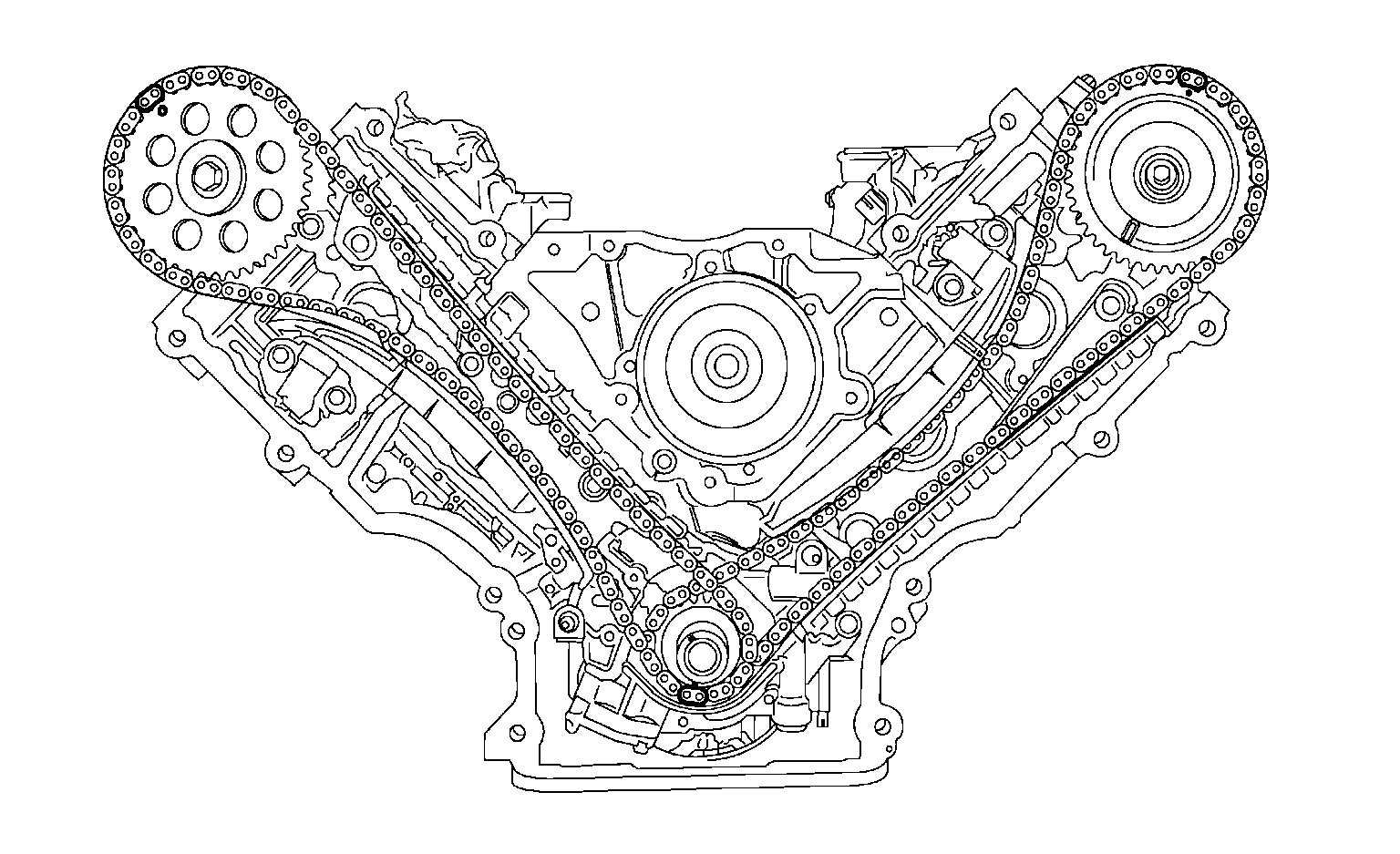
Timing Drive Components-Romeo Engine (4.6L)

pic 5


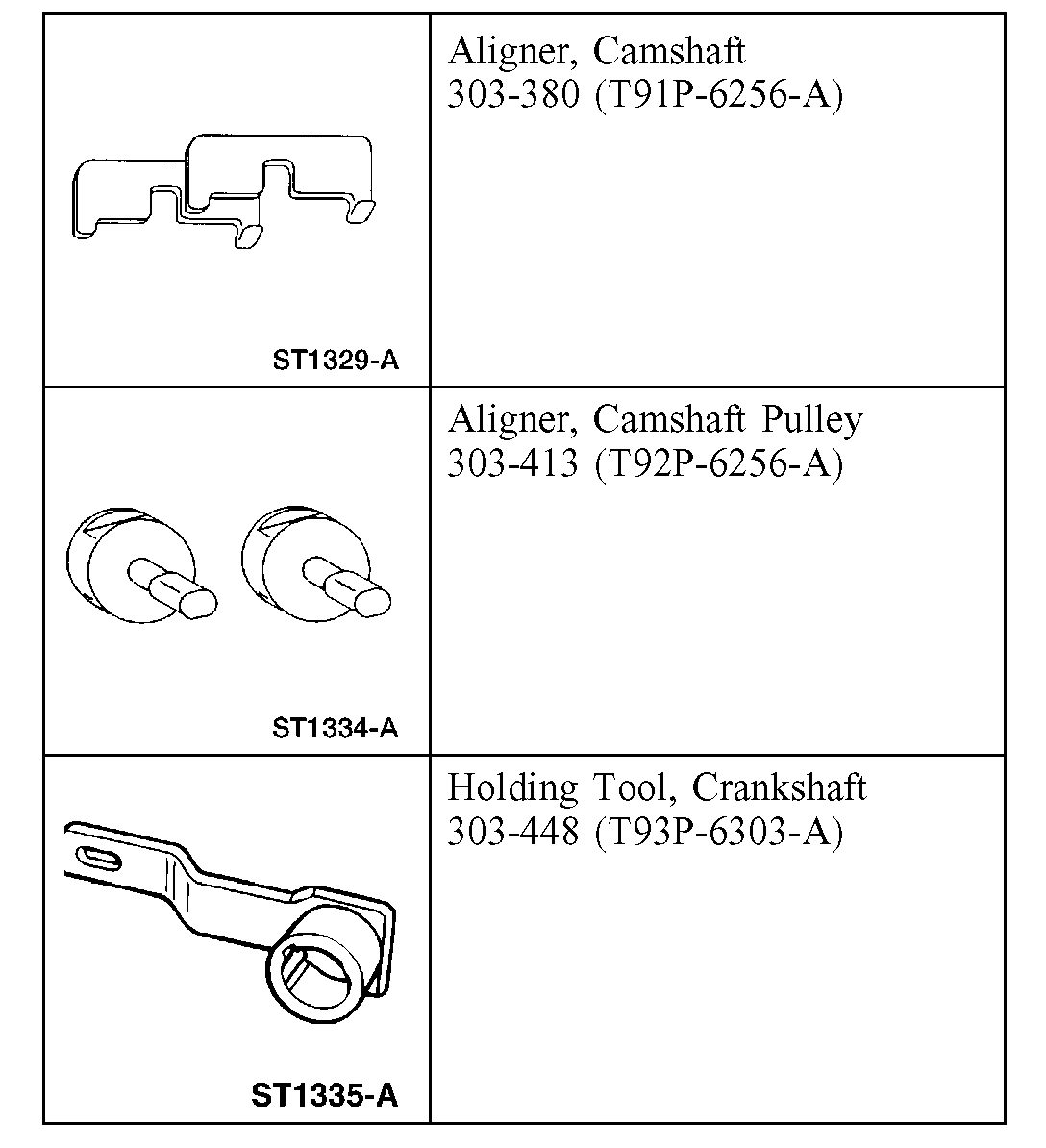
Special Tool(s)


pic 6


Material

Removal

CAUTION: Since the engine is not free-wheeling, timing procedures must be followed exactly or piston and valve damage can occur.

1. Remove the engine front cover.


pic 7


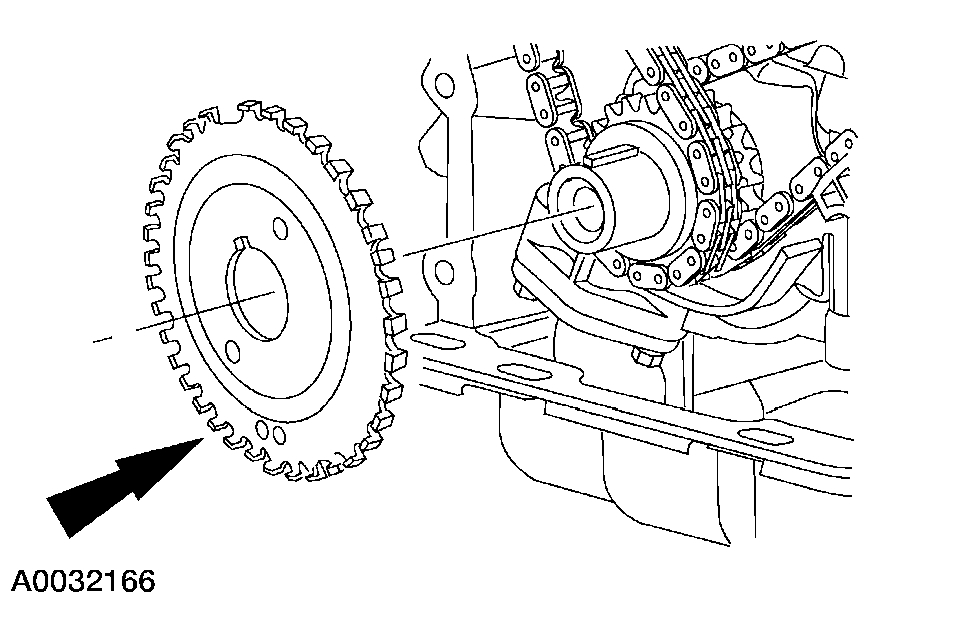
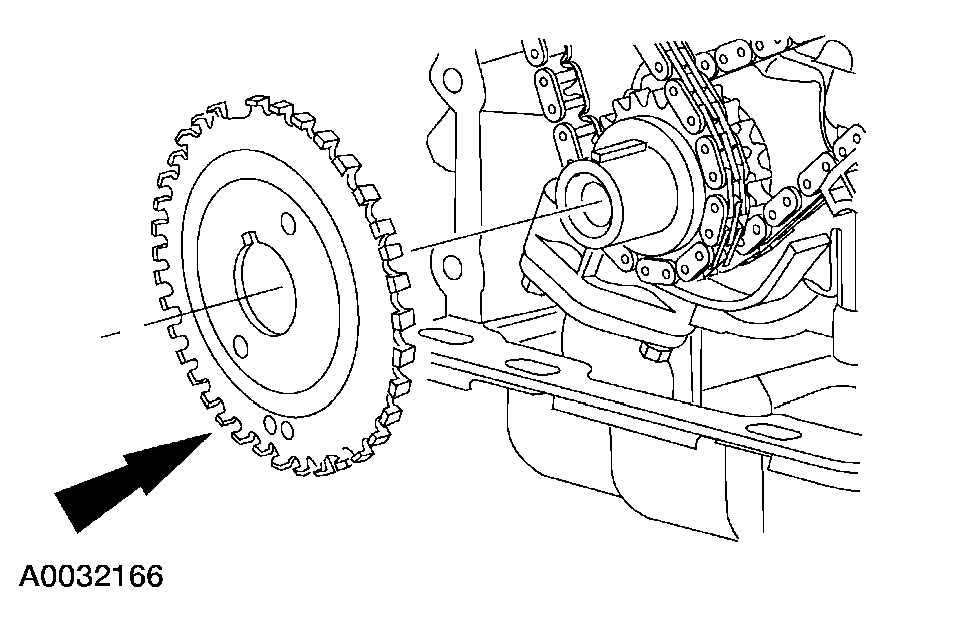
2. Remove the crankshaft sensor ring from the crankshaft.


pic 8


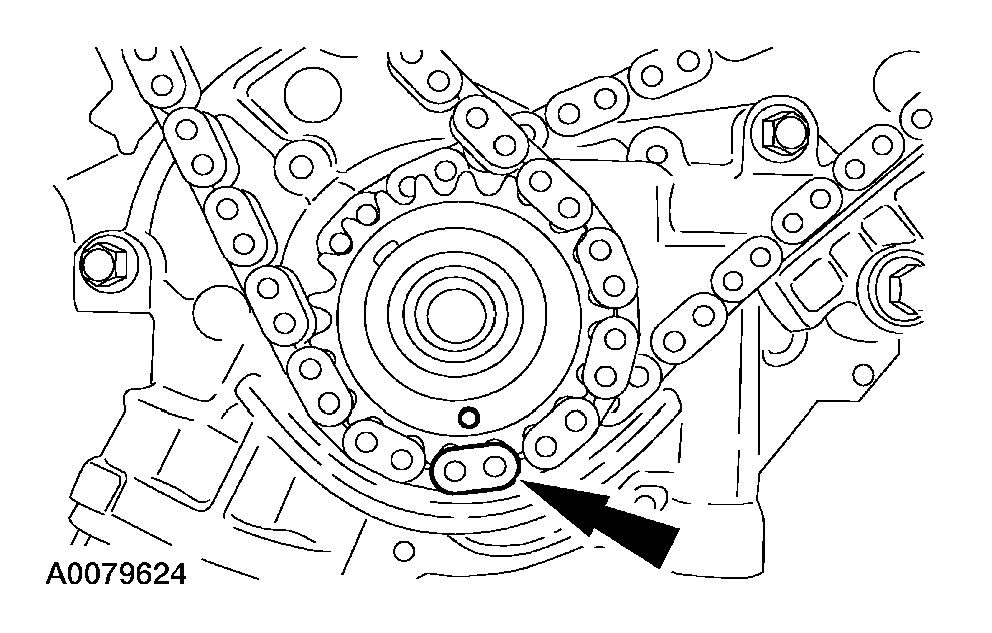
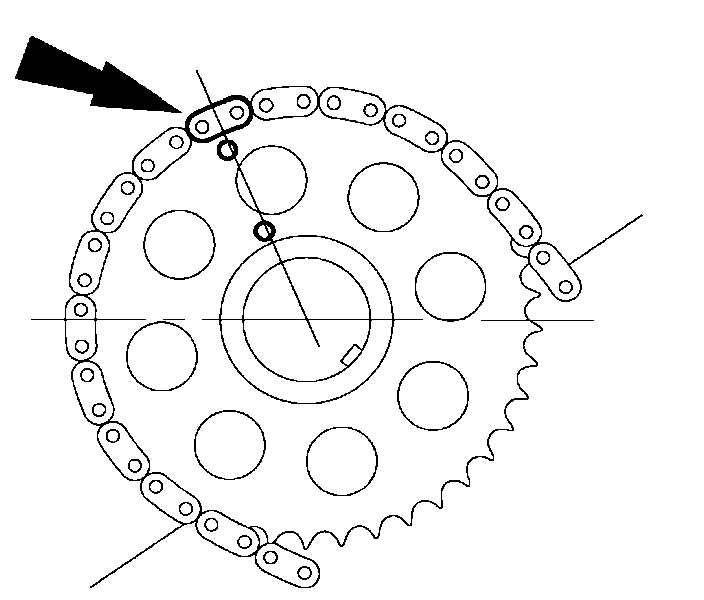
3. Rotate the crankshaft until the timing mark on the RH camshaft sprocket is approximately at the 11 o'clock position and the timing mark on the LH camshaft sprocket is approximately at the 12 o'clock position.


pic 9


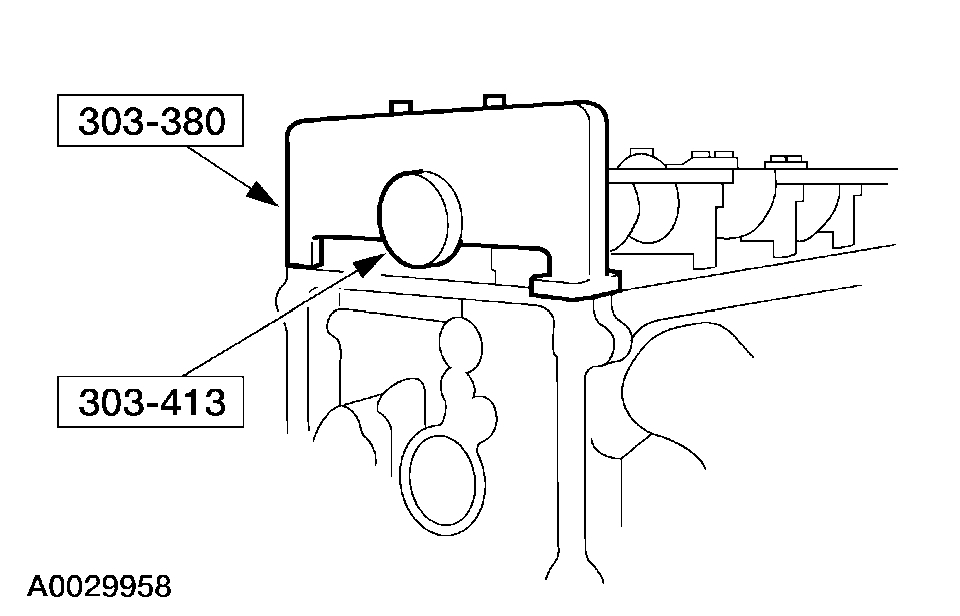
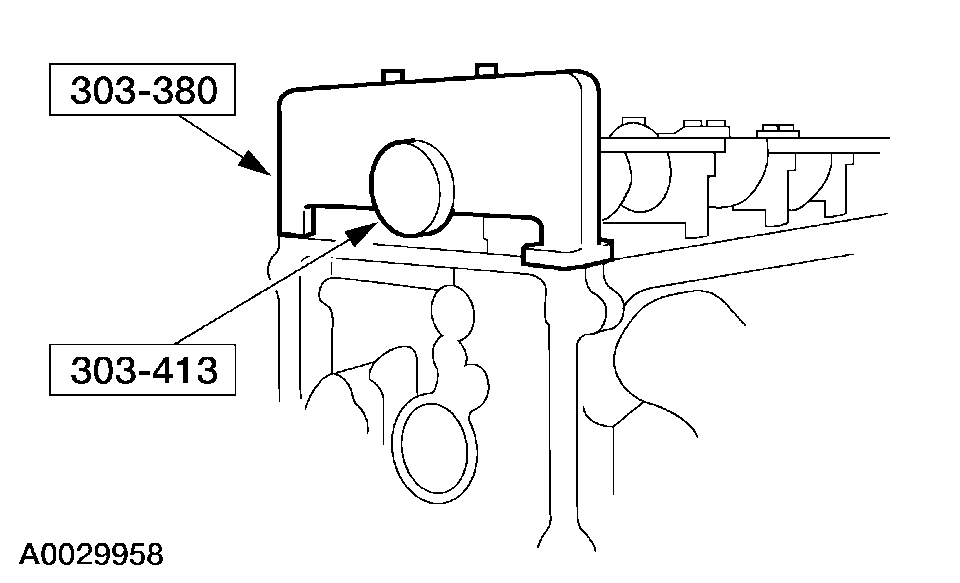
4. Install the special tools on the camshaft.


pic 10


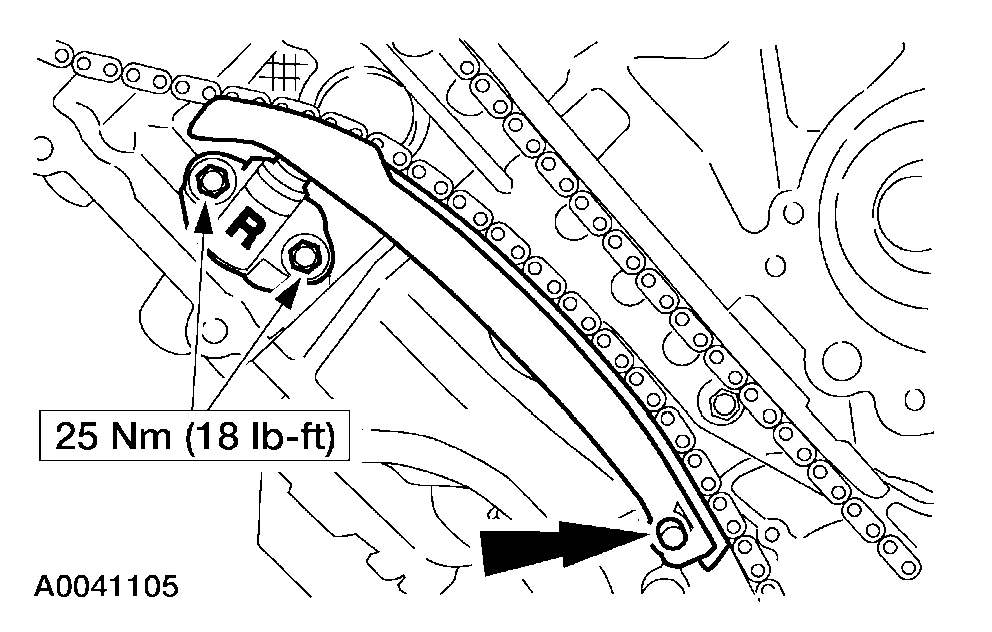
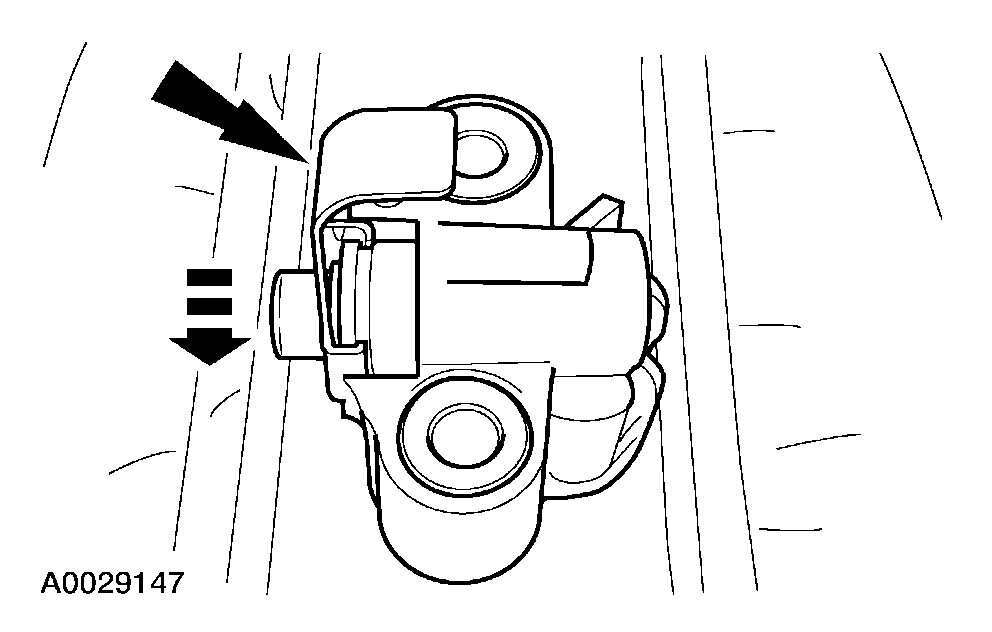
5. Remove the timing chain tensioning system from both timing chains.
1 Remove the bolts.
Remove the timing chain tensioners.
Remove the timing chain tensioner arms.


pic 11


6. Remove the timing chains and crankshaft sprocket.


pic 12


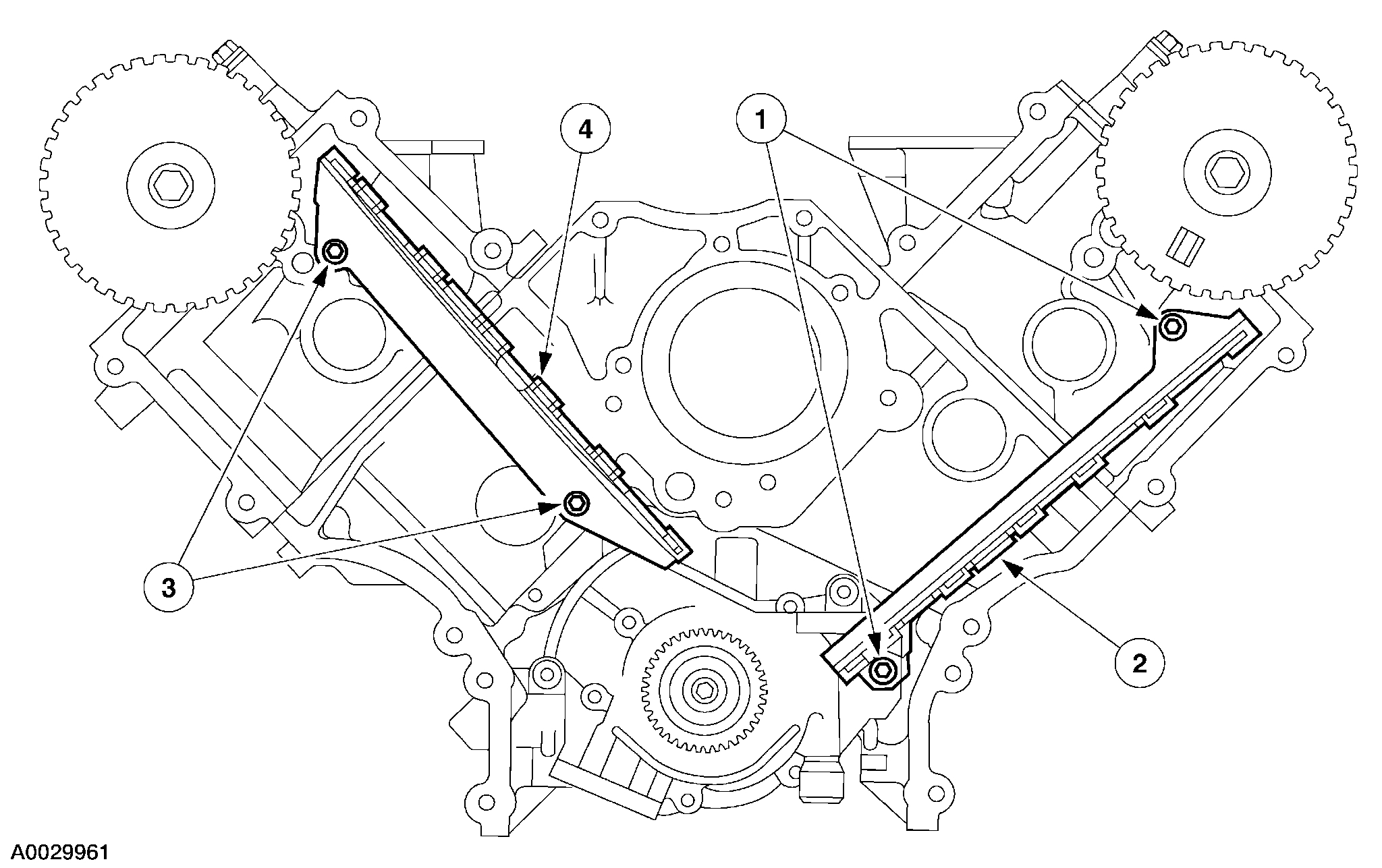
7. Remove the timing chain guides.
1 Remove the bolts.
2 Remove the LH timing chain guide.
3 Remove the bolts.
4 Remove the RH timing chain guide.


Installation


pic 13


1. CAUTION: Timing chain procedures must be followed exactly or damage to valves and pistons will result.

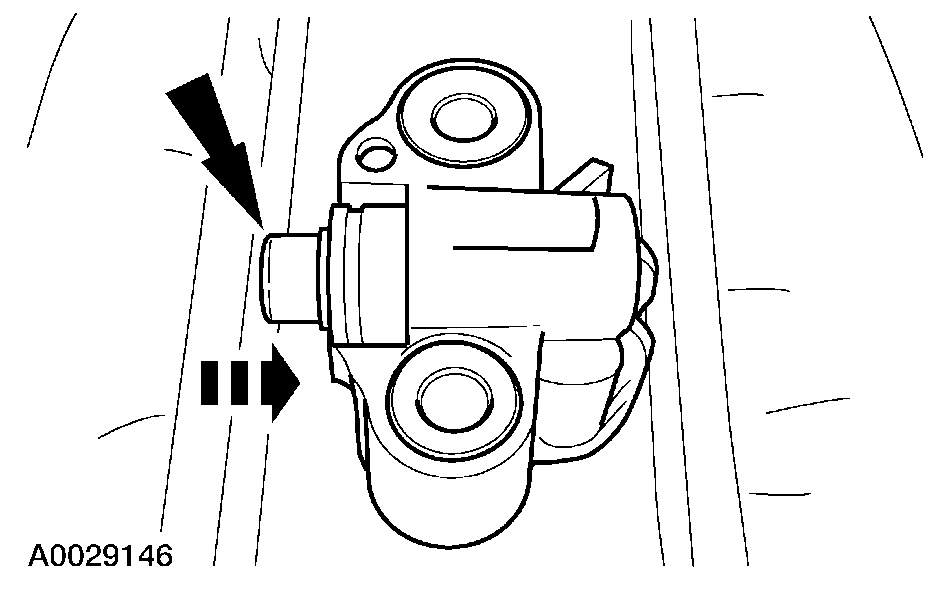
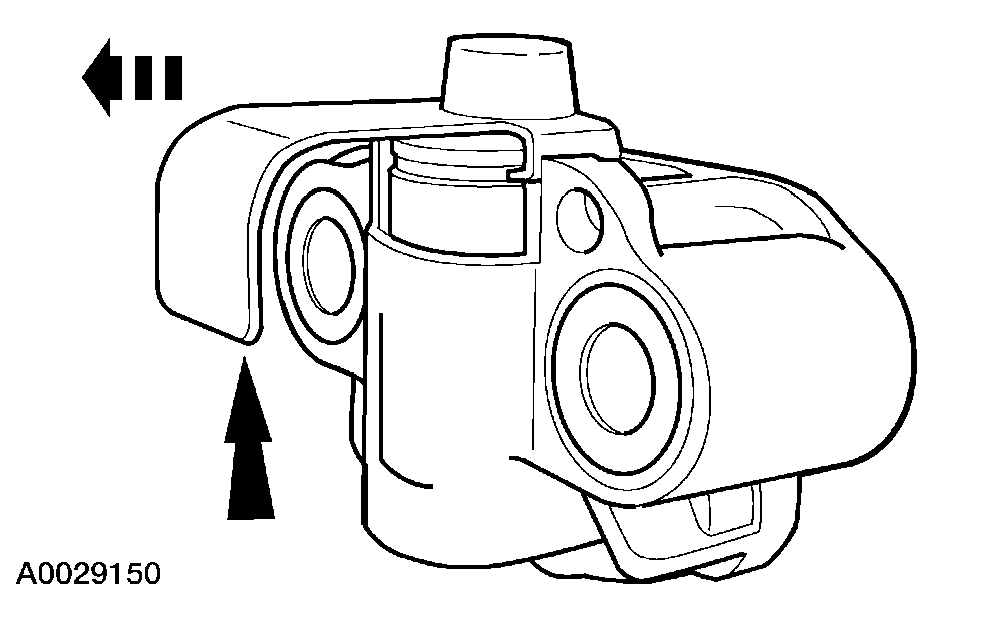
Compress the tensioner plunger, using a vise.


pic 14


2. Install a retaining clip on the tensioner to hold the plunger in during installation.


pic 15


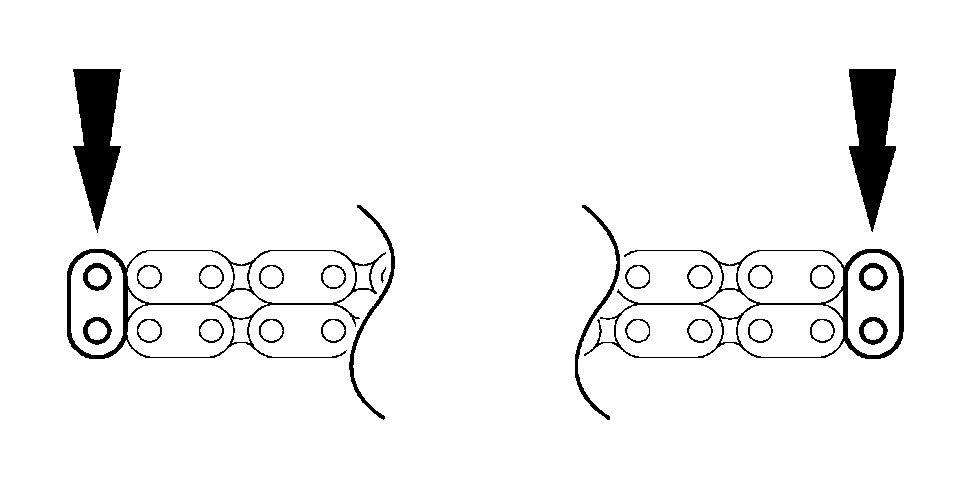
3. If the copper links are not visible, mark one link on one end and one link on the other end, and use as timing marks.


pic 16


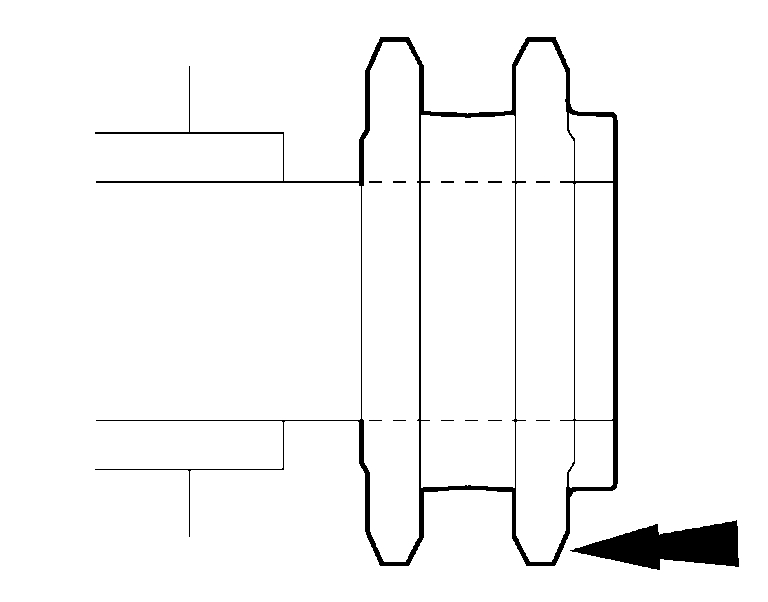
4. Install the crankshaft sprocket, making sure the flange faces forward.


pic 17


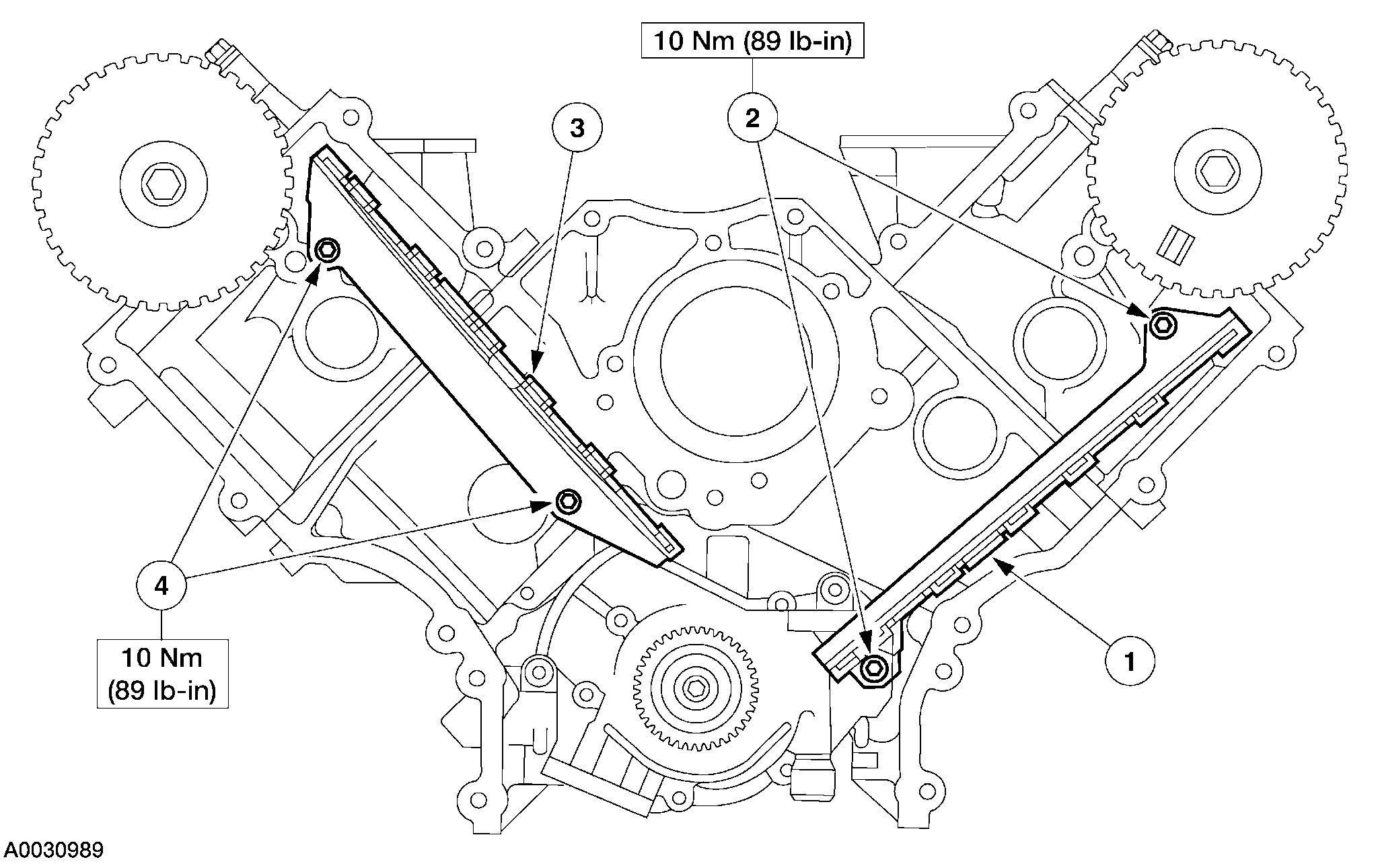
5. Install the timing chain guide.
1 Position LH timing chain guide.
2 Install and tighten the bolts.
3 Position the RH timing chain guide.
4 Install and tighten the RH bolts.


pic 18


6. CAUTION: Unless otherwise instructed, do not rotate either the crankshaft or the camshafts, when the timing chains are removed and the cylinder heads are installed. Severe piston and valve damage will occur.

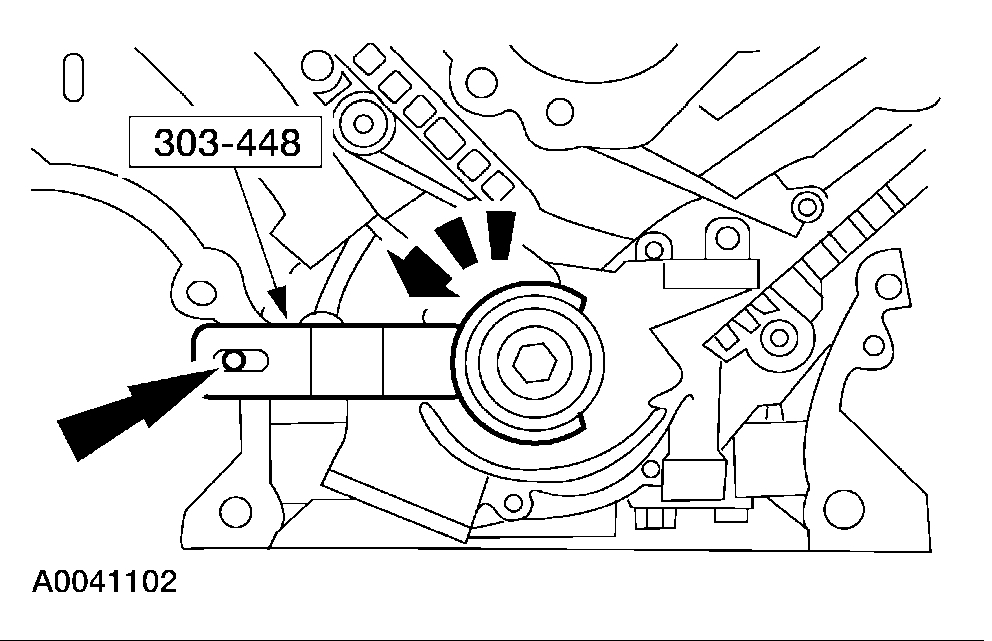
NOTE: The number one cylinder is at Top Dead Center (TDC) when the stud on the engine block fits into the slot in the handle of the special tool.

Using the special tool, position the crankshaft so the number one cylinder is at TDC.
7. Remove the Crankshaft Holding Tool.


pic 19


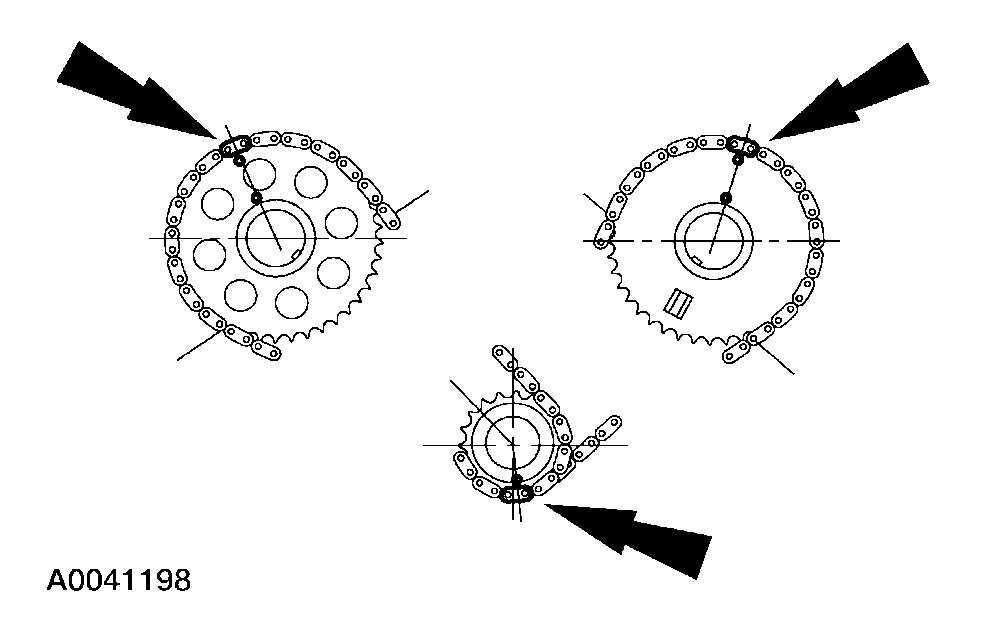
8. Position the LH (inner) timing chain on the crankshaft sprocket, aligning the copper (marked) link with the timing mark on the sprocket.


pic 20


9. Install the LH timing chain on the camshaft sprocket, aligning the copper (marked) link with the timing marks ran the socket.


pic 21


10. NOTE: The LH timing chain tensioner arm has a bump near the dowel hole for identification.

Position the LH timing chain tensioner arm on the dowel pin and install the LH timing chain tensioner.


pic 22


11. Remove the retaining clip from the LH timing chain tensioner.


pic 23


12. Position the RH (outer) timing chain on the crankshaft sprocket, aligning the copper (marked) link with the timing mark on the sprocket.


pic 24


13. Install the RH timing chain on the camshaft sprocket, aligning the copper (marked) link with the timing marks on the sprocket.


pic 25


14. Position the RH timing chain tensioner arm on the dowel pin and install the RH timing chain tensioner.


pic 26


15. Remove the retaining clip from the RH timing chain tensioner.


pic 27


16. Make sure that the copper (marked) chain links are lined up with the dots on the crankshaft sprockets and the camshaft sprocket.


pic 28


17. Remove special tools from the camshaft.


pic 29


18. Install the crankshaft sensor ring on the crankshaft.
19. Install the engine front cover.

_____________________________________________

I hope this helps. Let me know if you need anything or just have questions.
Jun 19, 2019 at 9:38 PM
Avatar
DARRELL BISHOP
  • MEMBER
  • 16 POSTS
Woo, didn't know I would have to deal with oil pan too. Seen some videos where only front end was taken apart an disconnected pickup tube from above oil pan. Is that another way to do it? Also only seen that would have to only take off timing chain cover, not the timing chain its self.
Jun 22, 2019 at 1:52 PM
Advertisement
Avatar
JACOBANDNICKOLAS
  • CERTIFIED EXPERT
  • 110,175 POSTS
Welcome back:

To remove the pump, the crankshaft timing gear needs removed. The pump is behind it. So, yes the chains need removed. As far as your question regarding the oil pan, it needs done. If you look at pic 4 above, the bolts that hold the pick up tube are mounted under the pan. Plus, if there is an oil pressure issue, the screen at the end of the pick up needs checked to make sure it isn't plugged. One last thought. When you separate the tube and pump, there is an o-ring. You have to make sure is isn't damaged. If there ends up being a leak there, pressure will be compromised.

Sorry for all the bad news. They don't make them too easy to work on anymore. Let me know if I can help or if you have other questions.

Take care,
Joe
Jun 22, 2019 at 11:03 PM
Avatar
DARRELL BISHOP
  • MEMBER
  • 16 POSTS
Yes thank you, might just start by doing the oil pan an checking the screen. Hopefully that's the issue an pump is okay.
Jun 23, 2019 at 6:34 AM
Avatar
JACOBANDNICKOLAS
  • CERTIFIED EXPERT
  • 110,175 POSTS
Welcome back:

Honestly, that is where I would start. What is actually happening? Is the oil light coming on? Do you hear any ticking or knocking from the engine? I have to be honest, there have been many times dealers wanted to replace an engine because the oil light was on and to be honest, there wasn't nothing wrong with the engine. The last one I worked on was a Hyundai with 200,000 on it. The oil light was coming on at a stop and there was oil leaking down the back of the engine, so the local dealer told the customer the engine was worn out and needed replaced. I worked on the vehicle in the past and knew the maintenance history and felt sure it wasn't bad, especially since there were no noises from the engine. I had to remove the intake to access a bad oil pressure switch so he had a little over 200 in fixing it, but that was way better than the thousands they wanted to replace the engine. LOL Interestingly, he is still driving the car and nearing 250,000. It still runs great.

Let me know what is happening and maybe I can help. Also, if there is no noise from the engine indicating low oil pressure, I would start by checking pressure with a mechanical oil gauge. All you do is remove the electric oil pressure switch and screw in a mechanical one. Most parts stores will lend you one.

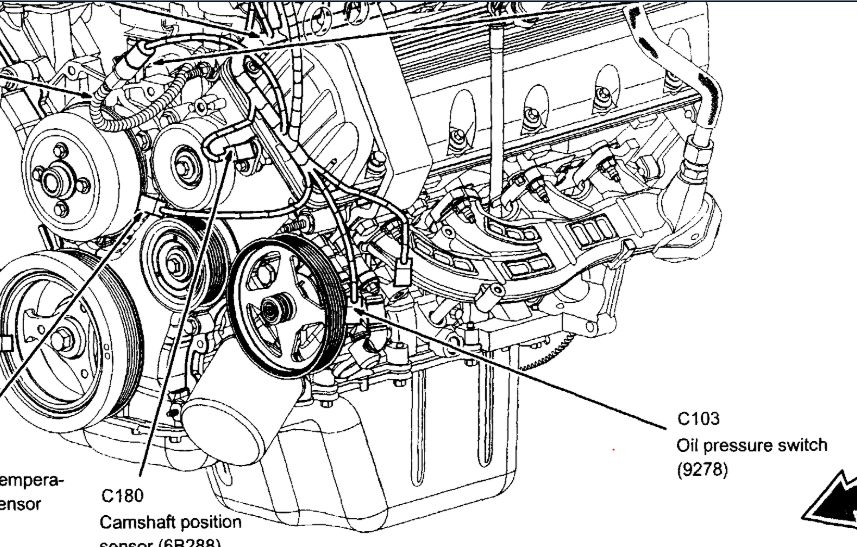
Picture 1 shows the location of the oil pressure switch. It's near the oil filter. Here are the directions for checking:

Oil Pressure Test
1. Disconnect and remove the oil pressure sensor from the engine.
2. Connect the Oil Pressure Gauge to the oil pressure sender oil galley port.
3. Run the engine until normal operating temperature is reached.
4. Run the engine at the specified rpm and record the gauge reading.
5. The oil pressure should be within specifications.
6. If the pressure is not within specification, check the following possible sources:
^ insufficient oil
^ oil leakage
^ worn or damaged oil pump
^ oil pump screen cover and tube
^ excessive main bearing clearance
^ excessive connecting rod bearing clearance

Here are the specs:

Oil pressure (A 2000 rpm - 93°C (200°F)) .................... 275.8-517.1 kPa (40-75 psi)

Let me know if I can help.

Take care,
Joe
Jun 23, 2019 at 7:37 PM
Avatar
DARRELL BISHOP
  • MEMBER
  • 16 POSTS
Yes has had slow leak since bought. Just made a 500 mile trip an couple weeks later it got noisy. Check gauge light came on an the oil pressure gauge was at Zero. Checked oil was 3-4 quarts low. Topped it off. Started it up an it seemed to quietin, check gauge light went off then a moment later the oil pressure gauge went to normal mid level on the dial. Lasted maybe 2 mins then light came back on oil gauge dropped back to zero. So I did oil filter an oil change. Same result. Old Oil filter didn't seem clogged itself. Haven't ran it since. Scared to damage engine
Jun 27, 2019 at 9:42 PM
Avatar
JACOBANDNICKOLAS
  • CERTIFIED EXPERT
  • 110,175 POSTS
Welcome back:

Now I understand. I just hope it is the pump and there wasn't internal damage causing it not to be able to build pressure.

Let me know if I can help or if you have other questions.

Take care,
Joe
Jun 28, 2019 at 5:35 PM
Avatar
DARRELL BISHOP
  • MEMBER
  • 16 POSTS
So do you think it's possible, that because I let it get so low that the oil pan screen clogged up trying to get the little bit of oil that was in it an got the dregs/trash? Also seen that pump doesn't actually pressurize the oil, how do I restore oil pressure once repaired?
Jul 4, 2019 at 4:21 PM
Avatar
JACOBANDNICKOLAS
  • CERTIFIED EXPERT
  • 110,175 POSTS
Welcome back:

It is possible that the pick up screen is plugged. Honestly, I would check that before anything else. Please keep in mind, if damage was done to main bearings in the engine due to little oil supply, you may not get pressure and still have a knock.

Let me know what you find.

Joe
Jul 4, 2019 at 6:35 PM
Avatar
DARRELL BISHOP
  • MEMBER
  • 16 POSTS
Hi, I got the pan off an found couple pieces of what looks like brownish white plastic. Along with (trash/dregs, dirt?). Looks to be clogging the screen. Is there any way I can clean it with gas maybe?
Jul 9, 2019 at 1:24 PM
Avatar
JACOBANDNICKOLAS
  • CERTIFIED EXPERT
  • 110,175 POSTS
Welcome back:

If the screen is plugged, I would suggest removing it and back flushing via the pick up tube. Also, it will give you a chance to see if anything made its way into the pump. Now, I hate to say it, but I use brake cleaner for things like that because it is very aggressive and evaporates really fast.

My biggest concern is what was blocking it. When you say plastic, does it appear to be anything from in the engine, such as a timing chain tensioner, gear, or anything else?

Let me know. If you can upload a picture of what you found, it may help me identify it.

Take care,
Joe
Jul 9, 2019 at 7:18 PM