No spark off coil

1979 JEEP CJ7
1 MILES • 4.2L • 6 CYL • 4WD • MANUAL
Avatar
DHOLT
  • MEMBER
  • 15 POSTS
I have 12 volts on the wire going to the positive side of the coil. But no spark getting to the plugs. Coil type accel 8140.
Mar 25, 2019 at 5:22 PM
Advertisement
Avatar
CJ MEDEVAC
  • CERTIFIED EXPERT
  • 11,004 POSTS
Your 1979 Jeep CJ, in my opinion, is the best year that AMC made, pretty much everything was perfected and the computer stuff had not been incorporated in yet.

Your coil could be dead, but that is the last thing I would guess.

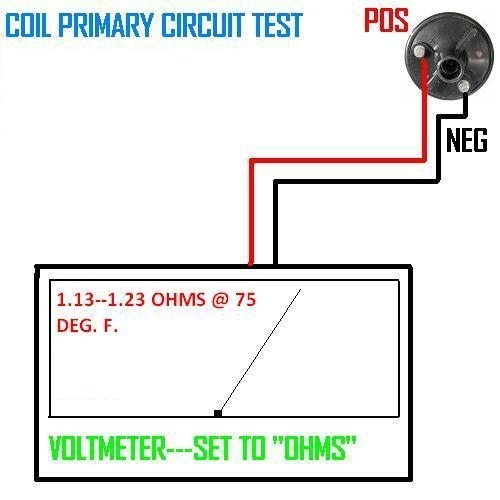
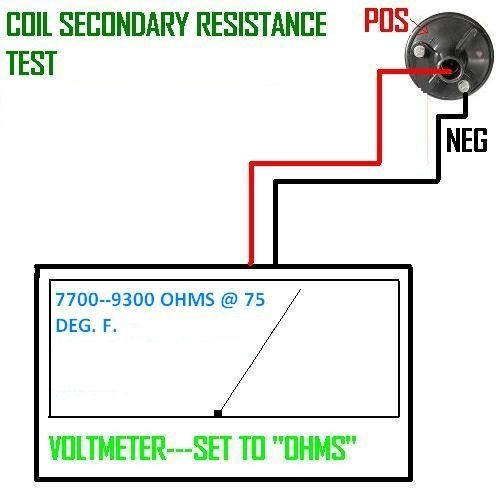
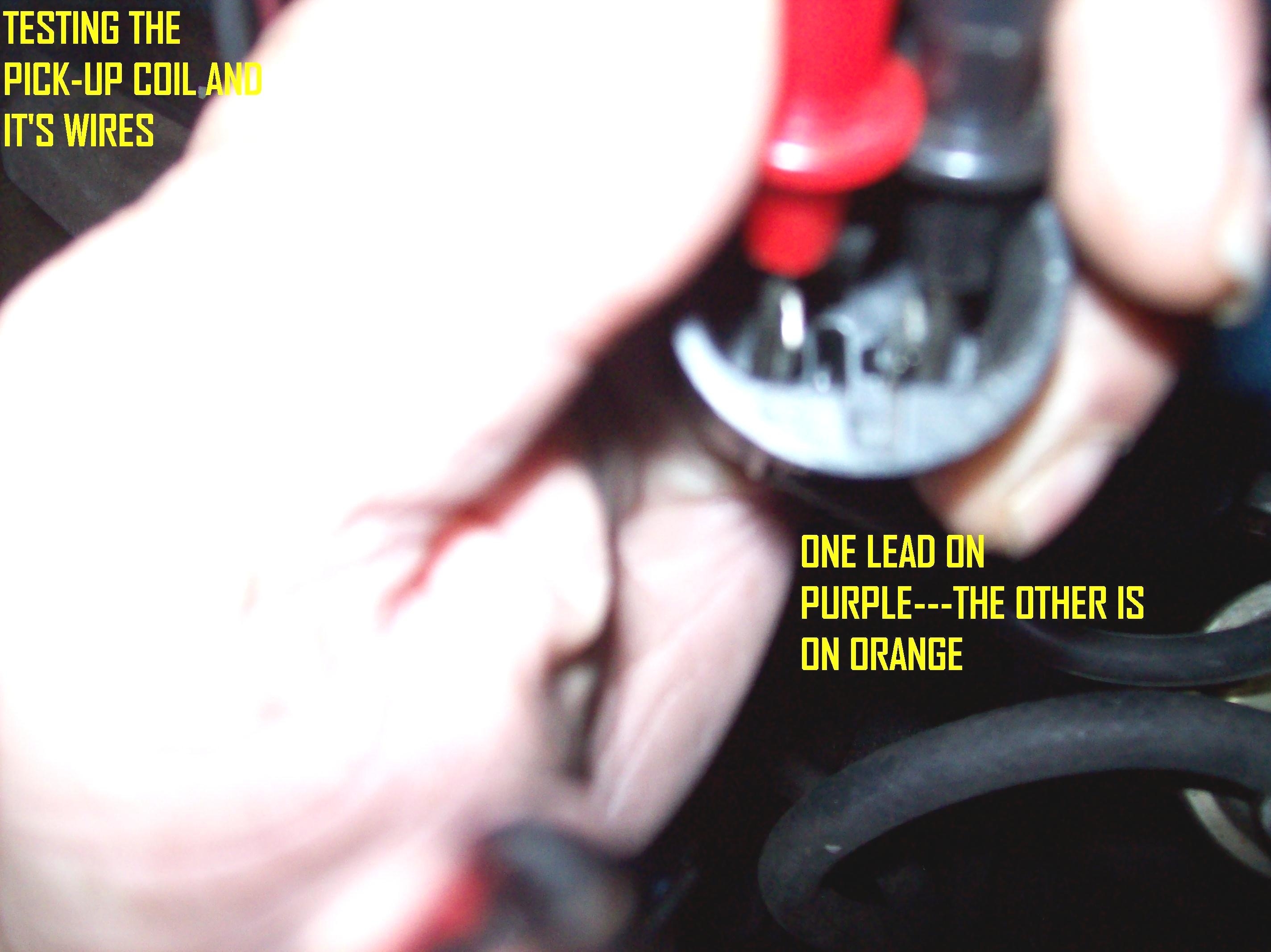
Pictures 1 and 2 are the way to test (these are the values for the original 1979 Jeep CJ Motorcraft system)

The Accel values are "1.2 ohms" and "89 k ohms"

I have a few more possibilities.

This is the one I lean towards the most.

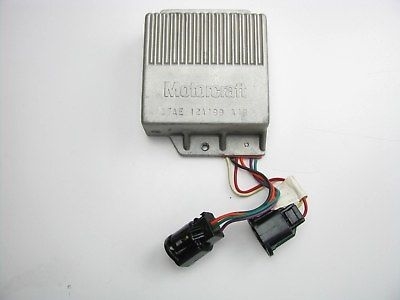
The ignition module.

Is it's body grounded well?

Not that easy?

Let's take it off,

The service manual prescribes grabbing the wires on either side of the connectors and giving them a firm pull. Digging at the connector locks will do no more than break them off, then you'll have to use wire ties to keep them together.

Take it to an auto parts store (my pics are in Advance Auto Parts)

Have it tested five or so times in a row, if it fails at all, replace it.

Yep,

I've seen several new ones be failures too.

If you get another one, test it while you are there, otherwise you will go insane wondering why the whole Jeep could be at fault, after tearing everything down.

Wow!, it was a bad "New" module the whole time.

Your module will have blue plastic around the wires as they exit the modules. Other colors are for other vehicles.

Send some news.

I will stay with you until it is running!

The Medic
Mar 25, 2019 at 6:59 PM
Avatar
DHOLT
  • MEMBER
  • 15 POSTS
Thank you for replying so quickly. I just bought a new module like three days ago. There is no way to ground it to the fender well. I'll go through tomorrow and check the coil. Should I reply on here or email.
Mar 25, 2019 at 7:04 PM
Advertisement
Avatar
CJ MEDEVAC
  • CERTIFIED EXPERT
  • 11,004 POSTS
This is the place!

Others read this stuff.

Others are happy when they fix their problem.

Especially when someone else had to bravely tear into theirs to obtain that magic information that could save them time and money.

Small bolts should ground it fine, shine up where the bolts hit.

The Medic
Mar 25, 2019 at 7:22 PM
Avatar
DHOLT
  • MEMBER
  • 15 POSTS
Does it ground through the body of the module?
Mar 25, 2019 at 7:31 PM
Avatar
CJ MEDEVAC
  • CERTIFIED EXPERT
  • 11,004 POSTS
Roger that!

You don't just have it fa-dangling, hovering over the fender?

The Medic
Mar 25, 2019 at 7:57 PM
Avatar
DHOLT
  • MEMBER
  • 15 POSTS
No it's in place but probably not to well grounded. I'll hit it with a wire brush in the morning. As well as get back to you with those readings from the coil.
Mar 25, 2019 at 8:02 PM
Avatar
CJ MEDEVAC
  • CERTIFIED EXPERT
  • 11,004 POSTS
See you then!

The Medic
Mar 25, 2019 at 8:11 PM
Avatar
DHOLT
  • MEMBER
  • 15 POSTS
Okay, I did the testing and got the ECM grounded. First test I get 1.5 ohms second test 8500 ohms.
Mar 26, 2019 at 9:21 AM
Avatar
DHOLT
  • MEMBER
  • 15 POSTS
Went to get the ECM tested. All the "experts" say there is no way to test them. You just have to go through process of elimination.
Mar 26, 2019 at 11:30 AM
Avatar
CJ MEDEVAC
  • CERTIFIED EXPERT
  • 11,004 POSTS
Process of elimination:

Eliminate the problem at hand.

Eliminate the employees at your auto store. Go elsewhere.

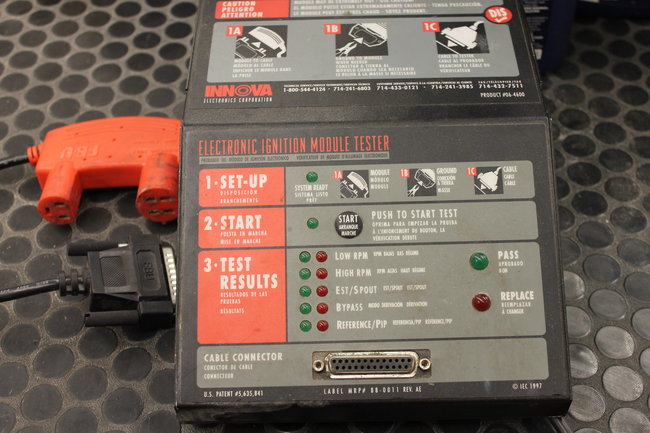
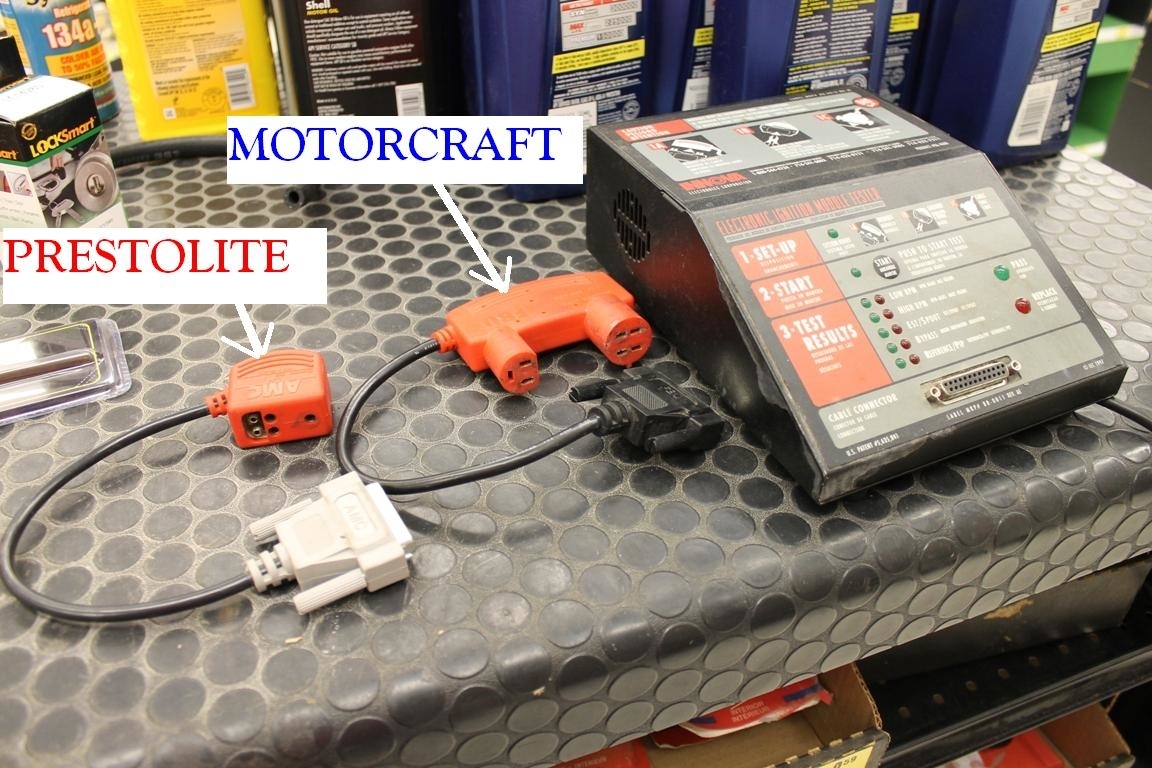
This picture is the tester at Advance Auto Parts.

You can see the pigtail beside it where the two Motorcraft connections plug in.

The other pigtail is for testing the Prestolite (1978 and earlier).

Other stores have similar testers.

The Medic
Mar 26, 2019 at 2:21 PM
Avatar
DHOLT
  • MEMBER
  • 15 POSTS
I called advanced auto orients and some mechanic shops. Same answer all around.
Mar 26, 2019 at 2:30 PM
Avatar
DHOLT
  • MEMBER
  • 15 POSTS
Is there anyway to test it myself. Not orients. O'Reillys.
Mar 26, 2019 at 2:58 PM
Avatar
CJ MEDEVAC
  • CERTIFIED EXPERT
  • 11,004 POSTS
So,

The test was to see if the old one was good or not.

The test would have been easy, simple, and of course, quick!

This would keep you from buying an unnecessary part.

Check this out:

https://www.youtube.com/watch?v=TQ_1aF-X7fc&t=246s

Yep,

You will probably want to shop around and buy one instead of the DIY testing! $30.00 to $45.00 is the norm.

If this does not fix it, we still can continue on trouble shooting.

If it does not fix it, you will have a spare module!

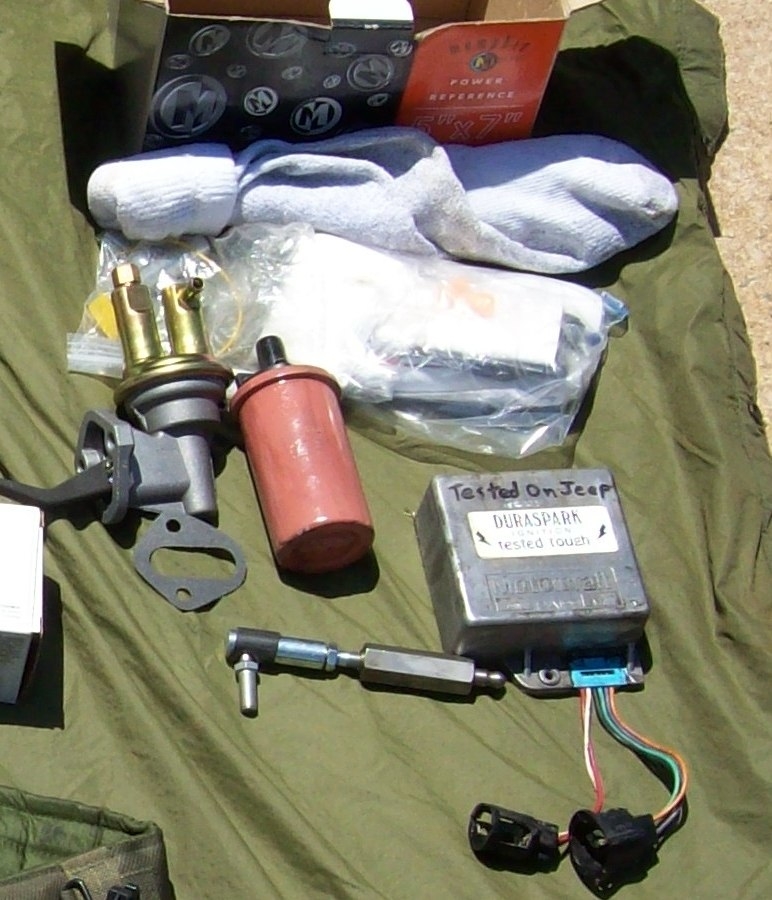
You need stuff anyway! I've roadside assisted (found them in my travels) a Jeep needing a fuel pump and another one needing the ignition module. Countless other vehicles needing tires plugged or fuel. They are at your mercy! Or they can walk, or they can wait for others!

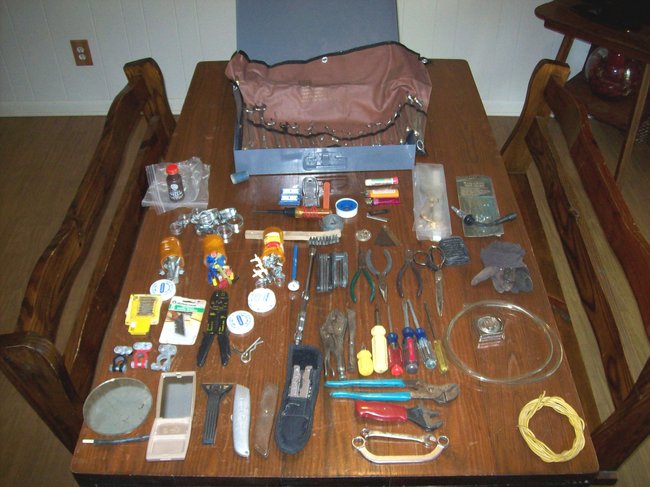
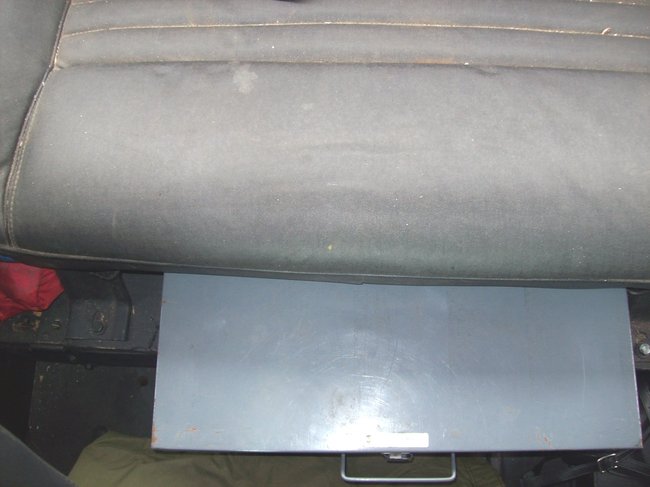
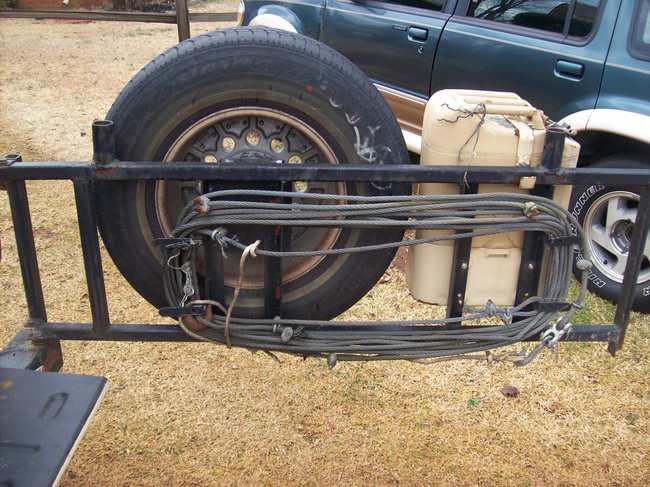
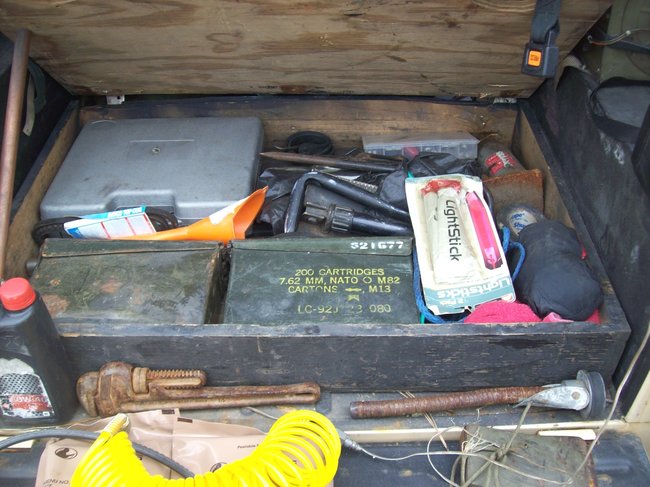
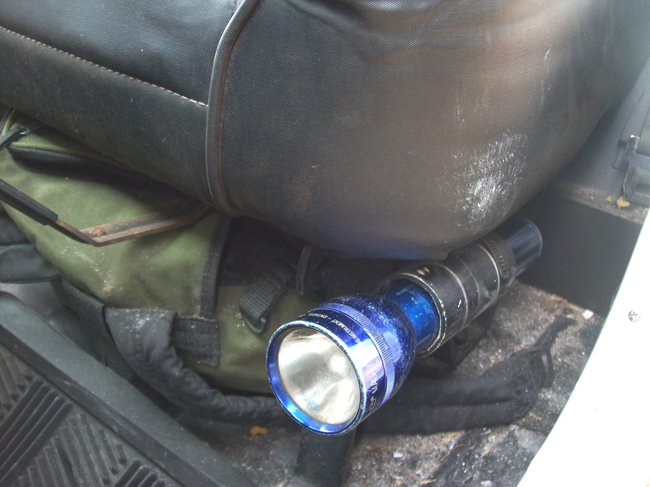
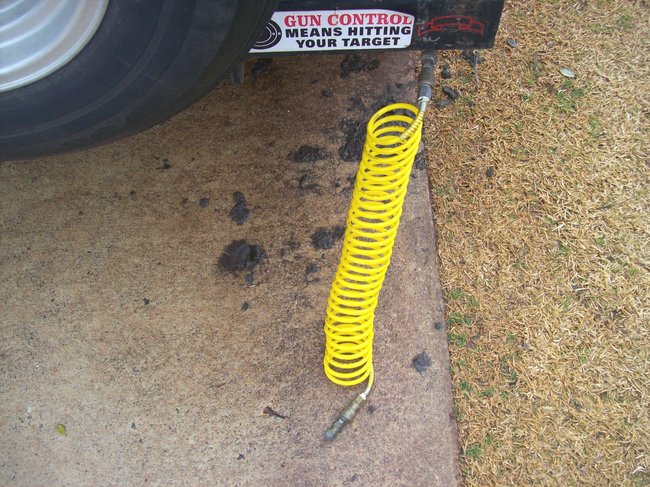
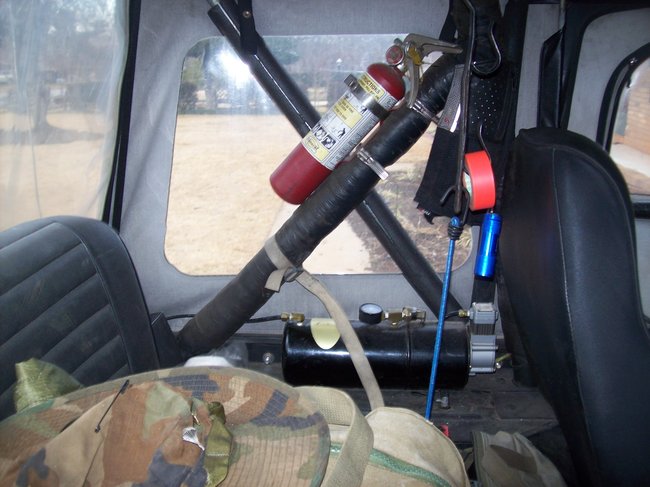
I keep tools, gas, a fuel pump, a coil, and an ignition module all as spares. I have an on board compressor for my train horns also adapted to fill my tires. I keep tire plugs, water, and so many other things in Mr. Jeep.

Let me know when you are ready.

The Medic
Mar 26, 2019 at 4:30 PM
Avatar
DHOLT
  • MEMBER
  • 15 POSTS
I must say you have everything stored well in the limited space. Is there any trouble shooting I can do until I get back to town to get another module?
Mar 26, 2019 at 4:47 PM
Avatar
CJ MEDEVAC
  • CERTIFIED EXPERT
  • 11,004 POSTS
Maybe this?

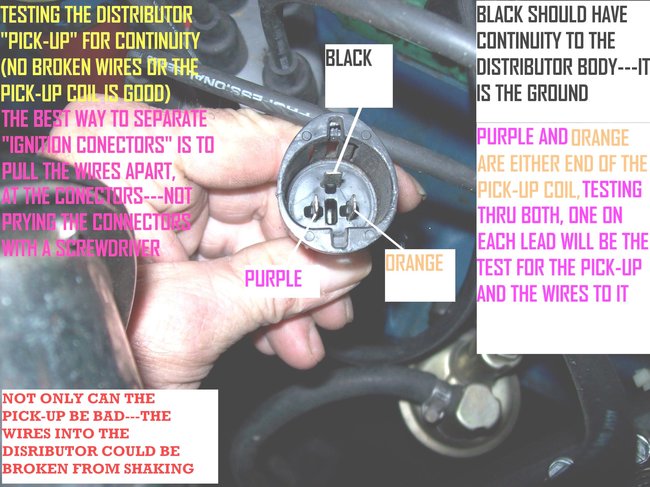
This is the connector half to the distributor.

Checking for continuity from the "crossways" terminal to the distributor body. One lead on the pin, the other on the distributor body.

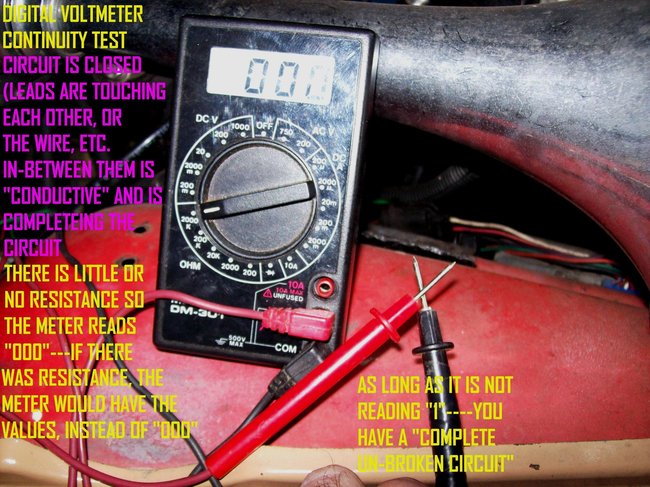
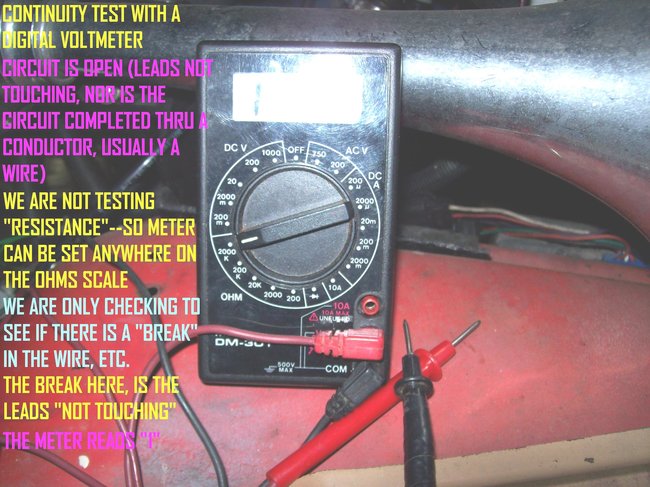
Now check the "side by side" pins (one lead on each pin) for continuity. These go through the pickup coil.

Picture 3) see the leads are touching (this is a complete circuit). If you put a wire length (etc.) between the leads, this should be a complete circuit also.

Picture 4) Now we have a "broken/ cut" wire between the leads. The circuit is not complete. There is "no continuity". Hence, the wire between the leads is an "open circuit". In our case, we would have a bad part.

I made these pics long ago, I was just getting a little computer competent. Ask me if you are lost!

Results?

The Medic
Mar 26, 2019 at 6:00 PM
Avatar
DHOLT
  • MEMBER
  • 15 POSTS
Black pin to body. Ranges from 0.2 to 000.
Cross convectors .60 to .58.
Mar 26, 2019 at 6:23 PM
Avatar
CJ MEDEVAC
  • CERTIFIED EXPERT
  • 11,004 POSTS
Distributor seems fine.

Any luck finding a module tester?

Did you go ahead and buy one?

Buy a tube of dielectric grease too, smear some on the connection pins before you connect them. You can use it on other electrical stuff too, such as fuses and light bulbs.

The Medic
Mar 27, 2019 at 5:14 PM
Avatar
DHOLT
  • MEMBER
  • 15 POSTS
I think I'm just going to buy one. That way I'll have an extra one like you said. I'll probably get it tomorrow.
Mar 27, 2019 at 5:44 PM
Avatar
DHOLT
  • MEMBER
  • 15 POSTS
Haven't had a chance to work on the Jeep in a bit. Been taking care of family and doing that silly working thing. When I get back at I'll let you know.
Mar 29, 2019 at 10:02 AM
Avatar
CJ MEDEVAC
  • CERTIFIED EXPERT
  • 11,004 POSTS
Roger.

See you then.

The Medic
Mar 29, 2019 at 4:09 PM
Avatar
DHOLT
  • MEMBER
  • 15 POSTS
Got a new ECM. Hooked everything back up still no start or spark.
Apr 8, 2019 at 3:41 PM
Avatar
CJ MEDEVAC
  • CERTIFIED EXPERT
  • 11,004 POSTS
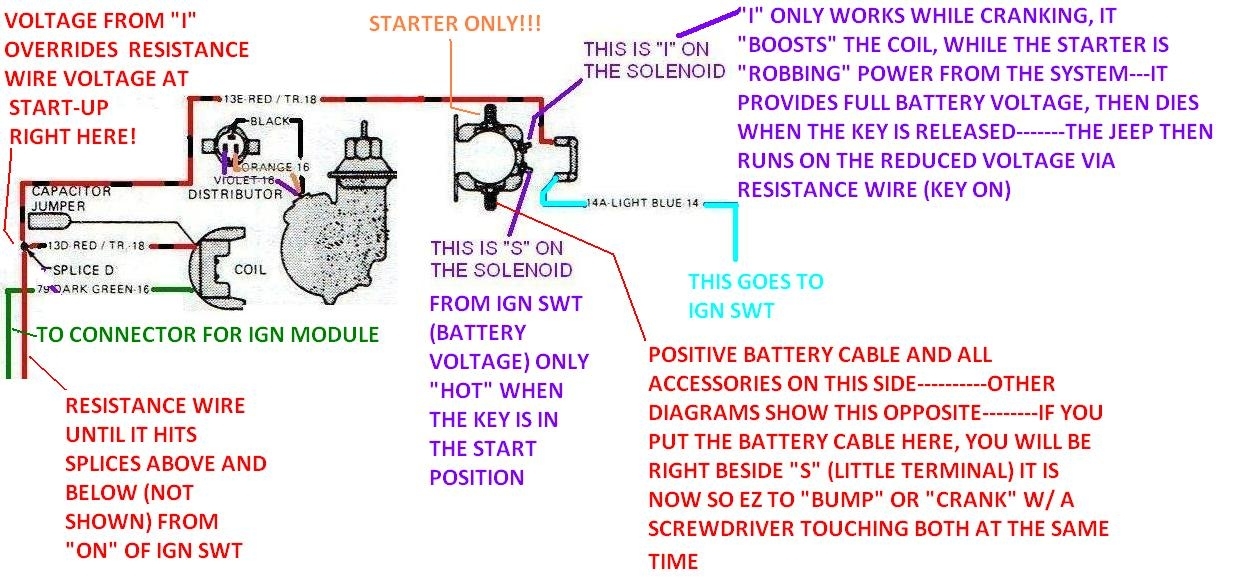
Let's go to the starter solenoid.

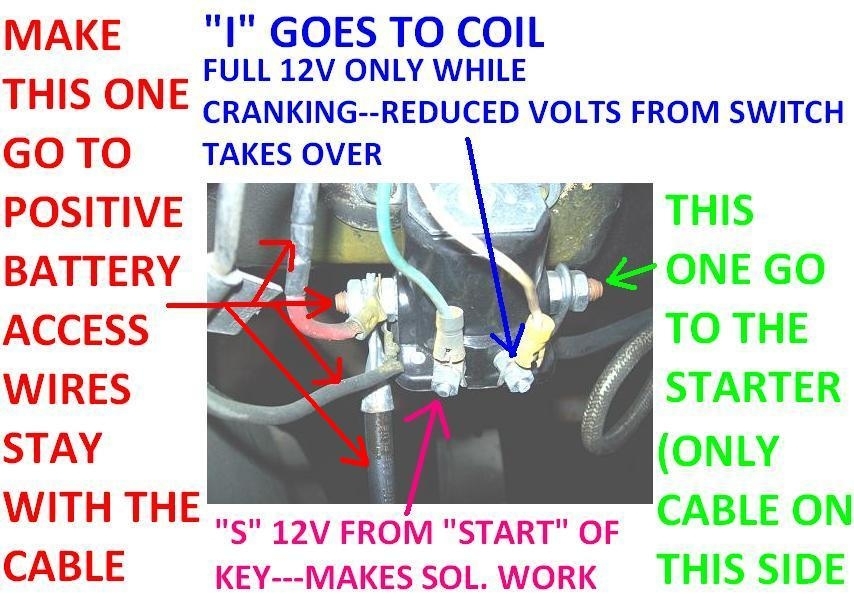
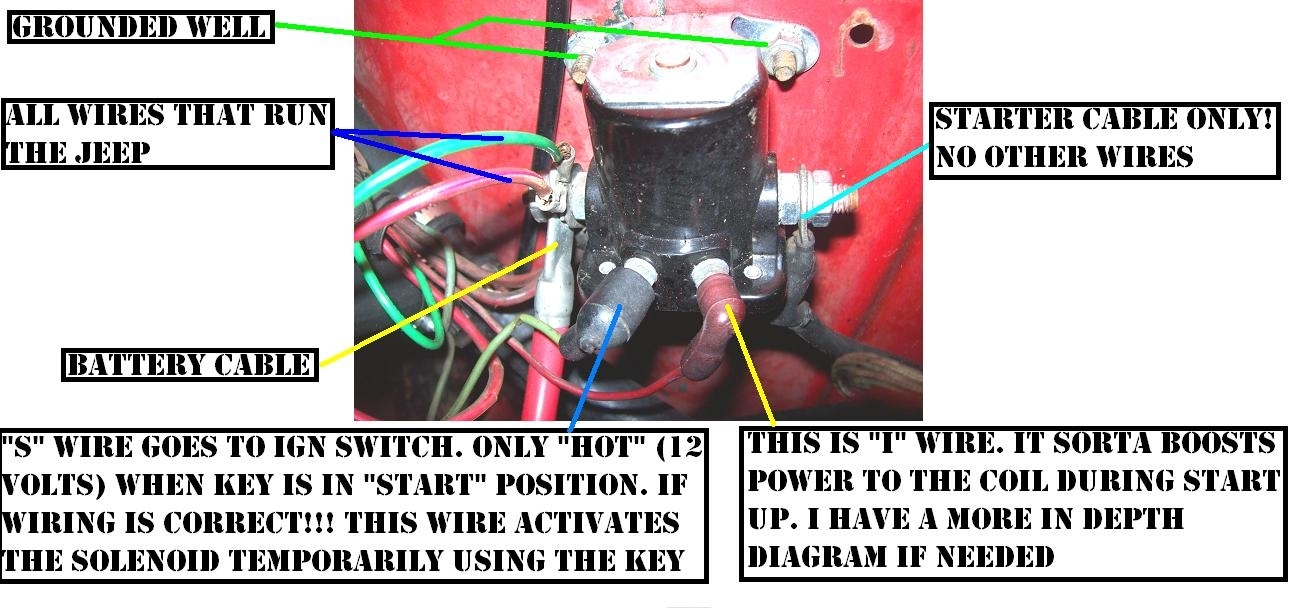
Pic 1) This is the way I wired my '46 Willys to be like my CJ 5. The wires on the big posts can be swapped (all of them from one side to the other side) (the big cable to the starter will swap too).

The pics that I post of both of my Jeep's solenoids have been swapped to opposing posts (factory is the other way) The solenoid don't care as long as everything is swapped.

When all is done, the starter is always by itself and the battery cable and those wires stay together on the opposite side.

"S" and "I" cannot be swapped.

Check!

Insure the starter solenoid's body has a good ground to the fender.

Insure the wires/ rings on the posts are clean, tight, and nothing has broke loose from a ring and is now dangling close by.

Test

I'm not sure if you are "Cranking" (not the same as "not starting"- Starting means running!)

See if this cranks you.

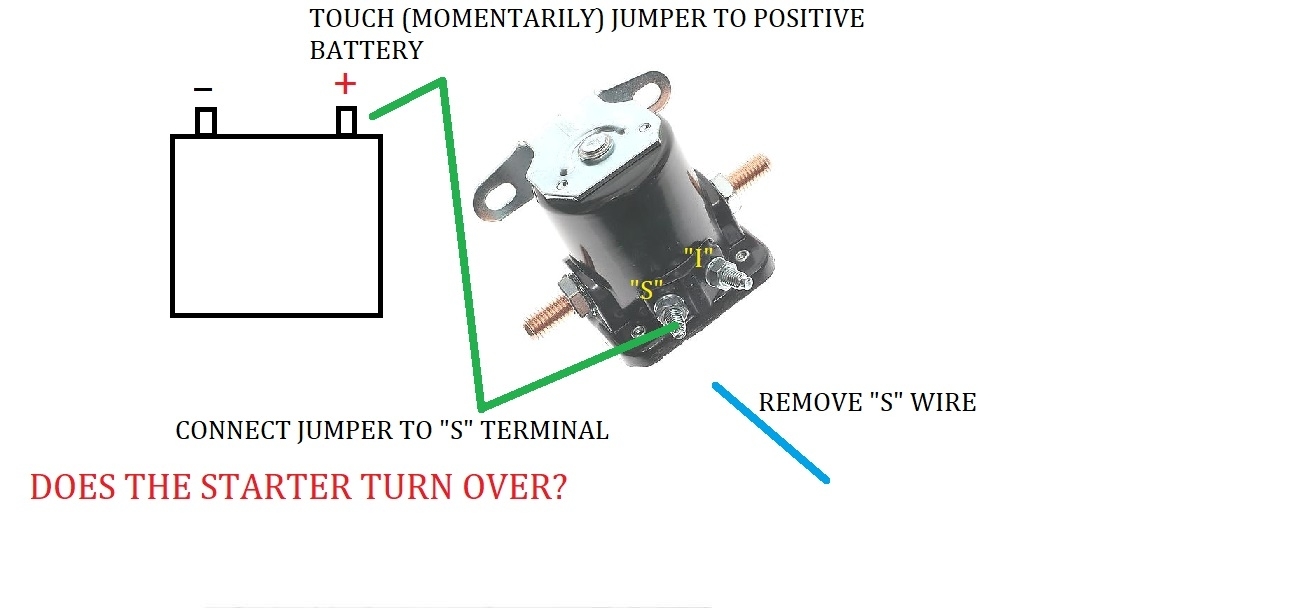
Remove "S" wire from the solenoid. Touch a temporary piece of wire from the Positive side of the battery to "S". terminal of the solenoid.

Yep,

If it works, you probably wet your pants, the initial bump will startle you!

It should crank, verifying the solenoid is good.

Before you buy another one, verify the solenoid body is grounded well to it's home spot.

Now let's test "S" wire. Removed from the solenoid, stick your voltmeter probe in the wires socket. Your other lead will go to the negative side of the battery (as there's no better ground than at the source!). Now have your buddy turn the ignition switch to "start". We should get 12 Volts!

No? Let me know!

While we are at it, Turn your key to "on". Stick your probe onto the positive side of your coil.

What do you get?

Your turn!

The Medic
Apr 8, 2019 at 6:24 PM
Avatar
DHOLT
  • MEMBER
  • 15 POSTS
Sorry for the long delay. Okay I get 12 volts to the "s" side of the solenoid and 12 volts on the positive side of it as well with the key in the run position. Mine is wired with a battery kill switch that wouldn't make a difference would it?
Apr 19, 2019 at 11:02 AM
Avatar
CJ MEDEVAC
  • CERTIFIED EXPERT
  • 11,004 POSTS
The battery kill switch should not affect you, unless it is not working.

Key on, positive side of the coil, voltage?

The Medic
Apr 19, 2019 at 3:28 PM
Avatar
DHOLT
  • MEMBER
  • 15 POSTS
7.8 to 8.0 volts.
Apr 19, 2019 at 3:42 PM
Avatar
CJ MEDEVAC
  • CERTIFIED EXPERT
  • 11,004 POSTS
Coil volts look okay.

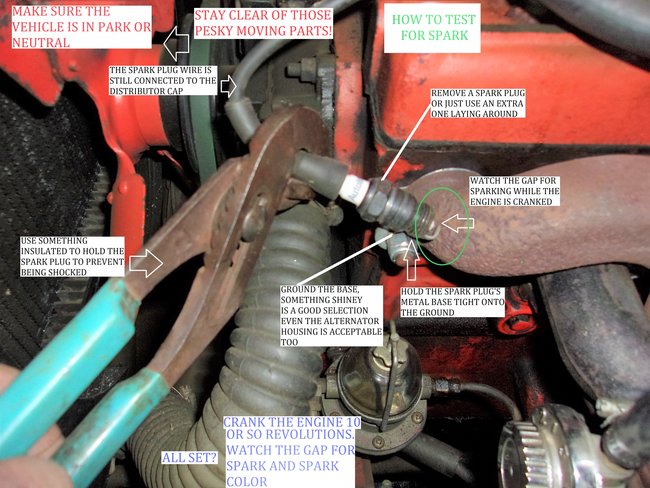
Are you testing for spark like picture 1?

Let's also look at "I" on the solenoid, does it make it's way to the coil and "tee" in with the resistance wire? (picture 2)

The Medic
Apr 20, 2019 at 8:54 PM