1998 Mercury Tracer Rough Idle, New A/C Compressor

1998 MERCURY TRACER
79,000 MILES • 4 CYL • FWD • AUTOMATIC
Avatar
AIDAN_80
  • MEMBER
  • 41 POSTS
Hi,

I purchased a used Tracer GS last year and since I got it, it’s had a low idle. After I purchased it I had a local (trusted) mechanic have a look at it and he said everything was fine apart from the thrust motor mounts (front and rear) he also mentioned the transmission mount should be replaced, a small leak in the a/c compressor and he had some concerns about the low idle. We recently had the A/C compressor and the thrust motor mounts (not the transmission mount) replaced and the low idle turned into a very rough idle. The entire car would shake quite badly when using the A/C while in Drive but not so much in Park or even in Reverse it’s much less! This shaking will die down quite a bit when I turn the A/C off, I’m in Florida so the A/C is critical! Although driving without the A/C is now very smooth compared to before.

I asked him to double check the car again and he flushed out the A/C system and increased the idle slightly. He showed me how he increased the idle and the screw used to make the increase is rusted in place so I’m stuck at what I’m at. He said the car did stall once as he was taking it around the block before increasing the idle. The car still shakes quite a lot when stopped but 100% file while driving? I sat in the car as he manually increased the idle with the A/C on and the shaking disappeared? He also checked all the usual, fluids, computer for codes, he actually showed me the results as he searched for an error codes. There where no errors reported from the computer.

Is there something else that’s missing? Something obvious that a more seasoned mechanic might have spotted that our mechanic hasn’t seen too much before or at all before in the shop or is our mechanic on the right track?

Thanks for your help!
May 13, 2008 at 10:39 PM
Advertisement
Avatar
2CARPRO JACK
  • CERTIFIED EXPERT
  • 11,533 POSTS
First if you have any mounts that are bad, it will vibrate regardless. The torque mounts go out it places extra stress on the other mounts to try to keep the engine in check. Have him clean the throttle bore around the butterfly with carb cleaner and a rag, also clean the Idle Air Control Motor the same way, this should help stabilize the idle, is the tune up in good shape?
May 15, 2008 at 8:06 AM
Avatar
AIDAN_80
  • MEMBER
  • 41 POSTS
Hi,

Thanks for the response! I intend to have the other mount replaced in the coming weeks. I actually took the car back in today as the check engine light came on. He checked for error codes and found the Idle Air Control to be giving an error? He cleared the code and set it up to come in next week, the light came on again on the way home. Tune should be fine, it had fresh fluids, new battery, plugs and wires when I bought it, I also had it checked when I got it. I do intend to have it checked out back to front next week to try and nail this problem. It's also now revving up quite a bit when I start the car, I've no meter to see how high but I was told not to worry about it for just this week unless it revs really high and loud, in which case I should turn it off. I will of course pass on your suggestions.

Thanks again for responding! :)
May 16, 2008 at 7:46 PM
Advertisement
Avatar
2CARPRO JACK
  • CERTIFIED EXPERT
  • 11,533 POSTS
A new IAC will most likely take care of the problem
May 19, 2008 at 7:47 AM
Avatar
AIDAN_80
  • MEMBER
  • 41 POSTS
Thanks again for the response! I'm sure between you and my mechanic you've saved me a lot of stress and a lot of cash!
May 22, 2008 at 10:46 PM
Avatar
AIDAN_80
  • MEMBER
  • 41 POSTS
Well I got it back into the shop and long story short, they replaced the trans axle mount (I now have 3 new mounts in total, 4th is in good shape) and the thing is still shaking but no where near as bad. It also feels more together taking off? There is a lot more power maybe due to the A/C being flushed out?

They checked for vacuum leaks, they double checked the A/C to ensure it was working correctly and flushed any and all air out of it. Cleaned the IAC (which needs replaced now at $200 for the part?) so I still have a high idle starting then dropping down and the shaking starts.

I've had our mechanic, his boss look at the thing and they double checked everything and still it shakes when stopped! They can't find whats wrong and have mentioned it could be the motor? They don't think the IAC is causing it to shake as bad as it was?

I mean ok this car is 10 years old but before the A/C and mounts where replaced I didn't feel as much as a rattle inside, not a bump. It's a lot better now but not as it was when I bought it before any work was done.

Am I asking too much or should I just get used to it?

Thanks again!!
Jun 23, 2008 at 10:27 PM
Avatar
MERLIN2021
  • CERTIFIED EXPERT
  • 17,250 POSTS
Well I agree with Jack, it's either a vacuum leak, or the IAC, Fords are known for them...
You may have a vacuum leak, get a can of spray gumout, spray the vac lines and maniflod area, when the idle changes, youve found the leak! You want the engine running and spray on the outside but do direct the stream onto the hoses, if it is a vacuum leak, the engine idle will change speed, then you have detected a leak, repair the vacuum leak and see how it runs! If that doesnt do it, you may need a new idle air control valve, it's bolted to the throttlebody
Jun 28, 2008 at 3:15 PM
Avatar
AIDAN_80
  • MEMBER
  • 41 POSTS
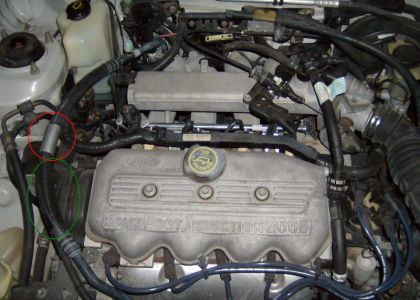
Thanks again for responding!!.. I'll head off to the local wal-mart/autozone and get a can of spray gumout and spray the vacuum lines. I don't have a tachometer, I'm assuming I'll hear the idle change if I find the leak? This might sound stupid but.. when I first got the car I noticed some duct tape wrapped around one of the tubes/lines (see attached image, highlighted in red) hidden under a plastic sleeve, highlighted in green. I never thought anything of it really until now?


https://www.2carpros.com/forum/automotive_pictures/190115_Tracer_Eng_1.jpg

Sorry if this sounds strange but I'm not much of a car person! After this I think I'll be learning a bit more on basic maintenance. Thanks again, I'll post back my results, if any!
Jul 1, 2008 at 8:54 PM
Avatar
MERLIN2021
  • CERTIFIED EXPERT
  • 17,250 POSTS
They most likley put tape there because a rub spot was developing. To put your mind at ease you can take a peek under there and re-tape it...
Jul 2, 2008 at 6:19 AM
Avatar
AIDAN_80
  • MEMBER
  • 41 POSTS
I already did, it looks like the rest of the tube, didn't look worn, cracked or damaged.. actually just sticky from the tape? I'll trust your judgment on it!
Jul 2, 2008 at 8:05 PM
Avatar
AIDAN_80
  • MEMBER
  • 41 POSTS
Ok I got the gumout, sprayed every single vacuum line I could find and didn't get anything. While I was in there I checked the oill so filled it up. I removed the air filter and knocked out the dust, there was deposit in the tube. I also used some Carburetor/Fuel Injector additive to my last fill. In the hope that maybe something might have an effect and.. something has, I think? (air filter maybe?) the rough idle is now bearable? I mean my teeth don't chatter at a stop light anymore? I'm going to replace the air filter with a new one this week and I'll have the IAC replaced when funds allow. I still get the high RPM's when starting but thats due to the IAC?

I do have another question... I had the brake switch, that controls the brake lights and shifter release replaced a few months ago as I got stuck in Park one day! I've been driving along quite happily until now.. I'm getting stuck in Park again?.. is there something that could be causing this? The old switch was melted inside? The mechanic that installed it said I might want to replace or disable the solenoid that controls the shifter release but I need to know when I have brake lights!!
Jul 7, 2008 at 9:28 PM
Avatar
AIDAN_80
  • MEMBER
  • 41 POSTS
I wanted to post back on this.. just incase another poor soul ends up in my boat with one of these wee cars!

Shaking Issue = Timing Belt jumped a tooth or too and finally jumped enough to cause the car to stop running. New timing belt and the rough idle dropped down to a buzz.. shakes up a bit sometimes but not too bad.

Still have the IAC Check Engine Light on.. going to pull it myself (seeing how easy it is) and put in another. That should finally put to bed the rough idle.

If your in the same boat as me owning an older Ford/Mercury Escort/Tracer with a rough idle and normal mileage you may want to keep an eye on the timing belt if it hasn't been done and of course error codes!
Jan 16, 2009 at 9:09 PM
Avatar
MERLIN2021
  • CERTIFIED EXPERT
  • 17,250 POSTS
If the belt jumped time, then it may have also backfired thru the intake, and this only needs to happen once to ruin an IAC...most of your remaining idle problems can trace back to it...
Jan 20, 2009 at 4:59 PM
Avatar
AIDAN_80
  • MEMBER
  • 41 POSTS
Ok I replaced the IAC and started up the car.. car ran perfect, idle was back to normal. Took it out for a test drive and it still shakes just a bit but still shakes up a bit now and then when in gear. The shake is just a buzz when in park. It's also stalled on me while reversing.. it was like the idle dropped so low it cut out the engine? I have to say it's night and day difference compared to what it used to be with the idle.

I should mention and please remember I'm a novice here lol.. Check engine is still on I assume this needs to be cleared! I also noticed some black oily buildup on the shallow hole on the throttle body. I'm going to remove the throttle body and clean it just in case.

At times when driving it today it felt like the computer didn't know what to do with the new IAC it'd had the old one messed up one for so long now like it was revving up now and then and dropping down once and a while. Is it relearning how to use the new part maybe?

Any suggestions would be excellent, thanks again! :-)
Jan 24, 2009 at 8:48 PM
Avatar
AIDAN_80
  • MEMBER
  • 41 POSTS
I disconnected the battery and drove around for a while.. check engine came back on with the used IAC I put in.. I had the check engine codes pulled at an auto store and this is what they found:

* P1504 IAC circuit fault
* ECM has detected an electrical load failure on the IAC circuit..
* Causes Open or shorted circuit or failed IAC valve.

I've also tried:
Installed used IAC car started with a buzz and very low idle almost to the point of stalling while in P. Reinstalled the old IAC car started up with a roar and the usual high idle it had! I started the engine, let it heat up and pulled the electrical connection from the IAC while the engine was running... no change and no stall or drop in RPM's! Tapped IAC with a hammer (both of them) while running and no change. Wiggled the electrical connection and the wires leading to the IAC without any change in idle.

Any other suggestions are very welcome!!
Jan 25, 2009 at 11:16 PM
Avatar
MERLIN2021
  • CERTIFIED EXPERT
  • 17,250 POSTS
A used IAC? Not on my ride thanks..The other thing is yes clean out the throttlebody, with TBI cleaner ONLY, these have a teflon coating and other cleaners destroy it. also check the PCV.
Jan 26, 2009 at 3:14 PM
Avatar
AIDAN_80
  • MEMBER
  • 41 POSTS
Well used IAC at $25 or a new one from Ford at close to $200... I had to try the used one first just incase.. I went a bought a new IAC from an auto store today but before I install it I checked all three IAC's with a multimeter just to be 110% sure it really is the used IAC and save myself some cash.. maybe?

I tested resistance (lowest setting), polarity in both directions with all three IAC's here's what I got..

* Original broken IAC 11.7 in both directions - high rev every time I used it in the car
* used IAC 12.1 in only one direction - buzz no high rev, very low idle still installed in car
* new IAC 11.8 in both directions - never installed, prefer to return if it's not needed

Now where I'm stuck at ruling out the IAC issue is.. I assume it should be allowing the test to run both ways I'm worried that it's only running one way in the use IAC.. I'm thinking it maybe shorted? Then why is the my original IAC showing expected resistance in both directions?.. mechanical failure maybe?

I'm just thinking out loud here as I'm very much a novice but would like to try and figure out this one if I can.

Thanks again! :-)
Jan 26, 2009 at 7:43 PM
Avatar
AIDAN_80
  • MEMBER
  • 41 POSTS
I ran one more test.. I disconnected the power to the IAC, the used one and put one of the multimeter probes on one of the IAC terminals and the other one the IAC body per the instructions found in a repair book. The reading was 1, I reversed the polarity and still reads 1.. I tried this out with the other two IAC's and again it reads 1. I tried this on all resistance settings starting from lowest all the way up to highest? The repair book said I should be reading at least 10,000 ohms?
Jan 26, 2009 at 9:09 PM
Avatar
AIDAN_80
  • MEMBER
  • 41 POSTS
I installed the new IAC and it works exactly like the used IAC I put in, no difference. Still keeps the check engine light on. The check engine light will stay on all day then every other day it'll knock off for a few hours and come right back on again. Still have error 1504 showing up. I did the same tests as before on the new IAC when installed, even pulled the electrical connection from the IAC while the car was running.. the idle didn't change one bit? I wonder if the IAC is even getting any power? I may have that electrical connection checked out? I checked again for vacuum leaks and again I sprayed carb cleaner on all the lines.. only one area gave a slight increase in idle when sprayed. I sprayed the same area over and over again and each time without fail the idle would go up just a small bit but not much. I sprayed a line to the right between the engine and battery as pictured..


https://www.2carpros.com/forum/automotive_pictures/190115_Car_IAC_002_1.jpg

Jan 27, 2009 at 8:27 PM
Avatar
MERLIN2021
  • CERTIFIED EXPERT
  • 17,250 POSTS


https://www.2carpros.com/forum/automotive_pictures/62217_Tracer_1.jpg

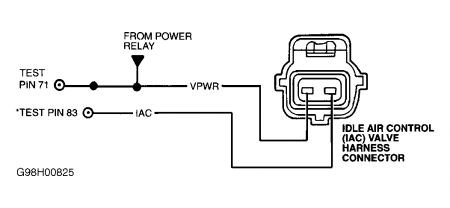
TESTS W/CODES (SOHC) -1998 Mercury Tracer GS Page 1 of 5 Diagnostic Aids Perform this test when instructed during QUICK TEST or if directed by other test procedures. This test is used to diagnose the following:  Throttle linkage.  Wiring harness circuits (IAC and VPWR).  Faulty Idle Air Control (IAC) valve.  Faulty throttle body.  Faulty Powertrain Control Module (PCM). Fig. 52: Identifying IAC Circuit & Connector Terminals 1) Check For DTCs Retrieve and record all Continuous Memory DTCs. Perform KOER ON-DEMAND SELF-TEST . If DTC P0505, P1504 or P1507 is present, go to next step. If DTC P0505 or P1507 is not present, IAC system is okay and testing is complete. If symptom exists, go to TESTS W/O CODES - EEC-V article. 2) DTC P0505, P1504 & P1507 DTCs P0505 and P1504 indicate IAC system malfunction has been detected. DTC P1507 indicates that IAC system under speed fault has been detected. Possible causes are:  IAC circuit open or shorted to PWR.  VPWR circuit open.  Contaminated IAC valve assembly.  Damaged throttle body.  Faulty IAC valve.  Faulty PCM. Turn ignition off. Disconnect IAC valve connector. Turn ignition on. Measure voltage between VPWR terminal at IAC valve wiring harness connector and battery ground terminal. If voltage is more than 10.5 volts, go to next step. If voltage is 10.5 volts or less, repair open in VPWR circuit. 3) Check IAC Valve Resistance Turn ignition off. Connect DVOM positive lead to VPWR terminal at IAC valve. Connect DVOM negative lead to IAC terminal at IAC valve. If resistance is 6-13 ohms, go to next step. If resistance is not 6-13 ohms, replace IAC valve assembly. 4) Check IAC Valve Internal Short To Case Turn ignition off. Measure resistance between each IAC valve terminal and IAC housing. If both resistance readings are more than 10,000 ohms, go to next step. If any resistance reading is 10,000 ohms or less, replace IAC valve assembly. 1/29/2009 TESTS W/CODES (SOHC) -1998 Mercury Tracer GS Page 2 of 5 5) Check Air Inlet System Turn ignition off. Remove air filter. Inspect air filter, MAF sensor and air inlet system for excessive dirt or contamination. Repair as necessary. If air inlet system is okay, go to next step. 6) Check For Vacuum Leaks Start engine and allow to idle. Inspect air inlet system any of the following possible faults:  Cracked or punctured air inlet tube.  Loose inlet air tube or air cleaner housing.  Loose or damaged throttle body.  Contaminated or damaged IAC valve assembly.  Faulty EGR valve or gasket.  Faulty PCV valve or hose. Check entire system for vacuum leaks. Repair as necessary. If no vacuum leaks are found, go to next step. 7) Check IAC Circuit Continuity Turn ignition off. Disconnect PCM 104-pin connector. Inspect connector for loose, damaged or corroded terminals. Repair as necessary. Install Breakout Box (014-00950), leaving PCM disconnected. Measure resistance between breakout box test pin No. 83 (IAC) and IAC terminal at IAC valve wiring harness connector. If resistance is 5 ohms or more, repair open in IAC circuit. If resistance is less than 5 ohms, go to next step. 8) Check IAC Circuit For Short To Power Turn ignition on. Measure voltage between test pin No. 83 (IAC) at breakout box and chassis ground. If voltage is one volt or more, repair short to power in IAC circuit. If voltage is less than one volt, go to next step. 9) Check IAC Circuit For Short To Ground Turn ignition off. Disconnect scan tool from DLC. Measure resistance between test pin No. 83 (IAC) and test pins No. 51 and 103 (PWR GND) at breakout box. If resistance is more than 10,000 ohms, go to next step. If resistance is 10,000 ohms or less, repair short to ground in IAC circuit. 10) Check IAC Signal From PCM Connect PCM to breakout box. Connect IAC valve to wiring harness connector. Connect DVOM between test pins No. 83 (IAC) and No. 51 (PWR GND) at breakout box. Start engine and slowly increase speed to 3000 RPM. If voltage is not 3.0-11.5, replace PCM. If voltage is 3.0-11.5 volts, proceed as follows:  If Continuous Memory DTC P1504 or P1507 is present, go to step 30).  If Continuous Memory DTC P1504 or P1507 is not present, check throttle body for damage. 1/29/2009 TESTS W/CODES (SOHC) -1998 Mercury Tracer GS Page 3 of 5 Repair as necessary. If throttle body is okay, replace IAC valve. NOTE: A break in step numbering sequence occurs at this point. Procedure skips from step 10) to step 20). No test procedures have been omitted. 20) DTC P1506 This DTC indicates IAC system has reached over speed malfunction. Possible causes are:  IAC circuit short to ground.  IAC assembly stuck open.  Air intake leaks or restrictions.  Damaged throttle body.  Contaminated or damaged IAC valve assembly.  Faulty Powertrain Control Module (PCM). Start engine and allow to idle. Inspect air inlet system any of the following possible faults:  Cracked or punctured air inlet tube.  Loose inlet air tube or air cleaner housing.  Loose or damaged throttle body.  Contaminated or damaged IAC valve assembly.  Faulty EGR valve or gasket.  Faulty PCV valve or hose. Check entire system for vacuum leaks. Repair as necessary. If no vacuum leaks are found, go to next step. 21) Check EVAP System Turn ignition off. Disconnect hoses from EVAP canister purge valve. Connect a vacuum pump to carbon canister hose port. See Fig. 53 . Using vacuum pump, apply 16 in. Hg to port. If vacuum bleeds off within 20 seconds, replace EVAP canister purge valve. If vacuum holds, go to next step. Fig. 53: Identifying EVAP Canister Purge Hose Ports 22) Check IAC Valve Function Start engine and allow to idle. Ensure transmission is in Park or Neutral and engine is warmed to normal operating temperature. Disconnect IAC valve wiring harness connector. If engine speed drops, go to next step. If engine speed does not drop, check throttle body for damage. If throttle body is okay, replace IAC valve. 23) Check IAC Circuit For Short To Ground Turn ignition off. Disconnect scan tool from DLC. Disconnect PCM 104-pin connector. Inspect connector for loose, damaged or corroded terminals. Repair as necessary. Install Breakout Box 1/29/2009 TESTS W/CODES (SOHC) -1998 Mercury Tracer GS Page 4 of 5 (014-00950), leaving PCM disconnected. Measure resistance between test pin No. 83 (IAC) and test pins No. 51 and 103 (PWR GND) at breakout box. If both resistance readings are more than 10,000 ohms and idle speed is normal, go to step 30). If both resistance readings are more than 10,000 ohms and high idle speed is present, replace PCM. If resistance is 10,000 ohms or less, repair short to ground in IAC circuit. NOTE: A break in step numbering sequence occurs at this point. Procedure skips from step 23) to step 25). No test procedures have been omitted. 25) DTC P1505: Check Inlet Air Supply This DTC indicates IAC system has reached the adaptive learning limit. Possible causes are:  Air intake leaks or restrictions.  Throttle body linkage binding.  Contaminated or damaged IAC valve assembly.  Damaged throttle body. Inspect air intake system for leaks. Repair as necessary. If air intake system is okay, go to next step. 26) Check Air Inlet System Turn ignition off. Remove air filter. Inspect air filter, MAF sensor and air inlet system for excessive dirt or contamination. Repair as necessary. If air intake system is okay, go to next step. 27) Check Throttle Body & Linkage Disconnect accelerator cable. Remove air cleaner tube from throttle body. Check cable and throttle body linkage for binding or interference. If faults are present, go to CIRCUIT TEST HU , step 3). If no faults are present, go to CIRCUIT TEST HU, step 8). NOTE: A break in step numbering sequence occurs at this point. Procedure skips from step 27) to step 30). No test procedures have been omitted. 30) Check IAC System For Intermittent Open Or Short Circuit Connect scan tool to DLC. Start engine and allow to idle. Ensure all accessories are off and engine is warmed to normal operating temperature. Using scan tool, select IAC and RPM PIDs from PID/DATA monitor menu. IAC duty cycle should be 20-45 percent. Observe IAC and RPM PIDs for indication of fault while performing the following:  Wiggle and bend wiring harness starting at IAC valve and work toward PCM.  Lightly tap on IAC valve to simulate road shock. Fault will be indicated by sudden change in IAC PID or RPM PID value. If any faults are found, isolate fault and repair as necessary. If no faults are found, problem cannot be duplicated at this time. Go to CIRCUIT TEST Z .
Jan 29, 2009 at 11:24 AM
Avatar
AIDAN_80
  • MEMBER
  • 41 POSTS
Thanks for posting that!!.. That should give me a few more options to test!
Jan 29, 2009 at 9:39 PM
Avatar
MERLIN2021
  • CERTIFIED EXPERT
  • 17,250 POSTS
Let us know...
Jan 31, 2009 at 5:33 AM
Avatar
AIDAN_80
  • MEMBER
  • 41 POSTS
I carried out a number of tests using the information posted where I could follow it, remember I’m not a mechanic and not familiar with all the terms presented in it. I also have no way to identify everything it mentions. I know I need to buy a book as it’ll help quite a bit!

Please note I did carry out each test approximately 10 times to ensure accuracy. Tests were carried out where directed with power set to on and when needed with the engine running:

Test 1:
Code 1504 present, previously had 1507 until I replaced the IAC. Same code with both new and used IAC.

Test 2:
Following the direction given I measured the voltage from VPWR to ground at 11.8v more than the 10.5 minimum stated.

test 3 & 4:
3. Resistance between VPWR and ground at 12.8 ohms, 4. resistance between IAC terminal and housing over 10,000.
test 7:
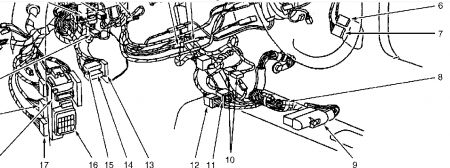
I’ve no clue where the PCM 104 pin connector is in order to disconnect it. Would welcome any direction finding it. I would really like to test that circuit fully to be sure nothing is shorted.

Voltage between Pin 83 (at the harness) and ground is measuring 0v. Resistance between Pin 83 and ground is 203 ohms
test 9:
Have no way to identify test Pin 51 (ground) do not have a breakout box or scan tool. I’d prefer not to buy a scan tool as I already know the code 1504 and before replacing the IAC it was 1507 over speed.

test 20:
IAC valve replaced, throttle body appears to be fine. Don’t have the over speed code after replacing the IAC. Checked for leaks and had a garage check for leaks none were found. I checked again with carb cleaner and got a minor increase in idle when spraying in the area highlighted in my post above. PCV valve and hose appears to be fine.
test 21:
I’ve no clue what this is even talking about! I’ve a feeling this was checked at the garage as they ran a test for vacuum leaks and found none after flushing out the A/C.

test 22:
Started engine let it heat up (actually drove around for a few minutes) parked waited for everything to come to a rest.. disconnected power to IAC.. no change might as well be driving without the power connected to the IAC! I do need to find that 104 pin PCM connector?

test 24:
Need to find Pins 53, 103 have no breakout box. Don’t have a high idle anymore or normal idle, my idle is now mostly low apart from when starting the engine from cold which is expected to be a bit higher than normal.

PCM – Powertrain Control Module, I assume this is the computer? If so I can rule this out, at least the garage did. They replaced it and the replacement responded the same as the old one so swapped back in the old one as it worked fine and sent the other back.

Thanks again for looking at this!
Jan 31, 2009 at 1:21 PM
Avatar
AIDAN_80
  • MEMBER
  • 41 POSTS
I should also note that this car drove perfect when I bought it.. after I had the A/C replaced it shook really bad! Now the shaking isn't too bad but I often wonder could something electrical been nipped, torn or shorted while changing the A/C?
Jan 31, 2009 at 1:31 PM
Avatar
AIDAN_80
  • MEMBER
  • 41 POSTS
I checked yet again for vacuum leaks as I did find an area giving me a slight increase in idle when sprayed with carb cleaner.. I wanted to ensure 100% that nothing was cracked, open or rotted away..

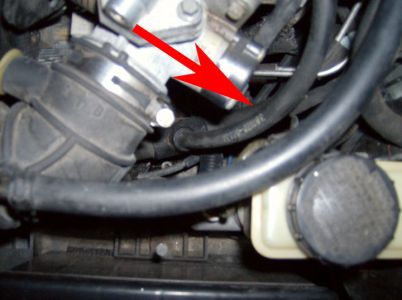
I found see images below.. under the IAC the throttle body.. below that there is a tube that runs down and it's open on the other end.. it isn't connected to anything? When I sprayed carb cleaner on it the idle jumps when I closed the tube the idle drops then starts to come back up again very slowly?

Should this tube be connected to something or is it some kind of drainage tube?

The image was taken from the area highlighted by the red arrow, below the throttle body leaning over the battery on the right side of the vehicle.

Jan 31, 2009 at 4:36 PM
Avatar
MERLIN2021
  • CERTIFIED EXPERT
  • 17,250 POSTS
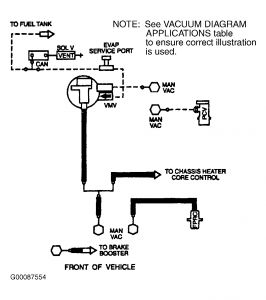
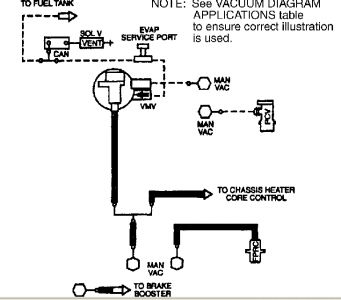
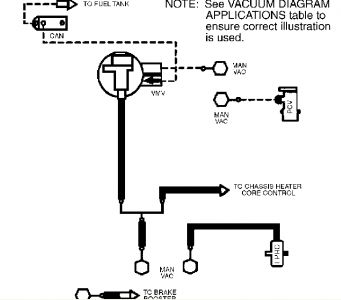
PCM 104 pin connector is at the center of the dash number 9 and I'm not sure about the vac line, but it should NOT be a dead end. There should be a decal with the vac routing on it, but heres one anyway...Any increase in engine speed means a vacuum leak and ALL must be repaired! The PCM cannot control mixture when unmetered air is entering the engine! Fix these and you will more than likly fix the problem.


https://www.2carpros.com/forum/automotive_pictures/62217_PCM_5.jpg


https://www.2carpros.com/forum/automotive_pictures/62217_vac_2.jpg


https://www.2carpros.com/forum/automotive_pictures/62217_vacb_1.jpg


https://www.2carpros.com/forum/automotive_pictures/62217_vaca_1.jpg

There are two different routings shown so here is both.
Jan 31, 2009 at 6:16 PM
Avatar
AIDAN_80
  • MEMBER
  • 41 POSTS
Thanks again for the response! I think it may well be that vacuum line running out of the throttle body. I found the other end of the line and from what I've been told is connected back to the purge valve? I assume that the black item in the image below? The line looks like it's rotted away over time it's falling apart.

I got a new line and once I have some daylight tomorrow I'll install it and see if that helps. Any advice on installing it would be welcome. I'm not seeing any clamps holding it on I assume it's stuck somehow.. the original line looks like it was stuck to the plastic line that runs from the purge valve (black item) in the image below.

Jan 31, 2009 at 7:24 PM
Avatar
AIDAN_80
  • MEMBER
  • 41 POSTS
I installed the new vacuum line from the bottom of the throttle body back to where the other broken end was. With the engine running, I sprayed the entire area again with carb cleaner and no changes in idle. I also pulled out the IAC power connector and right away the idle dropped very quickly but it adjusted itself before it stalled and settled into a shake once more. Reconnecting the IAC the idle corrected itself again and the shaking was reduced quite a bit.

I've cleared the computer just so I'm starting from fresh and so it'll relearn everything from the start. I'll drive it for a few days and see how it is. Even now it does feel a bit smoother than before although I can still feel the vibrations from the engine inside the car.
Feb 1, 2009 at 1:35 PM
Avatar
AIDAN_80
  • MEMBER
  • 41 POSTS

Now I've been driving around for a bit and so far so good.. the shaking is down to a slight vibration once and a while with a minor surge up then down but only minor. Check engine has not come back on again...

Assuming your correct and a backfire took out the IAC could it have taken out anything else that would or could throw off the idle just a tiny bit? PCV maybe or anything else I should look at.

Many thanks again for your help and to everyone else who helped!
Feb 2, 2009 at 5:57 PM
Avatar
MERLIN2021
  • CERTIFIED EXPERT
  • 17,250 POSTS
No but you might try cleaning the thottle body and the egr port all the way thru...
Feb 3, 2009 at 12:33 PM
Avatar
AIDAN_80
  • MEMBER
  • 41 POSTS
I'll try cleaning the throttle body as suggested, if I can ever figure out how!

Check engine is back on.. P1506:

* Engine Vacuum Leak
* Failed IAC Valve

Considdering I've tried a new in the box IAC, Used IAC and the broken IAC.. I'm sure enough I have two good IAC's! Which leaves Vacuum leak? I checked again with carb cleaner and I can't find anything!

Any tips, tricks, suggestions, hidden lines not easily visible I could be missing?
Feb 4, 2009 at 8:18 PM