change rear brakes

2005 JAGUAR X-TYPE
44,000 MILES • 6 CYL • AWD • AUTOMATIC
Avatar
YYY420
  • MEMBER
  • 1 POST
Step by step instructions to change rear brake and rotors?
Aug 14, 2009 at 8:49 PM
Advertisement
Avatar
JACOBANDNICKOLAS
  • CERTIFIED EXPERT
  • 110,175 POSTS
Hi,

Replacing the rear brake pads and rotors isn't too hard to do. Just make sure to get a lifetime pad so you don't have to pay for them again in the future.

You can expect rear brake pads to last approximately 30,000 miles. However, that will change based on driving habits and terrain.

To get you started, here is a link that explains in general how it is done. You can use this as a guide.

https://www.2carpros.com/articles/how-to-replace-rear-brake-pads-and-rotors

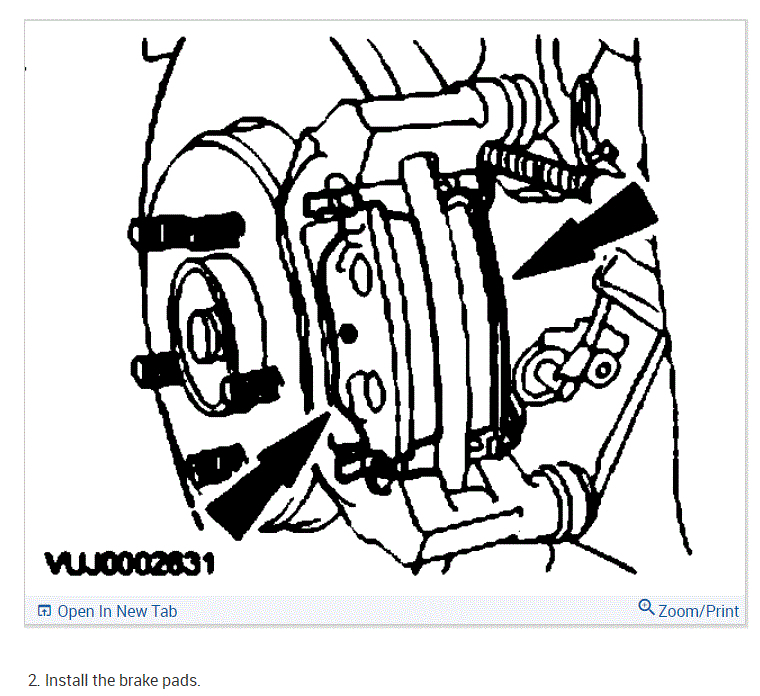
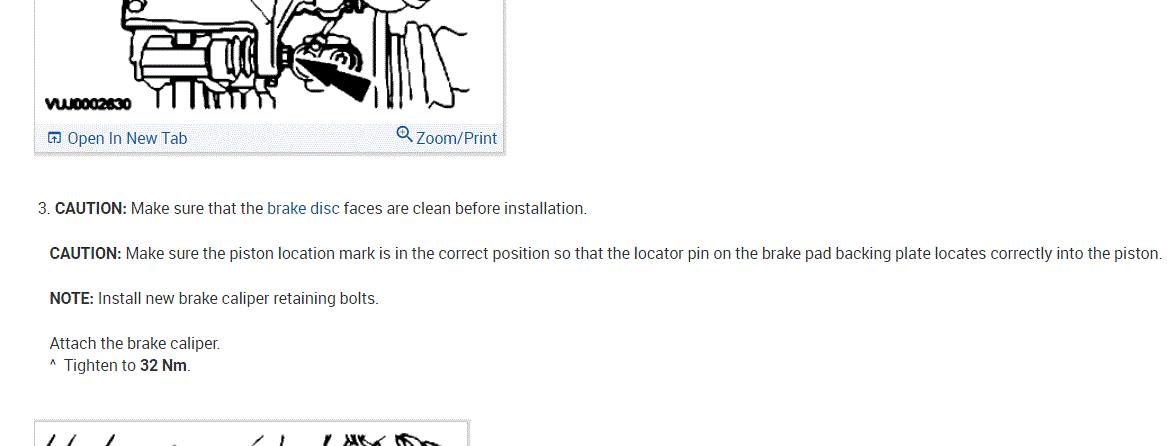
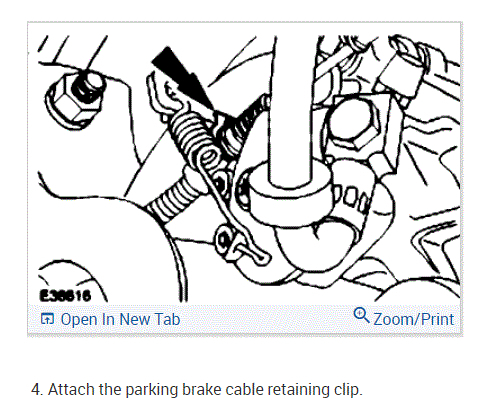
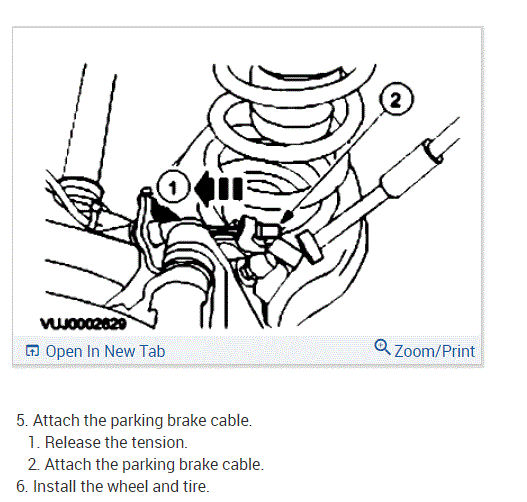
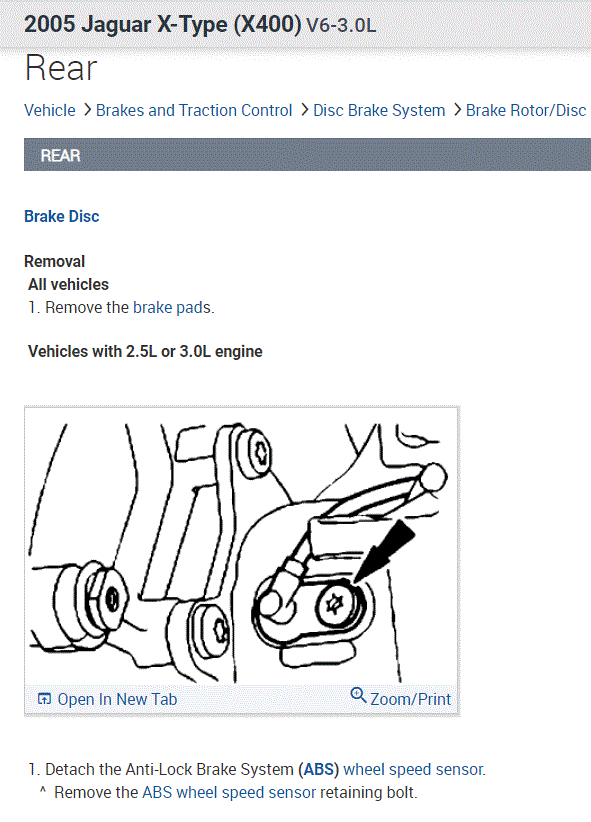
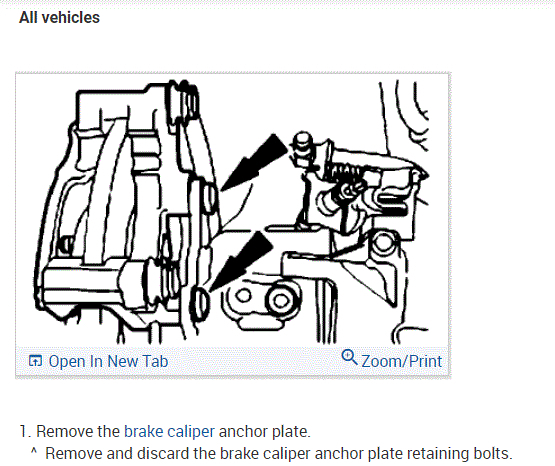
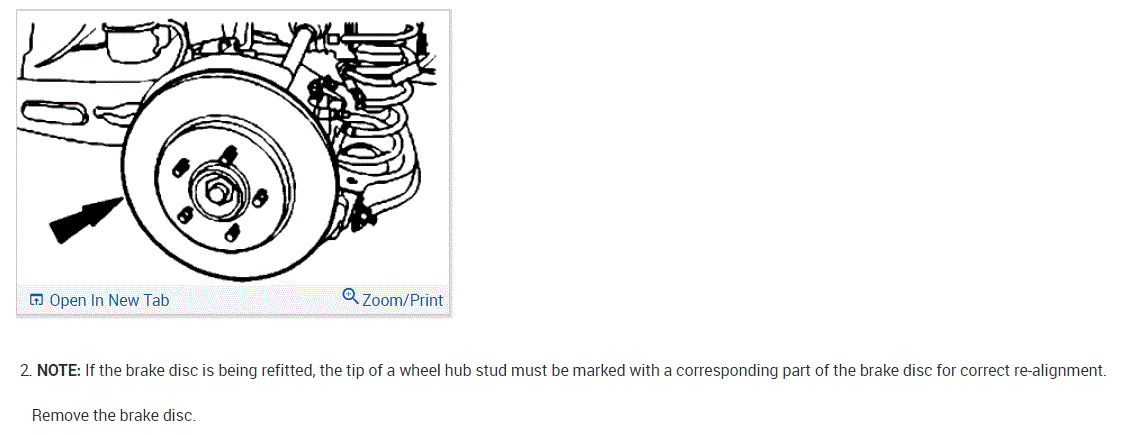
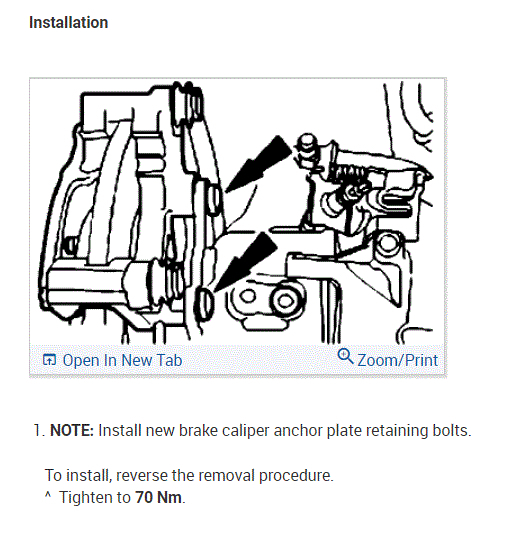
If you look at the attachments below, they provide the directions specific to your vehicle for rear brake pad and rotor replacement.

I hope this helps. Let me know if you have other questions.

Take care,

Joe

See pics below.
May 12, 2021 at 7:10 PM
Avatar
SXFT
  • MEMBER
  • 1 POST
I would like to know what tools are needed to change my rear brake pads
May 23, 2021 at 12:59 PM (Merged)
Advertisement
Avatar
DAVE H
  • CERTIFIED EXPERT
  • 13,384 POSTS
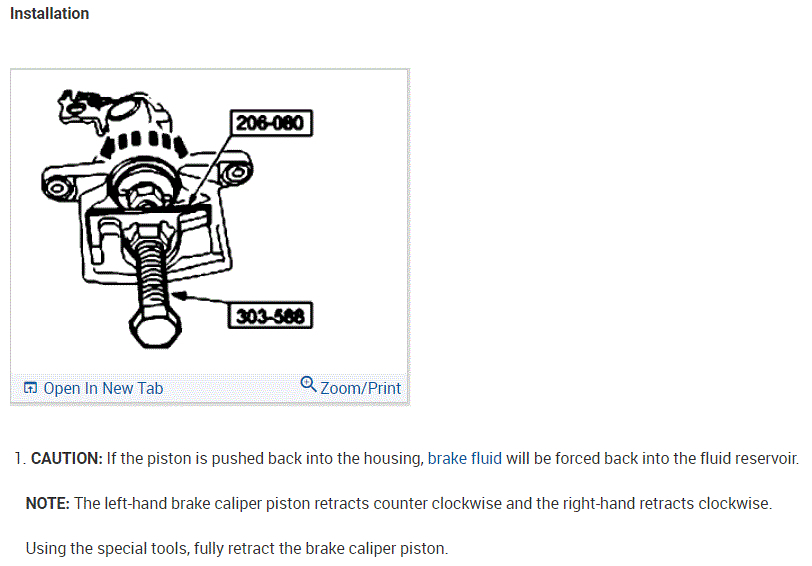
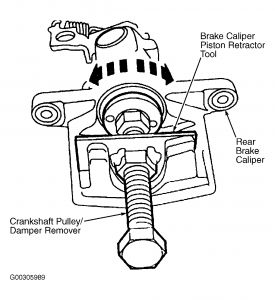
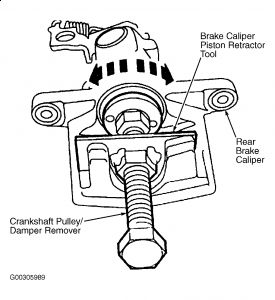
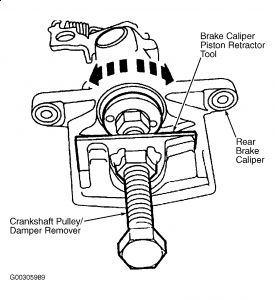
Using the Brake Caliper Piston Retractor Tool fully retract the rear brake caliper piston into the caliper housing. See Fig. 64 .


https://www.2carpros.com/forum/automotive_pictures/266999_jag_105.jpg

NOTE:The left rear brake caliper piston retracts counterclockwise and the right rear caliper piston retracts clockwise.
May 23, 2021 at 12:59 PM (Merged)
Avatar
DAVIDDIAZ3971
  • MEMBER
  • 3 POSTS
How do I replace rear disc pads
May 23, 2021 at 12:59 PM (Merged)
Avatar
DAVE H
  • CERTIFIED EXPERT
  • 13,384 POSTS
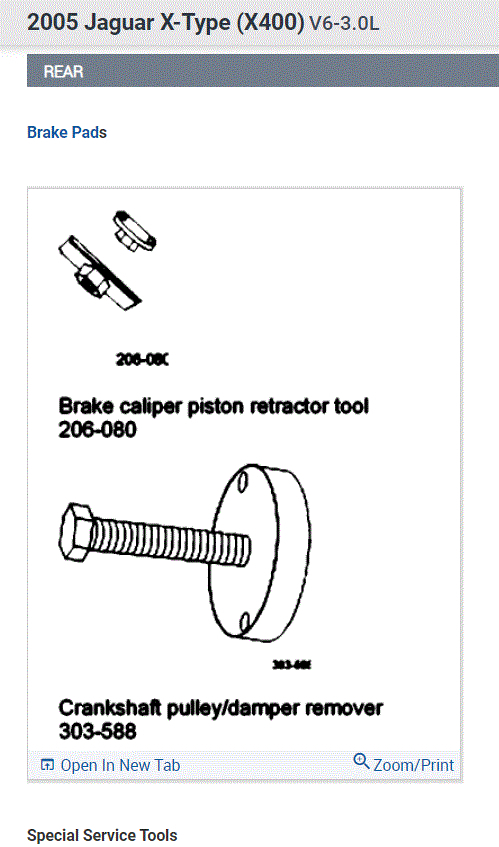
Hello ... thanks for the donation .. much appreciated. REAR DISC BRAKE PADS WARNING:Brake dust, if inhaled can damage your health. Always remove brake dust using a vacuum brush. Do not use a compressed air line to disperse brake dust into the atmosphere. NOTE:Special tools required: universal Brake Caliper Piston Retractor Tool or jaguar Brake Caliper Piston Retractor Tool(206-080) and Crankshaft Pulley/Damper Remover (303-588). NOTE:Brake pads must always be replaced in axle sets. Removal Open engine compartment hood and fit paint protection covers to fenders. Raise and support vehicle. Remove rear wheels. Release the tension on the parking brake cable by moving the parking brake caliper lever away from the cable end. Remove cable from parking brake cable lever. Remove the parking brake cable from the rear brake caliper. On vehicles with manually adjusted parking brakes, remove the retaining clip. On vehicles with self-adjusting parking brakes, release the tabs on the parking brake cable housing. Remove and discard the rear brake caliper retaining bolts. Remove the rear brake caliper and secure to one side. Remove the rear brake pads. Clean and inspect caliper and all associated parts. Installation CAUTION:Retracting the caliper piston may cause the fluid reservoir to overflow. Remove brake fluid spillage immediately from paint work with clean water. NOTE:The left rear brake caliper piston retracts counterclockwise and the right rear caliper piston retracts clockwise. Using the Brake Caliper Piston Retractor Tool (206-080) and Crankshaft Pulley/Damper Remover (303-588), Or a universal brake retract/rotate tool ..fully retract the rear brake caliper piston into the caliper housing. See Fig. 64


https://www.2carpros.com/forum/automotive_pictures/266999_jag_88.jpg

Install the rear brake pads NOTE:Make sure the piston location mark is in the correct position so that the locator pin on the brake pad backing plate locates correctly into the piston. Using NEW caliper retaining bolts, install the rear brake caliper. Tighten rear caliper retaining bolts to specification. See TORQUE SPECIFICATIONS Install the parking brake cable to rear brake caliper. On vehicles with manually adjusted parking brakes, install parking brake cable retaining clip. On vehicles with self-adjusting parking brakes, ensure that retaining tabs secure the parking brake cable housing. Release the tension on the parking brake cable by moving the parking brake caliper lever away from the cable end. Install cable to parking brake cable lever. Install rear wheels. Install lug nuts and tighten to specification. See TORQUE SPECIFICATIONS . Lower vehicle. Ensure that brake fluid level is at the MAX mark on reservoir. Start the engine and repeatedly press the brake pedal until brake pressure is evident. Top off brake fluid as necessary, bringing fluid level to the MAX mark. If necessary, check parking brake adjustment. See PARKING BRAKE under ADJUSTMENTS. Remove paint work protection covers, and close engine compartment hood. Hope this helps


https://www.2carpros.com/forum/automotive_pictures/266999_AAA2_1077.png

May 23, 2021 at 12:59 PM (Merged)
Avatar
DAVIDDIAZ3971
  • MEMBER
  • 3 POSTS
How do you change rear brake pads .Do i need a reset tool and if i do how to use it including which wsy rotation
May 23, 2021 at 12:59 PM (Merged)
Avatar
DAVE H
  • CERTIFIED EXPERT
  • 13,384 POSTS
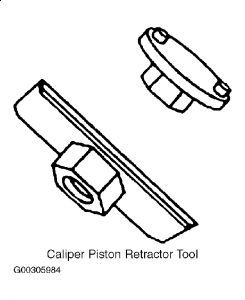
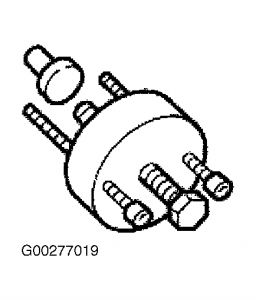
Hello .. thanks for the doantion .. much appreciated You can buy a generic brake tool from most autoparts stores REAR DISC BRAKE PADS WARNING:Brake dust, if inhaled can damage your health. Always remove brake dust using a vacuum brush. Do not use a compressed air line to disperse brake dust into the atmosphere. NOTE:Special tools required: Brake Caliper Piston Retractor Tool (206-080) and Crankshaft Pulley/Damper Remover (303-588). See Fig. 68 and Fig. 69 .
https://www.2carpros.com/forum/automotive_pictures/266999_jag_90.jpg


https://www.2carpros.com/forum/automotive_pictures/266999_jag2_5.jpg

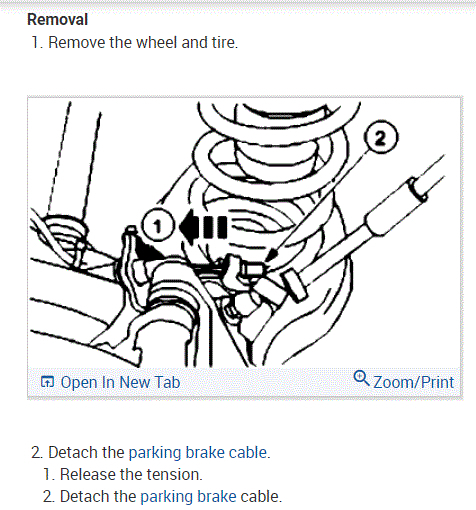
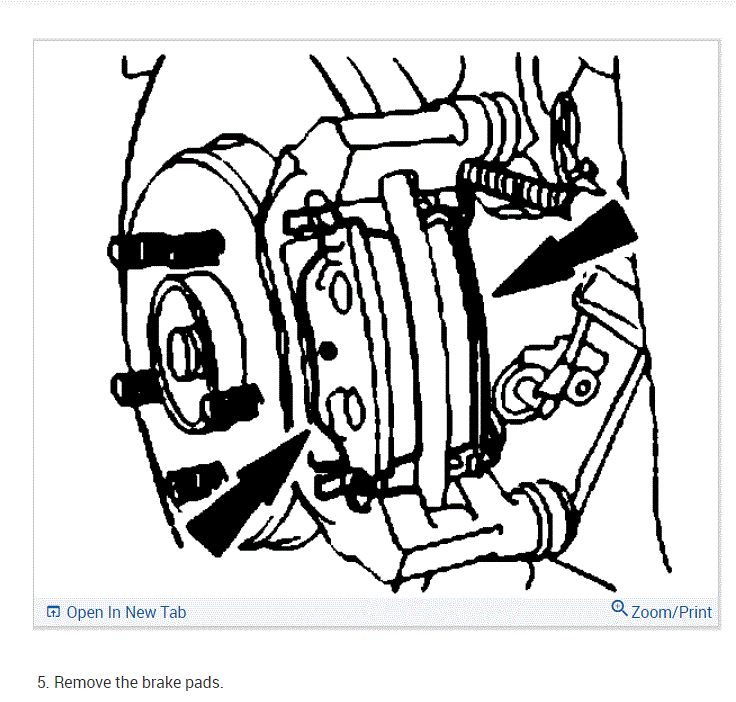
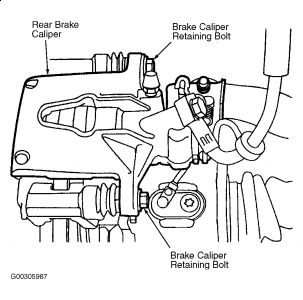
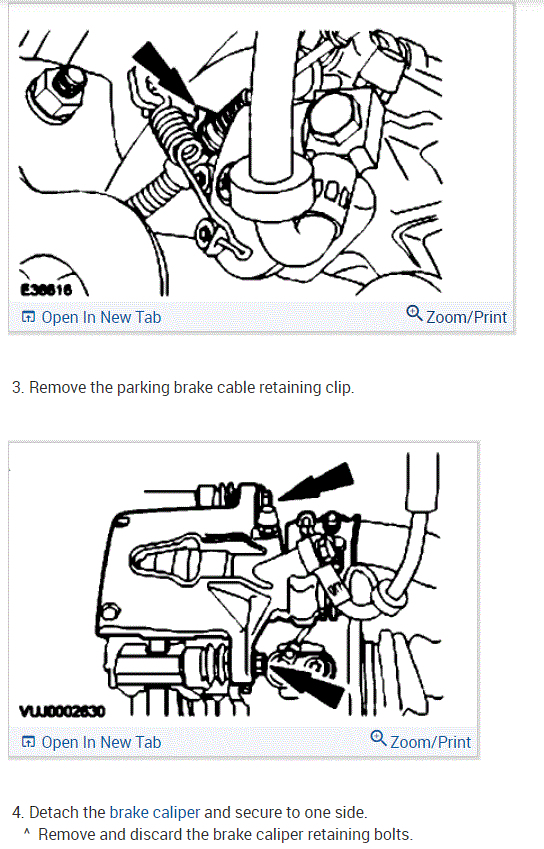
NOTE:Brake pads must always be replaced in axle sets. Removal Open engine compartment hood and fit paint protection covers to fenders. Raise and support vehicle. Remove rear wheels. Release the tension on the parking brake cable by moving the parking brake caliper lever away from the cable end. Remove cable from parking brake cable lever. See Fig. 32 . Remove the parking brake cable from the rear brake caliper. On vehicles with manually adjusted parking brakes, remove the retaining clip. See Fig. 33 . On vehicles with self-adjusting parking brakes, release the tabs on the parking brake cable housing. See Fig. 38 . Remove and discard the rear brake caliper retaining bolts. See Fig. 62 . Remove the rear brake caliper and secure to one side. Remove the rear brake pads. See Fig. 63 . Clean and inspect caliper and all associated parts. Installation CAUTION:Retracting the caliper piston may cause the fluid reservoir to overflow. Remove brake fluid spillage immediately from paint work with clean water. NOTE:The left rear brake caliper piston retracts counterclockwise and the right rear caliper piston retracts clockwise. Using the Brake Caliper Piston Retractor Tool (206-080) and Crankshaft Pulley/Damper Remover (303-588), fully retract the rear brake caliper piston into the caliper housing. See Fig. 64 . Install the rear brake pads. See Fig. 63 . NOTE:Make sure the piston location mark is in the correct position so that the locator pin on the brake pad backing plate locates correctly into the piston. Using NEW caliper retaining bolts, install the rear brake caliper. See Fig. 62 . Tighten rear caliper retaining bolts to specification. See TORQUE SPECIFICATIONS Install the parking brake cable to rear brake caliper. On vehicles with manually adjusted parking brakes, install parking brake cable retaining clip. On vehicles with self-adjusting parking brakes, ensure that retaining tabs secure the parking brake cable housing. Release the tension on the parking brake cable by moving the parking brake caliper lever away from the cable end. Install cable to parking brake cable lever. Install rear wheels. Install lug nuts and tighten to specification. See TORQUE SPECIFICATIONS . Lower vehicle. Ensure that brake fluid level is at the MAX mark on reservoir. Start the engine and repeatedly press the brake pedal until brake pressure is evident. Top off brake fluid as necessary, bringing fluid level to the MAX mark. If necessary, check parking brake adjustment. See PARKING BRAKE under ADJUSTMENTS. Remove paint work protection covers, and close engine compartment hood. Fig. 62: Removing & Installing Rear Brake Caliper

https://www.2carpros.com/forum/automotive_pictures/266999_jag_91.jpg

Fig. 63: Removing & Installing Rear Brake Pads


https://www.2carpros.com/forum/automotive_pictures/266999_jag2_6.jpg

Fig. 64: Retracting Rear Brake Caliper Piston

https://www.2carpros.com/forum/automotive_pictures/266999_jag3_1.jpg

Hope this helps


https://www.2carpros.com/forum/automotive_pictures/266999_AAA2_1080.png

May 23, 2021 at 12:59 PM (Merged)
Avatar
DEANWICKER
  • MEMBER
  • 3 POSTS
After replacing the rear calipers and pads my brakes were locking up. I'm a Quality Engineer so I was determined to understand. After a lot of experimenting I ended up with the booster and master cylinder.
The master cylinder was opened up and it's aluminum with a sliding plunger AND check valve. The check valve needs to touch a pin and only has about 3/16" travel. (You can actually remove the reservoir, small disk and fluid to see the check valve touch the pin. But I did this only after removal and reinstall onto the car.)
Why was my check valve not touching the pin? Since my car has about 120K the springs in the master and /or booster had gotten weak and the booster was barely keeping the check valve from actuating. Vacuum moves the check valve away from the trigger pin when the car runs and if you don't spring back the check valve stays shut thus locking the brakes.
You are in luck. The booster plunger can be adjusted by pressing the brake to extend it while the master is removed. (A 24" board between the seat and pedal help!)I used vice grips to hold on part of it and a wrench to adjust it. They appear to be glued together but I won. Perhaps my small torch helped. After adjusting as far as possible everything was back to normal -- almost. Once the brakes worked again the switch on the brake pedal was not contacting. This was fixed McGiver style with some stick on spacer(s) to trigger the brake pedal switch.
Why did changing pads cause a new problem of wheel locking up? My guess is there was some air in the lines that was eliminated during caliper bleeding.
Good luck to ya.
May 23, 2021 at 12:59 PM (Merged)