head gasket?

1999 FORD MUSTANG
120,000 MILES • 3.8L • 6 CYL • RWD • AUTOMATIC
Avatar
BILL ROSMUS
  • MEMBER
  • 5 POSTS
I have some oil in the coolant overflow. The car was overheating but turns out this was because the fan motor was burnt out, which I figured out when it almost overheated in a traffic slowdown on a road trip. Stopped and when the slowed down cleared driving at highway speed the temperature stayed very good. Just replaced fan motor today (drove one long highway trip back home, two hundred and fifty miles, and a few short in town trips before replacing fan motor). The highway driving back was good since highway speed air flow through the radiator; and the temperature was fine all the way back except the little bit of city driving. Analog temperature gauge. I change the oil and drained and refilled the rad before driving back and the changed the oil. There was no white gunk on the inside of the oil filter cap before or now. I do smell oil as I drove the short trips including today to the parts store to get the fan motor. Coolant seems to be lower, and some oil in it, but does not seem to be a lot. Engine power sends to be fine, no hesitation or roughness. The dirty coolant freaked me out. By the way, before I drained and refilled there was about an eighth to a quarter inch of it in the overflow. Thoughts? Advice? I am thinking head gasket but could it be the block? Help!
Aug 14, 2017 at 2:46 PM
Advertisement
Avatar
CARADIODOC
  • CERTIFIED EXPERT
  • 34,306 POSTS
A much better suspect is transmission fluid in the coolant. Check if the transmission cooler is built into your radiator. A few vehicles use a separate transmission cooler mounted in front of the radiator, but it has always been standard practice to build them into the radiator. If the tube carrying the transmission fluid through the radiator corrodes through, you will get those two fluids mixing. The transmission fluid will turn pink and may be foamy. Transmission fluid in the cooling system will rot rubber hoses from the inside.
Aug 14, 2017 at 5:23 PM
Avatar
BILL ROSMUS
  • MEMBER
  • 5 POSTS
You know, someone just told me that the transmission cooler on these is built into the radiator. And the transmission fluid does look pink, but not foamy. Maybe a small leak. The transmission has been suspect lately too. Any suggestion on fixes, or what type of shop for diagnostic?
Aug 14, 2017 at 6:50 PM
Advertisement
Avatar
CARADIODOC
  • CERTIFIED EXPERT
  • 34,306 POSTS
Basically we go by the symptoms, but if the leak is bad enough, you can remove the transmission cooler lines at the radiator, then use a cooling system pressure tester at the radiator cap. If you see the pressure drop slowly, watch for coolant or transmission fluid coming out of the transmission cooler ports.

My concern would be more for the transmission. Antifreeze in the engine oil will melt the soft outer layer of the engine bearings and cause them to to tear apart. Automatic transmissions have bushings that are made of the same type of soft metal so little chunks of debris will embed in them rather than spin around and chew up other metal parts. I would assume those bushings would be damaged by antifreeze too. Normally I only recommend a drain and fill for transmission service, but this is one time where a flush might be a better value. For the cooling system, I do not think I would be quite as concerned. It is not a big deal to flush the system yourself with a garden hose. If you do have to replace the radiator, that is a perfect time to do a flush.
Aug 14, 2017 at 7:01 PM
Avatar
BILL ROSMUS
  • MEMBER
  • 5 POSTS
I get it, remove the transmission coolant lines so that the transmission cooler part of the rad is open to atmosphere. If the pressure test fails, it means it is leaking out to the transmission lines (assuming the rad is not leaking too :) ). Now I would do that, but I live in a condo, so they would freak if I did that level of work here. But now I know what to ask when I take to a mechanic. I suspect you might be right. I had to flush the transmission a little while ago because it was doing weird downshifts on its own. And new transmission fluid seemed to help, but it is getting a bit goofy again. Chances are I might need a new transmission. The fact I do not need a new head gasket is good. Needing a new transmission. Might get them to give me a rebuilt standard instead. We will see.

In the meantime, I flushed the coolant before I saw your first reply. If I see any goop on top of that, I will take it as a bad sign. Will take it in to get the pressure test this week though. Thanks.
Aug 14, 2017 at 7:32 PM
Avatar
STRAILER
  • CERTIFIED EXPERT
  • 53,854 POSTS
Please let us know what happens so it will help others :)

Cheers, Ken
Aug 17, 2017 at 1:33 PM
Avatar
BILL ROSMUS
  • MEMBER
  • 5 POSTS
One thing I would like to do first before taking it to a mechanic, is to remove the coolant reservoir and wash it out so any oily/sludgy residue is gone. Then flush and fill it with clean coolant and observe for a week. Will almost certainly take it for a pressure test anyway.

The problem I have now is to figure out how the bottom of the reservoir is attached to the car. I got the top bolt off but it is tough to see how it attaches on the bottom without having a lift or jack and stands. Can anyone tell me how it is attached on the bottom?
Aug 17, 2017 at 6:29 PM
Avatar
CJ MEDEVAC
  • CERTIFIED EXPERT
  • 11,004 POSTS
Take a look at the pic in my link.

https://shop.advanceautoparts.com/p/dorman-oe-solutions-coolant-reservoir-603-329/11578028-P?searchTerm=coolant+reservoir#

Below the larger pic, click on the 3rd little pic. (It becomes the big pic).

Hovering over it will magnify a portion of the pic.

At the bottom of the reservoir it appears to have a cushion and an 'upside down' 'shark's dorsal fin. I do not see any other fastener and I suspect the dorsal fin sorta just sits/ locates/ dowels/ indexes into a slot to prevent movement. Removal would be to remove the fastener up top and simply pull it up!

Should you need anything, now or in the future, this may help.

https://www.2carpros.com/questions/2001-dodge-neon-milage-just-want-put-fliuds-their-locations

Keep us posted with progress.

The Medic
Aug 17, 2017 at 7:08 PM
Avatar
CARADIODOC
  • CERTIFIED EXPERT
  • 34,306 POSTS
I don't remove them when flushing the system. I go in the reservoir with a pressure washer wand to loosen the gunk. When I'm done with flushing the rest of the system, I pull the hose off at the radiator neck, and let it hang down as far as possible. I add water from the garden hose, and cover the opening with my hand if necessary, then the water flowing out the hose will siphon the reservoir empty. I add water faster at first to make it overflow and let the oil float out.

For the flush, there is always about a half gallon of water left in the block after it has been drained. I refill the system with a gallon of straight antifreeze, then a gallon of straight water, alternating until the radiator is full. Run the engine until it is warm and the coolant is circulating. Once it is mixed, test the freeze point. Since the reservoir was drained and is still empty, you can add water or antifreeze to bring the freeze point close to minus 35 degrees.
Aug 18, 2017 at 9:57 PM
Avatar
BILL ROSMUS
  • MEMBER
  • 5 POSTS
I live in a condo. No option for a hose or pressure washer unfortunately. Would be nice to be in a house but the cheapest around here are well over a million dollars... In the whole city. No stand alone house is cheaper. So have to remove and take upstairs. Any more than this I need a mechanic because even this much mechanical work risks busy bodies complaining.
Aug 18, 2017 at 10:46 PM
Avatar
CARADIODOC
  • CERTIFIED EXPERT
  • 34,306 POSTS
You might consider looking for a nearby community college with an Automotive program. We were always looking for live work to give the kids real-world experience, and we had about a dozen community members who would sit on a broken car until it fit what we were teaching because they knew the value these projects had for us.

Our students were very responsible and well-supervised. We charged ten bucks per hour for what the job was supposed to take. The downside is you have to wait until what you need fits the subject being studied, otherwise it would take work away from the shops that hired our graduates. Also, you may have to leave the car for days, or come back at an appointed time. My students were with me four hours per day, but part of that time was spent in the classroom.

This job would be part of a cooling system flush, which would have been part of my Engine Repair class. We would do this for the people I mentioned who were regular / repeat customers. The instructor might not take this on if he thinks he will never see you again, because it really doesn't provide a lot of learning experience. He might be more interested in having a student diagnose the original problem, and have him clean the reservoir as an additional task.
Aug 18, 2017 at 11:18 PM
Avatar
IMPERFECTANGEL13
  • MEMBER
  • 4 POSTS
My aunt gave me her 1999 Ford Mustang Saturday. She told me that there was a blown head gasket. Knowing that it had set for 2 years, untouched, I took my battery from my other car and put it in the mustang. It acted like it wanted to start, but just would not. Now, I'm having trouble finding out where to get parts and how much it will cost to be replaced. Like I said above, it wouldn't start, and a guy at one auto body shop told me he couldn't replace JUST the head gasket, he would have to replace the whole engine. So I need to know, if that is true; And approximately how much it would cost to fix the problem.
Dec 2, 2020 at 9:03 AM (Merged)
Avatar
RASMATAZ
  • CERTIFIED EXPERT
  • 75,992 POSTS
Dunno the cost of repairs due to it varies with location-

If its cranking over and will not start-check the fuel pressure and also for spark-start here-also refer to this link for more information:https://www.2carpros.com/articles/car-cranks-but-wont-start

Dec 2, 2020 at 9:03 AM (Merged)
Avatar
IMPERFECTANGEL13
  • MEMBER
  • 4 POSTS
Okay thanks. My dad also said the oil was kinda milky??? what does that mean?
Dec 2, 2020 at 9:03 AM (Merged)
Avatar
RASMATAZ
  • CERTIFIED EXPERT
  • 75,992 POSTS
If its milky have it block and pressure tested-to rule out a blown headgasket, cracked head or block
Dec 2, 2020 at 9:03 AM (Merged)
Avatar
IMPERFECTANGEL13
  • MEMBER
  • 4 POSTS
Okay and this guy that works at a auto body place, he said that he couldn't replace the gasket he could only replace the whole engine? Is that necessarily true?
Dec 2, 2020 at 9:03 AM (Merged)
Avatar
RASMATAZ
  • CERTIFIED EXPERT
  • 75,992 POSTS
Go somewhere else and get a 2nd opinion
Dec 2, 2020 at 9:03 AM (Merged)
Avatar
IMPERFECTANGEL13
  • MEMBER
  • 4 POSTS
Okay, thank you so much for your help.
Dec 2, 2020 at 9:03 AM (Merged)
Avatar
LIZBROWN
  • MEMBER
  • 1 POST
I've been told by a couple of Ford Techs that the cost of repairing the head gasket on my Mustang would be more than the car is worth. I can't afford a new one, nor can I afford the high cost to repair the part in a shop. If I have a trusted family member, with decades of mechanical experience, do the repairs would it be beneficial or would I be wasting my (and my family member's) time?
Dec 2, 2020 at 9:04 AM (Merged)
Avatar
RACEFAN966
  • CERTIFIED EXPERT
  • 5,029 POSTS
Ok the gasket set should cost about $274.00. Now if this family member has good experence with cars there is now reason why without the help of a good manual Chilton or Haynes and what ever help I can provide that you can't do this. Now as for the repair being worth more then car that is depended on how much you like you car. I have a 98 Mustang V-6 with about 250hp's and a pro charger planned for the future to put this V-6 at 500 hp and I get about 25 mpg in town and about 32 on the highway. I have done some performance mods already so if you ask me the car it totaly worth it but I am a Ford guy and really enjoy my Mustang. If I can help or you have any questions while doing the repairs just ask.
Dec 2, 2020 at 9:04 AM (Merged)
Avatar
FIREPROGOOSE
  • MEMBER
  • 1 POST
do you have a list of steps i can follow to replace the haed gaskets on a 98 mustang, 3.8L V6
Dec 2, 2020 at 9:04 AM (Merged)
Avatar
BLACKOP555
  • CERTIFIED EXPERT
  • 10,386 POSTS
kinda a easy job it will tkae abit of typing to say it all.

i can sum up the most of it though.

basically mark and disconnect all wires from manifold and near heads, next step disconnect intake manfiold and throttle body as a whole. then remove lower intake manifold.

from there disconnect exhaust manifolds at the exhaust collectors then unbolt heads.
Dec 2, 2020 at 9:04 AM (Merged)
Avatar
MARVINEVANS
  • MEMBER
  • 9 POSTS
So i just redid the headgaskets on my mustang gt i used the correct torque pattern and specks i used felpro head gaskets and and new head bolts i had the heads serfaced but i just started it up and looked under it and there is oil runing down the exhast manifold and it looks like chocolate milk and shur enough my engine coolent and oil are mixing and mixing on the ground too !!!!..
What did i do wrong was i supost to put the gaskets on with some type of sealent cause i put them on dry ....nothing is being burned out the exhast pipe if i haft to redo that head gasket will i need to replace thehead bolts for the 3rd time ?
Dec 2, 2020 at 9:05 AM (Merged)
Avatar
ASEMASTER6371
  • CERTIFIED EXPERT
  • 52,796 POSTS
did you change the oil and filter??

Roy
Dec 2, 2020 at 9:05 AM (Merged)

Avatar
MARVINEVANS
  • MEMBER
  • 9 POSTS
Yes everthing was oil and coolent was new
Dec 2, 2020 at 9:05 AM (Merged)
Avatar
ASEMASTER6371
  • CERTIFIED EXPERT
  • 52,796 POSTS
start with a leak down test in each cylinder to find the cylinder that is not correct

Roy
Dec 2, 2020 at 9:05 AM (Merged)
Avatar
TOFAST86
  • MEMBER
  • 3 POSTS
So I had a blown head gasket and I bought some bars head gasket repair. took the steps the car was running for a little while again after I let go down I filled up the radiator again. went to go start my car and ran for a little bit roughly and then I noticed the oil pressure drop to zero then car cut off. now my car won't start. what could be the problem?
Dec 2, 2020 at 9:05 AM (Merged)
Avatar
ASEMASTER6371
  • CERTIFIED EXPERT
  • 52,796 POSTS
Good morning,

The only repair is to replace the head gaskets.

https://www.2carpros.com/articles/coolantantifreeze-in-the-engine-oil

The coolant went down into the oil pan and contaminated the oil. That coolant damages the main and rod bearings and that is why the light is on.

The reason it will not start is coolant in the cylinders. At this point, you will need to either rebuild or replace the engine.

Roy
Dec 2, 2020 at 9:05 AM (Merged)
Avatar
TOFAST86
  • MEMBER
  • 3 POSTS
It was running after I flushed the oil. are you sure that's what I have to? what can I do to troubleshoot the problem?
Dec 2, 2020 at 9:05 AM (Merged)
Avatar
ASEMASTER6371
  • CERTIFIED EXPERT
  • 52,796 POSTS
You would need to have a leak down test done on each cylinder to see how many cylinders are leaking coolant into the oil. It is like a compression test but different. You use shop air on each cylinder.

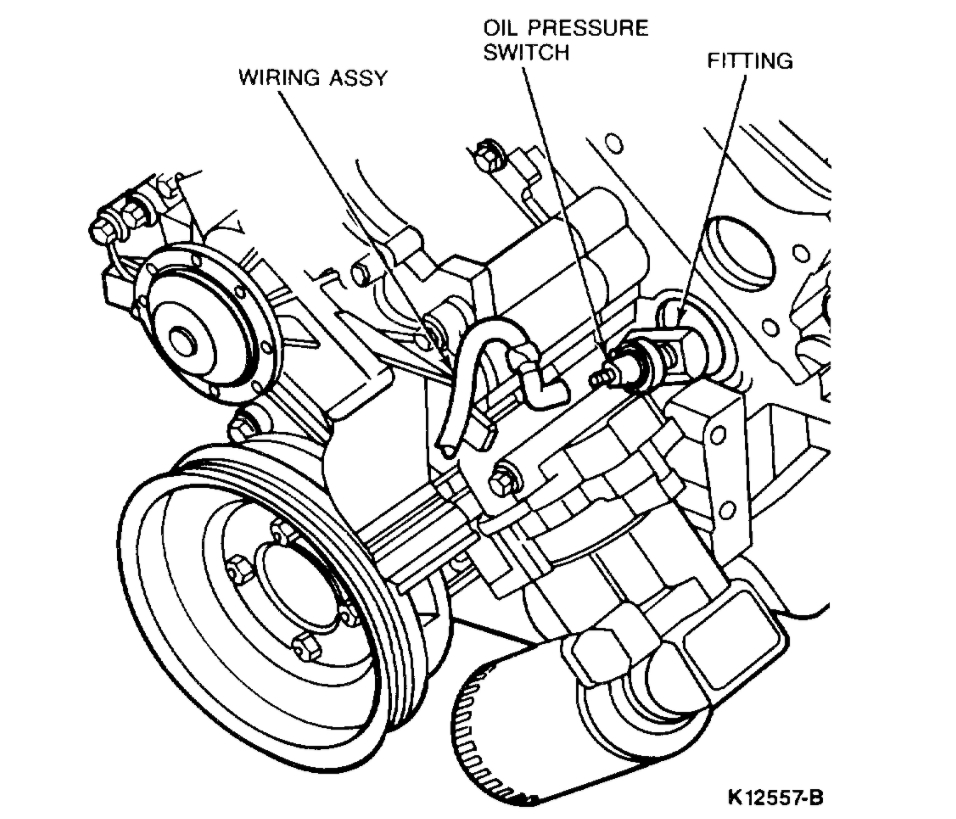
As far as the oil light , you will need to do a manual test from the oil pressure port to see if there is any pressure. You should have between 35-50 pounds. I attached a picture of the location of the sender unit.

https://www.2carpros.com/articles/high-or-low-engine-oil-pressure

You can rent a tester at a parts store.


Roy
Dec 2, 2020 at 9:05 AM (Merged)
Avatar
TOFAST86
  • MEMBER
  • 3 POSTS
I got my car to startup and idle it's a rough idle, but all my coolant pours out the exhaust pipe.
Dec 2, 2020 at 9:05 AM (Merged)
Avatar
JACOBANDNICKOLAS
  • CERTIFIED EXPERT
  • 110,175 POSTS
Hi,

It sounds like the head gasket is bad. Is there evidence of coolant mixing with the engine oil? It will have a tan creamy appearance. Take a look through this link. It explains how to check for a bad head gasket. You will see pics of what I'm referring to.

https://www.2carpros.com/articles/head-gasket-blown-test

If there is coolant mixed, it's likely that the bearings were damaged. When it is now running, is there any knocking or ticking from the engine?

_________________________________________________

1996 Ford Mustang V6-232 3.8L
Removal and Installation
Vehicle Engine, Cooling and Exhaust Engine Cylinder Head Assembly Service and Repair Procedures Removal and Installation
REMOVAL AND INSTALLATION
REMOVAL
1. Drain engine cooling system, then disconnect battery ground cable.
2. Remove air cleaner outlet tube from throttle body as follows:
a. Disconnect wire harness from intake air temperature sensor, then crankcase ventilation tube from air cleaner outlet tube.
b. Loosen air cleaner tube clamps on outlet tube, then disconnect outlet tube from throttle body.
c. Disconnect outlet tube from mass airflow sensor, then remove tube.
3. Loosen drive belt tensioner, then remove drive belts.
4. On left hand cylinder head, proceed as follows:
a. Remove oil filler cap.
b. Remove power steering pump front mounting bracket bolts.
c. Remove generator, then belt idler pulley.
d. Remove power steering pump/generator bracket bolts, then place pump/bracket assembly aside, with hoses connected, in position to prevent fluid leakage.
5. On righthand cylinder head, proceed as follows:
a. Remove drive belt.
b. Remove A/C mounting bracket bolts, then place A/C compressor aside with hoses connected.
c. Remove positive crankcase ventilation valve.
6. Remove upper intake manifold.
7. Remove valve cover.
8. Remove fuel injection supply manifold.
9. Remove lower intake manifold.
10. Remove exhaust manifolds.
11. Loosen rocker arm fulcrum bolts enough to allow rocker arm to be lifted off push rod, and rotate to one side.
12. Remove push rods, then identify position of each push rod. Push rods should be installed in their original positions during assembly.
13. Remove cylinder head bolts, then cylinder heads. Discard bolts.
14. Remove and discard old head gaskets.

INSTALLATION

CAUTION: Always use new cylinder head bolts to ensure a leak-proof assembly. Torque retention with used bolts can vary, which may result in coolant or compression leakage at cylinder head mating surface area.

1. Prepare cylinder head components as follows:
a. Lightly oil all bolts and stud bolt threads before installation, except those specifying special sealant.
b. Clean cylinder head, intake manifold, rocker arm cover and head gasket surfaces. If cylinder head was removed for head gasket replacement, check flatness of cylinder head and cylinder block gasket surfaces.
2. Position new head gasket(s) onto cylinder block using dowels for alignment, then position cylinder heads onto cylinder block.

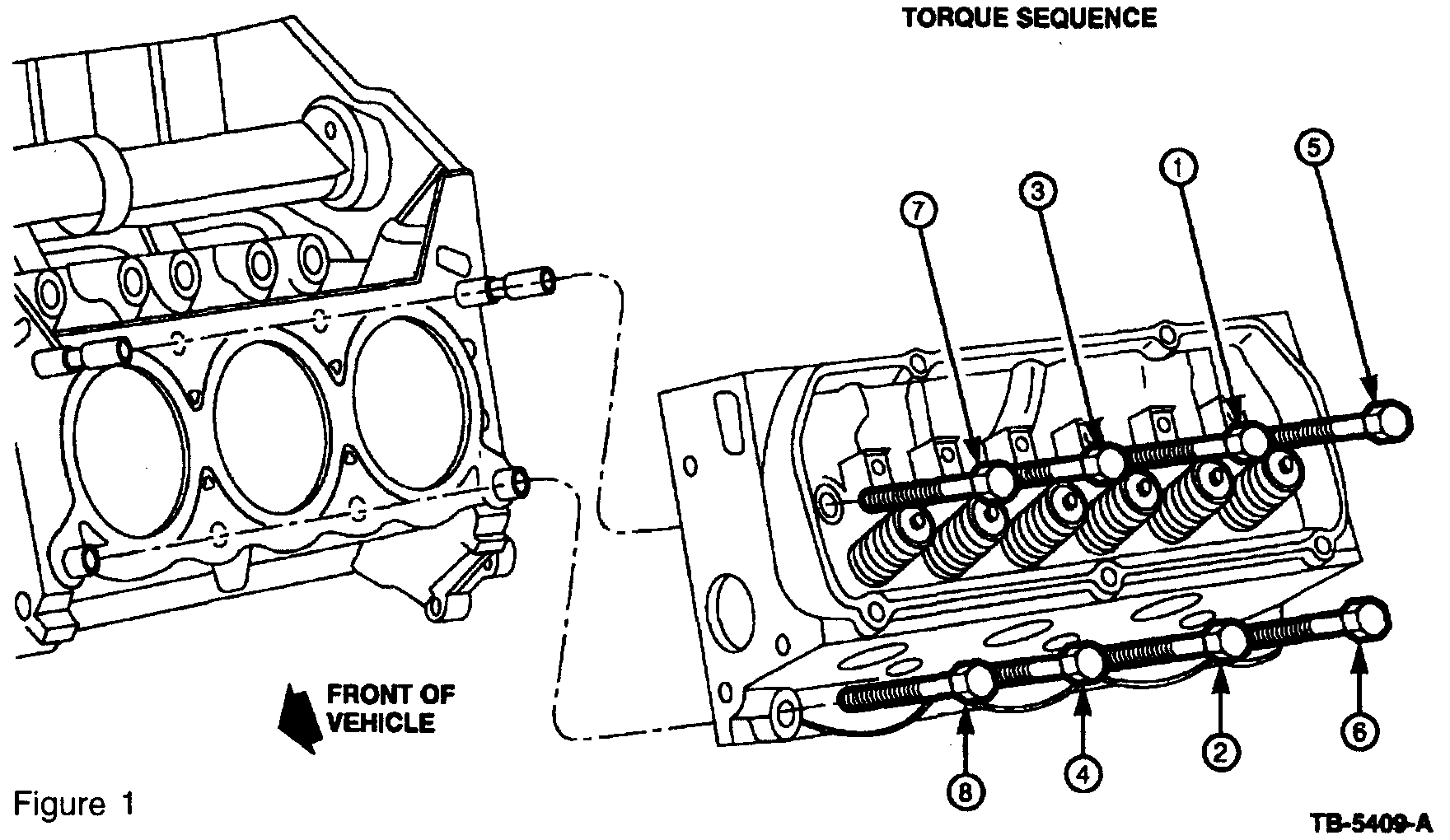
FWD 3.8L

pic 1


3. Reassemble and tighten the new head bolts to the following specifications:
Tighten all bolts in numerical sequence, as shown, in three steps as follows:

- 20 Nm (15 lb-ft)
- 40 Nm (30 lb-ft)
- 50 Nm (37 lb-ft)

Caution: Do not loosen all of the bolts at the same time. Work on one bolt at a time in the sequence shown. Failure to loosen bolts in proper sequence could cause cylinder head to warp.

4. In numerical sequence, retighten the bolts per the fallowing steps:

Long Bolts:

a. Loosen the long bolt and back out 2-3 revolutions.
b. Retighten the long bolt to 40-50 Nm (29-37 lb-ft).
c. Rotate the long bolt an additional 180°.
d. Go to the next bolt in sequence.

Short Bolts:

a. Loosen the short bolt and back out 2-3 revolutions.
b. Retighten the short bolt to 15-25 Nm (11-18 lb-ft).
c. Rotate the short bolt an additional 180°.
d. Go to the next bolt in sequence.
5. Dip each push rod end in engine assembly lubricant D9AZ-19579-D or equivalent.
6. Install push rods in their original positions, then lubricate all rocker arms with engine assembly lubricant D9AZ-19579-D or equivalent.
7. Install rocker arms.
8. Install exhaust manifolds.
9. Install lower intake manifold.
10. Install fuel injection supply manifold.
11. Position valve cover on cylinder head and install bolts. Note location of ignition wire routing clip stud bolts.
12. Install upper intake manifold.
13. Install spark plugs, then connect ignition wires to spark plugs.
14. On lefthand cylinder head, proceed as follows;
a. Install oil filler cap.
b. Install generator/power steering pump mounting bracket, then generator.
c. Install accessory drive belt tensioner.
d. Install power steering pump and support bracket, then tighten to specifications.
15. On righthand cylinder head, proceed as follows:
a. Install positive crankcase ventilation valve.
b. Install A/C compressor mounting and supporting brackets, then compressor.
16. Install drive belt.
17. Connect battery ground cable.
18. Install air cleaner outlet tube as follows:
a. Install outlet tube, then connect tube to mass airflow sensor.
b. Connect outlet tube to throttle body, then tighten air cleaner tube clamps on outlet tube.
c. Connect crankcase ventilation tube to air cleaner outlet tube, then wire harness to intake air temperature sensor.
19. Fill engine cooling system with specified coolant.

NOTE: This engine has aluminum cylinder heads and requires a special corrosion inhibited coolant formulation to avoid cooling system damage.

20. Start engine and check for coolant, fuel and oil leaks.
__________________

Here are the directions for the upper and lower intake manifolds. I'm including them so you have the torque specs.

__________________

1996 Ford Mustang V6-232 3.8L
Upper
Vehicle Engine, Cooling and Exhaust Engine Intake Manifold Service and Repair Procedures Upper
UPPER
Removal

1. Remove air cleaner outlet tube (9B659).
2. Disconnect accelerator cable (9A758) at throttle body (9E926). Disconnect speed control actuator cable (9A825) (if equipped).
3. Remove retaining bolts from oil pressure gauge (9273) and position cables aside.
4. Disconnect vacuum lines at upper intake manifold (9424).
5. Disconnect necessary electrical connectors.
6. Disconnect crankcase ventilation tube (6758) at the upper intake manifold and at positive crankcase ventilation valve (PCV valve) (6A666).
7. Remove throttle body if necessary.
8. Remove the EGR valve (EGR valve) (9D475) from the upper intake manifold.
9. Remove the nut and bolt retaining engine support and wiring retainer bracket located at the LH front of the intake manifold and set aside with ignition wires.
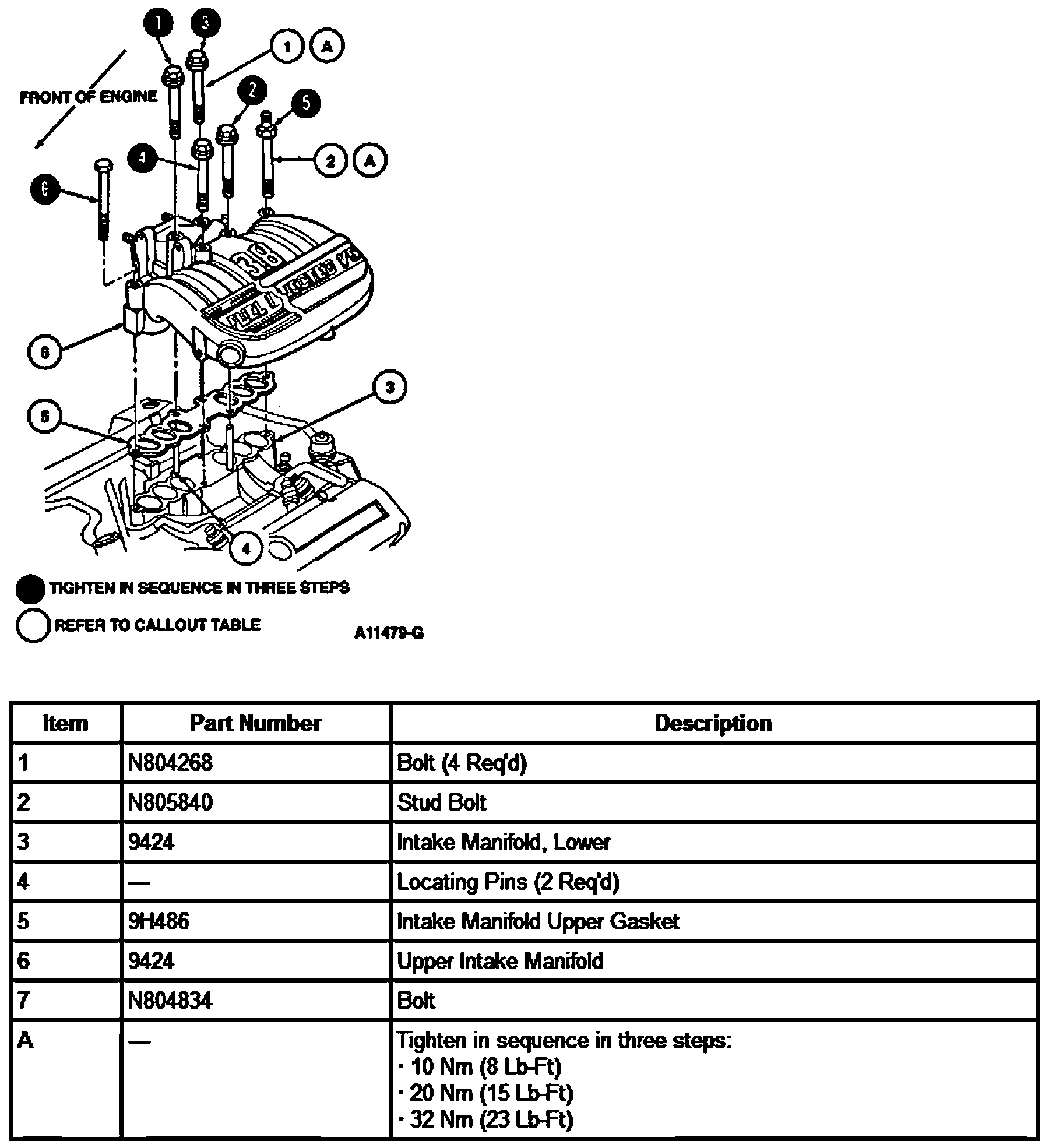
10. Remove upper intake manifold retaining bolts/studs.


pic 2


11. Remove upper intake manifold and intake manifold upper gasket (9H486).

Installation

NOTE: Use locating pins to secure position of intake manifold upper gasket between upper intake manifold and lower intake manifold.

NOTE: When the upper intake manifold is removed, always use a new intake manifold upper gasket upon reassembly.

1. Position new intake manifold upper gasket and upper intake manifold on top of lower intake manifold.

NOTE: Apply a light coat of Pipe Sealant with Teflon D8AZ-19554-A or equivalent meeting Ford specification WSK-M2G350-A2 and ESR-M18P7-A to retaining bolts and stud bolt threads prior to installation.

2. Install bolts and stud bolts in original locations.
Tighten in sequence as shown under Removal Step 11, in three steps:
- 10 Nm (8 Lb-Ft)
- 20 Nm (15 Lb-Ft)
- 32 Nm (23 Lb-Ft)
3. Install engine support and wiring bracket and retaining nut and bolt to LH front of the upper intake manifold. Tighten retainers to 20-30 Nm (15-22 lb-ft).
4. Install the EGR valve.


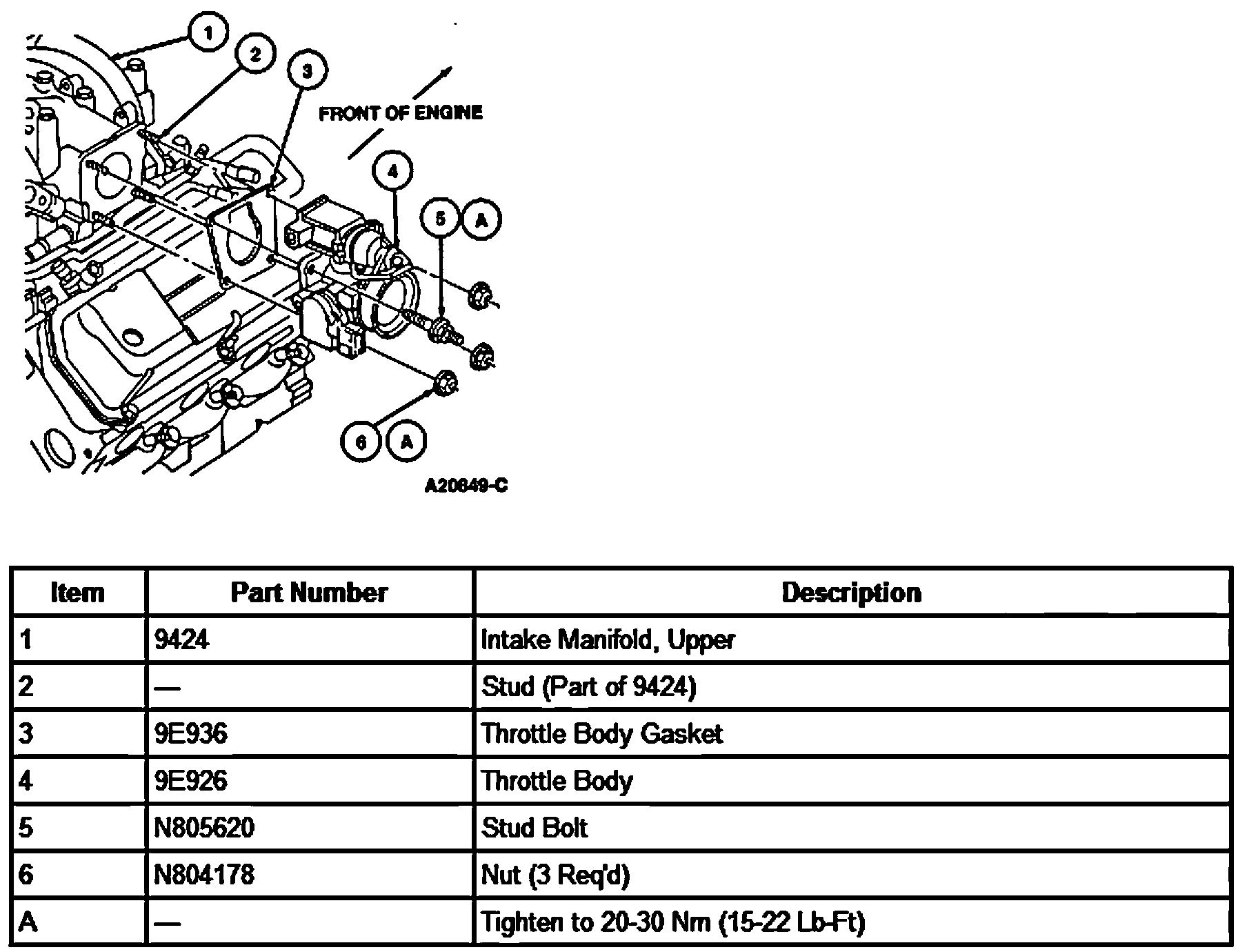
pic 3


5. Install new throttle body gasket (TB gasket) (9E936), throttle body if removed. Cross-tighten retaining nuts to 20-30 Nm (15-22 lb-ft).
6. Connect crankcase ventilation tube to positive crankcase ventilation valve on the upper intake manifold.
7. Connect necessary fuel charging wiring connectors.
8. Connect necessary vacuum hoses.
9. Position accelerator cable bracket (9723). Install and tighten retaining bolts to 14-20 Nm (10-14 lb-ft).
10. Connect accelerator cable at throttle body. Connect speed control actuator cable (if equipped).
11. Install air cleaner outlet tube.
12. Check and adjust accelerator cable if necessary.
13. Check and, if necessary, adjust engine idle airflow.
14. Check and adjust speed control actuator cable if necessary.

_____________________________

Here are the lower intake directions.

1996 Ford Mustang V6-232 3.8L
Lower
Vehicle Engine, Cooling and Exhaust Engine Intake Manifold Service and Repair Procedures Lower
LOWER
Removal

1. Drain engine cooling system.
2. Remove upper intake manifold as outlined.


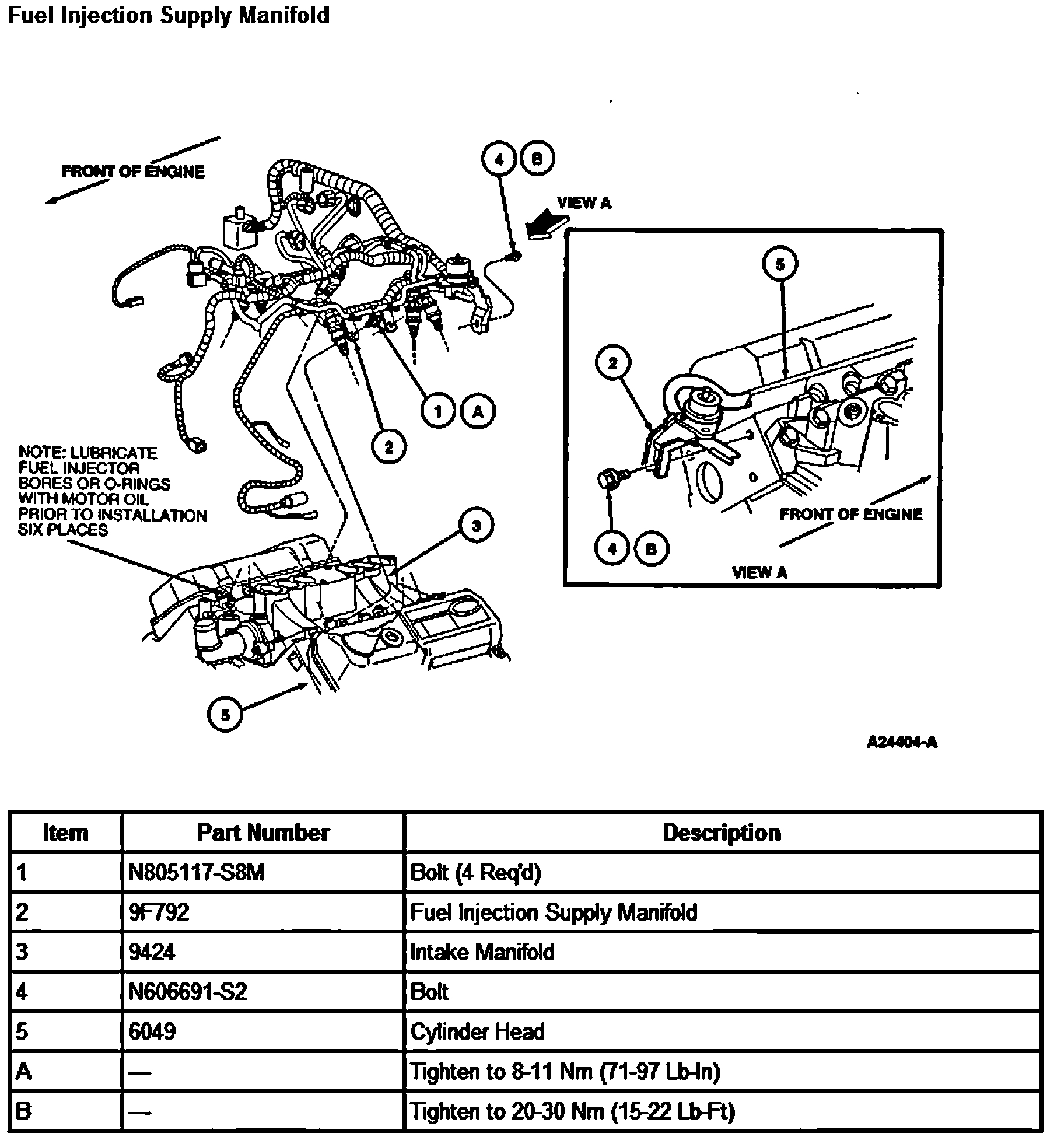
pic 4


3. Remove fuel injectors (9F593) and fuel injection supply manifold (9F792).
4. Remove heater water outlet hose.
5. Remove lower intake manifold retaining bolts/studs.

CAUTION: The lower intake manifold is sealed at each end with silicone sealer. To break the seal, it may be necessary to pry on the front of the lower intake manifold with a prybar. If it is necessary to pry on the lower intake manifold, use care to prevent damage to machined surfaces.

6. Remove lower intake manifold.
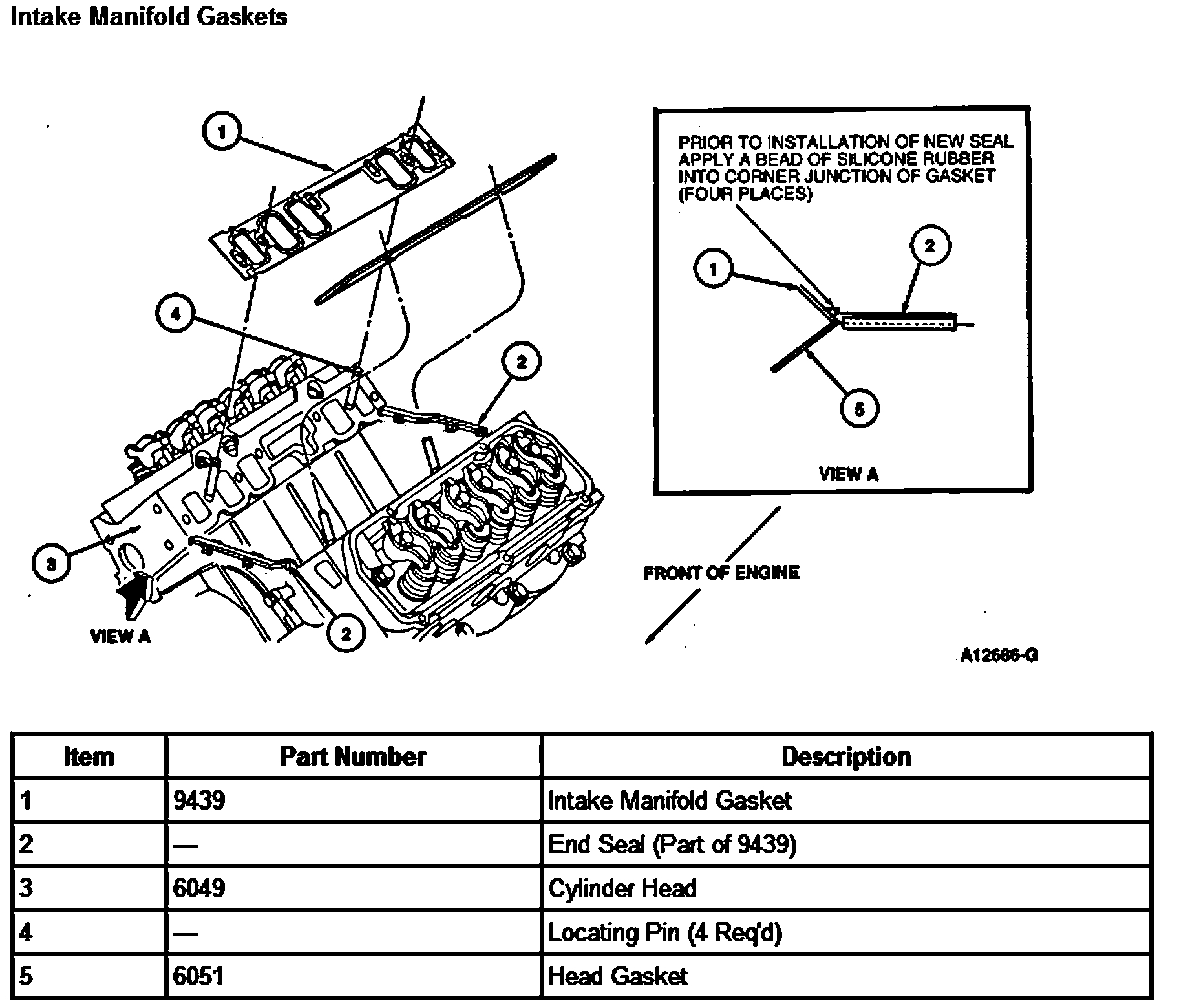
7. Remove and discard intake manifold gaskets (9439) and end seals.


pic 5


8. If lower intake manifold is to be disassembled, perform the following:
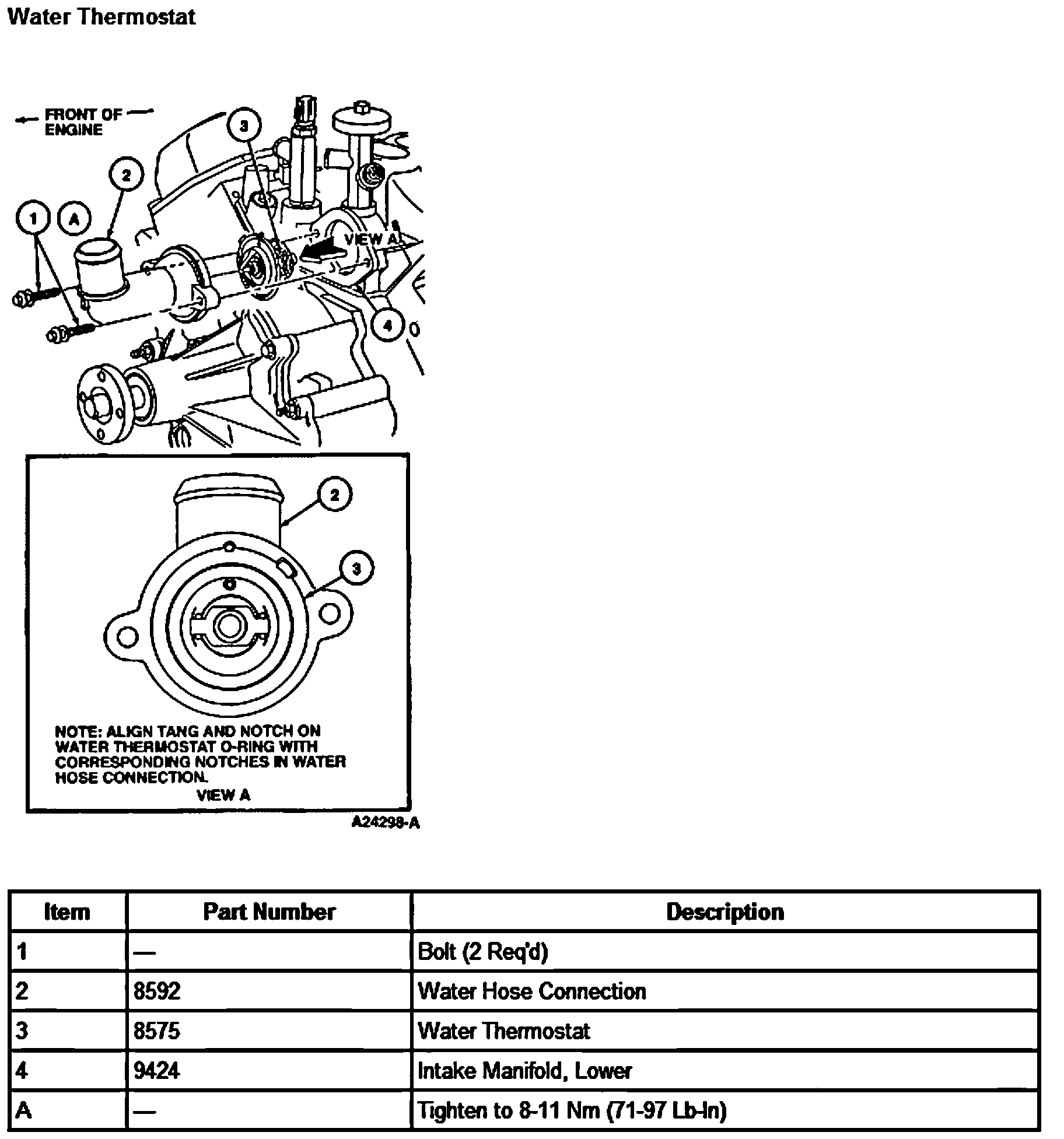
- Remove clutch pressure plate (7563) and water thermostat (8575).
- Remove engine coolant temperature sensor (ECT sensor) (12A648).
- Remove heater elbow.
- Remove all vacuum and electrical fittings.

Installation

NOTE: Lightly oil all retaining bolt and stud threads before installation with clean engine oil meeting Ford specification ESE-M2C153-E.

1. The lower intake manifold cylinder head and cylinder block mating surfaces should be clean and free of old gasketing material. Use a suitable solvent to clean these surfaces.
2. If lower intake manifold was disassembled:
a. Apply Pipe Sealant with Teflon D8AZ-19554-A or equivalent meeting Ford specification WSK-M2G350-A2 and ESR-M18P7-A to the threads of the engine coolant temperature sensor, all vacuum fittings, heater elbows, and electrical fittings (if equipped).
b. Install clutch pressure plate (note direction) and water thermostat. Install water hose connection (8592). Tighten retaining bolts to 8-11 Nm (71-97 lb-in).

NOTE: Prior to applying sealer, clean sealing surfaces of cylinder heads (6049) and lower intake manifold with Metal Surface Cleaner F4AZ-19A536-RA or equivalent meeting Ford specification WSE-M5B392-A to remove all residues that may interfere with the sealer's ability to adhere.

NOTE: When the lower intake manifold is removed, always use new intake manifold gaskets upon reassembly.

NOTE: When using silicone sealer, assembly must occur within 15 minutes after sealer application. After this time, the sealer may start to set up, and its sealing effectiveness may be reduced.

3. Apply a 3-4 mm (0.125 inch) bead of Silicone Rubber D6AZ-19562-AA (clear) or equivalent meeting Ford specifications ESB-M4G92-A and ESE-M4G195-A or F4AZ-19562-B (black) meeting Ford specification WSE-M4G323-A1 at each corner where the cylinder head joins the cylinder block (6010).
4. Install new front and rear intake manifold end seals.


pic 6


5. Install new intake manifold gaskets.
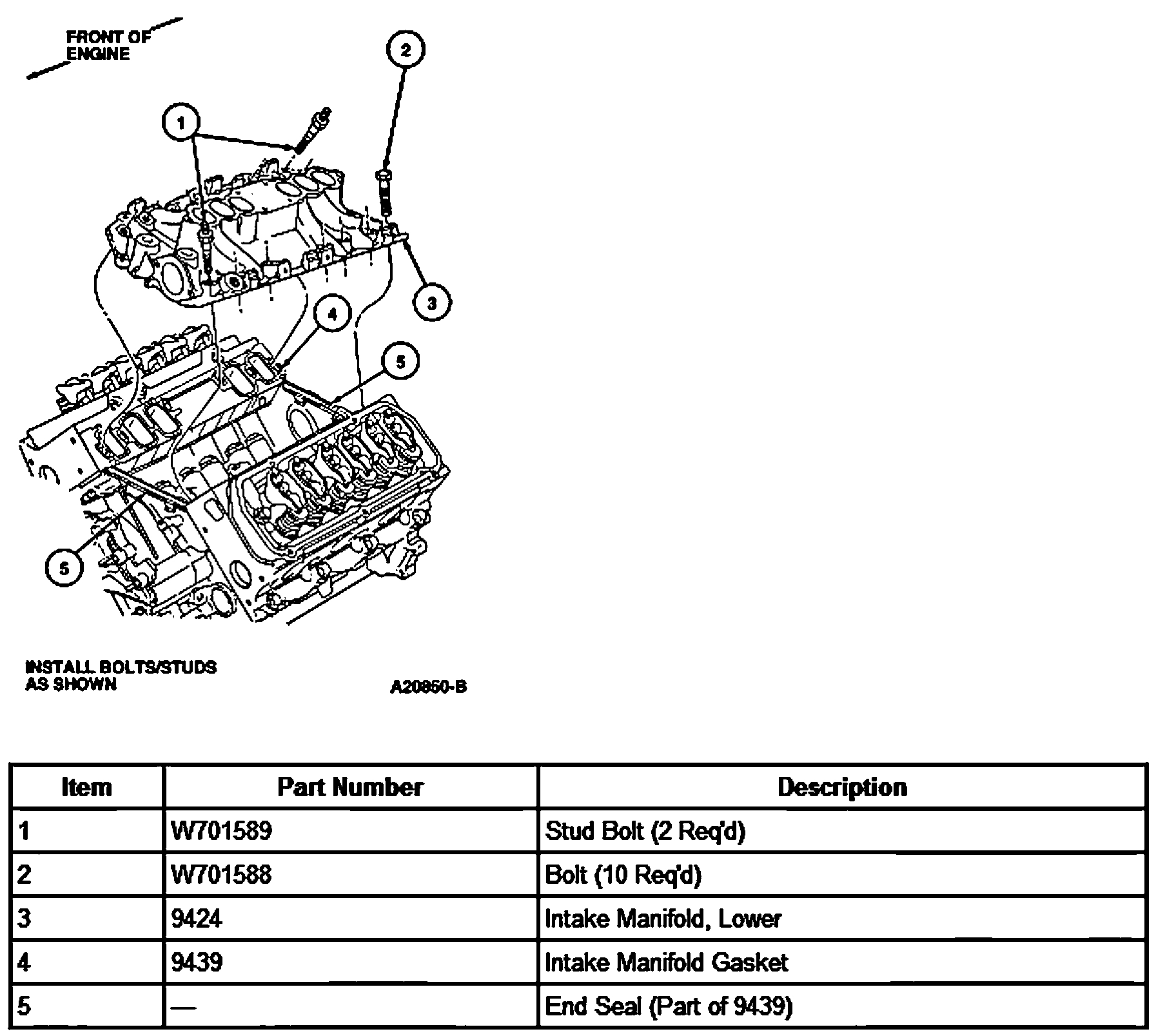
6. Carefully lower intake manifold into position on cylinder block and cylinder head. Use locating pins as necessary to guide lower intake manifold.


pic 7


7. Install bolts and stud bolt in their original locations.


pic 8


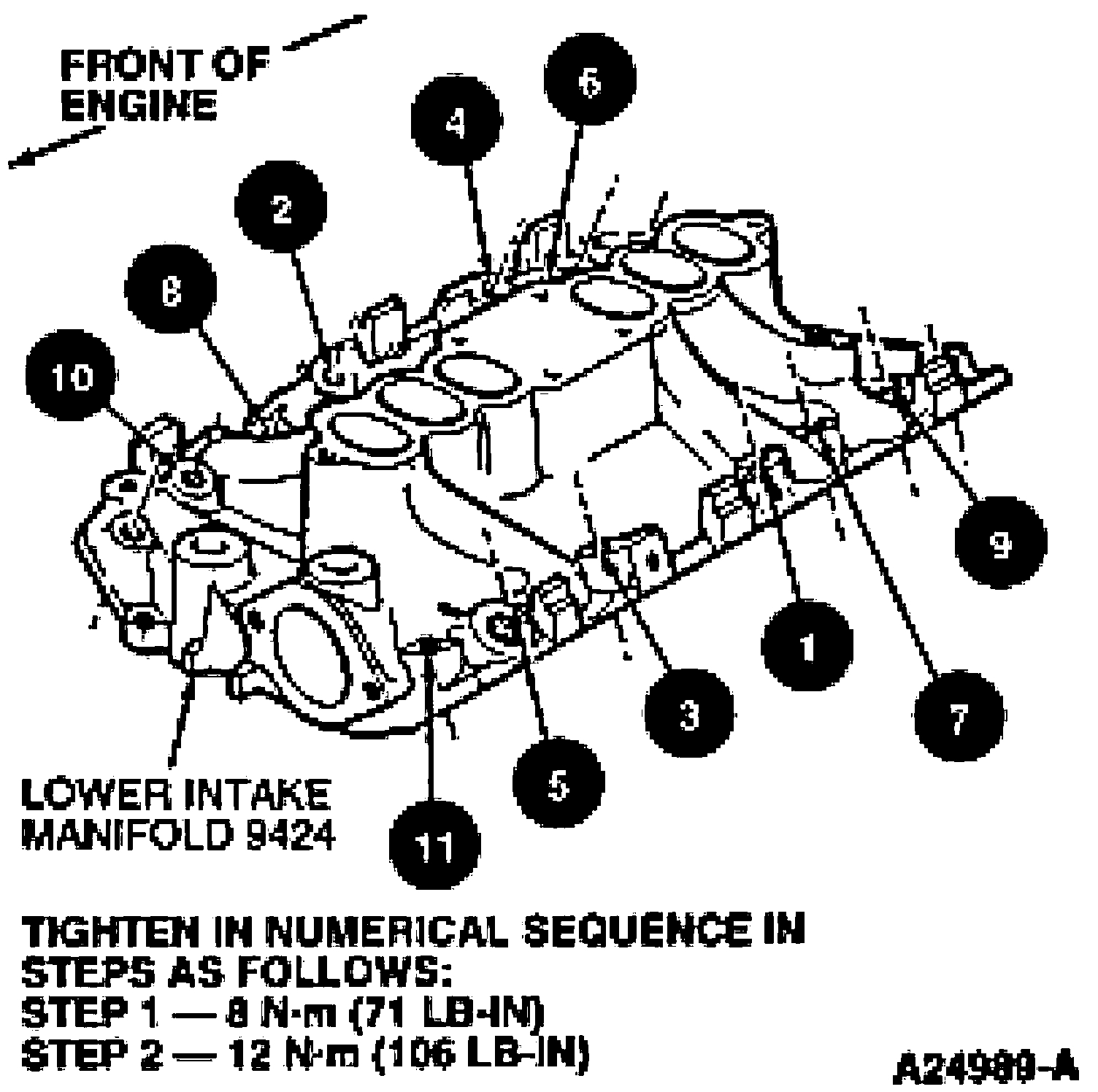
8. Tighten bolts and stud bolts in numerical sequence to the following specifications in two steps:
a. 8 Nm (71 lb-in).
b. 12 Nm (106 lb-in).
9. Install front crankcase ventilation tube so that the mounting bracket sits over the lower intake manifold stud. Tighten nut on stud to 20-30 Nm (15-22 lb-ft).
10. Install fuel injectors and fuel injection supply manifold. Tighten fuel injection supply manifold to lower intake manifold bolts to 8-11 Nm (71-97 lb-in). Tighten fuel pressure bracket bolt to 20-30 Nm (15-22 lb-ft).
11. Install upper intake manifold as outlined.

CAUTION: This engine has aluminum cylinder heads and requires a special corrosion inhibiting coolant to avoid cooling system damage.

12. Fill engine cooling system.
13. Start engine and check for leaks.

_________________________


Let me know if this helps or if you have other questions.

Take care,
Joe
Dec 2, 2020 at 9:05 AM (Merged)
Avatar
DIESLE
  • MEMBER
  • 2 POSTS
I am working on a 96 mustang 3.8. I found out that ford had a recall on this year and model due to blown head gaskets. Do you know if the gaskets were blowing in this car because of a bad engine designe or was it a bad gasket design? I ask this because I am about to replace the gaskets but I wanted to know if these gaskets were just going to blow out as well. Thanks
Dec 2, 2020 at 9:06 AM (Merged)
Avatar
ASEMASTER6371
  • CERTIFIED EXPERT
  • 52,796 POSTS
no recall that i could find at all to do with this.

tsb about sealers, straightening checking and such but thats it.

you have a 15 year old car that may have been overheated more than once causing the failure. I am sure when you get it apart, you will see what happened. I would stick to oem gaskets to be sure of any updates.
make sure you check the rad for restriction when you are done.

Roy
Dec 2, 2020 at 9:06 AM (Merged)