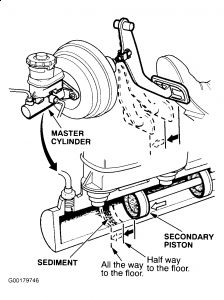
New front brakes at 105,000 installed by local brake and shock store; still have original rear brakes. New brake fluid also at 105,000. Recently noticed when the vehicle is cold (it's stored in a garage overnight) the brake pedal goes about half-way to the floor when braking. When the vehicle warms up the pedal goes only a couple of inches toward the floor when braking. This just started. When the new front brakes were installed the pedal took hold about 2 inches from the top and stayed that way until recently.
The brake store checked everything out and cannot find anything wrong. They are reluctant to start replacing things when they can't find a problem. Also, they didn't drive it when it was cold.
We reported the cold/hot phenomenon to them. They said as long as the vehicle is braking and stopping as before and there's no difference in handling, we shouldn't worry.
Does this sound okay? Do we possibly have a failing master cylinder or..............?
Thanks.
skip304
The brake store checked everything out and cannot find anything wrong. They are reluctant to start replacing things when they can't find a problem. Also, they didn't drive it when it was cold.
We reported the cold/hot phenomenon to them. They said as long as the vehicle is braking and stopping as before and there's no difference in handling, we shouldn't worry.
Does this sound okay? Do we possibly have a failing master cylinder or..............?
Thanks.
skip304
Oct 18, 2009 at 2:43 PM