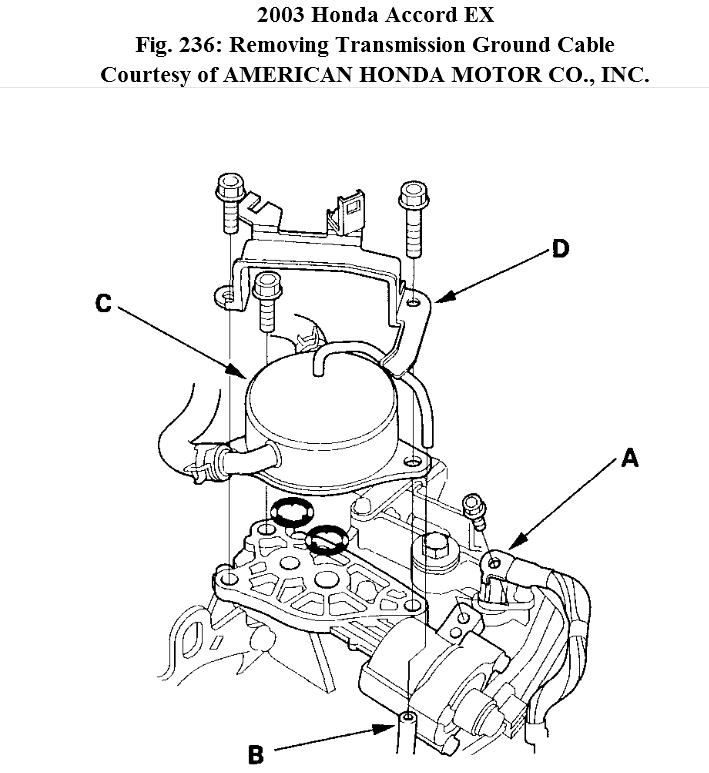
transmission slipping?

2005 HONDA ACCORD
90,000 MILES • 4 CYL • FWD • AUTOMATIC
Avatar
TMPHARR
  • MEMBER
  • 1 POST
Noticed today (for the first time) with my 2005 Honda Accord - 90000 miles that when i was going uphill, the rpm climbed to 3500 and when in went downhill at the same speed, rpm jumped more than 1000rpm. Trans and oil fluids okay. Maintenance required light on for a few thousand miles and havent taken it in (sorry being honest). No other indicator lights. Feels like the car wants to go idle at lower speeds. Please help!! Thank you.
Jun 20, 2010 at 9:25 PM
Advertisement
Avatar
MHPAUTOS
  • CERTIFIED EXPERT
  • 31,937 POSTS
Hi there,

This will have to be checked over first hand, to many possibilities to second guess this problem, do this asap as the further you drive it the more damage you may be doing.

This guide can help fix it

https://www.2carpros.com/articles/automatic-transmission-problems

mark (mhpautos)
Jun 20, 2010 at 11:01 PM
Avatar
NAVYDOC8425
  • MEMBER
  • 1 POST
My car has brown colored coolant, and having transmission slipping. Transmission was very low on fluid. Replaced fluid. Flushed out cooling system. Car drove very well for about seventy miles. No transmission slipping. Then started slipping again. Looked into engine compartment and more brown being forced out of the coolant reservoir and transmission was very low on fluid again.
Jul 7, 2020 at 2:17 PM (Merged)
Advertisement
Avatar
JACOBANDNICKOLAS
  • CERTIFIED EXPERT
  • 110,175 POSTS
The transmission cooler runs through the radiator. There must be an internal leak there. This needs to be repaired ASAP because it will take out the transmission.

Check that for me. If I am correct, the radiator will need replaced.
Jul 7, 2020 at 2:17 PM (Merged)
Avatar
KHLOW2008
  • CERTIFIED EXPERT
  • 41,814 POSTS
This model does not have hoses to the radiator. There is a cooler/warmer that is attached to top of transmission. That unit should be faulty and requires replacement.

Jul 7, 2020 at 2:17 PM (Merged)
Avatar
NOELNOCHIM
  • MEMBER
  • 1 POST
I am having the same problem with ATF tan sludge in coolant. The coolant hoses were all replaced and the system holds pressure. The car holds temperature for a while then overheats and spews tan colored fluid to the reservoir. I think that the ATF pressure is much higher than the coolant pressure (13 psi -ish) so the ATF leaks into the cooling system. Do you know if there is a history of leaks in the ATF warmer? There are a couple of "o"rings between the warmer case and the mounting to the transmission and ATF could leak into the coolant there. Whatever is causing the leak, the problem does not appear until some miles are put on the car. The last occurrence occurred six miles after the engine first came up to temperature and the thermostat opened. Thanks for taking the time to respond. Noel Nochim
Jul 7, 2020 at 2:17 PM (Merged)
Avatar
STRAILER
  • CERTIFIED EXPERT
  • 53,854 POSTS
Hey Noel,

I would bypass the warmer/cooler and drive the car for a short time to see if transmission fluid is leaking from the warmer/cooler. Use a short piece of tube as the splice.

Please run this test and get back to us so we can continue helping you.

Best, Ken
Jul 7, 2020 at 2:17 PM (Merged)
Avatar
DATIS
  • MEMBER
  • 2 POSTS
I was driving onto a bridge when my Tranny started slipping - it'd kick into neutral while i was in drive. I was in a bad portion of hte bridge so I threw on my hazzards and tried moving again, after turning on my car it went back into gear but still acted up a bit. As I tried making my return it did it a second time and fixed when I turned my car off and back on.

I maintained a 30-40 mile pace and it was driving well until midway back it stopped on the middle of the bridge. I kicked my hazzards on tried starting and restarting again but it wouldn't pick up the gear.

My tsc and engine light turned on. I got towed and went home. It was too late to check fluid levels and I had to work early this morning.

Should I be looking to save upwards of $1000-$2000. I know you can't give me an accurate diagnosis, but based on what I've said if you have any idea please let me know.

Thanks ahead of time to anyone who can give some input.

Cheers
Jul 7, 2020 at 2:17 PM (Merged)
Avatar
SIHOTA
  • MEMBER
  • 1 POST
Hey Noel,

Did replacing the ATF warmer solve the problem or how did you go about fixing it? Hope to hear back, thanks
Jul 7, 2020 at 2:17 PM (Merged)
Avatar
KHLOW2008
  • CERTIFIED EXPERT
  • 41,814 POSTS
Hi datis,

Check the trans fluid level first.

Get a scan done to retrieve the trouble code and let me know what it is.
Jul 7, 2020 at 2:17 PM (Merged)
Avatar
STRAILER
  • CERTIFIED EXPERT
  • 53,854 POSTS
Hello,

I am sure it did. it is the only thing that can allow transmission fluid into the radiator. Here is a guide to help you see what you are in for when changing the radiator out:

https://www.2carpros.com/articles/how-to-replace-a-car-radiator

Please let us know if you need anything else to get the problem fixed.

Cheers, Ken
Jul 7, 2020 at 2:17 PM (Merged)
Avatar
DATIS
  • MEMBER
  • 2 POSTS
My dad checked the level while i was at work and said it was low but had a fair bit in it.

will be taking the car to the shop soon to see the code.

Thanks again.
Jul 7, 2020 at 2:17 PM (Merged)
Avatar
DILL-11
  • MEMBER
  • 126 POSTS
I put a used transmission in a 2003 Honda accord 3.0. First and second change fine but third slips before it change. What could cause this? Also I have three set of sensors that are black and brown they all wiil put up to each other could they be crossed?
Jul 7, 2020 at 2:17 PM (Merged)
Avatar
HMAC300
  • CERTIFIED EXPERT
  • 48,601 POSTS
if it slips going into a gear either the seals are bad in that clutch pak or the clutch pak itself. the solenoids could be the same but it depends on the connectors. they all have different colored wires going to them though so it can shift properly. However those are probably not your cause.
Jul 7, 2020 at 2:17 PM (Merged)
Avatar
HMAC300
  • CERTIFIED EXPERT
  • 48,601 POSTS
orgot to add, a trans guy shold check this out however for a proper diagnosis
Jul 7, 2020 at 2:17 PM (Merged)
Avatar
DILL-11
  • MEMBER
  • 126 POSTS
How do I check the fluid in park running or not? When I check it in park it seams to have fluid still in the dip stick tube. Cloud it be to full. The manual say check hot engine off never heard of that.
Jul 7, 2020 at 2:17 PM (Merged)
Avatar
HMAC300
  • CERTIFIED EXPERT
  • 48,601 POSTS
check it the way the manual says but I kind think it sounds like there is to much fluid in it. normally that gets blown out the vent though.
Jul 7, 2020 at 2:17 PM (Merged)
Avatar
DILL-11
  • MEMBER
  • 126 POSTS
Well I had drove it. shouldn't it came out then if it was over full?
Jul 7, 2020 at 2:17 PM (Merged)
Avatar
HMAC300
  • CERTIFIED EXPERT
  • 48,601 POSTS
if it got warm enough yes if you only drove less than 10 miles then it wouldn't have. you migh thave had to drive it further. I can't find any info on how to check it.ok I did find the way to check it. you have to shut engine off and check fluid within 60-90 seconds of shutting engine off. also you have to heat trans until the cooling fan comes on.
Jul 7, 2020 at 2:17 PM (Merged)
Avatar
AMYBELLA
  • MEMBER
  • 4 POSTS
My 2002 Accord(V-6/V-Tec)with auto tranny and 95,000 miles runs great except for the occasional 'jerking' or 'slipping' that feels like the transmission.

It becomes more noticeable when accelerating somewhere between 0 to 15mph and even more if accelerating up a driveway or small hill! Also, during 'stop and go' traffic, I am sometimes able to take of quickly without a problem... but then other times it seems like I press the pedal about a half second before the RPM's increase.

I really hope that these are not early signs of a major tranny disaster.
Jul 7, 2020 at 2:18 PM (Merged)
Avatar
DRCRANKNWRENCH
  • CERTIFIED EXPERT
  • 3,380 POSTS
Get the trouble codes pulled. Any Advance Auto or Auto Zone will do this for free.
If no codes come up, you either have a torque converter or a clutch pack problem.
Jul 7, 2020 at 2:18 PM (Merged)
Avatar
AMYBELLA
  • MEMBER
  • 4 POSTS
Thanks for the advice! My gut told me that was the obvious first move to make, just doing a little research and 'finger crossing' before I take it in.

If it is the torque converter, will driving it in this condition cause anything else to go wrong? I'm assuming clutch kits only apply to manual trannys, right? I guess I should also mention that the previous owner modified the dual exhaust (but I think he only added exhaust tips) but if I find that he also modified the actual exhaust system or maybe added performance headers, could this possibly be another reason for my problem as well??
Jul 7, 2020 at 2:18 PM (Merged)
Avatar
DRCRANKNWRENCH
  • CERTIFIED EXPERT
  • 3,380 POSTS
If the torque converter goes bad it will stopp moving and can catastrphically fail which would break more parts and make a rebuild cost more. So, if the scan does not turn up any trouble codes you probably need a rebuild. Take it to a transmission shop ASAP.
There are clutch packs in automatic transmissions that can go bad and slip.
The exhaust probably has nothing to do with your problem.
Jul 7, 2020 at 2:18 PM (Merged)
Avatar
AMYBELLA
  • MEMBER
  • 4 POSTS
Thank you so much for your insight!! (Thank goodness I work from home, I love my little scooter n' booter and don't want her to die, lol)

I appreciate what you guys do on this website!!!! You rock!!
Jul 7, 2020 at 2:18 PM (Merged)
Avatar
DRCRANKNWRENCH
  • CERTIFIED EXPERT
  • 3,380 POSTS
You're very welcome. Come back anytime you need anything. We have a great team of techs waiting to help.

Take care,
Dr. C
Jul 7, 2020 at 2:18 PM (Merged)
Avatar
RALPH WISEMAN
  • MEMBER
  • 1 POST
I bought a rebuilt transmission and it was shipped in to the mechanic. It arrived without sensors. The seller said to take sensors off of old transmission. The mechanic says the if he does that it will not work and the sensors will not match up. The mechanic says it will cost 300 dollars each time to pull the transmission if it is the sensors after he installs it. If I send it back to the seller I will lose 250 dollars in shipping and still have to find a different transmission. The old transmission is slipping. The check transmission light comes on and the D4 light flashes. What would you do? Send the transmission back or pay to have it installed and take your chances and then replace the sensors.
Jul 7, 2020 at 2:18 PM (Merged)
Avatar
KHLOW2008
  • CERTIFIED EXPERT
  • 41,814 POSTS
Hi Ralph,

Thank you for the donation.

This is a tricky situation.

1. The sensors are external so replacement can be done without removal of the trans assy from the vehicle. $300 is rather steep to do the job.

2. If the new transmission has a fault, even though it might have been rebuilt, you would have to pay the mechanic to remove the trans again.

3. Even if the trans had come with the sensors, there is no guarantee that the sensora are good.

4. If the sensors from the original transmission are faulty, moving them over to the new trans wuold result in the same problem.

5. If the sensors are good, then you would not have any problem moving them over.

Are all the sensors missing or only specific ones?

Is it the sensors or solenoids that are missing?

What is/are the exact trouble code retrieved for the D4 light blinking?

Though the original transmission is slipping, the cause might not be internal. A faulty sensor or solenoid can cause the problem.

If you have not retrieved the trouble codes, get a free scann done at Autozone to retrieve the trouble codes so we can understand the problem better.

If I am in the situation, I would get the trouble codes to understand what is causing the D4 light to blink before proceeding further.
Jul 7, 2020 at 2:18 PM (Merged)
Avatar
BEN LEE
  • MEMBER
  • 66 POSTS
This is a 4 cyl, automatic

I just started driving this car and I immediately noticed the transmission slipping issues that the previous owner warned me about. This seems to be mostly in 1st gear, either slipping out of gear and back in, or slipping while going from 1st to 2nd.

I wanted to find out all the possible diagnostic steps I could take (a humble DIY'er) before taking in to a specialist. For instance, on my previous car I had some much more severe shifting issues, which turned out to be a faulty transmission range sensor (aka: neutral safety switch) that I was able to diagnose by testing the voltage in each lever position and while driving. It was a $40 transmission fix, so of course I'm hoping to be as lucky this time...

Since this is a new car to me I don't even know where the TRS is yet, but I would also like to know what other types of diagnosis I could do, based on the type of issue I'm having.

I should also note that the transmission fluid was changed about 18 months ago.

Thanks!
Jul 7, 2020 at 2:18 PM (Merged)
Avatar
DRCRANKNWRENCH
  • CERTIFIED EXPERT
  • 3,380 POSTS
The fluid and filter should be changed every 30,000 miles. However, in this case it may be worth it to see what happens.
But, before you do that get is scanned for trouble codes.
Jul 7, 2020 at 2:18 PM (Merged)
Avatar
BEN LEE
  • MEMBER
  • 66 POSTS
Thanks, I'll pull the codes and report back
Jul 7, 2020 at 2:18 PM (Merged)
Avatar
DRCRANKNWRENCH
  • CERTIFIED EXPERT
  • 3,380 POSTS
IGNORE THIS MESSAGE....Clear Pending Status....IGNORE THIS MESSAGE
Jul 7, 2020 at 2:18 PM (Merged)
Avatar
BEN LEE
  • MEMBER
  • 66 POSTS
By the way, I typed in the miles wrong before. It is 126,000 miles (not 12.6k)
Jul 7, 2020 at 2:18 PM (Merged)
Avatar
DRCRANKNWRENCH
  • CERTIFIED EXPERT
  • 3,380 POSTS
There are 2 components that you can test manually with a multi-meter.
The first is the Clutch Pressure Control Solenoid Valve, "A" and "B". It is located on the 2.3L, it is located on the right side of the transaxle right by to tab used to hook an engine hoist to remove the engine/tranny assembly. On the 3.0L, it is on the top rear or transaxle. The A and B solenoids are on top of each other. They have 2 pin connectors with "A" having a red wire in connection, "1" and a white wire in connection, "2". The B connector has an orange wire in the, "1" connection and green in the, "2" connection.

To test solenoid;
1. Disconnect harness
2. Measure resistance before terminals. It should be 5 Ohms, if it is not solenoid needs replacement.
3. To check solenoid movement, apply 12V to terminal, "1" and ground, "2". Clicking noise indicates solenoid works.
4. Remove solenoid to check fluid passage for debris/clogging. If debris is removed, repeat step 3. to ensure solenoid still moves properly.


The second component is the Lock-up solenoids. They are located on the right front of engine compartment of 2.3L and the Top front of the 3.0L The wires are either Blue/yellow or yellow from the connector in either terminal.

1. Disconnect harness and measure resistance between terminal, "1' and ground. It should be 12-25 Ohms. Replace solenoid is of of specified range.
2. Ensure solenoid movement by grounding body of solenoid to ground and 12V to terminal, "1" and then terminal, "2". Both should make a clicking noise if solenoid is operating .

Check these solenoids and scan trouble codes then let me know results.
Jul 7, 2020 at 2:18 PM (Merged)

Avatar
REHONDA
  • MEMBER
  • 1 POST
Transmission problem
2001 Honda Accord 4 cyl Two Wheel Drive Automatic 111K miles

When in reverse, backing up in an incline, the engine races and slips and the car moves real slow
Jul 7, 2020 at 2:18 PM (Merged)
Avatar
MHPAUTOS
  • CERTIFIED EXPERT
  • 31,937 POSTS
Hi there ,

first thing to do is check fluid condition and level, if low top up and check for any leaks, otherwise get it inspected for operation and error codes by a trans specialist.

mark (mhpautos)
Jul 7, 2020 at 2:18 PM (Merged)
Avatar
BEN LEE
  • MEMBER
  • 66 POSTS
Thank you for these great instructions! Just a few questions before I test. Can you confirm what you mean by "measure resistance BEFORE terminals"?
I don't have a power probe, and I have never applied power to a component for testing before. How do I go about doing this?

Thank you!
Jul 7, 2020 at 2:18 PM (Merged)
Avatar
DRCRANKNWRENCH
  • CERTIFIED EXPERT
  • 3,380 POSTS
First, buy a multi meter as you can get a cheap one for $10 and a good one for $40. It is worth the $40 as it will have test funstions the cheaper one won't.
To test before the terminal means to test the connector end wires. Meaning, don't test the terminal connections on the part you are testing. This test is to see if th epart is getting power, so you want to see if the connector is getting power. If it is not, the problem is before the connector.
To apply 12V to part to test, use the car battery as the powersupply. I usually use it as the ground as well. Get something that will hold the wires to the battery or loosn the post connectors and slip wires in between the battery poast and wire. Before you do this you have to strip the insulation off of the wire to expose the copper strands. Get a wire that is about the same size or larger than the wires coming from the connector and cut them long enough to reach the part tro be tested easilty. Strip some insulation off the other end of the wires and twist them around so they make a point contact and aren't frayed out all over and may touch a contact or ground that you don't want it to. Touch the 12V or, "Hot" wires to the positive connector side of the part you are testing. You can keep track of this by looking at test instructions and use the,"terminal 1 or terminal 2" designations to know which one is positive and which one is negative. The wire color tells you whcih terminal is which and the connector may have, "1" and "2" on it.
It is not hard but be very carful as you can end up touching test leads to meatl and get a good shock and then have to replace your main fusible link. It is really best tro dis-connect to battery from the positive and neagative cable and get large aligator clips or clamps, you can find them at Radio Shack or auto parts store, as it is best to prevent that kind of stuff from happening and if you have anyuthing powered straight from battery it could damge it. Also get smaller alligator clips for terminals in part, these are not as necassary as you are not working in a cramped place and terminals are close together, or the twisted ends will work just fine. You just want to make sure you don't accidnetly ytouch any metal or touch them to each other.
Go through the steps carefully and get prepared as far as getting the right wires, slips and test meters go. Take your time doing the procedure and double check everything before you actually test it. Kind of like, " measure twice cut once". You will have eliminted 2 of some of the most likley causes for your problem. That is how diagnostics goes by porocess of elimination.
Take care.
Jul 7, 2020 at 2:18 PM (Merged)
Avatar
BEN LEE
  • MEMBER
  • 66 POSTS
Thanks so much for the detailed input.
You mentioned the possible damage of a component by running power directly from the battery...is this where a fused jumper wire would come in, and if so, how do I make one.

I also noticed that my Haynes books says to use a fused jumper wire when running power to test these solenoids, but I have no idea how to make one.

Thanks again!
Jul 7, 2020 at 2:18 PM (Merged)

Avatar
DRCRANKNWRENCH
  • CERTIFIED EXPERT
  • 3,380 POSTS
It is a good idea to make one. I don't know what amperage fuse to suggest. See if your hayne's manual suggests an amperage. More than likely the amperage will vary with the component tested.

To make a jumper wire with a fuse. Go to a local auto parts store. In the electrical section and look for an in-line fuse. There are 3 types, the large double bladed, the small double bladed and the fuse that looks like a cylindrical glass tube.
Check your fuse box to see what type of fuses your car uses so you can get the same type for your test wire.

To make the wire, get the length of wire you need. Consider the fact that you may use it again to test something farther away from the battery. The gauge of the wire is important too as if you want to test something on a 40 Amp circuit, you will need a 10 gauge wire to be safe. Also consider what you are testing as selecting the size of the fuse. Try to find the fuse that is protecting the circuit that the part you are testing is on.


You might want to mount the fuse near the battery as mounting it near the test end may become cumbersome. The in-line fuse will simply mount in-line with the positive test wire. You can strip some extra insulation off the wires if you want. It is probably best to sauder the ends of the in-line fuse holder to the ends of the test wire where you are splicing it into the wire. Make sure you protect it with either heat shrink wrap or electrical tape.

Let me know if you need anything else.
Jul 7, 2020 at 2:18 PM (Merged)

Avatar
BEN LEE
  • MEMBER
  • 66 POSTS
Great advice, thank you!
Jul 7, 2020 at 2:18 PM (Merged)
Avatar
BEN LEE
  • MEMBER
  • 66 POSTS
I picked up both a standard ATO and mini fuse holder and some 20' of household (lamp) wire to make some jumper leads. The reason I bought both size fuse holders is so that I would have the option to use either type of fuse...but is there any harm in have a fuse holder in-line with my ground jumper wire also? I know it is not needed, but by doing that I would be able to have a jumper with either fuse size for the hot side if I need to switch them. If this is a bad idea just let me know
Jul 7, 2020 at 2:18 PM (Merged)