Electrical issues

2011 NISSAN MURANO
129,000 MILES • 3.5L • 4WD • AUTOMATIC
Avatar
SIERRA HALLER
  • MEMBER
  • 3 POSTS
My car started acting weird the other day. The lights started dimming and it sounded like it was running funny. Later that day it shut off while I was in park and when I tried to turn it back on the battery and brake light came on. It started back up and then the traction control, the slippery light, and ABS light all came on and it shut off again. Today it did the same thing while driving it, but it went into limp mode before shutting off and wouldn’t start again. A new battery was put in it. I went back out today to leave again, and the lights started dimming again and the car is idling high but no warning lights or anything are on. After it did it the other day, we used a volt meter to check the battery and it said it was fully charged. Today it was completely dead when it shut off.
Dec 21, 2018 at 4:05 PM
Advertisement
Avatar
JACOBANDNICKOLAS
  • CERTIFIED EXPERT
  • 110,175 POSTS
Hi and thanks for using 2CarPros.

It sounds like the alternator has failed. What I need you to do is perform a simple test. Follow this link:

https://www.2carpros.com/articles/how-to-check-a-car-alternator

You will need to recharge the battery prior so the car will start. However, if you have a simple volt meter, you can do this. Here are directions for using a volt meter:

https://www.2carpros.com/articles/how-to-use-a-voltmeter

If you don't feel comfortable testing it and can drive to a parts store safely, most of them will do it for free. Or, you could disconnect the battery, remove the alternator, and then take it to a parts store to have it bench tested.

If you decide to remove the starter, here are the directions for removal and replacement. Note: Make sure to disconnect the battery prior to the removal process. While it is disconnected, recharge it.

_______________________________________

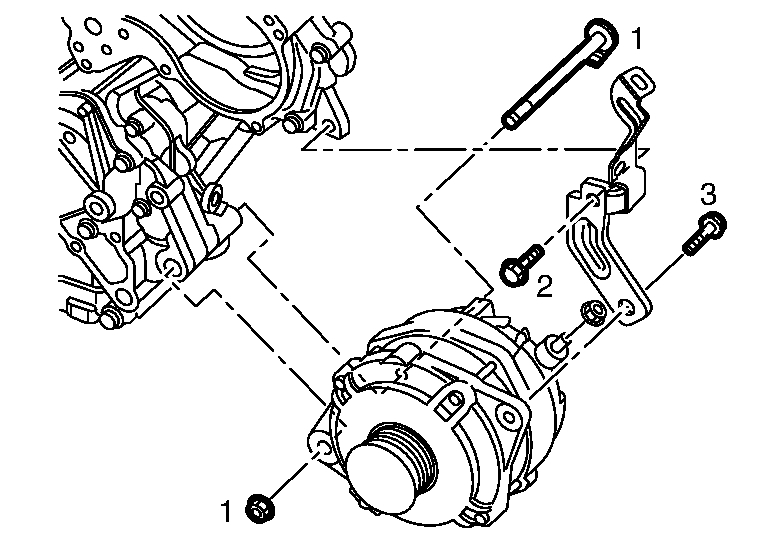
REMOVAL AND INSTALLATION
ALTERNATOR


Removal and Installation


REMOVAL
1. Disconnect the negative battery terminal.
2. Remove engine cover.
3. Remove front wheel and tire (RH).
4. Remove splash guard (RH) See: Front Fender Liner > Removal and Replacement > Exploded View.
5. Remove air cleaner and air duct assembly. See: Air Cleaner Housing > Removal and Replacement > Removal And Installation.
6. Remove drive belt. See: Drive Belt > Removal and Replacement > Removal And Installation.
7. Remove A/C compressor. .
8. Remove idler pulley.
9. Disconnect the oil pressure switch.
10. Disconnect the alternator harness connectors.
11. Remove the alternator bolt and nuts, using power tools.
12. Slide the alternator out and remove.

INSTALLATION
Installation is in the reverse order of removal.

CAUTION:
- Temporarily tighten all of alternator bolt and nuts. And then tighten them in numerical order shown in the figure.
- Be sure to tighten "B" terminal nut carefully.
- Install alternator and check tension of belt. See: Drive Belt Tensioner > Removal and Replacement > Exploded View.
- For this model, the power generation voltage variable control system that controls the power generation voltage of the alternator has been adopted. Therefore, the power generation voltage variable control system operation inspection should be performed after replacing the alternator, and then make sure that the system operates normally. See: Charging System > Initial Inspection and Diagnostic Overview > Inspection Procedure.

_____________________________________

Let me know what you find or if you have other questions.

Take care,
Joe
Dec 21, 2018 at 5:30 PM

Avatar
SIERRA HALLER
  • MEMBER
  • 3 POSTS
We replaced the alternator last night, it ran fine to town (twenty minutes) and back. Then this morning I went out to start it and the battery and brake light came back on again. What else could be wrong?
Dec 27, 2018 at 9:34 AM
Advertisement
Avatar
JACOBANDNICKOLAS
  • CERTIFIED EXPERT
  • 110,175 POSTS
Are both lights staying on when the engine is running?
Dec 27, 2018 at 2:56 PM
Avatar
SIERRA HALLER
  • MEMBER
  • 3 POSTS
They were for a while and now they don’t come on until we hit the accelerator. As soon as the car reaches 2,000 rpm's they come back on and don’t go off until we let off the gas.
Dec 27, 2018 at 4:07 PM
Avatar
JACOBANDNICKOLAS
  • CERTIFIED EXPERT
  • 110,175 POSTS
Hi and welcome back:
The only common denominator that I see is the ECM, ABS, traction control, and Alternator all ground on the engine.

On the rear of the alternator there is a wiring harness that plugs into the alternator. There is a black wire that is in that harness. First, I want you to disconnect the battery and then unplug the alternator. Then locate the black wire in the plug and check if there is continuity to ground. Move the wire around to see if it changes things. If continuity is good, I want you to run a separate ground wire between the engine block and a known good ground on the frame, body panel, or even the negative on the battery. Connect it to a clean location on the engine to provide an additional ground.

Reconnect the battery and see if that changes anything. The reason I am suggesting this is because although these different components ground at the engine, they are at different places on the engine. Therefore, if the engine itself doesn't have a good ground, the components won't either.

Do this and let me know what you find or if you have other questions.

Take care,
Joe
Dec 27, 2018 at 8:49 PM