Coil pack

1998 JEEP GRAND CHEROKEE
194,000 MILES • 4.0L • 6 CYL • 4WD • AUTOMATIC
Avatar
JOSHUA CURTIS
  • MEMBER
  • 22 POSTS
I am trying to determine how many coil packs are on my Jeep? It is a 1998 Grand Cherokee Laredo 4.0L L6. I bought from this couple who treated it like badly, and I am trying to fix it up. So far, I am working on plugs and wires, distributor cap and rotor, radiator flush, oil change, transmission fluid change and filters and seals. I am also changing out the throttle positioning sensor. I bought a new alternator for it because my battery kept draining and I am hoping it was my alternator, will find out a couple days. I plan on doing the starter as well. I am just not sure how many coil packs are on a L6. Anyone suggest anything else I should change/replace apart from the coil packs? I am going to do some fuel injector cleaner and fuel system cleaner as well with an oil treatment when I do the oil change. Any help would be appreciated guys!
Oct 17, 2018 at 1:57 PM
Advertisement
Avatar
CARADIODOC
  • CERTIFIED EXPERT
  • 34,306 POSTS
Coil packs are used on engines that do not use a distributor. You have just a single ignition coil.

For the alternator, you have to determine if you have a failed charging system or a drain on the battery. The two are not the same. The fastest way to find out if the charging system is working is to measure the battery's voltage while the engine is running. It must be between 13.75 and 14.75 volts. If that is what you find, replacing the alternator will not solve a drain. Check out this article for more information:

https://www.2carpros.com/articles/how-to-check-a-car-alternator

This article will help with a battery drain:

https://www.2carpros.com/articles/car-battery-dead-overnight
Oct 17, 2018 at 4:44 PM
Avatar
JOSHUA CURTIS
  • MEMBER
  • 22 POSTS
Thank you. It is good to know I only have one.

I already purchased a new alternator because I bought a brand new battery, left me Jeep for two weeks without starting it, went to start it, and it was dead. I jumped it and drove it for about five hours and it did great. Left it in my driveway for three days without starting it and went to start it, but it would not start. It had power and tried to turn over, but was not getting enough juice. Lead me to believe that my alternator was going back and I was running on the battery itself. I am going to replace the alternator and go from there. I am going to have all my fuses checked and see if I have a blown fuse. Could be my door locks. On the key fob none of the door will unlock, but I can use the door lock on the door and it works fine. I do not know what the deal is there.

I appreciate the reply and the advice.
Oct 17, 2018 at 5:51 PM
Advertisement
Avatar
CARADIODOC
  • CERTIFIED EXPERT
  • 34,306 POSTS
If you drove for five hours, the alternator is working. With a dead charging system, starting out with a good, fully-charged battery, it would run dead in less than an hour from running the electric fuel pump, heater fan, ignition system, injectors, etc. If the lights were on, the battery would run dead in less than a half hour.

The vehicle should be able to sit for more than three days, then still start, but be aware there is a normal drain on the battery to keep the memories alive in multiple computers. Unless specified differently by the manufacturer, the industry standard is a maximum of 35 milliamps, (0.035 amp), is allowable. Chrysler says at that rate, a good, fully-charged battery will still be strong enough to crank an engine fast enough to start after sitting for three weeks. My 1993 Dynasty has gone six weeks and started okay, but that does not mean every vehicle will start. I have a 2014 Ram truck that also sits for up to two months, and it too will start, but regardless, three weeks is the expectation.

Here is an article about testing fuses:

https://www.2carpros.com/articles/how-to-check-a-car-fuse

You will find many more dandy articles here:

https://www.2carpros.com/articles

Rather than trying to list all the things to check for the drain, start with this article:

https://www.2carpros.com/articles/car-battery-dead-overnight

Then come back and tell me what you found out. I can describe how to use an amp meter to look for the drain, but it is more involved than just connecting it and reading the numbers, like we could do on older cars.
Oct 17, 2018 at 6:25 PM
Avatar
JOSHUA CURTIS
  • MEMBER
  • 22 POSTS
No, see, I bought a brand new, fully charges battery and drove about two hours from the place I bought it to my girlfriends house and left it there two weeks. Went back and it had no power or anything. I jump started it with jumper cables and let it run about ten minutes. Drove it a couple places and turned it off and back on at each place; had no problems. I exaggerated the five hours, might have maybe three tops. Drove it to my house and started it everyday for about two minutes to make sure it did not shut off. I ended up leaving it for two days then went to start it and it had power from the battery, but would not turn over. It was wanting to, but sounded like it was dying out as I turning the key which is what led me to the alternator. All the lights were off as well, nothing was left on.

I do not believe it is the starter since it was dying out as I turning the key and I was losing charge from my battery, and it started fine before had even when I had to jump the battery. It is also possible I had a bad battery.
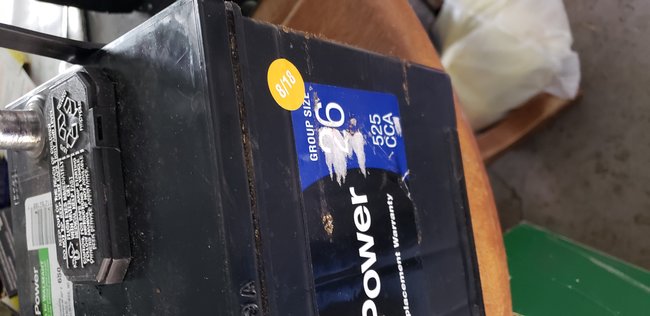
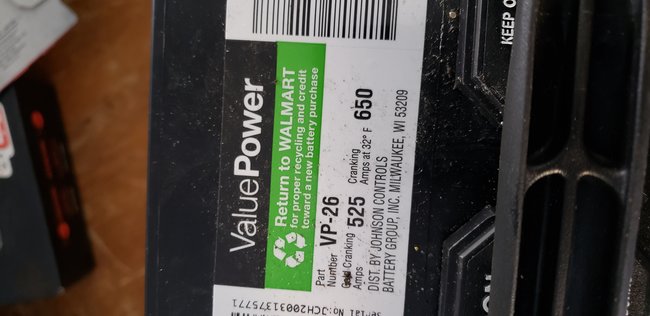
I bought one of those cheap Value Start batteries from Walmart because it was all I could afford at the time. I had no smells or anything either when the vehicle was running or as I was starting.
Oct 17, 2018 at 6:45 PM
Avatar
CARADIODOC
  • CERTIFIED EXPERT
  • 34,306 POSTS
You missed the important part of my story. If the alternator is not working, the most you will be able to drive is up to one hour, if you are lucky. Nothing you have shared so far indicates there is anything wrong with the alternator.

I will be back tomorrow to see how you are doing.
Oct 17, 2018 at 7:37 PM
Avatar
JOSHUA CURTIS
  • MEMBER
  • 22 POSTS
Should the alternator not keep my battery charged though? Or is there some kind of drain that keeps draining my battery? I know there is a normal drain that keeps the computers running, but do you think there is a parasitic drain that keeps draining my battery?
Oct 17, 2018 at 8:49 PM
Avatar
CARADIODOC
  • CERTIFIED EXPERT
  • 34,306 POSTS
Yes. The alternator recharges the battery after it cranked the engine to start it, then it runs the entire electrical system while you are driving. On today's vehicles that can take 25 to 30 amps. That is three times what a pair of head lamp bulbs draw. Leaving the lights on used to ruin a good battery in less than two hours back in the 1970's and 1980's. Drawing 30 amps will ruin a good battery in under an hour, when you do not have a working alternator to run the electrical system. This is how I know your alternator is working. Now, . . . it can have other problems that can reduce its maximum output to exactly one third of its rated maximum current, but the symptoms for that do not match anything you are observed so far.

You need to perform a test for a drain on the battery. That involves removing the battery's negative cable, and inserting an amp meter between that cable clamp and the battery's post, but things get a little tricky on mid 1990's and newer vehicles. Yours is likely to have a computer that needs up to twenty minutes to go to "sleep" mode. Until then, it can draw up to three amps which will blow an internal fuse in most meters. Also, if you do anything to break the circuit for even an instant, including simply switching scales on the meter, that will wake the computer up again, then it will draw that high current until it goes to sleep mode again. To avoid this heartache and frustration, you need to bypass the meter with a small jumper wire at the appropriate times.

Do you have a digital volt-ohm-amp meter and know how to use it? If you want to do this test, I will describe the procedure in a lot more detail. You will need that meter and a jumper wire, and the dome light switch will have to be rigged so the light will not turn on when the door is open. That is so you can pull fuses, one at a time, from the inside fuse box.
Oct 18, 2018 at 6:07 PM
Avatar
JOSHUA CURTIS
  • MEMBER
  • 22 POSTS
I do not have any tools to do any kind of tests. I have a mechanic friend that is going to do work on my Jeep once I get the parts.

I was thinking my alternator was going bad because my car battery kept dying. I know it is still work, but I think it is going bad where my battery keeps dying. I figured my car was running on the car battery instead of the alternator where it is weakening and dying out so easily.

I also checked Walmart's battery listings and the battery I bought for my Jeep is not listed in the books for my Jeep so that might be a factor as well. I do not honestly know. I know enough about cars to get me by. I bought a Value Start group 24 and online it said it was compatible for my vehicle, but I went this morning and checked their actual book and for their Value Start brand it is not showing any battery for my vehicle. It could possibly be an under-powered 12V and that be a reason it is dying out also.
Oct 18, 2018 at 6:14 PM
Avatar
CARADIODOC
  • CERTIFIED EXPERT
  • 34,306 POSTS
There is a number of things to look at for the new battery. First is the posts have to oriented correctly. Except for some new vehicles, Chryslers and GMs always used the same orientation. I remember it by saying, "I need a battery right away". When looking down on top of the battery, with the posts on the side "away" from you, the positive post is on the "right" side, hence, "right away".

Next, it has to be a 12-volt battery. You have to look pretty hard to find a 6-volt for older farm tractors, 8-volt, I think for golf carts, and 24-volt for semi trucks.

The third thing is how they mount in the vehicle. Used to be mostly with a metal rod over the top, but Ford used plastic bars that usually broke in a few years. Both used bolts or rods that hooked into something down low. Today a lot of vehicles use a metal plate or a plastic block that hooks over a lip on both sides on the bottom of the battery's case. The battery needs to be bolted down to reduce vibration, which will greatly shorten its life span, and so it can't slide over and get chopped up in the radiator fan. That wasn't a pretty sight when it happened to me on the race track!

All of these things determine which vehicles a certain battery will be listed as fitting.

The biggest confusion comes from the electrical ratings. The main one is "cold cranking amps", (CCA). Use that number to compare one battery to another one. This is one area where car manufacturers seem to not skimp. Your Jeep probably came with around a 650 CCA battery. That means it can supply up to 650 amps while maintaining a minimum of 9.6 volts, for at least 15 seconds, at a specific temperature. That is either 0 degrees or 32 degrees. I can never remember.

It only takes up to 300 amps to get a starter motor turning, and once it's up to speed, it only draws 100 - 150 amps. A 650 CCA battery is more than sufficient for the job. Normal thinking is "bigger is better", but that doesn't necessarily apply to replacement batteries. Just because the new battery has a higher CCA rating, it isn't going to crank the engine any faster, and if you have a failure to start, it isn't necessarily going to crank it any longer. It is simply capable of delivering higher current if it has to. For most of us, buying a battery with a really high CCA rating means we're buying more than we need or will ever use, so we're wasting our money.

There's a trade-off to that higher current rating. As all batteries age, the lead flakes off the plates and collects in the bottom of the case. Once that lead builds up high enough to touch the plates, it shorts that cell, then the battery must be replaced. To get that higher CCA rating, the plates have to be larger. That leaves less room at the bottom of the case for the lead to build up. That battery will develop a shorted cell quicker than one with a lower CCA rating and more room in the case. To address that trade-off, the case can be made physically larger to make room for larger plates. We call that the "group number". One of the two most common group sizes is "group 24". Those fit in the spaces provided in the majority of cars. Trucks and many cars can fit the larger "group 27" batteries too, and they will mount the same way.

Ford used to have a number of odd-size batteries, and now GM is doing that too. Chrysler has always been famous for real good parts interchangeability between years and models, but even they are going to a number of custom-size batteries. This is where those applications charts will help you find the right battery for your vehicle. Basically, if it fits and can be bolted down, and the cables match the posts, it should be okay. It costs the battery manufacturers very little to add a little lead and end up with a higher CCA rating. To say that a different way, there is very little incentive to make a replacement battery that's smaller electrically than what came in your vehicle originally. Given the age of your Jeep, the battery has been replaced a number of times already, and the previous owner likely installed one larger than the original, so just because you install a smaller CCA battery, it might still be bigger than the original battery was.

Here's a link to a related article:

https://www.2carpros.com/articles/how-to-replace-a-car-battery
Oct 18, 2018 at 7:38 PM
Avatar
JOSHUA CURTIS
  • MEMBER
  • 22 POSTS
That could possibly be another problem I have is I have no battery hold down plate. It either broke or they removed the battery.

Also, the Value Start battery I bought has a CCA of 590, and, if what you say is correct, it is significantly lower than the recommended 650 CCA. I, also, checked an EverStart MAXX battery that is recommended for my Jeep and it was bigger than the Value Start the online website said would fit my Jeep. Both are top post like my vehicle takes.

At my employer, we have a Duracell with a CCA of 775 at 0 degrees, and I am really leaning towards buying that battery and a hold down plate through a Mopar Parts Store for my Jeep and see if it helps anything at all.
Oct 18, 2018 at 7:52 PM
Avatar
CARADIODOC
  • CERTIFIED EXPERT
  • 34,306 POSTS
My '80 Volare came with a 350 CCA battery, and that was an upgrade included in a package that included FM radio, and a bunch of plastic bolt-on "Road Runner" body panels and tape stripes. That battery was so small, unscrewing one cap almost caused all of them to unscrew because they were so close together. Drove that car its first two years back and forth to college in miserable Wisconsin winters. It never failed to start the engine, even after sitting for three weeks over Christmas break. It was 30 below the day I went back, and the engine started just fine. Replaced that battery when it was more than five years old only because I didn't trust it because of its age.

Your battery should be fine for the size engine you have. Replacing it with one with a higher CCA isn't going to solve a battery drain problem.
Oct 19, 2018 at 6:39 PM
Avatar
JOSHUA CURTIS
  • MEMBER
  • 22 POSTS
I understand that, but the point I was trying to make was, according to Walmart battery guide book, the battery I bought for my Jeep is not listed as being compatible for my vehicle in that brand. Either the online battery sizer I used through the Walmart website or the book is wrong. Comparing the size difference between the Everstart MAXX battery and the Value Power batteries, the Value one is significantly smaller than the Everstart, so, the battery I might either have a dead cell or is not for my vehicle at all which could cause the battery drain because there is too much juice being pulled and the battery is not strong enough.

I was talking to a coworker who is a car guy, and he told me to get a better battery, and use a quick disconnect on the positive terminal until I can pinpoint where the drain is coming from. He said leaving it connected while I am at work for eight or nine hours should not hurt it, but if I have to leave it for longer periods then I should disconnect the positive terminal to prevent my battery from draining.

I do not know even where to start looking. Part of me is leaning towards the CD player that was installed was not installed correctly and only hooked up to a ground wire, and the other part is saying they knew it was having electrical issues which is why I got it so cheap. Only option I really can think of is doing the battery thing until I can make it to Meineke to have them look for the drain because it would be cheaper than going to a dealership.
Oct 19, 2018 at 6:51 PM
Avatar
CARADIODOC
  • CERTIFIED EXPERT
  • 34,306 POSTS
There is a clinker in yer thinker. I have a suspicion your battery was not listed for your vehicle because it is considered a truck, not a car. Truck batteries are expected to bounce around more which can be expected to shorten their life span. Therefore, they often come with shorter warranties; typically only three years instead of the more common five years. I cannot emphasize enough, the battery is not causing the problem. You can put one in big enough to start the space shuttle, but that still will not stop the drain. Think of a small leak in a municipal water tower. Your answer to stop that leak is to put the tower on longer legs. What you need to do is address the leak, not the size of the tower, or its height. What you need to do is address the drain, (electrical leak), not the size of the battery. Once the drain is solved, you can put in a battery that's half of what you have now, and it will work fine.

Your friend should have told you to disconnect the battery's negative cable, not the positive one. Disconnecting either cable will stop any drain, but we always say to do the negative one because if you bump a metal hold-down bracket or any part of the body sheet metal with the wrench while it is in contact with the cable clamp, nothing will happen. You just go about your business. If you bump the wrench into something metal while it is touching the positive clamp, Fourth of July fireworks will take a back seat to what you will produce. If you are lucky, there will just be a lot of sparks. If you are as unlucky as one student who did this many years ago at school, the wrench will weld itself in place, become red-hot, and melt and bend under its own weight. Rather than take a chance on that, just take the negative cable off first, and always reconnect it last. When you are replacing a battery, once the negative cable is off, if you bump metal with the wrench on the positive cable, nothing exciting will happen.

Be aware too that you are going to have a low-idle speed problem every time you disconnect the battery. For everything else, the Engine Computer will rebuild what it lost in memory as soon as you start driving, without you even noticing. But "minimum throttle" needs to have certain conditions met for that relearn to take place. Until then, the engine may not start unless you hold the accelerator pedal down 1/4". You will not get the nice "idle flare-up" to 1,500 rpm at start-up, and it will tend to stall at stop signs. To meet the conditions for that relearn to take place, drive at highway speed with the engine warmed up, then coast for at least seven seconds without touching the pedals.

If you suspect the CD player as the cause of the drain, pull its fuses out, then see what happens. There should be one for the radio, and a second one for the memory circuit for the clock and station presets. That is always tied into some other circuit that is always live. Chrysler almost always ties that into the interior lights fuse, so pull that one too.

A common place to find wiring problems, especially intermittent ones, is with the wires that run between the door hinges. Those often fray and break. Once the drain test shows the amount of current being drawn, we can often make generalizations as to the cause. For example, one under-hood light that sticks on will draw close to one amp. Same with one brake light bulb. A glove box light draws close to half an amp. That can take a couple of days to drain a battery. Other things I have run into are power seat switches on the seat itself that get hung up in the upholstery, wiper motors with defective "park" switches that don't quite turn off, aftermarket radios that are connected to unswitched power circuits, and remote amplifiers that fail to turn off.

I am not fond of those franchise shops for electrical work. Around by me, they hire the young kids with little experience and no formal training. A much better alternative would be to find a nearby community college with an Automotive program, and see if they can help. We were always looking for live work to give our kids real-world experience. The cost will be real low, but the trade-off is it can take weeks to get the vehicle back, and they will only work on it while they are studying Automotive Electrical. To work on an electrical problem in, . . . lets say, Brakes class, would take work away from the local shops that hire the graduates. They may only do electrical work once or twice per year, especially at the smaller schools. The instructor can tell you if they need work and when they can do it.
Oct 19, 2018 at 8:13 PM
Avatar
JOSHUA CURTIS
  • MEMBER
  • 22 POSTS
I understand it maybe considered a truck and not a car which is why there was no listing, however, I looked under Jeep Grand Cherokee and found the right year and there was no battery in that brand. I bought a 24 group battery, at my work they have a group 34 battery listed, so no clue. I was just simply stating I believe I have the wrong battery for my vehicle regardless.

I understand there is also a leak that is draining my battery, and I need to address it, I was saying I do not know what it could be or where it is or how to find it, and I do not know enough about that kind of stuff to remotely find it.

We do not have any colleges around here that do that kind of stuff, and it would be probably be cheaper, yes, but I need it fixed ASAP. I am trying to see if my mechanic friend can find the leak when he goes to work on my Jeep when I get all the parts, I will keep in my to keep disconnecting the negative terminal instead of the positive one.

I just do not know where to go to have it looked at. As I said before my door locks do not unlock when I use my key fob, but it works on the door itself. My ashtray is open because it is broken, but there is no light that I could see. Then when I cut my headlights on, the odometer light goes on like a bulb is burned out, and the lights are very low even with the dimmer all the way up so there might be some blown bulbs. If I can get everything fixed, I know the Jeep will be a great vehicle, as I had stated the people I bought it from treated it like crap.
Oct 19, 2018 at 8:35 PM
Avatar
CARADIODOC
  • CERTIFIED EXPERT
  • 34,306 POSTS
In the instrument cluster, you'll find a bunch of 194, . . . what I call "peanut" bulbs, because they're about the size of peanuts, (as opposed to the larger "acorn" bulbs), but that is a story for another day! Those 194 bulbs where fairly universal among all car brands and models for many years, so you can find a pile of them in any pick-your-own-parts salvage yard. These bulbs have an unusual characteristic where they turn black inside over time. Even though they might not be burned out, they give off very little light. You will find these for a lot of license plate lights too. As a side note, I have to visit a yard soon to get about 160 of the twist-in sockets these bulbs plug into. Need them for a new display board I'm building to sell LED versions of these at an old car show swap meet. 1980's and 1990's Jeeps are some of the easiest instrument clusters to remove in a salvage yard. Often just need a Philips screwdriver and nothing more.

The group 24 and 27 batteries are the only two I have memorized because they used to be so common. I suspect the biggest difference with a group 34 is it probably has the two tabs on the bottom for the hold-down bracket, but the height could be shorter too for vehicles with lower hood lines, or something like that. Regardless, if it can be bolted down, you are good to go.

With no nearby community college, my next suggestion is every city has at least one shop that is real good with electrical problems. I am quite proud to say that in over nine years of teaching Automotive Electrical, I had one student who just could not comprehend basic electrical theory. That is common in our field because we're used to seeing things and manipulating them. Cannot see electrical current, so it is hard for us. Anyway, we sat in the classroom one Friday night until 11:00 p.m. That is when he finally got it. Today he is working for the premier electrical shop in my city. You might ask some other mechanics who they recommend for electrical work. That shop might solve the problem faster than at any other shop, which will save some bucks.

Just thinking out loud, . . . when you turn the key in the door lock, there is a switch that sends a disarm signal to the Body Computer to turn off the anti-theft system. You only hold the key in that position for a fraction of a second, then return it to centered so it can be removed. What if the wire for that switch is broken between the door hinges and is touching a frayed adjacent wire? That is one way an inoperative door lock could be related to a drain. Those touching wires could be sending the disarm signal continuously. That is the kinds of things we have to consider when looking for a drain. Once it is solved, we usually find something that works properly now that should have been a useful clue.
Oct 20, 2018 at 9:13 PM
Avatar
JOSHUA CURTIS
  • MEMBER
  • 22 POSTS
So, a Phillips screwdriver will remove the instrument cluster and replaced all the 194 bulbs, and it should fix my illumination problem?

I have no idea what the difference is, just know all the books (my work, Walmart, Auto Zone etc.,) all call for group 34 battery and I bought a group 24 battery.

I have not tried that with the door lock, I just know I can lock it with my key, but not the fob. Some doors work, others do not. Unlocks the back glass on the tailgate for the lift gate. Maybe the regulators are bad? Have no idea. If I knew a good wiring shop fairly cheap, I would say my problems would be fixed.
Oct 20, 2018 at 9:20 PM
Avatar
CARADIODOC
  • CERTIFIED EXPERT
  • 34,306 POSTS
Made a road trip to Walmart to see what the differences are. A group 34 battery is 1/2" shorter than a group 24, and the caps are recessed. That means your 24 is one inch taller. Width and length are the same. I have the same issue with my 2014 Ram. It calls for a weird battery with recessed posts for hood clearance, but after letting it sit all winter and freeze, I drove it to the battery store with a borrowed full-size group 27 and had no clearance issues. Under just the right set of conditions, the engineers found a special battery was needed, and rather that try to confuse us with a pile of choices, they just picked the battery size that would work in every application. Someone might require that special battery, but my truck does not.

The 1993 through 1998 Grand Cherokees are all listed as needing the group 34, but if you did not create a bulge in the hood or sparks when you slammed it shut, you can get by with the group 24. That might not be the case in a different year, or perhaps with an optional hood style.

It was interesting to note that 1999 and newer Jeeps call for a group 65. That battery is the same height as a group 34, but it is one inch longer. That does not mean you must put that one in. A group 34 would fit and bolt down just fine, with an inch of room left over. By the way, all three of these have the mounting tabs on the bottom. The book lists the cheaper group 24 as having 650 CCA, and the original for your vehicle is listed as a 600 CCA. As long as the posts do not hit the hood, as I have said multiple times, the battery you have will be fine. If you buy the other one with 800 CCA, you will be buying more battery than you need or will use.
Oct 20, 2018 at 10:48 PM
Avatar
JOSHUA CURTIS
  • MEMBER
  • 22 POSTS
I appreciate the information. I will have to get the battery checked because it could have a dead cell where it has sat long or my charging system is going out, and not recharging the battery. Either way the brand new battery I had bought died completely after two weeks of sitting.
Oct 20, 2018 at 10:55 PM
Avatar
JOSHUA CURTIS
  • MEMBER
  • 22 POSTS
Even still though, the original recommendation was 600 CCA and the group 24 battery I bought is 590 CCA, so, going by the original specifications, the group 24 I bought is under the original recommendation for my vehicle.
Oct 20, 2018 at 10:59 PM
Avatar
JOSHUA CURTIS
  • MEMBER
  • 22 POSTS
I apologize, I was wrong, I bought a group 26 battery. Regardless, either there is a leak or that battery is not strong enough for my Jeep.

The couple I bought it from said they bought a battery, but it had drained as well. I do not know if they had an old battery or a new one or what, was never told anything. I am going to try an actual battery made for my vehicle to see if that works out any better.
Oct 21, 2018 at 12:30 PM
Avatar
CARADIODOC
  • CERTIFIED EXPERT
  • 34,306 POSTS
Go ahead, but it is not going to solve anything. Remember, the biggest, strongest, baddest battery in the world is only guaranteed to crank the engine fast enough to start after sitting for three weeks. Longer than that and the battery can not be blamed for a failure to start.

As a side note, I buy a lot of batteries to run lights and a radio display at an old car show swap meet. I get all of mine from a battery store where I can buy "reconditioned" batteries for $35.00. These could have just been in stock too long and they want to get rid of them, or, more commonly, someone returned a new battery because it didn't solve their problem. They cannot sell it as new now, so they call it "reconditioned" instead of "used". I take whatever group size they have available. Two of those were deep cycle batteries I got a few years ago. One just died two weeks ago. It would only crank the engine for about four seconds, which usually isn't long enough for it to start. I put its twin in, and now it will run my inverter and laptop for over two hours, then still crank the engine just fine. Before all this drama, I had a puny group 24 in there that lasted over six years, then it developed a shorted cell. Whenever one of my numerous vehicles needs a battery, I grab whatever is at hand, and I have never ever looked at the CCA rating or gave it any concern. If it fits, it works.

My 2014 Ram came with a 750 CCA battery. It was a salvage vehicle that my buddy rebuilt at his body shop. Since I did not really need it, I let it sit at his shop over winter, and the battery ran dead, as expected, and froze. The people at the battery store said the replacement would run $135.00 because it was a special size for hood clearance, with recessed posts. Upon their suggestion, they looked in their reconditioned pile, and found one rated at only 675 CCA. Naturally I grabbed that one, and it has been working fine. I only drive that truck about once a month. It always fires right up, and that battery will also run my laptop for well over two hours.

I pay for these batteries by turning in five or six old ones for the "core". They would not take my old Ram battery until I could prove it was really bad. They said I needed to take it home, slow-charge it for three days, then test it. Sure enough, it is working fine in another vehicle, just like they said it probably would. This might be one of the new "absorbed glass mat", (AGM) batteries I have heard about that have unusual requirements. Going to have to learn more about them.

The bottom line is you are obsessing over the wrong thing. Do not waste your valuable time worrying over a few cold cranking amps. That is as relevant to the problem as is the number of street lights there is in Walmart's parking lot to whether or not you can see at night.
Oct 21, 2018 at 7:23 PM
Avatar
JOSHUA CURTIS
  • MEMBER
  • 22 POSTS
I get what you are saying, my point is, I have no idea where to take my Jeep to have the electrical issues looked at. I have neither the skills, knowledge, or tools to do it myself.

Have no idea if the guy swapping my transmission and doing other work on my Jeep knows how either. If I buy $300.00 in parts then pay him $600.00 for the things I mentioned in my very first post, it will all be useless if I have to turn around and buy a new battery or get it jumped every two or three days.
Oct 22, 2018 at 2:40 AM
Avatar
CARADIODOC
  • CERTIFIED EXPERT
  • 34,306 POSTS
You're at the right place. In other online forums, anyone can jump in, then too many responses seriously confuse the issue. Here, you're in a private conversation with just me, and any other experts who want to add a comment. We try to stick with you until the problem is solved.

Are you willing to buy a digital volt / ohm / amp meter and some small jumper wires? Harbor Freight Tools has a perfectly acceptable meter for around seven bucks. They often go on sale for even less. When shopping for a meter, don't waste your money on features you won't use. Some expensive ones can measure frequency. Most of us never do that. I personally do not like auto-ranging meters for a number of reasons. They do their job just fine, and it could even be a slight benefit for this test, buy I have around 15 meters, and every one needs to have the range switched to manually.

If you want to pursue this, I'll describe what to do in a lot more detail. The biggest clinker here, starting with mid '90s models, is there is a computer that needs up to 20 minutes to go to "sleep" mode. During that 20 minutes, it can draw up to three amps. Most digital meters have an internal 2-amp fuse that will blow, so it can't be put in the circuit until that computer goes to sleep. The frustrating part is it will wake up again for another 20 minutes every time you break the circuit. That could be from momentarily disconnecting a battery cable, or, simply from switching ranges on the meter. To avoid all this frustration, all you need to do once the negative battery cable is removed, is to reconnect it with a small jumper cable. Harbor Freight Tools has those too for about five bucks for a dozen. The pack usually includes two each of six different colors.

I'll draw a diagram too of how to make the connections. Most meters come with a pair of probes, and rather than holding them in place with two hands while you do your work with your other two hands!!!, use two of those jumper wires to connect the meter's probes. That way you don't have to hang onto them while you wait for the computer to time out.

Once everything is hooked up and the computer has gone to sleep, you'll need to remove one fuse, then look at the meter to see if current dropped significantly. It's customary to start at the fuse box inside the vehicle, so you'll need to do something to prevent the interior lights from turning on. That could involve removing the driver's door switch and unplugging it. A lot of them now are built into the door latch assembly. For those, just use a screwdriver shank to trip the latch closed.

Now that I've shared all that wondrous information, we should back up and consider a totally different possibility. It would be smart to have the charging system professionally load-tested first. This can not be done at an auto parts store with their hand-held testers. Those do a fine job of telling you if the alternator is putting out something or nothing, but that's all. We need to know exactly how much current it can produce. There are three possibilities for what will be found with the full-load output current test. There were three different alternators available for this model. The most common was the 90-amp alternator, so I'll use that for the rest of this sad story.

During the full-load test, the alternator is going to develop very close to 90 amps, 0 amps, or around 30 amps. 90 amps means it is working properly. 0 amps means it is dead, most commonly due to worn brushes, which are fairly easy and cheap to replace. 30 amps is what we're looking for. That is the culprit that is responsible for a lot of problems with an elusive solution. All alternators have six "diodes". Those are one-way valves for electrical current flow. It is not that uncommon for one of them to fail. When that happens, that alternator will only be able to develop exactly one third of its rated maximum current. That's what we're on the lookout for. In this story, 30 amps is not enough to run the entire electrical system under all conditions. The battery has to make up the difference until it slowly runs down over days or weeks.

The electric fuel pump can draw close to ten amps. Same for a pair of head lamp bulbs on "low", and same for a heater blower motor on a mid speed. Now add the injectors, ignition system, radio, and tail lights, and you're way beyond what the alternator can deliver. The typical symptom would be the engine cranks okay and starts most of the time, but if you start and stop a bunch of times during the day, eventually the engine will start cranking slower and slower. Once it's running, it usually won't stall alongside the road and let you sit, but it might let you sit in a parking lot or your driveway. Even if you do make it home, with the normal current drain overnight, the engine might not start the next morning. What's happening is the battery runs down from cranking the engine, then, once the engine is running, the alternator struggles to run the electrical system, but it doesn't have anything left over to recharge the battery.

It's important too to point out there is no such thing as a weak alternator, except for that diode problem. If you were to find, for example, your alternator can only develop 45 amps during the full-load test, that is not because it is weak. That indicates you either have a good 45-amp alternator, or you have a 136-amp alternator with one bad diode. No car uses an alternator as small as a 45-amp unit since the '70s, so we can rule that out. You can assume you have a larger alternator with a bad diode. The additional clue is the load tester will indicate a very high "ripple" voltage. That takes some time to explain, but you would mainly observe that as unusually loud whine on AM radio. A few load testers provide a printout of these important numbers, and ripple voltage will be listed as a voltage. Most do not, so we have to write them down on the repair order. For those, ripple voltage is only shown on a relative bar chart. It will be either "low" or "high" with no specific voltage. That is fine. We just want to know if it is high. When you have this test performed, be sure to specify you want to know the charging voltage, the full-load output current, and the ripple voltage. To find all of this out, the test only takes less than half a minute. It takes far longer to wheel the tester over to the vehicle and connect the few cables.
Oct 22, 2018 at 6:59 PM

Avatar
JOSHUA CURTIS
  • MEMBER
  • 22 POSTS
Truthfully, I was going to talk to my mechanic friend, and see if he could pinpoint the drain for like an extra $200. Or just go to a garage and see what they would charge.

I bought a brand new Remy 90-amp alternator. I'm going to buy a new starter, battery terminals, and a battery temperature sensor cable once I have all the parts I need to fix my Jeep. I'm going to go to a garage and have all my belts, hoses, and fuses checked as it is.

I don't know enough about cars to do the work myself. My luck I will end up making a $10 fix into a $1,000 fix.

My interior light do not come on when I open my driver side door. When I click the unlock button on the keyless remote the dome lights will come on, but, as I stated before, it doesn't unlock the doors so I didn't see a point in using it.
Oct 22, 2018 at 7:19 PM
Avatar
CARADIODOC
  • CERTIFIED EXPERT
  • 34,306 POSTS
Very good. You still might want to check for broken wires between the door hings. That job is made a lot easier on most Jeep models because that harness unbolts, then unplugs, and can be inspected and repaired on the workbench, not with your head stuck in the door like on most vehicles.
Oct 22, 2018 at 8:29 PM
Avatar
JOSHUA CURTIS
  • MEMBER
  • 22 POSTS
I will be sure I have it checked out. I am just not mechanically inclined, and know I would end up messing something up. I appreciate the help anyway. Too bad you cannot come check the wiring, lol.
Oct 23, 2018 at 6:30 AM
Avatar
JOSHUA CURTIS
  • MEMBER
  • 22 POSTS
I was actually looking where you said something about the door, and I don't have a door jab switch on the driver side. All I saw there was a wire connector, but I can't find any kind of replacement for it. On Rock Auto, they have dashboard mounting door jab switches where mine is right on the inside door by lock hinge. I don't know if having that wire just hanging there is drawing any power to it or not. Also noticed I don't have a glovebox light. I'm looking into getting a new switch for it, and the ashtray light I don't know if it works or not. The hinge is missing from the ashtray so it just hangs there. Looked on Mopar Part Giants, and they have one for it, so I'm going to change the bulb and see if it works; I can just tape it shut until the new one comes in.

Then I need to figure out how to get thr dashboard off to get to the instrument cluster so I can check those lights, and not sure if you're familiar with it or not, but I have select-trac on my Jeep and only the front wheel light up in 4wd and it's supposed to be all 4, so no clue if there's a light out or my 4wd doesnt function correctly.
Oct 23, 2018 at 12:35 PM
Avatar
CARADIODOC
  • CERTIFIED EXPERT
  • 34,306 POSTS
I'm not an expert on four-wheel-drive systems. For that, you should post a new question so the other experts will see it and have a chance to reply. Also, the site categorizes them to help other people who are researching the same problem.

Dangling wires are the exact opposite of a short. In electrical terms, we call that an "open circuit". That would be the equivalent to a garden hose with the nozzle turned off. No current, (and no water), will flow. The opposite of that is a "closed circuit". That is a properly-working circuit that is turned on. All motors and light bulbs have some resistance that limits how much current will flow. In the garden hose, you could add resistance by squeezing the hose or standing on it. That higher resistance would decrease current flow.

When you have a short circuit, current is able to bypass that bulb or motor, so there is no resistance to limit current. That's when the fuse is overwhelmed and blows. The equivalent with the garden hose would be if you chopped it open with an axe. In this silly story there is still some resistance in the pipes, otherwise the municipal water tower would empty out instantly.

For the instrument cluster, my only experience with Jeeps is they're the ones I look for in salvage yards when I need the twist-in sockets for my displays. Typically all you need to remove the cluster is a Philips screwdriver. The entire dash doesn't have to be removed. I never pay attention the year of the model I'm working on, but they're all pretty much the same.
Oct 23, 2018 at 7:38 PM
Avatar
JOSHUA CURTIS
  • MEMBER
  • 22 POSTS
So it's possible then that dangling plug is live and could result in my battery going dead? Although I dont see that killing my battery after 2 days. I also found that the visor switch on the driver side was up and I'm assuming it was it in the on position since there's a little slide like with an arrow up and down. Assuming down is off and up and on, it would have been left on. Even with the visor closed it could had some play.

I found some door jamb switches for like 4.99 on auto zone so I'm going to replace all 4. Then when I get a battery I can see if they work or not cause I honestly have no idea. Since there was no door jamb on the driver side I assumed it didnt work. I never tried the passenger side where there is a door jamb to see if the under dash light and all came on
Oct 23, 2018 at 7:49 PM
Avatar
CARADIODOC
  • CERTIFIED EXPERT
  • 34,306 POSTS
You didn't follow my sad story. There can't be any current flowing in something that is disconnected. For current to flow, you must have a "complete circuit". Here's the story I used in the classroom:

Water flows down multiple creeks into a river. From there it flows to the ocean, it evaporates, then the cloud floats back up here. Low-flying clouds get ripped on a church steeple and dump the water as rain. That water finds its way back to the creeks. That is a complete circuit. If you interrupt that anywhere, such as placing a sheet of plastic over the ocean, you stop the cycle, and no more water flows anywhere.

You also have to have a complete circuit in an electrical circuit. There's two competing schools of thought, but for us, we think of an electron as starting out by leaving the battery's positive post. From there it flows through wires, fuses, switches, and more wires, then through the "load", which is typically a motor or bulb. From there it flows through more wireds, often more switches, then typically to the body sheet metal or frame, then into the battery's negative post. If you interrupt that path anywhere, current stops flowing. That can be intentional, meaning a switch that's turned off, or a plug that's disconnected, or unintentional, such as a cut wire or corroded connector terminal. Any break anywhere means the circuit is not complete, then no current flows anywhere. That is what you have with the dangling wire.
Oct 23, 2018 at 8:35 PM
Avatar
JOSHUA CURTIS
  • MEMBER
  • 22 POSTS
Okay, I understand.

As far as the visor mirror light goes, as I stated, the switch was in the up position, which I can only assume is being on, even though the visor was closed would it still cause the light to be on? I know that would drain my battery.

The door actuators I believe are shot or not functioning correctly since they dont unlock my doors with the keyless remote, would that have anything to do with it? Do you know if they're difficult to replace? I know you have to remove the door panelling, but aside from that I'd be lost.
Oct 23, 2018 at 8:44 PM
Avatar
CARADIODOC
  • CERTIFIED EXPERT
  • 34,306 POSTS
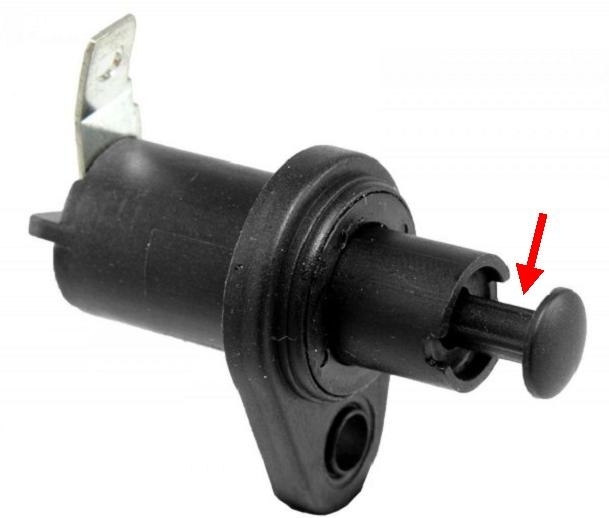
The door switch listed for your vehicle is this teardrop design. You can find tons of them in any salvage yard. They were used on '96 and newer Caravans too. They have an extremely low failure rate, but a lot of people replaced them for the "Door Ajar" light and the interior lights turning on when going around a corner. That was caused by the slight outward movement of the door.

These switches are one-time auto-adjusting, and often slamming the door caused them to over-adjust, then this problem would occur. The simple fix is to use a pick to pull out the plastic "nail". That is how it adjusts. You pull it out too far, then it will find its adjustment when you close the door.

I had a lot of these vehicles come into the dealership with this problem, but instead of selling the customer new switches, or simply pulling the nails out, my fix was to pull the nail all the way out, slide on three M5 lock washers, then put the nail back in. My nifty red arrow is pointing to where the washers go. The washers prevented the nail from over-adjusting in the future, so the customer never had that problem again. I always did both switches right away, and for that professional touch, the people in the parts department gave me a bottle of black touch-up paint to color the washers so they didn't stick out.

If one of those switches is missing, my suspicion is someone less-informed than you removed it to stop the chime and warning message.
Oct 23, 2018 at 8:51 PM
Avatar
JOSHUA CURTIS
  • MEMBER
  • 22 POSTS
I have one on the passenger side, rear passenger, and rear driver, but I don't know if they chime or turn on the interior lights. I know if I click the unlock button on the keyless remote the overhead dome lights and under dash lights come on. As I said before, I never tried to open the passenger side door to see if the lights came on because I never noticed the driver door jamb was missing. I happened to look after you mentioned it and saw the connector wire hanging where the jamb goes.

From what all I noticed on the other ones they are all factory, and have the jamb sticking out like it's supposed to. As I said, I'm going to buy one for the driver side and replace the other three and see what happens from there.

From what I was reading, the door actuators allow you to unlock the door with the keyless remote so mine are all bad since the doors doesn't unlock. I can unlock the door with the key, so I'll replace those in time. As far as I know, the unlock on the doors still work so it isn't so bad really. If those are bad, I don't know what to replace. Door locks I presume? Well the regulator? If that is what it's called.
Oct 23, 2018 at 9:01 PM
Avatar
CARADIODOC
  • CERTIFIED EXPERT
  • 34,306 POSTS
Every visor light I've ever seen turns on with a switch in the flap, so if that is closed, the light will be off.

I never replaced a latch assembly in a Jeep, but it is common now to find the lock actuator built into the assembly rather than being a separate solenoid. The first clue to look for is if the power lock operates with any switch, meaning a key fob, a switch on the door panel, or the speed-sensitive auto-locking feature through the Body Computer, the actuator is okay. If the lock motor is bad, or a wire going to it is broken, the power lock will not work from any switch.

If you hear a loud buzzing noise inside the door when you operate the lock, the assembly must be replaced. That is caused by the lock motor's armature has broken free and is spinning on the shaft instead of moving the gear train. That problem first showed up on the miserable redesigned '96 Caravans' sliding door locks. Those were not built into the latch assembly. I replaced a lot of those at the dealership.
Oct 23, 2018 at 9:05 PM
Avatar
JOSHUA CURTIS
  • MEMBER
  • 22 POSTS
I can hear it unlocking and locking when I press the button on the keyless remote but it won't engage. I can't remember if I've tried it using the door or not. I think I did it manually and went and slid the locks to lock. If none of them work then I have to replace the latch assembly or just the actuator?
Oct 23, 2018 at 9:09 PM
Avatar
CARADIODOC
  • CERTIFIED EXPERT
  • 34,306 POSTS
If none work, you have to look for what they have in common. That would be the Body Computer and the lock switches. When only one or two don't work, the first suspect would be the wires between the door hinges. Next would be the individual actuators. If an actuator makes that buzzing noise, the wiring has to be okay. That points to the armature broken free and spinning without moving the lock linkage.
Oct 23, 2018 at 10:20 PM
Avatar
JOSHUA CURTIS
  • MEMBER
  • 22 POSTS
Like I said, it makes the sound like its engaging but it doesnt lock or unlock, so I need to replace the armature?
Oct 23, 2018 at 10:27 PM
Avatar
CARADIODOC
  • CERTIFIED EXPERT
  • 34,306 POSTS
No. The armature is what is broken in the motor. That can only be repaired by replacing the latch assembly.
Oct 23, 2018 at 11:12 PM
Avatar
JOSHUA CURTIS
  • MEMBER
  • 22 POSTS
Okay, latch assembly. Got it. Thank you
Oct 23, 2018 at 11:18 PM