Codes P0106, P0069, P0107 and P0452

2013 DODGE DART
88,000 MILES • 4 CYL • TURBO • 2WD • MANUAL
Avatar
NASER NASER
  • MEMBER
  • 836 POSTS
Throttle response isn't full, isn't where it should be.. where would you start on something like this? hard to get up to speed, especially going up hill, but once you do all good.
Aug 22, 2020 at 1:36 PM
Advertisement
Avatar
JACOBANDNICKOLAS
  • CERTIFIED EXPERT
  • 110,175 POSTS
Naser,

All of the codes are related to the MAP sensor except the 452. It's tied into the EVAP pressure switch which can be an electrical issue or even a gas cap.

Have you checked the MAP sensor? Since three of the codes are related to it, that is where I would start. Here is the diagnostics for testing the sensor:

___________________________________________

2013 Dodge Dart L4-1.4L Turbo
Checking The MAP Sensor Operation
Vehicle Power-train Management Sensors and Switches - Power-train Management Sensors and Switches - Computers and Control Systems Manifold Pressure/Vacuum Sensor Testing and Inspection Component Tests and General Diagnostics Checking The MAP Sensor Operation
CHECKING THE MAP SENSOR OPERATION

For a complete wiring diagram, refer to the Wiring Information.

Diagnostic Test

1. MAP SENSOR WIRING OR CONNECTORS

NOTE: Diagnose and repair any MAP Sensor circuit DTCs before proceeding with this test.

NOTE: Diagnose and repair any sensor supply or system voltage DTCs before proceeding with this test.

1. Turn the ignition off.
2. Using the wiring diagram/schematic as a guide, inspect the wiring and connectors between the MAP Sensor and the PCM.
3. Look for any chafed, pierced, pinched, or partially broken wires.
4. Look for broken, bent, pushed out or corroded terminals.
5. Turn the ignition on.
6. Monitor the scan tool data relative to the sensor and wiggle test the wiring and connectors.
7. Look for the data to change or for a DTC to set during the wiggle test. If necessary, check each sensor circuit for high resistance or a shorted condition.

Were any problems found?

Yes

- Repair as necessary.
- Perform the Power-train Verification Test. See: A L L Diagnostic Trouble Codes ( DTC ) > Verification Tests > Power-train Verification Test.

No

- Go To 2

2. MAP VACUUM/BAROMETRIC PRESSURE
1. With a scan tool, read the Barometric Pressure.

NOTE: The Barometric Pressure should be approximately equal to the actual barometric pressure. If necessary, compare the Barometric Pressure value of the tested vehicle to the value of a known good vehicle of a similar make and model.

2. Connect a vacuum gauge to a manifold vacuum source.
3. Start the engine.

NOTE: If the engine will not idle, maintain a constant RPM above idle.

WARNING:
When the engine is operating, do not stand in direct line with the fan. Do not put your hands near the pulleys, belts, or fan. Do not wear loose clothing. Failure to follow these instructions can result in possible serious or fatal injury.

4. With the scan tool, read the MAP Sensor value.

NOTE: The scan tool reading for MAP vacuum should be within 1" of the vacuum gauge reading.

Were any problems found?

Yes

- Go To 4

No

- Go To 3

3. CHECK THE MAP SENSOR VOLTAGE
1. With the scan tool, monitor the MAP Sensor signal voltage.
2. With the engine idling in neutral or park, snap the throttle.

NOTE: The MAP Sensor signal voltage should change from below 2.0 volts at idle to above 3.5 volts at wide open throttle.

Were any problems found?

Yes

- Go To 4

No

- Test complete.

4. CHECK THE 5-VOLT SUPPLY CIRCUIT FOR HIGH RESISTANCE
1. Turn the ignition off.
2. Using a voltmeter, perform a voltage drop test on the MAP Sensor 5-Volt Supply circuit between the MAP Sensor harness connector and the PCM harness connector.Make sure the voltmeter leads are connected so that positive polarity is displayed on the voltmeter.

WARNING:
When the engine is operating, do not stand in direct line with the fan. Do not put your hands near the pulleys, belts, or fan. Do not wear loose clothing. Failure to follow these instructions can result in possible serious or fatal injury.

3. Start the engine.

Is the voltage reading below 0.1 volt?

Yes

- Go To 5

No

- Repair the 5-Volt Supply circuit for excessive resistance.
- Perform the POWER-TRAIN VERIFICATION TEST. See: A L L Diagnostic Trouble Codes ( DTC ) > Verification Tests > Power-train Verification Test.

5. CHECK THE MAP SENSOR SIGNAL CIRCUIT FOR HIGH RESISTANCE
1. Turn the ignition off.
2. Using a voltmeter, perform a voltage drop test on the MAP Sensor Signal circuit between the MAP Sensor harness connector and the PCM harness connector.Make sure the voltmeter leads are connected so that positive polarity is displayed on the voltmeter.

WARNING:
When the engine is operating, do not stand in direct line with the fan. Do not put your hands near the pulleys, belts, or fan. Do not wear loose clothing. Failure to follow these instructions can result in possible serious or fatal injury.

3. Start the engine.

Is the voltage reading below 0.1 volt?

Yes

- Go To 6

No

- Repair the MAP Sensor Signal circuit for excessive resistance.
- Perform the POWER-TRAIN VERIFICATION TEST. See: A L L Diagnostic Trouble Codes ( DTC ) > Verification Tests > Powertrain Verification Test.

6. CHECK THE MAP SENSOR GROUND CIRCUIT FOR HIGH RESISTANCE
1. Turn the ignition off.
2. Using a voltmeter, perform a voltage drop test on the MAP Sensor Ground circuit between the MAP Sensor harness connector and the PCM harness connector.Make sure the voltmeter leads are connected so that positive polarity is displayed on the voltmeter.

WARNING:
When the engine is operating, do not stand in direct line with the fan. Do not put your hands near the pulleys, belts, or fan. Do not wear loose clothing. Failure to follow these instructions can result in possible serious or fatal injury.

3. Start the engine.

Is the voltage below 0.1 volt?

Yes

- Go To 7

No

- Repair the MAP Sensor Ground circuit for excessive resistance.
- Perform the Power-train Verification Test. See: A L L Diagnostic Trouble Codes ( DTC ) > Verification Tests > Power-train Verification Test

7. MAP SENSOR
1. Using the wiring diagram/schematic as a guide, inspect the wiring and connectors between the MAP Sensor and the Power-train Control Module (PCM).
2. Look for any chafed, pierced, pinched, or partially broken wires.
3. Look for broken, bent, pushed out or corroded terminals.
4. Perform any Technical Service Bulletins that may apply.

Were any problems found?

Yes

- Repair as necessary.
- Perform the Power-train Verification Test. See: A L L Diagnostic Trouble Codes ( DTC ) > Verification Tests > Power-train Verification Test

No

- Replace the MAP Sensor. See: Manifold Pressure/Vacuum Sensor > Removal and Replacement.
- Perform the Power-train Verification Test. See: A L L Diagnostic Trouble Codes ( DTC ) > Verification Tests > Power-train Verification Test.

_____________________________________

Let me know what you find. Also, note that since you indicated turbo, the information is specific to the 1.4L turbo.

Joe
Aug 22, 2020 at 9:02 PM

Avatar
NASER NASER
  • MEMBER
  • 836 POSTS
thanks, I don't see any wiring schematics.
Aug 23, 2020 at 3:01 PM
Advertisement
Avatar
NASER NASER
  • MEMBER
  • 836 POSTS
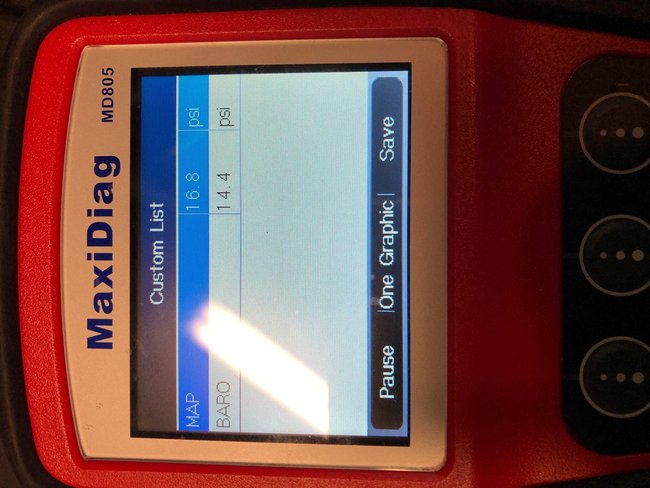
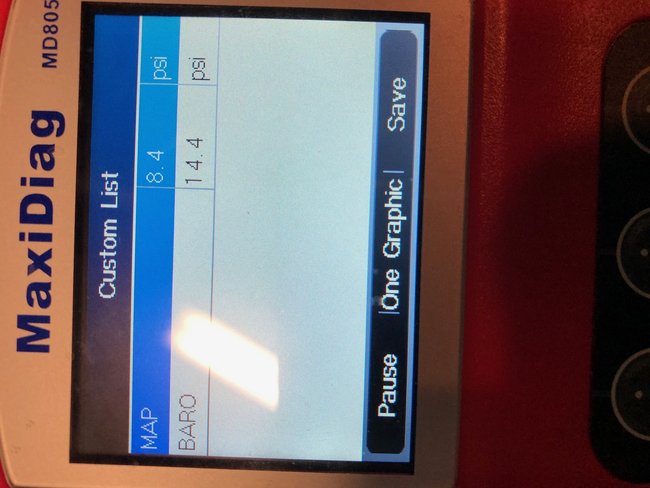
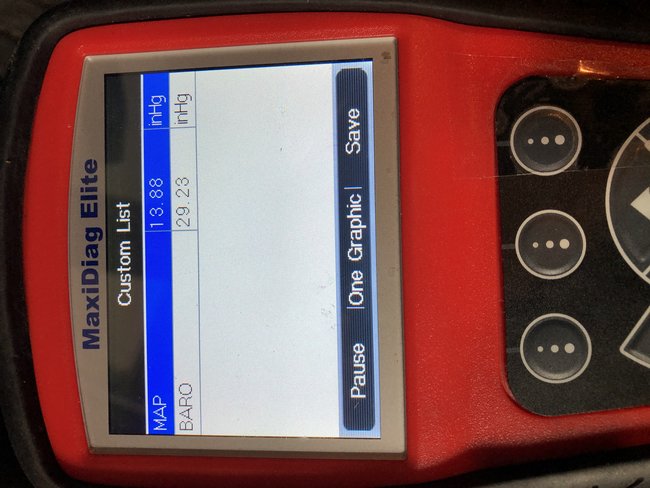
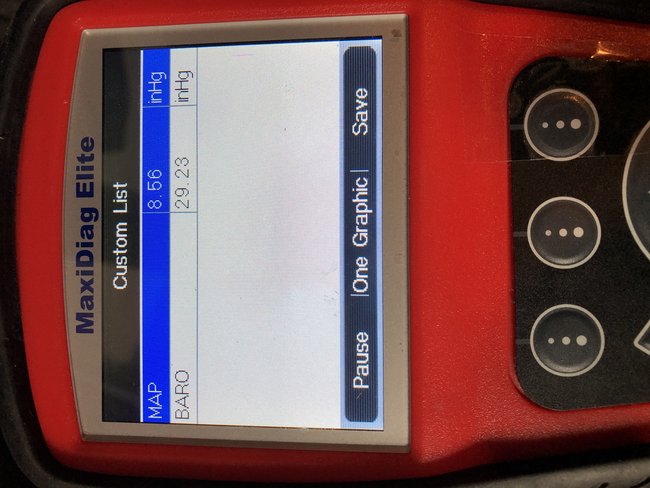
harness has signal and ground, and I have a 5 volt signal.. the first pic shows the values with ignition on, second with car running.. I deleted all codes before starting, immediately after starting the car check engine light is back with only one code; p0069.
Aug 23, 2020 at 3:28 PM
Avatar
JACOBANDNICKOLAS
  • CERTIFIED EXPERT
  • 110,175 POSTS
Either the MAP sensor is bad, the barometric pressure sensor, or the PCM is failing. Here are directions specific to P0069:

______________________________________-

2013 Dodge Dart L4-1.4L Turbo
Power-train Control Module (PCM)
Vehicle ALL Diagnostic Trouble Codes ( DTC ) Testing and Inspection P Code Charts P0069 P0069-00 Power-train Control Module (PCM)
POWER-TRAIN CONTROL MODULE (PCM)
P0069-00-MANIFOLD PRESSURE/BAROMETRIC PRESSURE CORRELATION

For a complete wiring diagram, refer to the Wiring Information.

- When Monitored:
Ignition on and during engine cranking with no Manifold Absolute Pressure (MAP) Sensor or Barometric Pressure Sensor electrical failures present.

- Set Condition:
The Power-train Control Module (PCM) performs the following rationality tests to check the Manifold Air Pressure Sensor and Barometric Pressure Sensor: At PCM power-up, the manifold pressure is compared with barometric pressure. If the two do not correlate and it cannot be determined which sensor is faulty, then this code is reported. One Trip Fault. Three good trips to turn off the MIL.


Pic 1


Always perform the Pre-Diagnostic Troubleshooting procedure before proceeding. See: Computers and Control Systems > Initial Inspection and Diagnostic Overview > PCM Pre-Diagnostic Troubleshooting Procedure.

Diagnostic Test

1. DTC IS ACTIVE

NOTE: Diagnose and repair any Crank Sensor DTC, Cam Sensor DTC, reference voltage DTC, air intake system restriction or exhaust system restriction before continuing with this test.

1. Turn the ignition on.
2. With the scan tool, select View DTCs and review the DTC environmental data.

Is the the DTC Active at this time?

Yes

- Go To 2

No

- Perform the INTERMITTENT CONDITION diagnostic procedure. See: Computers and Control Systems > Initial Inspection and Diagnostic Overview > PCM Intermittent Condition Test.

2. CHECKING THE MAP SENSOR OPERATION

NOTE: Diagnose and repair any MAP sensor or baro sensor DTCs before continuing with this test.

1. Perform the diagnostic procedure for CHECKING THE MAP SENSOR OPERATION. See: Manifold Pressure/Vacuum Sensor > Component Tests and General Diagnostics > Checking The MAP Sensor Operation.

Were any problems found?

Yes

- Repair as necessary.
- Perform the POWER-TRAIN VERIFICATION TEST. See: A L L Diagnostic Trouble Codes ( DTC ) > Verification Tests > Power-train Verification Test.

No

- Go To 3

3. POWER-TRAIN CONTROL MODULE (PCM)
1. Using the wiring diagram/schematic as a guide, inspect the wiring and connectors between the MAP Sensor and the Power-train Control Module (PCM).
2. Look for any chafed, pierced, pinched or partially broken wires.
3. Look for broken, bent, pushed out or corroded terminals. Verify that there is good pin to terminal contact in the MAP Sensor and Power-train Control Module harness connectors.
4. Perform any Technical Service Bulletins that may apply.

Were there any problems found?

Yes

- Repair as necessary.
- Perform the POWER-TRAIN VERIFICATION TEST. See: A L L Diagnostic Trouble Codes ( DTC ) > Verification Tests > Power-train Verification Test.

No

- Replace and program the Power-train Control Module. See: Engine Control Module > Removal and Replacement.
- Perform the POWER-TRAIN VERIFICATION TEST. See: A L L Diagnostic Trouble Codes ( DTC ) > Verification Tests > Power-train Verification Test.

______________________________________

Joe
Aug 23, 2020 at 6:16 PM
Avatar
NASER NASER
  • MEMBER
  • 836 POSTS
Logical. The MAP sensor had a bit if oil on it, wires all in good condition. Can you pinpoint to their location?
Aug 23, 2020 at 7:02 PM
Avatar
JACOBANDNICKOLAS
  • CERTIFIED EXPERT
  • 110,175 POSTS
When you say their location, what are you referring to? I assume you know where the MAP is because you indicated oil on it.

Here are the directions for removal and replacement:


2013 Dodge Dart L4-1.4L Turbo
Removal
Vehicle Powertrain Management Sensors and Switches - Power-train Management Sensors and Switches - Computers and Control Systems Manifold Pressure/Vacuum Sensor Service and Repair Removal and Replacement Removal
REMOVAL
1.4L

NOTE: This sensor monitors both Inlet Air Temperature (IAT) and Manifold Air Pressure (MAP).

1. Disconnect and isolate the negative battery cable.
2. Remove the engine cover.
3. Remove the air cleaner body See: Air Cleaner Housing > Removal and Replacement > Air Cleaner Body - Removal.

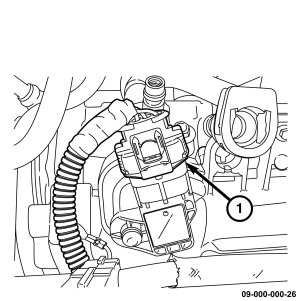
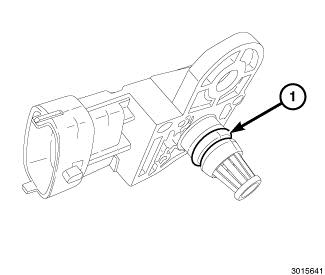
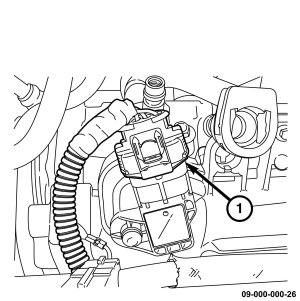
Pic 1

4. Unlock and disconnect the wire harness connector (1) from the IAT/MAP sensor.
5. Remove the bolt and the IAT/MAP sensor from the intake manifold.


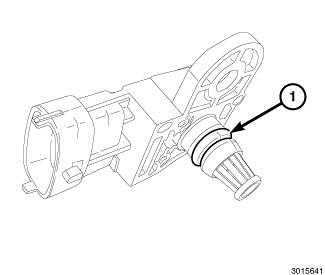
Pic 2


6. The IAT/MAP sensor O-ring (1) can be reused if not damaged.

_________________________________________________________________

Install:

__________

2013 Dodge Dart L4-1.4L Turbo
Installation
Vehicle Power-train Management Sensors and Switches - Power-train Management Sensors and Switches - Computers and Control Systems Manifold Pressure/Vacuum Sensor Service and Repair Removal and Replacement Installation
INSTALLATION
1.4L


pic 3


NOTE: This sensor monitors both Inlet Air Temperature (IAT) and Manifold Air Pressure (MAP).

1. The IAT/MAP sensor O-ring (1) can be reused if not damaged.
2. Apply a small amount of engine oil to the sensor O-ring (1).


pic 4


3. Install the IAT/MAP sensor (1) into the intake manifold with the bolt (2) tightened to 9 Nm (80 in. lbs.).
4. Connect and lock the wire harness connector (3) to the sensor.


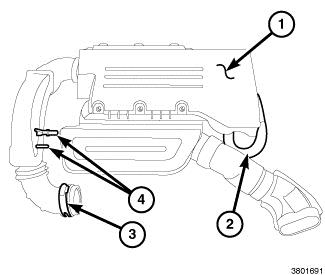
pic 5


5. Install the air cleaner body (1) See: Air Cleaner Housing > Removal and Replacement > Air Cleaner Body - Installation.

6. Connect the negative battery cable and tighten nut to 5 Nm (45 in. lbs.).

___________________

Let me know.
Joe

Aug 23, 2020 at 7:20 PM
Avatar
NASER NASER
  • MEMBER
  • 836 POSTS
Yes, that's the one i removed and cleaned just in case. But you saying there is also a barometric sensor. where is that located?
Aug 23, 2020 at 7:43 PM
Avatar
JACOBANDNICKOLAS
  • CERTIFIED EXPERT
  • 110,175 POSTS
Naser,

The sensor is part of the Powertrain Control Module. It can't be serviced separately.

Here is the description:

2013 Dodge Dart L4-1.4L Turbo
Powertrain Control Module (PCM)

POWERTRAIN CONTROL MODULE (PCM)
P2226-00-BAROMETRIC PRESSURE SENSOR


Theory of Operation

The barometric pressure measures atmospheric pressure. The sensor is part of the Powertrain Control Module (PCM) and is not replaceable separately.

- When Monitored:
Key on and no battery related DTC present.

- Set Condition:
The Powertrain Control Module (PCM) detects that the Barometric pressure value differs from the other pressure sensors by a calibrated amount.

Joe
Aug 23, 2020 at 9:20 PM
Avatar
NASER NASER
  • MEMBER
  • 836 POSTS
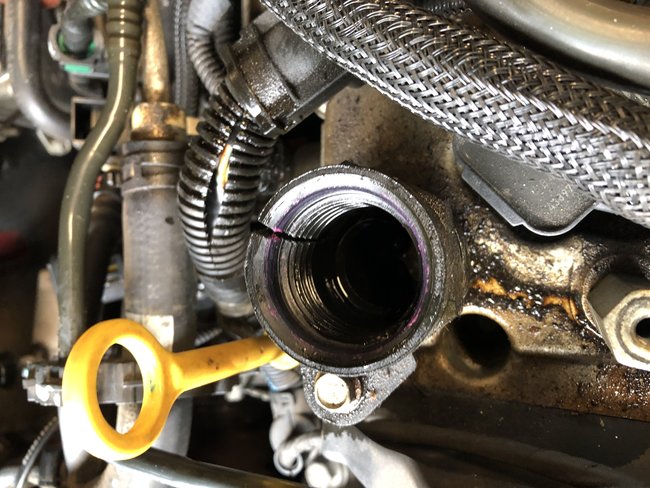
Notice this crack u think it would affect it?
Aug 24, 2020 at 10:57 AM
Avatar
JACOBANDNICKOLAS
  • CERTIFIED EXPERT
  • 110,175 POSTS
Is that the oil fill on top of the valve cover? If so, I don't think it would, but see if there is any air leaking around it. It's hard to tell if it leaks because the valve cover has a lot of oil on it.

Let me know.
Joe
Aug 24, 2020 at 2:09 PM
Avatar
NASER NASER
  • MEMBER
  • 836 POSTS
I think all the oil round it is from oil leaking from it when car is running, engine also had almost 2 quarts of extra oil quarts in it, sucked that out, reset codes, didn't come back immediately and drove it around the block also didn't come back yet.very short drive, but still feels very strangled, not breathing right.
Not enough throttle, as if something is keeping throttle from opening.
Aug 24, 2020 at 2:22 PM
Avatar
NASER NASER
  • MEMBER
  • 836 POSTS
yes, the oil filler cap.
Aug 24, 2020 at 2:27 PM
Avatar
JACOBANDNICKOLAS
  • CERTIFIED EXPERT
  • 110,175 POSTS
If it's lacking power, have you checked the catalytic converter to make sure it isn't partially plugged?

https://www.2carpros.com/articles/bad-catalytic-converter-symptoms

Joe
Aug 24, 2020 at 8:37 PM
Avatar
NASER NASER
  • MEMBER
  • 836 POSTS
No, i have not .car has 88,000, plus it sometimes does it sometimes not. Plus once you are at higher speeds it is okay, it is at lower speeds where the problem is. throttle related problem i am pretty sure.
Aug 25, 2020 at 6:20 AM
Avatar
JACOBANDNICKOLAS
  • CERTIFIED EXPERT
  • 110,175 POSTS
Naser,

I understand what you are saying. Have you tested the MAP or replaced it?

Joe
Aug 25, 2020 at 7:59 PM
Avatar
NASER NASER
  • MEMBER
  • 836 POSTS
Waiting on a replacement MAP.
Aug 25, 2020 at 8:42 PM
Avatar
JACOBANDNICKOLAS
  • CERTIFIED EXPERT
  • 110,175 POSTS
Hi,

Sounds good. I'm surprised that isn't an easy to get part. Are you in the US?

Joe
Aug 26, 2020 at 2:29 PM
Avatar
NASER NASER
  • MEMBER
  • 836 POSTS
Yes, I am in Alabama , i was surprised that my cost at the dealer was $180.00, and cheapest i found in store was $160.00, way too high, found it for $60.00 online. It was not easy finding it too, some show the wrong part.
Aug 26, 2020 at 2:39 PM
Avatar
NASER NASER
  • MEMBER
  • 836 POSTS
Changed the MAP sensor same code, there is also some air i feel when i out my hand around the cracked oil filler cap.
Aug 28, 2020 at 3:34 PM
Avatar
NASER NASER
  • MEMBER
  • 836 POSTS
what do you call that piece that the oil cap attaches to?
Aug 28, 2020 at 7:17 PM
Avatar
JACOBANDNICKOLAS
  • CERTIFIED EXPERT
  • 110,175 POSTS
Are you referring to the valve cover? That is where the oil cap attaches.

I hope all is well and the storm didn't cause you problems.

Joe

Aug 28, 2020 at 9:33 PM
Avatar
NASER NASER
  • MEMBER
  • 836 POSTS
No, it's the oil filler cap extension/adapter, it's where the cap screws in, it's plastic.
Aug 28, 2020 at 10:02 PM
Avatar
NASER NASER
  • MEMBER
  • 836 POSTS
No, storm passed and all is well. thanks
Aug 28, 2020 at 10:02 PM
Avatar
JACOBANDNICKOLAS
  • CERTIFIED EXPERT
  • 110,175 POSTS
First, glad to hear you are well. That was a bad one (storm). As far as the oil filler neck, is there any way you could temporarily seal it to see if it makes a difference?

Joe
Aug 29, 2020 at 8:30 PM
Avatar
NASER NASER
  • MEMBER
  • 836 POSTS
I tried with tape didn't work, tried with a towel it made some difference, but the throttle response is still very bad, not much response going up the driveway. i will have to do the p0107 testing.
Aug 29, 2020 at 8:32 PM
Avatar
JACOBANDNICKOLAS
  • CERTIFIED EXPERT
  • 110,175 POSTS
Naser, nothing is easy anymore. I don't know if you need them, but here is what I have as far as P0107 diagnostics. I hope it helps.

____________________________________________________-

2013 Dodge Dart L4-1.4L Turbo
Powertrain Control Module (PCM)
Vehicle ALL Diagnostic Trouble Codes ( DTC ) Testing and Inspection P Code Charts P0107 P0107-00 Powertrain Control Module (PCM)
POWERTRAIN CONTROL MODULE (PCM)
P0107-00-MANIFOLD ABSOLUTE PRESSURE SENSOR CIRCUIT LOW

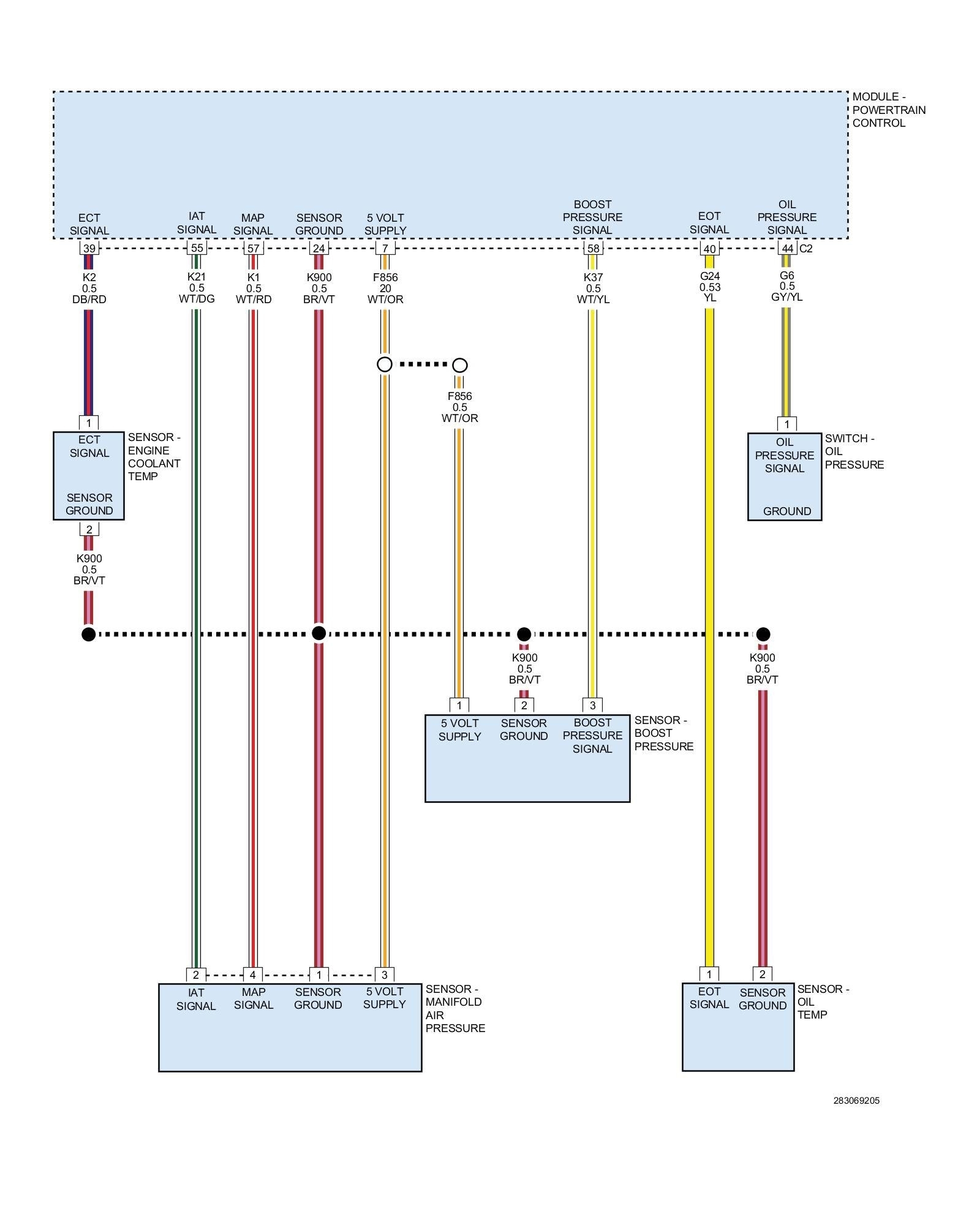
For a complete wiring diagram, refer to the Wiring Information.


pic 1


Theory of Operation

The Manifold Absolute Pressure (MAP) Sensor and the Intake Air Temperature (IAT) Sensor are combined into one component. The PCM provides a common 5-Volt Supply and sensor ground that is shared by both sensors. Each of these sensors sends feedback to the Powertrain Control Module (PCM) on it's own signal circuit. The MAP Sensor is a transducer that varies resistance according to changes in altitude and atmospheric conditions. With the ignition on and the engine not running, the MAP Sensor provides the PCM with the Barometric Pressure reading. When the engine is running, the MAP Sensor signal supplies the PCM with the current air pressure within the Intake Manifold. The IAT Sensor signal supplies the PCM with the temperature of the air entering the Intake Manifold. This information is used by the PCM, along with other inputs to calculate fuel delivery, and timing needs.

- When Monitored:
With the ignition on.

- Set Condition:
The MAP Sensor signal voltage is below 0.059 volts for 0.5 seconds. One Trip Fault. Three good trips to turn off the MIL. MIL will illuminate and the ETC light will flash if equipped.


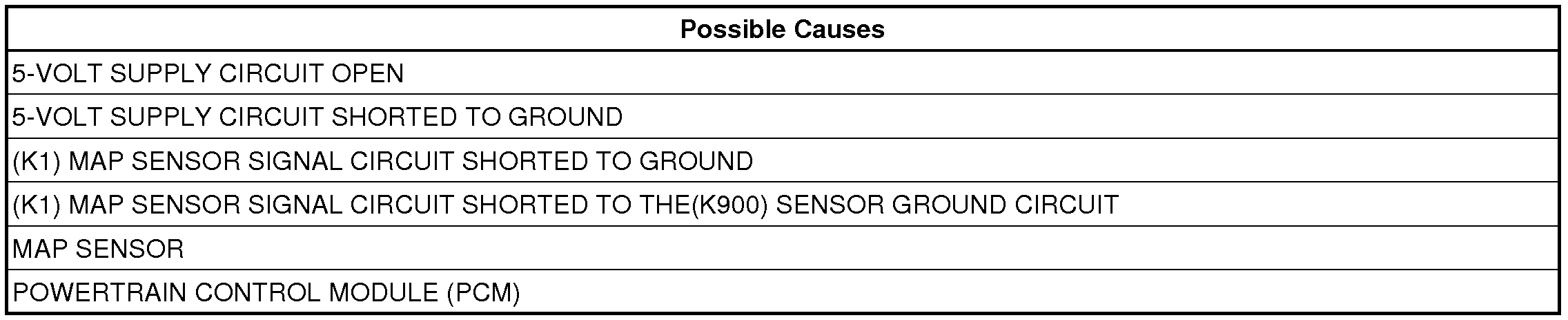
pic 2


Always perform the Pre-Diagnostic Troubleshooting procedure before proceeding. See: Computers and Control Systems > Initial Inspection and Diagnostic Overview > PCM Pre-Diagnostic Troubleshooting Procedure.

Diagnostic Test

1. ACTIVE DTC
1. Start the engine and allow it to reach normal operating temperature.

WARNING:
When the engine is operating, do not stand in direct line with the fan. Do not put your hands near the pulleys, belts, or fan. Do not wear loose clothing. Failure to follow these instructions can result in possible serious or fatal injury.

NOTE: Diagnose and repair any 5-Volt Supply circuit DTCs before continuing with this test.

2. With the scan tool, read the active DTCs.

Is the DTC Active at this time?

Yes

- Go To 2

No

- Perform the INTERMITTENT CONDITION diagnostic procedure. See: Computers and Control Systems > Initial Inspection and Diagnostic Overview > PCM Intermittent Condition Test.

2. CHECK THE (F856) 5-VOLT SUPPLY CIRCUIT
1. Turn the ignition off.
2. Disconnect the MAP Sensor harness connector.
3. Ignition on, engine not running.
4. Measure the voltage on the (F856) 5-Volt Supply circuit in the MAP Sensor harness connector.

Is the voltage between 4.9 to 5.1 volts?

Yes

- Go To 3

No

- Repair the (F856) 5-Volt Supply circuit for an open circuit or short to ground.
- Perform the POWERTRAIN VERIFICATION TEST. See: A L L Diagnostic Trouble Codes ( DTC ) > Verification Tests > Powertrain Verification Test.

3. MAP SENSOR
1. With the scan tool, monitor the MAP Sensor voltage with the Sensor harness connector disconnected.

NOTE: The sensor voltage should be approximately 5.0 volts (plus or minus.1 volt) with the connector disconnected.

Is the voltage above 4.8 volts?

Yes

- Verify that there is good pin to terminal contact in the Sensor and Powertrain Control Module connectors. If OK, replace the MAP Sensor. See: Manifold Pressure/Vacuum Sensor > Removal and Replacement.
- Perform the POWERTRAIN VERIFICATION TEST. See: A L L Diagnostic Trouble Codes ( DTC ) > Verification Tests > Powertrain Verification Test.

No

- Go To 4

4. CHECK THE (K1) MAP SENSOR SIGNAL CIRCUIT FOR A SHORT TO GROUND
1. Turn the ignition off.
2. Disconnect the PCM C2 harness connector.
3. Measure the resistance between ground and the (K1) MAP Sensor Signal circuit at the MAP Sensor harness connector.

Is the resistance above 10k Ohms?

Yes

- Go To 5

No

- Repair the (K1) MAP Sensor MAP Signal circuit for a short to ground.
- Perform the POWERTRAIN VERIFICATION TEST. See: A L L Diagnostic Trouble Codes ( DTC ) > Verification Tests > Powertrain Verification Test.

5. CHECK FOR THE (K1) MAP SENSOR SIGNAL CIRCUIT SHORTED TO THE (K900) SENSOR GROUND CIRCUIT
1. Measure the resistance between the (K1) MAP Sensor Signal circuit and the (K900) Sensor Ground circuit at the MAP Sensor harness connector.

Is the resistance above 10k Ohms?

Yes

- Go To 6

No

- Repair the short between the (K1) MAP Sensor Signal circuit and the (K900) Sensor Ground circuit.
- Perform the POWERTRAIN VERIFICATION TEST. See: A L L Diagnostic Trouble Codes ( DTC ) > Verification Tests > Powertrain Verification Test.

6. POWERTRAIN CONTROL MODULE (PCM)
1. Using the wiring diagram/schematic as a guide, inspect the wiring and connectors between the MAP Sensor and the Powertrain Control Module (PCM).
2. Look for any chafed, pierced, pinched or partially broken wires.
3. Look for broken, bent, pushed out or corroded terminals. Verify that there is good pin to terminal contact in the MAP Sensor and Powertrain Control Module connectors.
4. Perform any Technical Service Bulletins that may apply.

Were there any problems found?

Yes

- Repair as necessary.
- Perform the POWERTRAIN VERIFICATION TEST. See: A L L Diagnostic Trouble Codes ( DTC ) > Verification Tests > Powertrain Verification Test.

No

- Replace and program the Powertrain Control Module. See: Engine Control Module > Removal and Replacement.
- Perform the POWERTRAIN VERIFICATION TEST. See: A L L Diagnostic Trouble Codes ( DTC ) > Verification Tests > Powertrain Verification Test.

_____________________________________

Let me know what you find or if you have other questions.

Take care,
Joe
Aug 29, 2020 at 9:21 PM
Avatar
NASER NASER
  • MEMBER
  • 836 POSTS
I went to put inside my garage to start on the p0107 testing and it has much better response, warm. do these pictures tell you anything? First one engine warm no throttle, second with throttle. Can you confirm to me that the res/white is the signal wire i should be checking and it should have a range of volts between 0 and 5v depending on the pressure? So far two days ago when i tested it it would only change between 0.50 and 0.80v.
Sep 5, 2020 at 8:37 AM
Avatar
JACOBANDNICKOLAS
  • CERTIFIED EXPERT
  • 110,175 POSTS
Naser, the pressures don't seem out of the ordinary. Have you checked to make sure nothing is disconnected at the turbo? I've seen air intakes break or come apart and cause a pressure variation as well.

If nothing is disconnected and based on your readings the map is good, I have a feeling it could be the PCM. Double check connections there as well.

Hope you are doing well.

Joe
Sep 5, 2020 at 6:27 PM
Avatar
NASER NASER
  • MEMBER
  • 836 POSTS
Yes, checked all wires, os, voltage, all good, not getting variation in map volts as it should, only getting between 1.87-0.59, i should have a range of 0-5v with throttle vRiation.
Sep 5, 2020 at 6:37 PM
Avatar
JACOBANDNICKOLAS
  • CERTIFIED EXPERT
  • 110,175 POSTS
Have you replaced the MAP?

Joe
Sep 5, 2020 at 7:13 PM
Avatar
NASER NASER
  • MEMBER
  • 836 POSTS
Yes, new Bosch MAP sensor, first thing i did.
Sep 5, 2020 at 8:14 PM
Avatar
4DRTOM
  • CERTIFIED EXPERT
  • 467 POSTS
Hello, Naser,

I have 2 cents to through in.
I read through your thread here, As Joe just mentioned about checking the turbo, as I was reading that is what was coming into my mind. After its warm and you are doing your test drives are you hearing the turbo turn on? The gate might not be opening or opening fully. I think checking that the vacuum line that runs the gate to verify its connected and the gate diaphragm isn't leaking it is worth an inspection. I quick check by spraying carburetor cleaner around the vacuum lines and a hand vacuum tester to see the diaphragm is holding pressure is quick and easy.
Tom
Sep 6, 2020 at 8:37 AM
Avatar
NASER NASER
  • MEMBER
  • 836 POSTS
yes, the turbo sound is present. I had other darts where the hose to throttle develops a leak and you can't even drive it, doubt this is the same, as its drivable once you get up speed. is there a way to check if these numbers are correct by sending you the turbo boosts and vacuum on my scanner?
Sep 6, 2020 at 9:11 AM
Avatar
JACOBANDNICKOLAS
  • CERTIFIED EXPERT
  • 110,175 POSTS
Naser, The turbo may still spool and be heard, but a leak in the charge air tube can throw off pressures. It's just a thought.

Joe
Sep 6, 2020 at 8:27 PM
Avatar
NASER NASER
  • MEMBER
  • 836 POSTS
I will double check.
Sep 7, 2020 at 11:21 AM
Avatar
NASER NASER
  • MEMBER
  • 836 POSTS
I had an IT friend check the PCM visually from inside looks good. Reconnected it, removed negative, touched positive to disconnected negative for an hour to drain any charge, left it alone for another hour. Connected battery, before i even start it it had a code stores for the p0069, no check engine light when started. If it's giving me the code before even starting then the vacuum leaks are out i believe. I checked all hoses to turbo and what not all look good.
Sep 7, 2020 at 1:24 PM
Avatar
NASER NASER
  • MEMBER
  • 836 POSTS
P106 came back, still has good power but a bit congested.
Sep 7, 2020 at 1:36 PM
Avatar
NASER NASER
  • MEMBER
  • 836 POSTS
So if the PCM has an issue, disconnected battery or not code will be there without even turning the motor on, does that make sense? Didn't do anything after disconnecting the battery and the code is already there.
Sep 7, 2020 at 1:41 PM
Avatar
JACOBANDNICKOLAS
  • CERTIFIED EXPERT
  • 110,175 POSTS
Naser,

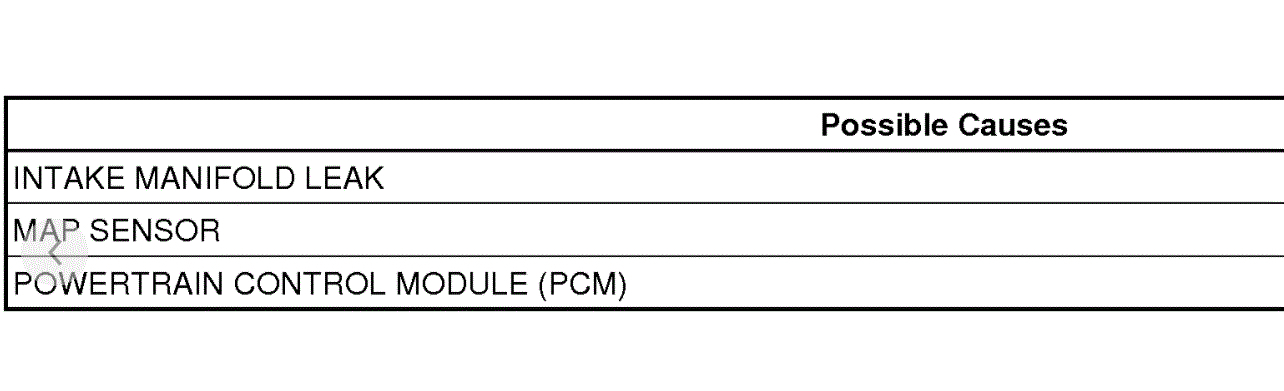
Hi buddy, here is what to do: Replace the MAP sensor and clear the code. If it returns, replace the PCM. If you look at the attached pic, it shows three possible causes. If there are no vacuum related leaks, if you replace the MAP, clear the code, and it comes right back, the PCM is the problem.

I hope this helps.

Take care,
Joe
Sep 7, 2020 at 8:07 PM
Avatar
NASER NASER
  • MEMBER
  • 836 POSTS
Yes, removed the PCM sending it for repair. thanks man.
Sep 7, 2020 at 8:09 PM