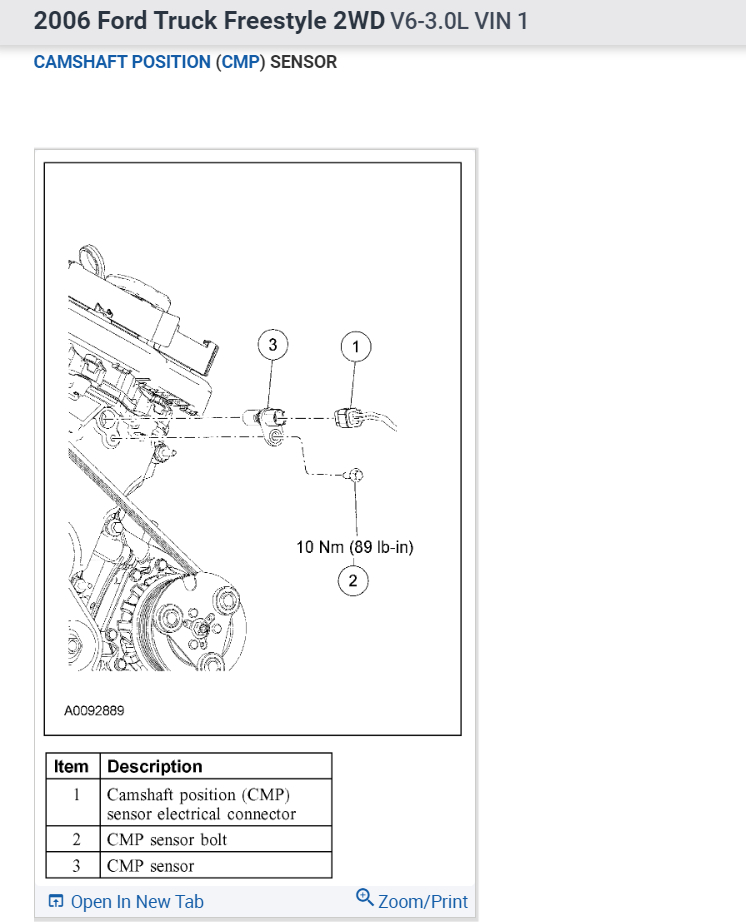
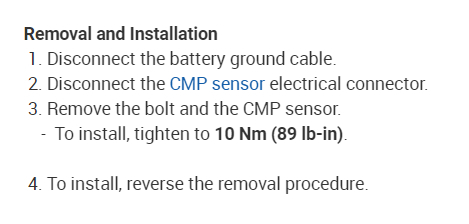
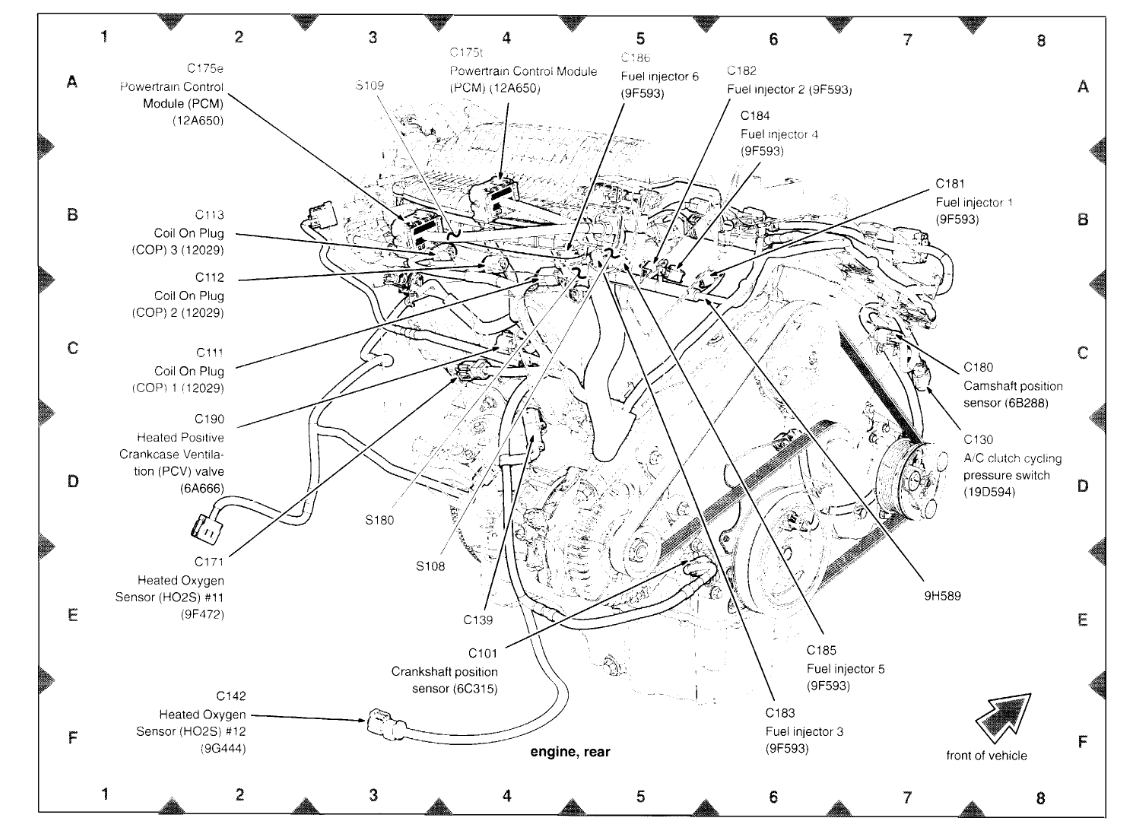
I used to have a 2000 Kia Sephia back in the 2010s and I had noticed that its camshaft position sensor was right behind the exhaust camshaft on the back of the cylinder head and the 2000 Kia Sephia was a straight four cylinder engine so it only had a single cylinder head above its engine block, now I have a 2014 Nissan Versa SV and while it also has a single cylinder head above the engine block I can't see a camshaft position sensor, I only see two electronic variable valve timing actuators on each side on the front of the cylinder head, the Ford Freestyle is a V-6 engine so it has two cylinder heads above its V type engine block, I never had a Ford Freestyle so I don't know if it is dual overhead camshaft with four camshafts on both cylinder heads or single overhead camshaft with two camshafts one on each cylinder head, so the camshaft position sensor must be behind the camshaft, the exhaust camshaft if it is dual overhead camshaft, what the camshaft position sensor does is it triggers an ignition module to temporarily interrupt the flow of low voltage electricity to each of the direct distributorless ignition coils' primary windings so that the electromagnetic field that has formed collapses and forms high voltage secondary electricity to the coils' secondary windings which ignite the spark plugs and fire up the air-fuel mixture from the intake manifold which pushes down the pistons and piston rings and rotates or turns the crankshaft, flywheel, transmission planetary gears, differential gears and front wheels but I don't know how does an all-wheel drive works, I know that I have included too much information but is that V-6 engine misfiring or running rough or shaking at idle speed or does it just operate with the check engine light?
Jan 17, 2023 at 12:56 PM