camshaft alignment

2001 VOLVO V70
162,000 MILES • 2.3L • 5 CYL • 2WD • AUTOMATIC
Avatar
RICK ESTESS
  • MEMBER
  • 52 POSTS
My camshafts are misaligned. The exhaust cam has been turned; how much I don't know. Timing belt off. How do I align them properly, and how can I tell if I've done it right? Can I tell by looking at them? I plan on taking the cam cover off to replace seals. I have the cam/crankshaft lock/cam cover remover tool kit as well as all the other tools I need. One more question: Does the crankshaft pulley go on only one way? I need to know if it's properly set on the crankshaft before I can align the mark with the mark on the oil pump. I see a 2-tooth gap on the crank pulley that appears to correspond to a specific place on the crankshaft end. Is that where they should match?
Aug 22, 2019 at 4:41 PM
Advertisement
Avatar
JACOBANDNICKOLAS
  • CERTIFIED EXPERT
  • 110,175 POSTS
Welcome to 2CarPros.

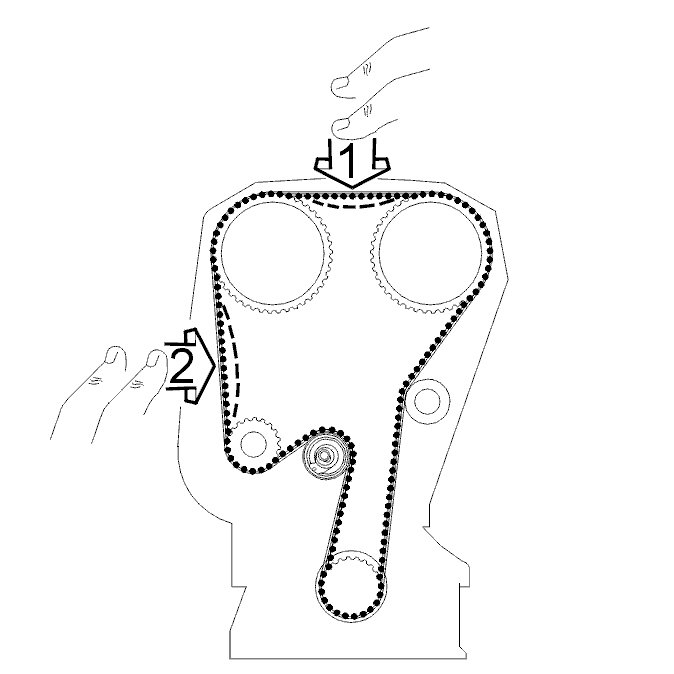
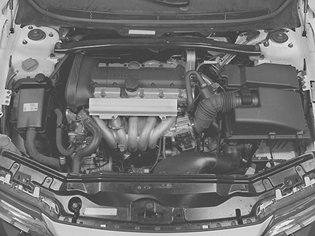
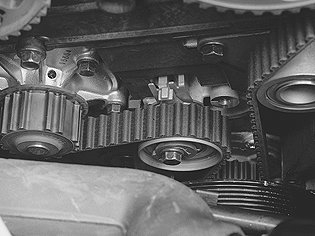
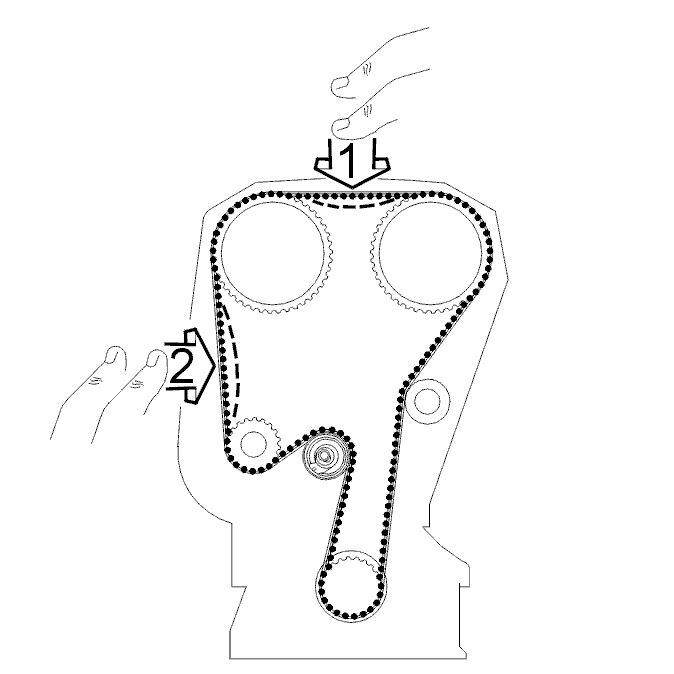
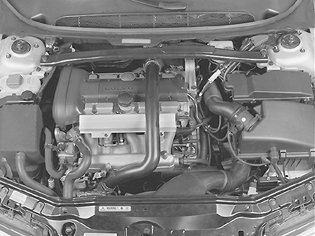
The crankshaft pulley will only fit one way. It should have a key-way that only allows it to go one way. Here are the directions for replacing the belt. All attached pics correlate with the directions.

_________________________

TIMING BELT, REPLACING
Timing belt, replacing

Special tools:
999 5433 COUNTERHOLD See: Vehicle > Electrical / Mechanical Repair > 999 5433 Counterhold

Remove components


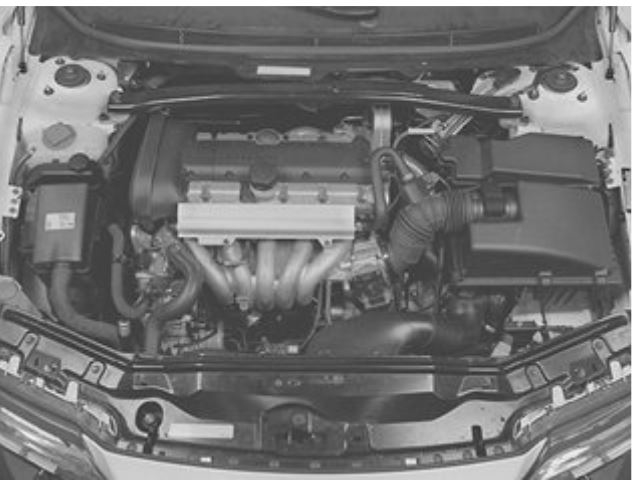
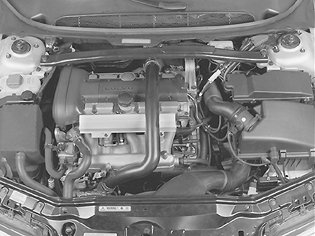
pic 1


Caution! Remove the ignition key.

Remove:
- the cross stay between the suspension turrets
- the upper camshaft belt cover
- the servo reservoir and expansion tank.
Lift them up and place them on top of the engine

Warning! Ensure that no power steering fluid is spilled. It is extremely flammable!

- the auxiliaries belt
- the front camshaft belt cover.

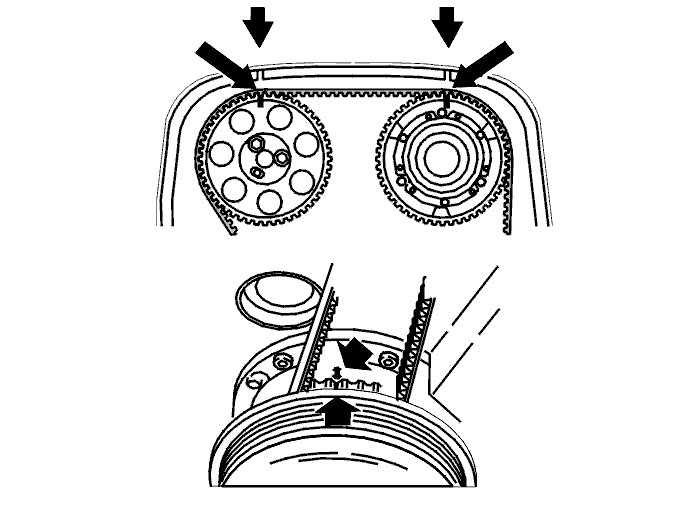
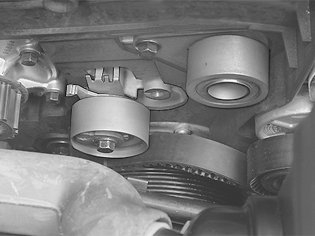
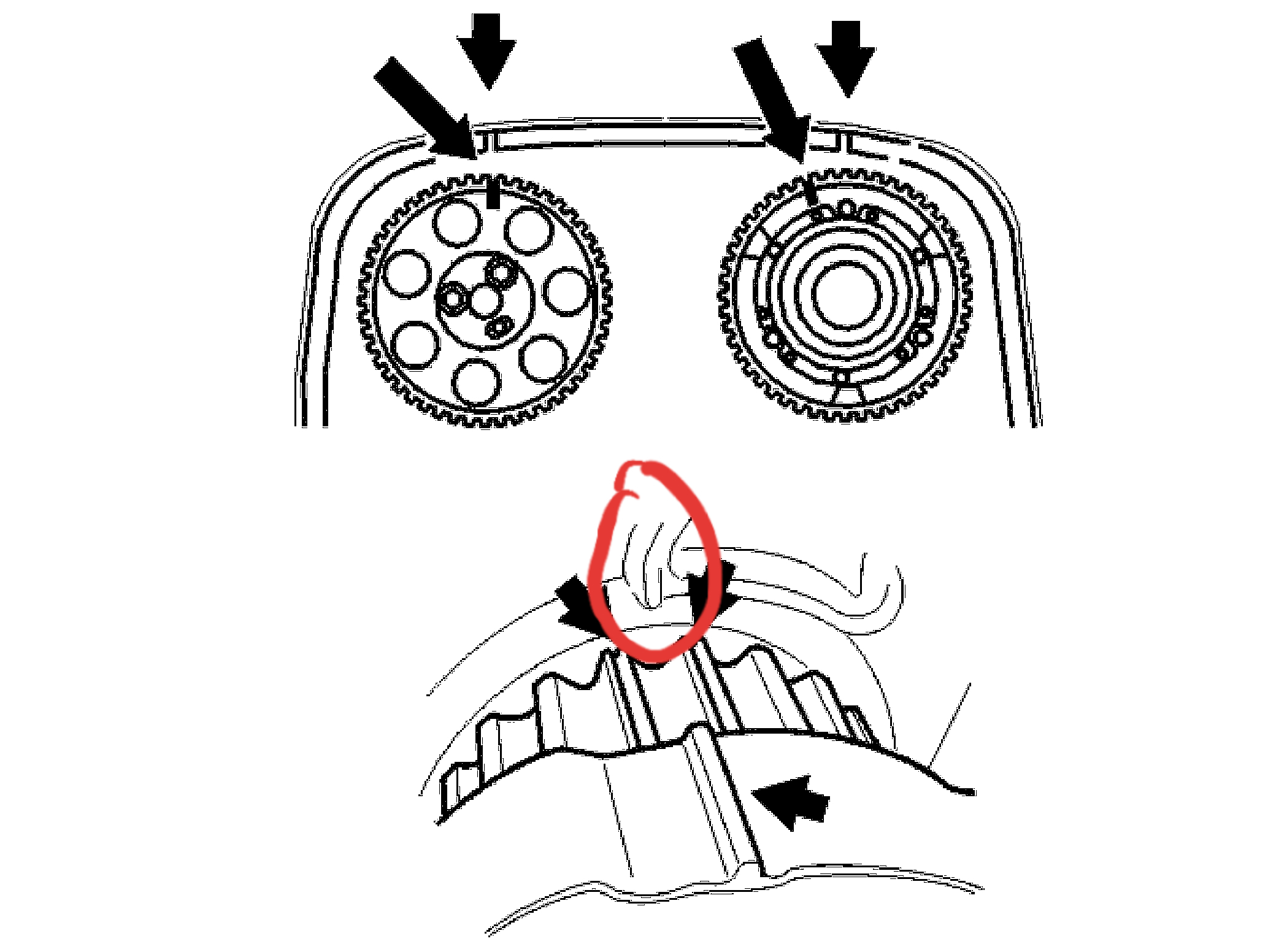
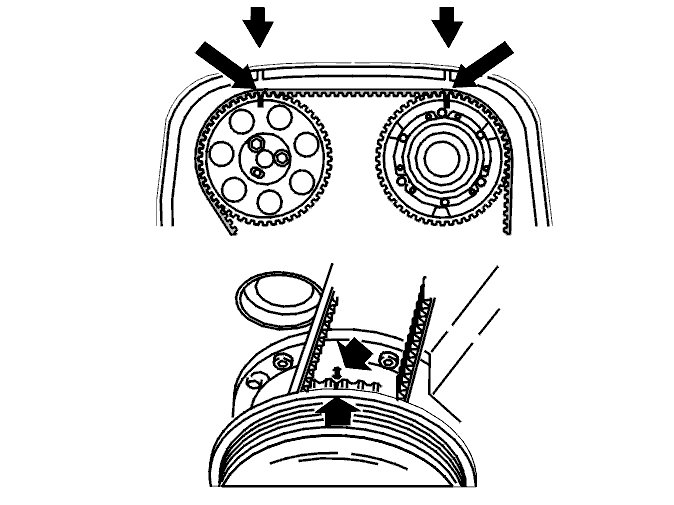
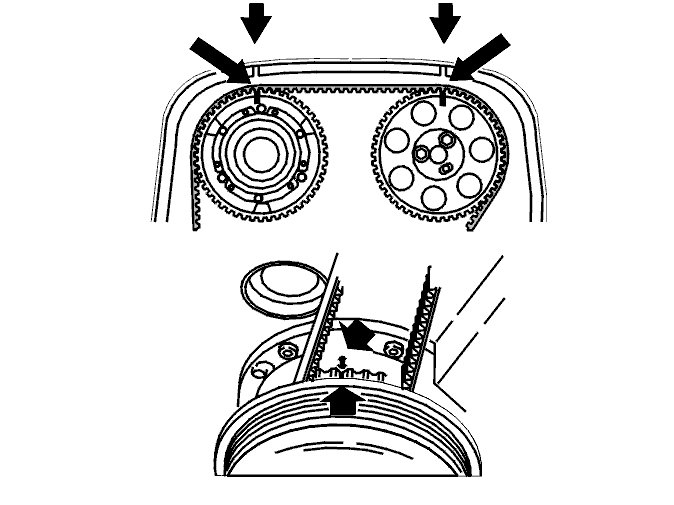
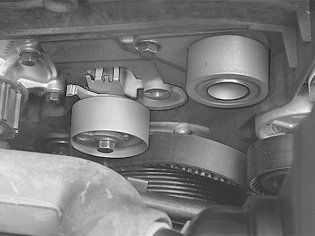
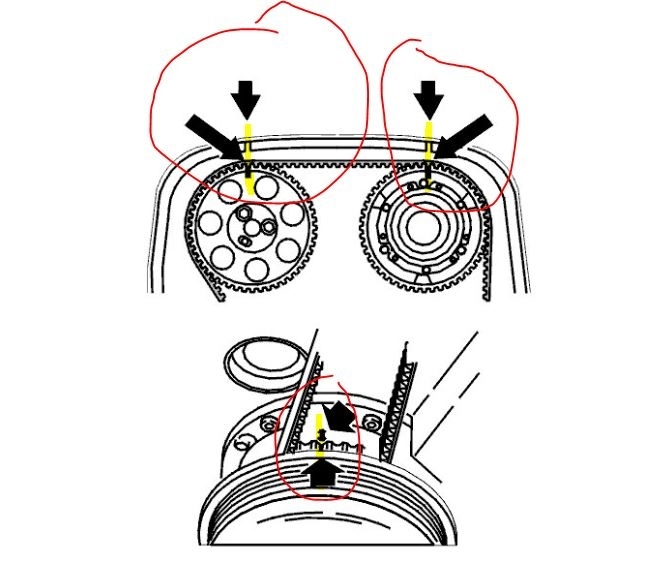
Position the engine according to the marking


pic 2

Remove the right front wheel.
Remove the nut from the cover in the fender liner.
Install the upper camshaft belt cover.
Turn the crankshaft clockwise until the markings on the crankshaft and camshaft pulley correspond.
Turn the crankshaft a further 1/4 turn clockwise and then back again until the markings correspond. The markings are illustrated.
Remove the upper camshaft belt cover.

Removing the camshaft belt


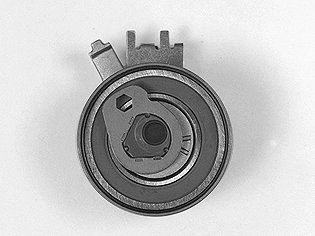
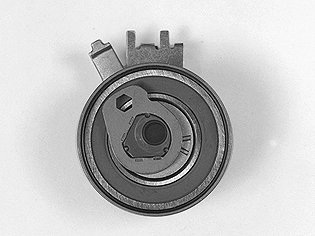
pic 3

Slacken off the belt tensioner.
There are two variants of the belt tensioner.
Up to engine number 3188688 the eccentric must be turned clockwise when loosening.
From engine number 3188689 the eccentric must be turned anticlockwise to loosen the belt tension.
- Slacken off the belt tensioner center screw slightly.
- Hold the center screw in position and, depending on the variant, turn the eccentric on the tensioner to 10 o'clock (clockwise) or 2 o'clock (anticlockwise) using a 6 mm allen key.
- Remove the camshaft belt from the tension pulley, camshaft pulley and water pump.


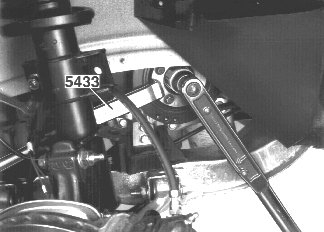
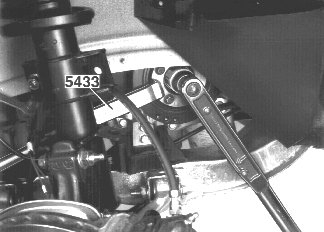
pic 4

Remove the vibration damper.
Remove the oscillation damper. Use counterhold 999 5433 COUNTERHOLD See: Vehicle > Electrical / Mechanical Repair > 999 5433 Counterhold. Work the oscillation damper loose.
Remove the camshaft belt.

Checking the tension pulley and idler pulley


pic 5


Check for bearing wear:
Spin the idler pulley and listen for noise. If replacing with a new idler pulley, tighten to 24 Nm.
Spin the tension pulley and listen for noise. When replacing, screw the tension pulley into place with the center screw.
spin the tension pulley and listen for noise. If replacing, screw the tension pulley into place with the center screw.
Screw in the center screw by hand.
Ensure that the tensioner fork is centered over the cylinder block rib.
Ensure that the allen hole on the eccentric is at "10 o'clock".

Installing the camshaft belt


pic 6


Note: For information regarding Variable Valve Timing see: Variable Valve Timing Actuator, Adjustments See: Variable Valve Timing Actuator > Adjustments
Also see Belt Drive, Assembly See: Timing Belt > Removal and Replacement > Belt Drive, Assembly

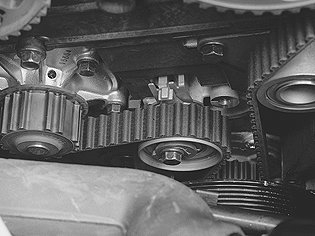
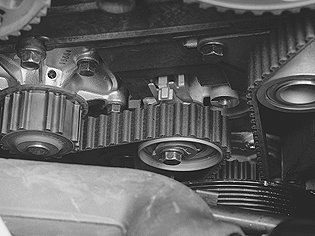
Install the camshaft belt over pulley wheel on the crankshaft.
Install the oscillation damper. Tighten the center nut to 180 Nm. Use counterhold 999 5433 COUNTERHOLD See: Vehicle > Electrical / Mechanical Repair > 999 5433 Counterhold.
Remove the counterhold and install new screws. Tighten the screws to 25 Nm. Angle-tighten 30°

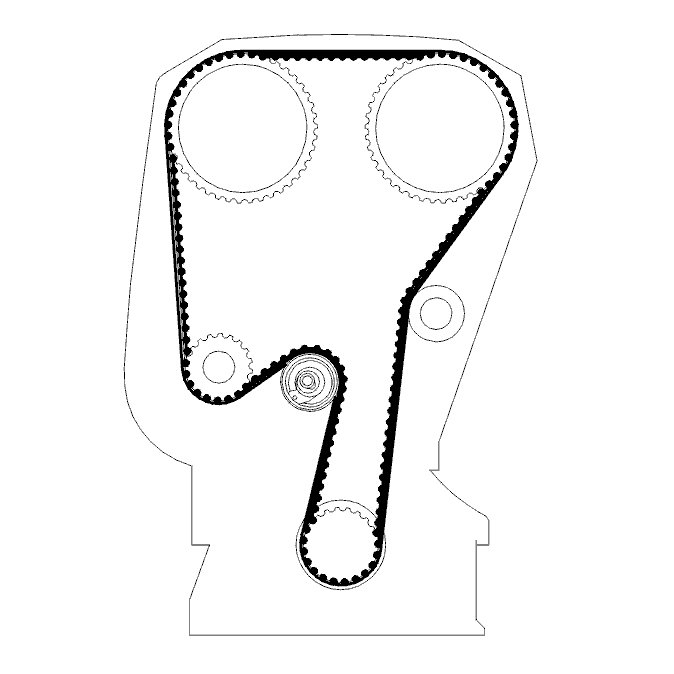
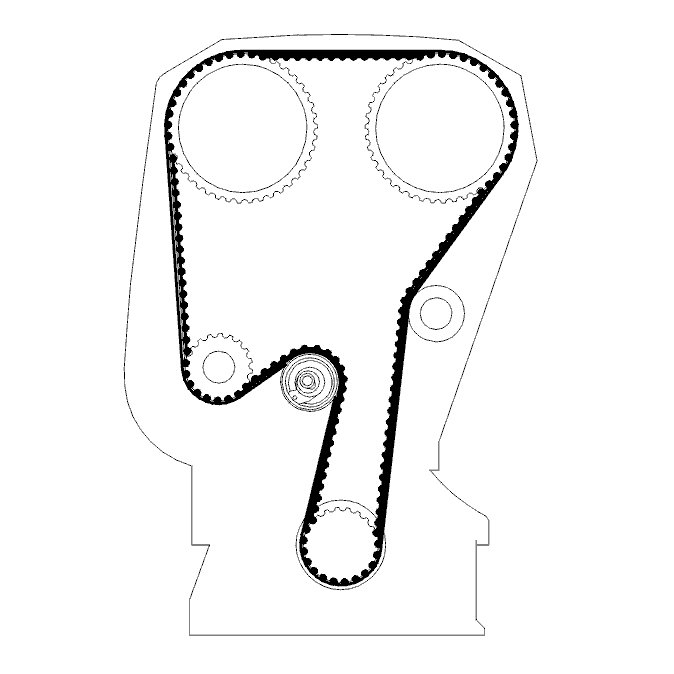
Install the new belt in the following order:
- crankshaft
- idler pulley
- intake camshaft pulley
- exhaust camshaft pulley
- water pump
- belt tensioner.

Tighten the timing belt


pic 7

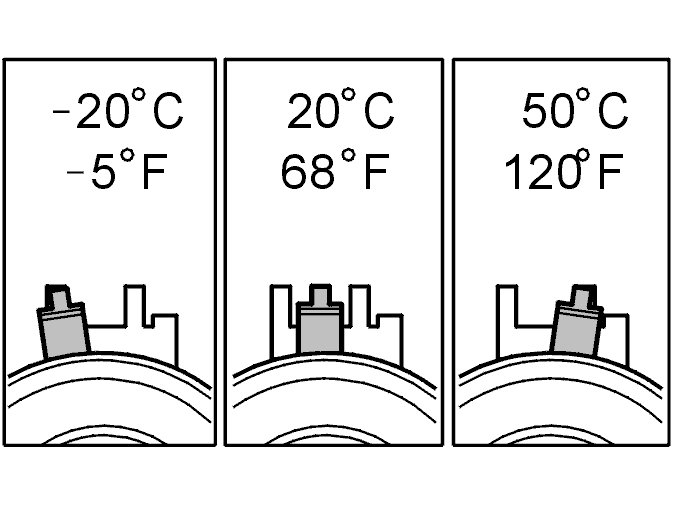
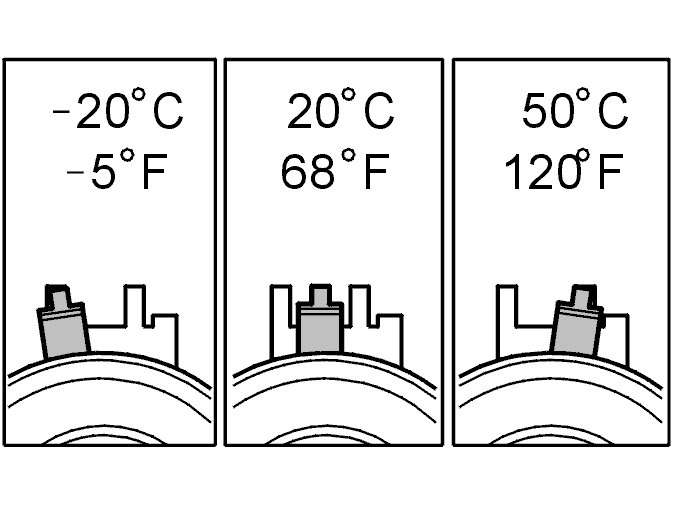
This adjustment is to be made with a cold engine. A suitable temperature is approximately 20°C/68°F.
At higher temperatures, for example with engine at operating temperature or at higher ambient temperature, the needle is further to the right.
The position of the needle, when aligning the camshaft belt tensioner at different engine temperatures, is shown in the illustration.

pic 8

Tighten the timing belt:
There are two variants of the belt tensioner.
From engine number 3188688 the eccentric must be turned anticlockwise to tighten the belt.
From engine number 3188689 the eccentric must be turned clockwise to tension the belt.
- turn the crankshaft clockwise carefully until the camshaft belt is tensioned. The belt should be tight between the intake camshaft pulley, idler pulley and crankshaft.
- hold the center screw on the belt tensioner in position and turn the eccentric on the belt tensioner clockwise/anticlockwise, depending on the variant, until the tensioner's needle passes the marked position.
Then turn the eccentric back so that the indicator reaches the marked position in the center of the window.
- Secure the eccentric and tighten the center screw to 20 Nm.
Check that the needle is in the correct position.

Check


pic 9


Checking markings:
- press the belt to check that the indicator on the tensioner moves easily.
- install the upper timing belt cover.
- turn the crankshaft 2 turns and check that the markings on the crankshaft and camshaft pulley correspond.
- check that the indicator on the belt tensioner is within the marked area.

Reinstall

pic 10


Reinstall the removed components:
- the front camshaft belt cover.
Tighten to 12 Nm
- the upper camshaft belt cover
- install the auxiliaries belt
- the servo reservoir
- the expansion tank

Note! Ensure that the hoses are correctly positioned.

- the cross member. Tighten the screws at the suspension turret to 50 Nm and the screw for the engine bracket to 80 Nm.
Wipe clean and check the engine compartment
- the cover in the fender liner
- the front wheel according to Installing wheels See: Wheels > Removal and Replacement.

Checking work

Function test:
- Test drive the engine
.___________________________________________

Let me know if this helps.

Joe
Aug 22, 2019 at 9:59 PM
Avatar
JIS001
  • CERTIFIED EXPERT
  • 3,412 POSTS
Hello and welcome to 2CarPros. First off I would not recommend you take off the cam cover since that is what holds your camshafts in place especially if you do not have much experience. The 2 notches on the crank sprocket is for you to align the crank to the oil pump dimple. See image below. The dimple aligns in between the 2 notches on the crank sprocket.

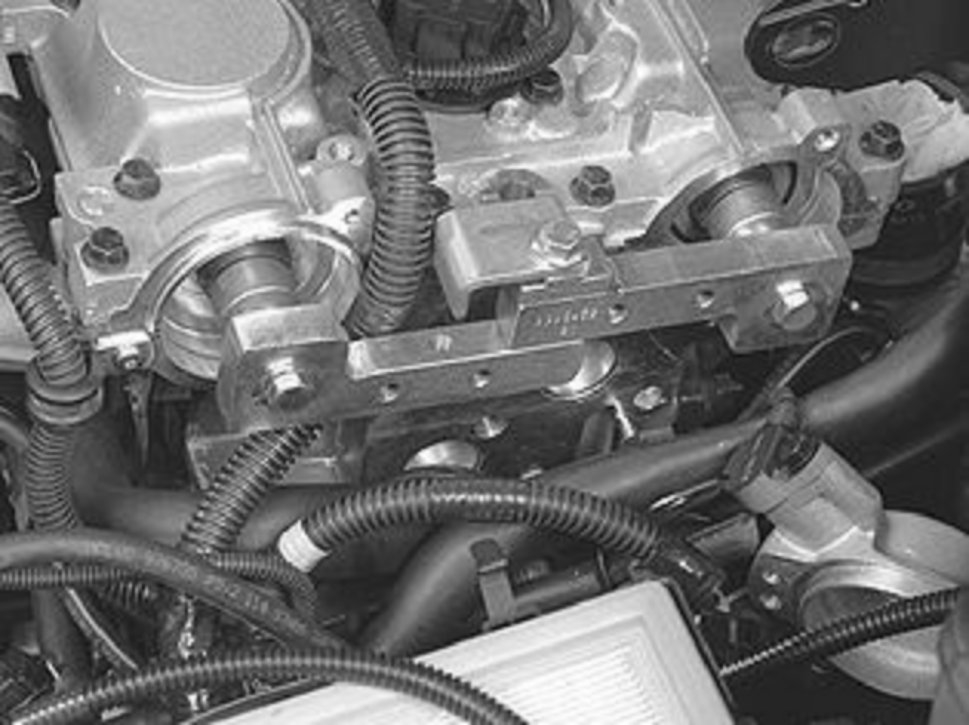
I also attached an image on how the tool set up is. Set your crank up as illustrated and then remove the timing belt. That will give you some room to move the cams a bit to set up the cam lock tool. Once set up you can remove the VVT sprockets to replace the cam seals. As a Volvo tech I already had my system of how to set the sprockets back up.

Before you remove the sprockets you will notice they are locked clockwise. Meaning it has enough play to go counter clockwise and back. Also check the VVT pulley for play. Majority of oil leaks is not the cam seals. It is the VVT hub that leaks so I recommend you replace them. Pricey but your already in.

Order new cam hub caps as well and the bolts. The actual tooth sprocket needs to be transferred over to the hub. Once you do that and reassemble snug the bolts to where you can turn the hubs clockwise and line the mark to the cover. Once lined up torque the center bolt and then install the center caps and install the timing belt. If you have any questions to the repair please do not hesitate to ask but do not remove the cam cover. Trust me, you are asking for headaches!

Also what fault codes did you get to suspect a misaligned exhaust hub? Majority of timing codes is a bad oil control valve, low oil level or low oil pressure? Any ticking sounds at idle? Also while engine running and hot pull dipstick and check for foam on the dipstick. That would indicate an internal oil leak with the pick up tube seals and can cause timing codes. Let us know please.
Aug 22, 2019 at 10:28 PM
Advertisement
Avatar
RICK ESTESS
  • MEMBER
  • 52 POSTS
Thanks, Joe. While I really appreciate your clearing up the crankshaft pulley issue, and added some very valuable info relevant to putting everything back together, I still need to know about the cams. The engine rotates twice for every rotation of the cams, right? How do I get everything back in sync after I accidentally rotated my exhaust cam? I could line up the timing mark on the cam sprocket with the corresponding mark on the sprocket cover, but that doesn't mean it's correct, right? I mean there's a 50-50 chance that I could do some serious valve damage if it's not the other 50. How can I eliminate that risk? How can I know the valves aren't going to hit a piston before I put the timing belt back on? Thanks again for your time and attention.
Aug 22, 2019 at 10:54 PM
Avatar
RICK ESTESS
  • MEMBER
  • 52 POSTS
JIS001 - Thanks for the reply. I set out to replace the cam and crank seals to take care of the leaks and here I am. I didn't do a scan when the engine was running because it was running fine. There was some noise around the belts so I bought a water pump, tensioners, etc. One of the parts was shot, so that was a good investment, along with the water pump. I've replaced a heater core, front axles, struts, wheel bearing, suspension parts, and brakes on this car. I've never taken on a job like this one involving the synchronization of several moving parts before, and am more than a little nervous about proceeding without full confidence. I'm close to that, but not quite.
Aug 22, 2019 at 11:08 PM
Avatar
RICK ESTESS
  • MEMBER
  • 52 POSTS
JIS001 - I just re-read your reply and noticed that I didn't address some of your questions. I checked the oil frequently (because of the oil leaks). I never let it run low and saw no foam on the dipstick. I will take your advice and buy a new exhaust VVT hub; I'll get back to you when the time comes to dial it in. Thanks again.
Aug 22, 2019 at 11:18 PM
Avatar
JIS001
  • CERTIFIED EXPERT
  • 3,412 POSTS
Thanks for the reply. I just did my friends XC90 for a leak and it was the exhaust hub. For the most part, Volvo is bullet proof from leaks until those hubs go bad. But your on the right track with having the tools handy for such a task. You are in good hands here since all of us here put together have years of experience. Let us know when your ready to do the repair. It is no easy task but from my earlier post, it is much simpler then the repair guide that has you do more then you need to do.
Aug 23, 2019 at 12:03 AM
Avatar
RICK ESTESS
  • MEMBER
  • 52 POSTS
Thanks for helping me. That 50-50 thing still has me stumped. Is there any way to find out that the pistons will clear the valves other than cranking the engine a couple of turns to see what happens? I'm leaning that direction now; setting the crank and cams to their marks, and spinning the engine by hand a couple of revolutions to see if it stops when a piston hits a valve, or if it keeps going. If it stops, then i'd back the crank off a bit, turn the cam 360 degrees, back on the mark, reset the crank marks, then try again. This time it should clear. I presume. On the "piston hits a valve thing", it would be easy to know that the piston is in contact with a valve because of the resistance. What i want is no resistance at all, right? Again, it's only the exhaust cam that's out of whack right now. No way am i touching the intake cam until the right time - and when it's locked with the right tool. I'll get back to you at some point when i'm actually turning wrenches. Thanks again.
Aug 23, 2019 at 12:28 PM
Avatar
RICK ESTESS
  • MEMBER
  • 52 POSTS
Addendum: My emissions system was totally plugged when I bought the car. There were oil leaks everywhere.
Aug 23, 2019 at 12:29 PM
Avatar
JACOBANDNICKOLAS
  • CERTIFIED EXPERT
  • 110,175 POSTS
Welcome back:

Once you get it together, turn it by hand several revolutions. If it stops, don't force it. By doing that, at least you will know if there will be any damage or if the timing is wrong. Don't use the starter to do it.

Let me know how things work out or if you have questions.

Take care,
Joe
Aug 23, 2019 at 8:19 PM
Avatar
JIS001
  • CERTIFIED EXPERT
  • 3,412 POSTS
Those oil leaks is usually a result of a plug PCV system. The oil trap and banjo bolt get plugged up and causes pressure to build up. Your lucky it did not take out the turbo. Have seen that with the inline 6 twin turbo engines.
Aug 23, 2019 at 10:33 PM
Avatar
RICK ESTESS
  • MEMBER
  • 52 POSTS
Yeah, there was a lot wrong with the car when I bought it. The guy who sold it to me just flat-out lied. But, there's something about the car that just hits me in a very good way, and, for some odd reason, I can forgive any fault it has, even though dealing with those faults right now is causing a lot of stress and taking a lot of my time and money. The body is perfect as is the interior, which, to be totally honest, is what set the hook. In other words, my Volvo is a high-maintenance girlfriend I can drive.
Aug 24, 2019 at 8:30 AM
Avatar
JACOBANDNICKOLAS
  • CERTIFIED EXPERT
  • 110,175 POSTS
Welcome back:

I love the description. LOL.

Were you able to make any progress?

Joe
Aug 24, 2019 at 7:14 PM
Avatar
RICK ESTESS
  • MEMBER
  • 52 POSTS
Project is in a holding pattern until i finish building an outdoor fireplace. My customer just received the brick veneer we've been waiting for and knocked my car off the top of the priority list. Gotta earn money for parts! I should be back in the shop in two days. I was thinking, maybe i should give it a good engine compartment/underside cleaning while i have everything off. I hate a dirty engine, and the layers of dirt blended with oil covering the underside is just depressing. I want to give it a good spraying it with engine degreaser and carefully rinse it with a pressure washer, clean all the contacts and plugs with electrical cleaner, then wrap all the wires with new wire loom. Of course all electrical should be 100% protected. I would not spray areas like the fuse box, alternator, etc. I would cover the fuse box and other sensitive areas with tarping. I'd get those areas with brushes and cloth. This is how i would do it. How would you clean/degrease the engine bay and underside? Thanks again for taking an interest in my project.
Aug 24, 2019 at 10:59 PM
Avatar
JACOBANDNICKOLAS
  • CERTIFIED EXPERT
  • 110,175 POSTS
Welcome back:

Not a problem. When you get back to it, let me know. As far as cleaning, protect electrical components and make sure nothing is open to allow water to get into the engine. Basically exactly what you said.

Joe
Aug 25, 2019 at 7:25 PM
Avatar
RICK ESTESS
  • MEMBER
  • 52 POSTS
Got it. Thanks again.
Aug 28, 2019 at 11:00 AM
Avatar
RICK ESTESS
  • MEMBER
  • 52 POSTS
Wait. I have another question. What are the best spark plugs for my Volvo engine? (B5234T3). Are Volvo brand plugs worth the extra money?
Aug 28, 2019 at 11:02 AM
Avatar
JIS001
  • CERTIFIED EXPERT
  • 3,412 POSTS
Yes. Other brand plugs cause them to misfire for some crazy reason.
Aug 28, 2019 at 11:11 AM
Avatar
RICK ESTESS
  • MEMBER
  • 52 POSTS
Thanks! Ordering now.
Aug 28, 2019 at 2:30 PM
Avatar
JACOBANDNICKOLAS
  • CERTIFIED EXPERT
  • 110,175 POSTS
Let us know if that fixes the issue. Also, what brand plug are in it now?

Joe
Aug 28, 2019 at 5:07 PM
Avatar
RICK ESTESS
  • MEMBER
  • 52 POSTS
I haven't taken the old plugs out yet; forgot the brand. There was no misfire with the old plugs, but the engine has had a nagging vibration since I got it. I've replaced all of the motor mounts, as well as all of the bushings and other mounts connected to the engine. Still vibrates at idle and up to about 1000 RPM. I'm hoping that by getting the timing dialed in and getting the Volvo plugs installed, re-torquing everything bolted to the engine, cleaning all of the engine electrical connections, and making sure all of the hoses are tight when I put everything back together will take care of the problem. If not, then we'll have a new topic to discuss. Right now I've got it up on my home-built rack giving it a good cleaning so I can see any oil leaks I might have missed when I get it running again.I'm thinking that I should pull the oil pan while I have it up and check for crankcase ventilation issues - I've already replaced all the smog crap, might as well make it complete. Yeah, I've branched out quite a bit from the original cam alignment, but I can't turn my back on these things that are now easy to get to. If I had the patience of a saint and the hands of a 10-year-old girl, I'd let them go and take care of them when the time comes. Thanks again. -Rick
Aug 29, 2019 at 12:14 AM
Avatar
JACOBANDNICKOLAS
  • CERTIFIED EXPERT
  • 110,175 POSTS
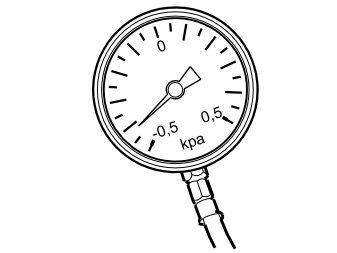
Happy to help, Rick. Let us know how things work out for you. Also, if you remove the oil pan, that will not help to identify ventilation issues. I just don't want you to do something and then realize it wasn't needed. Here are the directions for testing crankcase ventilation. The attached pictures correlate with the directions.

________________

CRANKCASE VENTILATION, CHECK
Crankcase ventilation, check

Note! Some variation in the illustrations may occur, but the essential information is always correct.

Special tools:
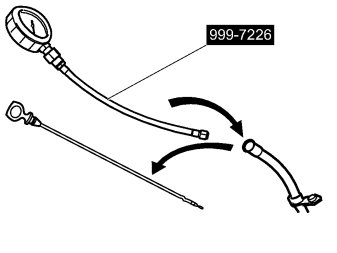
999 7226 Pressure gauge

Check

Measuring the pressure in the crankcase


pic 1


Note! Take readings at idle at operating temperature.

Warm up the engine until the thermostat opens.
Switch of the AC and other electrical equipment.
Reset the manometer using the adjuster screw.
Remove the dip stick and connect manometer 999 7226 Pressure gauge as illustrated.


pic 2


Note! The pressure values are given for sea level. High levels can reduce the reading slightly.

Read off manometer value.
The value for a clean crankcase ventilation is -0.2 kPa or lower.
If the manometer indicates a value from -0.2 up to 0.0 kPa or a positive value, the crankcase ventilation is partially or completely blocked and must be cleaned. Refer to: Crankcase ventilation, cleaning See: Positive Crankcase Ventilation > Procedures > Crankcase Ventilation Cleaning

Let me know how thing work out for you.

Take care,
Joe
Aug 29, 2019 at 7:17 PM
Avatar
RICK ESTESS
  • MEMBER
  • 52 POSTS
Thanks for getting me out of wasting time! God knows I've got a lot left that I need to do. I had to work again today at my job, but I'm back on it tomorrow to finish the engine cleaning outside, then I'll push it back into the shop to get everything dialed in and back together. Thanks also for naming the correct tool I'll need to check my crankcase ventilation. Man, I want my Volvo back. But I want it back knowing everything was done right. You guys are worth your weight in gold.
Aug 30, 2019 at 10:09 PM
Avatar
JACOBANDNICKOLAS
  • CERTIFIED EXPERT
  • 110,175 POSTS
Welcome back:

You are very welcome. Sorry to hear you're stuck at work all the time. I hold down one full time and 2 part time jobs, so I totally understand.

Let me know when you get things back together.

Take care,
Joe
Aug 31, 2019 at 7:16 PM
Avatar
RICK ESTESS
  • MEMBER
  • 52 POSTS
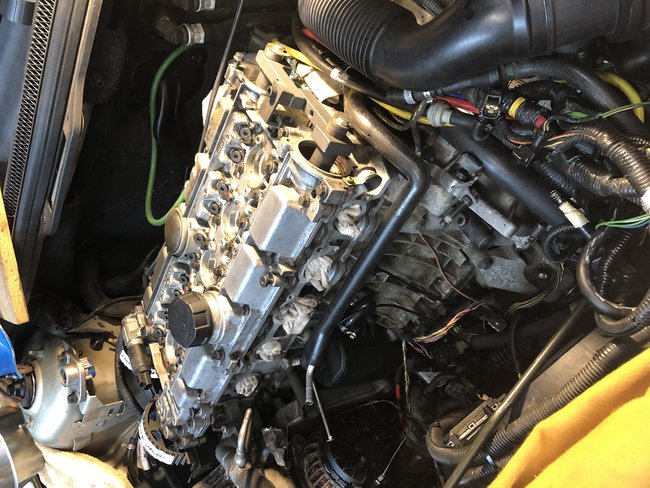
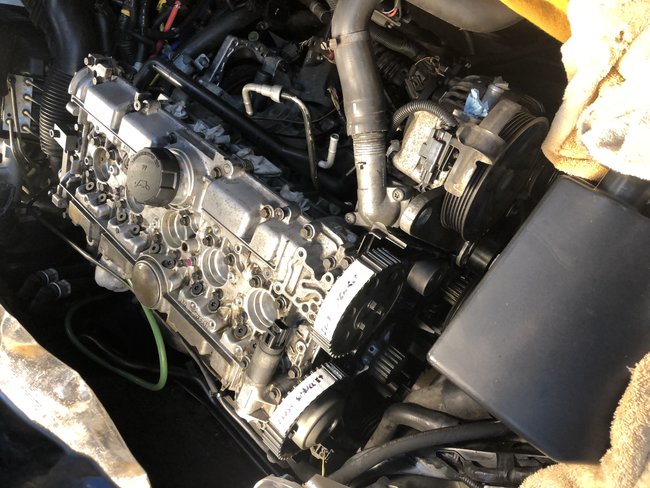
Okay. I'm ready to align the camshafts. Cam sprockets are on but loose. Crankshaft marks lined up properly and the crank lock pin is in. I want to turn the intake cam to where the writing on the end is down and the slot is flat. I want the writing on the exhaust cam to be UP and the slot is flat. (I know the slots are slightly off horizontal for perfect timing, but because the cam lock isn't designed to hold the cams that way, we'll let it go for now). With the cams locked in the position I stated, it's time to set and tighten the VVT on the exhaust cam as well as the sprocket on the intake cam. Note: The new water pump and idler pulley have been installed and torqued to spec. The new tensioner is ready to install, as are the timing and serpentine belts. If all looks good, please lead the way. I really appreciate your help!
Sep 5, 2019 at 5:45 PM
Avatar
JIS001
  • CERTIFIED EXPERT
  • 3,412 POSTS
Send me an image of how you locked the cams? If you are not using the proper tool then we are not going to know if your timed properly or not?
Sep 5, 2019 at 7:35 PM
Avatar
RICK ESTESS
  • MEMBER
  • 52 POSTS
I have a Volvo 999 5452 cam locking tool on it right now. I used a homemade cam locking tool only to get the VVT bolt off after the original 999 5452 broke during the second removal attempt. That sucker was on tight - more than the 88 ft-lb torque spec. I can text and email pictures from my phone, but not from my PC, which is what I'm using to communicate with you. I'll see if I can pull up this email with my iPhone and send you the pictures if it's absolutely necessary. If you don't see them by morning it means I couldn't do it.
Sep 5, 2019 at 9:23 PM
Avatar
RICK ESTESS
  • MEMBER
  • 52 POSTS
Looks like I successfully sent the pictures. I’ll go back to my PC and verify it.
Sep 5, 2019 at 9:30 PM
Avatar
JIS001
  • CERTIFIED EXPERT
  • 3,412 POSTS
There is not much you can do with the intake came sprocket since it is a 3 bolt pattern and will go on as it needs to go on. The exhaust cam you need to put the center bolt snug where you have some room to to spin it.turn it clockwise to where you want it. But I recommend you line it with the mark on the cam cover. Once lined up torque the center bolt. Install the timing belt and turn engine over by hand several times to make sure no valves are hitting.
Sep 5, 2019 at 9:55 PM
Avatar
RICK ESTESS
  • MEMBER
  • 52 POSTS
Sounds like that should get me to the finish line with confidence. If I spin the crank over, say, 4 times without hitting valves, I can cross the finish line. Yeah, you want metaphors, I got 'em! Wish I didn't have a doc appt. or I'd get out to the shop and do it now. I'll definitely get back to you tonight. Thank you very much!
Sep 6, 2019 at 12:17 PM
Avatar
RICK ESTESS
  • MEMBER
  • 52 POSTS
I forgot to ask: what if the valves are hitting the pistons?
Sep 6, 2019 at 12:21 PM
Avatar
JACOBANDNICKOLAS
  • CERTIFIED EXPERT
  • 110,175 POSTS
Welcome back:

Do not force them. If the valves are hitting, the timing is wrong. It will cause internal damage if you force it.

Here are the directions for removal and replacement of the timing belt. The directions show how timing is done. All attached pictures correlate with the directions.

_______________________________________

2001 Volvo V70 T5 L5-2.3L Turbo VIN 53 B5234T3
Timing Belt, Replacing
Vehicle Engine, Cooling and Exhaust Engine Timing Components Timing Belt Service and Repair Removal and Replacement Timing Belt, Replacing
TIMING BELT, REPLACING
Timing belt, replacing

Special tools:
999 5433 COUNTERHOLD See: Vehicle > Electrical / Mechanical Repair > 999 5433 Counterhold

Note! Since the illustrations in this service information are used for different model years and/or models, some variation may occur. However, the essential information is always correct.

Remove components


pic 1


Caution! Remove the ignition key.

Remove:
- the cross stay between the suspension turrets
- the upper timing belt cover
- the servo reservoir and the expansion tank.
Lift up and place on top of the engine.

Warning! Make sure that no power steering fluid is spilled. Extremely flammable.

- the auxiliaries belt
- the front timing belt cover.

Position the engine according to the marking


pic 2

- Remove the right front wheel
- Remove the nut from the cover in the wing liner
- Install the upper timing belt cover
- Turn the crankshaft clockwise until the markings on the crankshaft and camshaft pulley correspond
- Turn the crankshaft a further 1/4 turn clockwise and then back again until the markings correspond.
The markings are illustrated
- Remove the upper timing belt cover.

Removing the timing belt


pic 3

Slacken off the belt tensioner.
Slacken off the centre screw for the belt tensioner slightly.
Hold the centre screw still. Turn the tensioner eccentric clockwise using a 6 mm Allen key to 10 o'clock.
Remove the timing belt from the tension pulley, camshaft pulley and water pump.


pic 4

Remove the vibration damper.
Remove the oscillation damper. Use counterhold 999 5433 COUNTERHOLD See: Vehicle > Electrical / Mechanical Repair > 999 5433 Counterhold. Work the oscillation damper loose.
Remove the timing belt

Checking the tensioner pulley and idler pulley


pic 5


Check bearing wear:
- spin the idler pulley and listen for noise.
If replacing with a new idler pulley, tighten to 24 Nm.
- spin the tension pulley and listen for noise.
When replacing, screw the tension pulley into place using the centre screw.
Screw in the centre screw by hand.
Ensure that the tensioner fork is centered over the cylinder block rib.
Ensure that the Allen hole on the eccentric is at "10 o'clock".

Installing the timing belt


pic 6


Note: For information regarding Variable Valve Timing see: Variable Valve Timing Actuator, Adjustments See: Variable Valve Timing Actuator > Adjustments
Also see Belt Drive, Assembly See: Timing Belt > Removal and Replacement > Belt Drive, Assembly

Install the timing belt over the pulley on the crankshaft.
Install the oscillation damper. Tighten the center nut to 180 Nm. Use counterhold 999 5433 COUNTERHOLD See: Vehicle > Electrical / Mechanical Repair > 999 5433 Counterhold.
Remove the counterhold and install new screws. Tighten the screws to 25 Nm. Angle-tighten 30°

Install the new belt in the following order:
- crankshaft
- the idler pulley
- intake camshaft pulley
- exhaust camshaft pulley
- water pump
- belt tensioner.

Tighten the timing belt


pic 7

This adjustment is carried out on a cold engine. A suitable temperature is approximately 20°C/68°F.
At higher temperatures, for example with the engine at operating temperature or at higher ambient temperature, the needle is further to the right.
The illustration shows the position of the indicator when aligning the timing belt tensioner at different temperatures.

For engine serial no. up to 3188688


pic 8


Tension the timing belt as follows:
- turn the crankshaft clockwise carefully until the timing belt is tensioned. The belt must be tensioned between the intake camshaft pulley, the idler pulley and the crankshaft
- hold the centre screw on the belt tensioner fixed. Turn the belt tensioner eccentric counter-clockwise until the tensioner indicator passes the marked position.
Then turn the eccentric back so that the indicator reaches the marked position in the centre of the window
- Secure the eccentric and tighten the center screw to 20 Nm.
Check that the indicator is in the correct position.

For engine serial no. from 3188689


pic 9


Tension the timing belt as follows:
- turn the crankshaft clockwise carefully until the timing belt is tensioned. The belt must be tensioned between the intake camshaft pulley, the idler pulley and the crankshaft
- hold the centre screw on the belt tensioner fixed. Turn the belt tensioner eccentric clockwise until the tensioner indicator passes the marked position.
Then turn the eccentric back so that the indicator reaches the marked position in the centre of the window
- Secure the eccentric and tighten the center screw to 20 Nm.
Check that the indicator is in the correct position.

Check


pic 10


Checking markings:
- press the belt to check that the indicator on the tensioner moves easily
- install the upper timing belt cover
- turn the crankshaft 2 turns. Check that the markings on the crankshaft and camshaft pulley correspond
- check that the indicator on the belt tensioner is within the marked area.

Reinstall


pic 11


Reinstall the removed components:
- the front timing belt cover.
Tighten to 12 Nm..
- the upper timing belt cover
- install the auxiliaries belt
- the servo reservoir
- the expansion tank.

Note! Make sure that the hoses are routed positioned.

- the cross member. Tighten the screws at the suspension turret to 50 Nm and the screw for the engine bracket to 80 Nm.
Wipe clean and check the engine compartment
- the cover in the wing liner
- the front wheel according to Installing wheels See: Wheels > Removal and Replacement.

Checking work

Function test:
- Test drive the engine.

_____________________________

Let me know if this helps or if you have other questions.

Take care,
Joe
Sep 6, 2019 at 7:05 PM
Avatar
RICK ESTESS
  • MEMBER
  • 52 POSTS
I know there will be damage if valves hit a piston. I know that the timing is wrong if that happens. What nobody has been able to tell me is, how much should I turn the cam to get it right? 1 turn? 1/2 turn? Could it take multiple tries to get it right or is it like a coin toss; if it lands on heads and you want tails, just flip it over and you get what you want - there's no half heads or half tails; it's one way or the other. This is what I've been trying to find out but nobody will give me a straight answer. It's possible that it's just too simple for you guys to believe that anyone could have difficulty with figuring it out. I'm not ashamed to say that I do. I'm definitely not stupid, I just want to be absolutely sure that I get this right because I've already invested over $6,000.00 in this car. I'm walking away from the car for the night.
Sep 6, 2019 at 9:24 PM
Avatar
JACOBANDNICKOLAS
  • CERTIFIED EXPERT
  • 110,175 POSTS
The timing marks on the cams must align with the marks indicated below as well as the crankshaft must align also at the same time as indicated below. It isn't a 50/50 shot. There is only one way it will work. If I am misunderstanding what you are asking, let me know.
Sep 7, 2019 at 6:33 PM
Avatar
JIS001
  • CERTIFIED EXPERT
  • 3,412 POSTS
Hi, as JACOBANDNICKOLAS has stated earlier. If you did not time it right you will feel the valves hitting the piston. Now if you are off 2 teeth then you will not know until you have the vehicle running and it sets off a Check Engine light. So your either way off and stop! Or your going to set the engine light on. A job like this you will need to take your time and double check your markings.
Sep 7, 2019 at 10:37 PM
Avatar
RICK ESTESS
  • MEMBER
  • 52 POSTS
Thanks for restating that. I get a little more comfortable with each piece of advice. To me, the more critical something is, the more I need to hear the same thing said in different ways; it solidifies it. When this is done, I'll be looking to help somebody else get out of this bind - pay it forward. The most important bit of info that I've been missing is this: the crank to cam ratio is 2:1. I'm betting that the main reason you guys were wondering why I couldn't get this is because I should have known it. (I found out last night). Knowledge crossover carries a lot of assumptions and as long as you're teaching new people, it's gonna happen. As long as there's mutual respect, this will work. There is and it does. And I appreciate it.
Sep 8, 2019 at 12:40 PM
Avatar
RICK ESTESS
  • MEMBER
  • 52 POSTS
While turning the engine over by hand.
Sep 8, 2019 at 6:38 PM
Avatar
JACOBANDNICKOLAS
  • CERTIFIED EXPERT
  • 110,175 POSTS
Welcome back:

You are welcome. It's tough not being there to actually show what should happen. Thanks JIS001 for jumping in. The more the better.

Take care and let us know the results.

Joe
Sep 8, 2019 at 6:39 PM
Avatar
RICK ESTESS
  • MEMBER
  • 52 POSTS
I tested the cam alignment by turning the crankshaft clockwise. I'm hearing a pop coming from the cam hub area on the exhaust side. (No valve to piston contact which means the big problem has been solved!!)The pop sounds after about every seventh tooth on the timing belt passes over the sprocket. I've been told that it's just the sound of the cam turning over and it's nothing to worry about. Is this true? I need your input before I put everything back together. I want to get my car back on the road tomorrow! It's been two months! Thanks for all your help!
Sep 8, 2019 at 8:09 PM
Avatar
JACOBANDNICKOLAS
  • CERTIFIED EXPERT
  • 110,175 POSTS
I think I'm going to let JIS001 answer that one. To me, it doesn't sound right, but he is a certified Volvo tech, so he will have a better answer.
Sep 9, 2019 at 5:47 PM
Avatar
JIS001
  • CERTIFIED EXPERT
  • 3,412 POSTS
Post a video so we can see and hear the exhaust hub please. It might be normal since oil is pumping into the hub but I still want to confirm the sound.
Sep 9, 2019 at 8:32 PM