brake bleed problems?

2003 GMC SONOMA
140,000 MILES • 4.3L • 6 CYL • 2WD • AUTOMATIC
Avatar
DOOB
  • MEMBER
  • 72 POSTS
New master cylinder. I have bled with air comp assist just get little bits of fluid not a solid column of fluid. Also did auto bleed with scanner. Nothing! Prob fans proportioning valve. But don’t what to do with that.
Feb 5, 2021 at 3:27 PM
Advertisement
Avatar
KASEKENNY
  • CERTIFIED EXPERT
  • 18,907 POSTS
Just to be clear, you replaced the master cylinder and now you cannot get brake fluid to the rear? If this is the case, did you bench bleed the master? If not we should do that now and just start fresh.

You can do it on the vehicle, just take the lines off and get a bench bleed kit from a parts store that basically just routes the fluid back to the reservoir. They should be clear tubes so that you can see it is a solid stream coming out of each chamber.

Here is a guide that will help with this:

https://www.2carpros.com/articles/how-to-replace-a-brake-master-cylinder

There is a chance that you either got a faulty master or if it wasn't bench bled then it could have damaged the walls of the chambers and now it is not pushing fluid.

So basically we need to start at the beginning of the system and make sure you have no air. Then I would open the bleeders on the rear wheels and let them gravity bleed for a few hours. You should then get a steady drip then close them off and bleed them with the air bleeder that you used before.

Let's do this and go from there. Thanks
Feb 6, 2021 at 5:23 PM
Avatar
DOOB
  • MEMBER
  • 72 POSTS
Thank you. I will do that and get back to you.
Feb 6, 2021 at 9:57 PM
Advertisement
Avatar
ASEMASTER6371
  • CERTIFIED EXPERT
  • 52,796 POSTS
Good afternoon,

If you have ABS, there is an automated process to bleed the ABS module. If you have air in the system, this must be done.

I posted it below for you along with the procedure for bench bleeding the master cylinder.

https://www.2carpros.com/articles/how-to-replace-a-brake-master-cylinder

Roy

Master Cylinder Bench Bleeding

Notice: When adding fluid to the brake master cylinder reservoir, use only Delco Supreme 11, GM P/N 12377967 (Canadian P/N 992667), or equivalent DOT-3 brake fluid from a clean, sealed brake fluid container. The use of any type of fluid other than the recommended type of brake fluid, may cause contamination which could result in damage to the internal rubber seals and/or rubber linings of hydraulic brake system components.

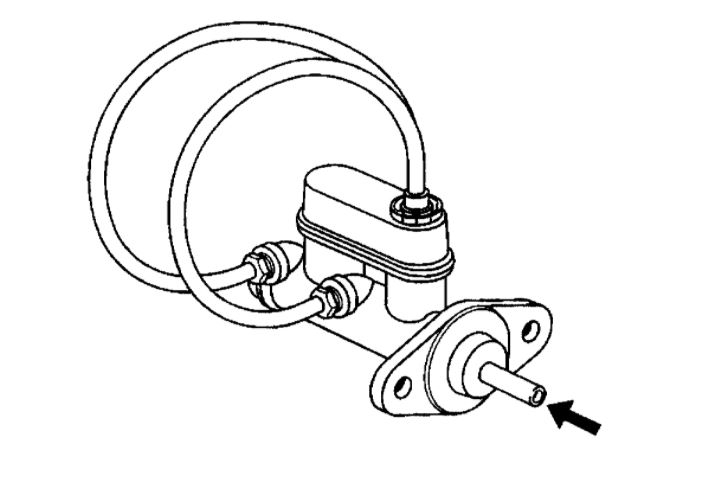
1. Secure the mounting flange of the brake master cylinder in a bench vise so that the rear of the primary piston is accessible.


imageOpen In New TabZoom/Print


2. Remove the master cylinder reservoir cap and diaphragm.
3. Install suitable fittings to the master cylinder ports that match the type of flare seat required and also provide for hose attachment.
4. Install transparent hoses to the fittings installed to the master cylinder ports, then route the hoses into the master cylinder reservoir.
5. Fill the master cylinder reservoir to at least the half-way point with Delco Supreme 11, GM P/N 12377967 (Canadian P/N 992667), or equivalent DOT-3 brake fluid from a clean, sealed brake fluid container.
6. Ensure that the ends of the transparent hoses running into the master cylinder reservoir are fully submerged in the brake fluid.
7. Using a smooth, round-ended tool, depress and release the primary piston as far as it will travel, a depth of about 25 mm (1 lbs.), several times. Observe the flow of fluid coming from the ports.
As air is bled from the primary and secondary pistons, the effort required to depress the primary piston will increase and the amount of travel will decrease.
8. Continue to depress and release the primary piston until fluid flows freely from the ports with no evidence of air bubbles.
9. Remove the transparent hoses from the master cylinder reservoir.
10. Install the master cylinder reservoir cap and diaphragm.
11. Remove the fittings with the transparent hoses from the master cylinder ports. Wrap the master cylinder with a clean shop cloth to prevent brake fluid spills.
12. Remove the master cylinder from the vise.

ABS Automated Bleed Procedure

Two - Person Procedure

Important:
^ Use the two-person bleed procedure under the following conditions:
- Installing a new Electro-Hydraulic Control Unit (EHCU) or new Brake Pressure Modulator Valve (BPMV).
- Air is trapped in the valve body.
^ Do not drive the vehicle until the brake pedal feels firm.
- Do not reuse brake fluid that is used during bleeding.
- Use the vacuum, the pressure and the gravity bleeding procedures only for base brake bleeding.

1. Raise the vehicle in order to access the system bleed screws.
2. Bleed the system at the right rear wheel first.
3. Install a clear hose on the bleed screw.
4. Immerse the opposite end of the hose into a container partially filled with clean DOT 3 brake fluid.
5. Open the bleed screw 1/2 to 1 full turn.
6. Slowly depress the brake pedal. While the pedal is depressed to its full extent, tighten the bleed screw.
7. Release the brake pedal and wait 10-15 seconds for the master cylinder pistons to return to the home position.
8. Repeat the previous steps for the remaining wheels. The brake fluid which is present at each bleed screw should be clean and free of air.
9. This procedure may use more than a pint of fluid per wheel. Check the master cylinder fluid level every four to six strokes of the brake pedal in order to avoid running the system dry.
10. Press the brake pedal firmly and run the Scan Tool Automated Bleed Procedure. Release the brake pedal between each test.
11. Bleed all four wheels again using Steps 3-9.
This will remove the remaining air from the brake system.
12. Evaluate the feel of the brake pedal before attempting to drive the vehicle.
13. Bleed the system as many times as necessary in order to obtain the appropriate feel of the pedal.
Feb 7, 2021 at 9:45 AM

Avatar
DOOB
  • MEMBER
  • 72 POSTS
Okay Ken, I bled master system while still on truck using hose kit. Am now 4 hours into gravity bleed and no fluid has came from rear bleeder screws.
Feb 7, 2021 at 7:05 PM
Avatar
ASEMASTER6371
  • CERTIFIED EXPERT
  • 52,796 POSTS
Did you do the automated bleed with a scan tool? Without doing this, you cannot get the air out of the ABS.

Roy
Feb 7, 2021 at 7:07 PM
Avatar
DOOB
  • MEMBER
  • 72 POSTS
I was trying to gravity bleed the rear. But should I do an auto bleed? Just close rear bleeders and do the auto bleed now?
Feb 7, 2021 at 7:17 PM
Avatar
ASEMASTER6371
  • CERTIFIED EXPERT
  • 52,796 POSTS
Gravity will not do it.

Yes, do the auto bleed and see if you get fluid to the rear when the air is gone.

Roy
Feb 7, 2021 at 7:18 PM
Avatar
DOOB
  • MEMBER
  • 72 POSTS
Okay, will do.
Feb 7, 2021 at 7:19 PM
Avatar
ASEMASTER6371
  • CERTIFIED EXPERT
  • 52,796 POSTS
Keep us updated.

Roy
Feb 7, 2021 at 7:20 PM
Avatar
DOOB
  • MEMBER
  • 72 POSTS
Well did auto bleed. Still no fluid yet. I opened up rear pass bleeder Maybe will gravity ble.
Feb 7, 2021 at 8:13 PM
Avatar
DOOB
  • MEMBER
  • 72 POSTS
Maybe will gravity bleed overbite.
Feb 7, 2021 at 8:14 PM
Avatar
DOOB
  • MEMBER
  • 72 POSTS
Maybe proportioning valve outta whack! Frustrating
Feb 7, 2021 at 8:26 PM
Avatar
ASEMASTER6371
  • CERTIFIED EXPERT
  • 52,796 POSTS
Do you have ABS?

If you do, there is no proportioning valve. If you do not, then yes, it could be.

What kind of scan tool did you use for the automated bleed sequence?

Roy
Feb 8, 2021 at 1:47 AM
Avatar
DOOB
  • MEMBER
  • 72 POSTS
Angel 610 elite scan tool. There is ABS and there is a proportioning or combination valve between master cylinder and brake lines. Respectfully
Feb 8, 2021 at 1:45 PM
Avatar
ASEMASTER6371
  • CERTIFIED EXPERT
  • 52,796 POSTS
When you push the pedal down, do you have pressure at the outlet lines of the master cylinder?

Roy
Feb 8, 2021 at 1:57 PM
Avatar
DOOB
  • MEMBER
  • 72 POSTS
Feels like it with motor off.
Feb 8, 2021 at 2:12 PM
Avatar
DOOB
  • MEMBER
  • 72 POSTS
With engine on it just goes to floor.
Feb 8, 2021 at 2:13 PM
Avatar
DOOB
  • MEMBER
  • 72 POSTS
Why is this GMC so difficult? Never had this much abuse!
Feb 8, 2021 at 2:14 PM
Avatar
ASEMASTER6371
  • CERTIFIED EXPERT
  • 52,796 POSTS
You need to crack open the lines at the master one at a time. Then have someone push the pedal and see if fluid comes out. Checking to see if the master is producing pressure.

Roy
Feb 8, 2021 at 2:18 PM
Avatar
DOOB
  • MEMBER
  • 72 POSTS
Yes, will do.
Feb 8, 2021 at 2:20 PM
Avatar
ASEMASTER6371
  • CERTIFIED EXPERT
  • 52,796 POSTS
Keep us updated.
Feb 8, 2021 at 2:33 PM
Avatar
DOOB
  • MEMBER
  • 72 POSTS
Nothing, just kind of oozes out.
Feb 8, 2021 at 2:38 PM
Avatar
DOOB
  • MEMBER
  • 72 POSTS
Okay, Roy. Didn’t have pressure so I re-bled master cylinder till no bubbles. Moving fluid okay it seems.
Feb 8, 2021 at 2:57 PM
Avatar
DOOB
  • MEMBER
  • 72 POSTS
Okay, it just barely oozes fluid. So I bled the master cylinder in place just to see if it’s pushing fluid. It seems okay. Thinking of bypassing combination valve.
Feb 8, 2021 at 3:14 PM
Avatar
ASEMASTER6371
  • CERTIFIED EXPERT
  • 52,796 POSTS
Sounds like the master cylinder is no good. I would replace it again and rebleed everything.

https://www.2carpros.com/articles/how-to-replace-a-brake-master-cylinder

Roy
Feb 9, 2021 at 12:58 AM
Avatar
DOOB
  • MEMBER
  • 72 POSTS
Okay. Bled master cylinder with bench bleed kit. Didn’t remove it from truck. Am now 4 hours into gravity bleed and no fluid has came from rear bleeder screws.
Feb 9, 2021 at 10:29 AM
Avatar
DOOB
  • MEMBER
  • 72 POSTS
Okay Roy, I have replaced master cylinder with new one and am now getting fluid to rear and front. I vacuum bled the lines and still have no pedal with engine running.
Feb 21, 2021 at 6:50 PM
Avatar
ASEMASTER6371
  • CERTIFIED EXPERT
  • 52,796 POSTS
I do not see that replaced the master cylinder again?

This sounds like a defective master cylinder as I suggested.

Roy
Feb 22, 2021 at 1:26 AM
Avatar
DOOB
  • MEMBER
  • 72 POSTS
Yep, replaced it with new one. Bench bled it.
Feb 22, 2021 at 6:07 AM
Avatar
DOOB
  • MEMBER
  • 72 POSTS
Yea, this is the second one replaced. I took the former master cylinder and put it in vise and found that it wasn’t pumping from front reservoir. So replaced it with a new one. I bench bled it before installing it yesterday.
Feb 22, 2021 at 6:11 AM
Avatar
ASEMASTER6371
  • CERTIFIED EXPERT
  • 52,796 POSTS
You will need a pressure bleeder. A vacuum bleeder does not work well at all for bleeding out the air.

Do you have ABS?

Roy
Feb 22, 2021 at 7:43 AM
Avatar
DOOB
  • MEMBER
  • 72 POSTS
Yes, it has ABS. ABS light is on now. Okay, I’ll get a pressure bleeder and try that.
Feb 22, 2021 at 2:25 PM
Avatar
ASEMASTER6371
  • CERTIFIED EXPERT
  • 52,796 POSTS
You will need a scan tool to bleed that system.

I attached the procedure below for you to follow.

Roy

ABS Automated Bleed Procedure

Two - Person Procedure

Important:
^ Use the two-person bleed procedure under the following conditions:
- Installing a new Electro-Hydraulic Control Unit (EHCU) or new Brake Pressure Modulator Valve (BPMV).
- Air is trapped in the valve body.
^ Do not drive the vehicle until the brake pedal feels firm.
- Do not reuse brake fluid that is used during bleeding.
- Use the vacuum, the pressure and the gravity bleeding procedures only for base brake bleeding.

1. Raise the vehicle in order to access the system bleed screws.
2. Bleed the system at the right rear wheel first.
3. Install a clear hose on the bleed screw.
4. Immerse the opposite end of the hose into a container partially filled with clean DOT 3 brake fluid.
5. Open the bleed screw 1/2 to 1 full turn.
6. Slowly depress the brake pedal. While the pedal is depressed to its full extent, tighten the bleed screw.
7. Release the brake pedal and wait 10-15 seconds for the master cylinder pistons to return to the home position.
8. Repeat the previous steps for the remaining wheels. The brake fluid which is present at each bleed screw should be clean and free of air.
9. This procedure may use more than a pint of fluid per wheel. Check the master cylinder fluid level every four to six strokes of the brake pedal in order to avoid running the system dry.
10. Press the brake pedal firmly and run the Scan Tool Automated Bleed Procedure. Release the brake pedal between each test.
11. Bleed all four wheels again using Steps 3-9.
This will remove the remaining air from the brake system.
12. Evaluate the feel of the brake pedal before attempting to drive the vehicle.
13. Bleed the system as many times as necessary in order to obtain the appropriate feel of the pedal.
Feb 22, 2021 at 4:02 PM
Avatar
DOOB
  • MEMBER
  • 72 POSTS
Okay. Have bled a quart of fluid through all wheels. Going to do auto bleed next. ABS light is on. Have new master cylinder. And bench bled it twice. Will report anything new.
Feb 24, 2021 at 6:51 PM
Avatar
DOOB
  • MEMBER
  • 72 POSTS
Also found trouble code c0222 and c0226. something about missing it front speed sensor. Would that cause ABS light and no pedal?
Feb 24, 2021 at 6:54 PM
Avatar
DOOB
  • MEMBER
  • 72 POSTS
You know I just remembered that abs module is from another20 03 Sonoma is that a problem.
Feb 24, 2021 at 11:13 PM
Avatar
ASEMASTER6371
  • CERTIFIED EXPERT
  • 52,796 POSTS
The module must be programmed to your VIN number in order to work.

The module will not cause a little or no brake pedal.

https://www.2carpros.com/articles/abs-warning-light-on-easy-repair-guide

Neither code is listed for your truck. Get the module programmed and see what happens.

Roy

Electronic Brake Control Module (EBCM) Replacement

Removal Procedure

Important: After installation, calibrate the new EBCM to the tire size that is appropriate to the vehicle.

Important: Thoroughly wash all contaminants from around the EHCU. The area around the EHCU must be free from loose dirt to prevent contamination of disassembled ABS components.


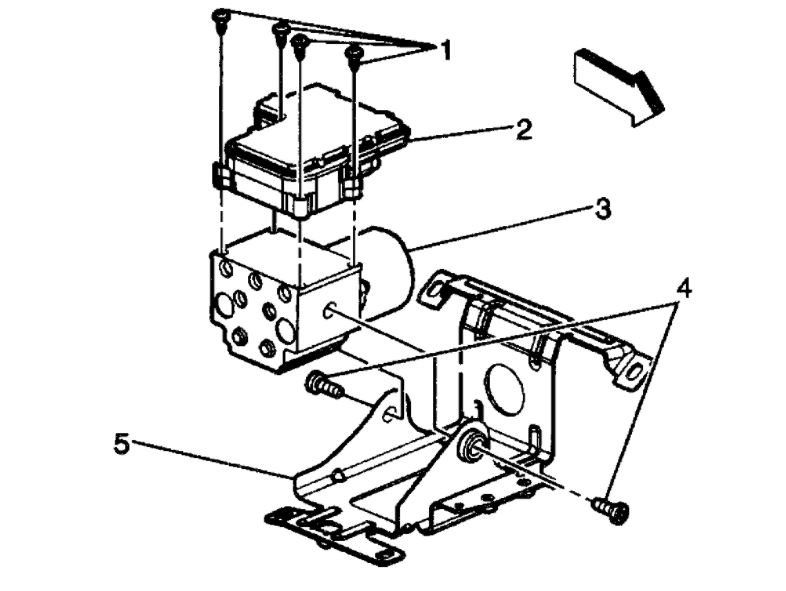
imageOpen In New TabZoom/Print


1. Disconnect the electrical connectors from the EBCM (2).
2. Remove the four T 25-TORX mounting screws (1) that fasten the EBCM (2) to the BPMV (3).
3. Remove the EBCM (2) from the BPMV (3). Removal may require a light amount of force.

Important: Do not use a tool to pry the E13CM or the BPMV.

4. Clean the BPMV (3) to EBCM (2) mounting surfaces with a clean cloth.
Feb 25, 2021 at 2:09 AM