Cranked up truck, pedal sank to the floor.

2008 CHEVROLET SILVERADO
195,000 MILES • 5.3L • V8 • 4WD • AUTOMATIC
Avatar
ERIC LEEWRIGHT
  • MEMBER
  • 2 POSTS
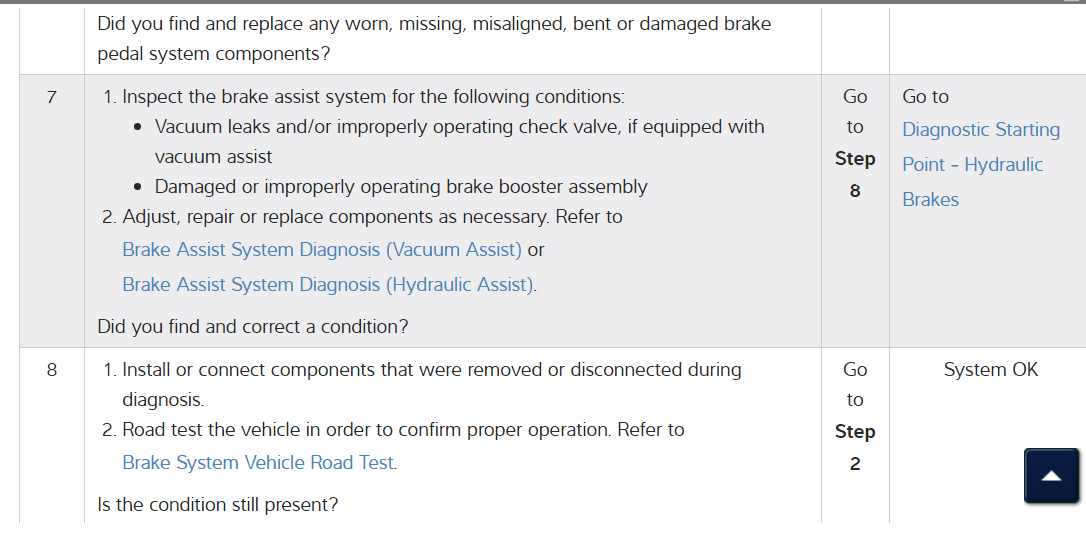
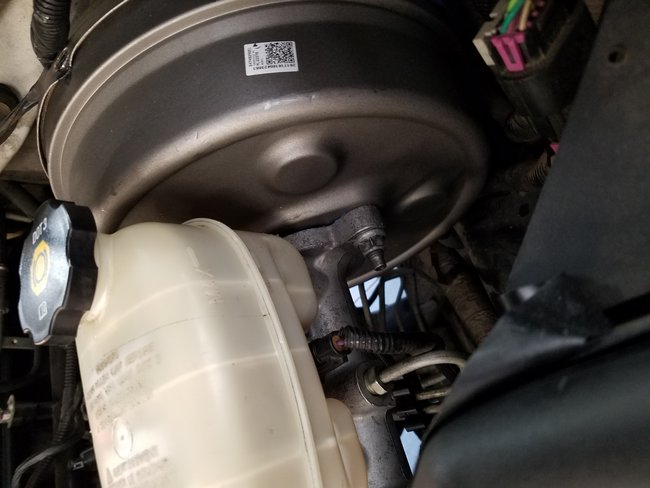
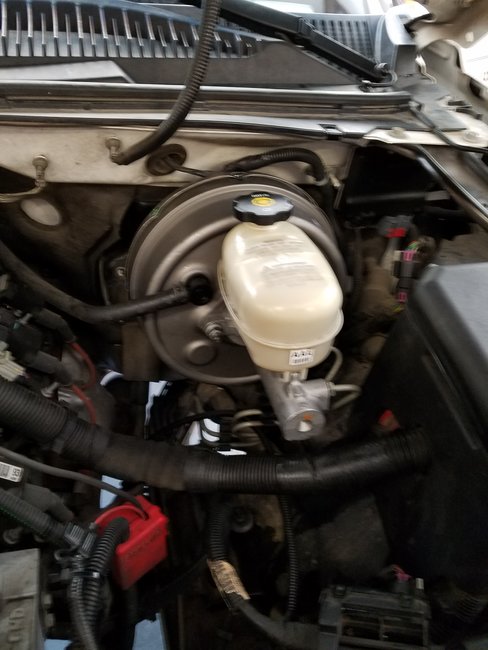
I replaced my brakes (rear drums and shoes, front rotors. Pads I replaced about five months ago, left them on.) I wanted to flush some old fluid out so I went to bleed the lines. My front two caliper bleed screw were stripped and I ruined them even further over the course of two days trying to get them off with everything I had. Went and bought two new calipers. Replaced calipers, guide bolts, banjo bolt. (calipers are on the correct side, bleeder on top) when I finished I bled the brakes. (RR, LR, RF, LF) until all visible air was out. (Went through two bottles of fluid) Hopped in truck and felt pedal with truck off. Felt nice and solid. I was feeling good. Cranked up truck, pedal sank to the floor. Not good. Bled two more times all the way around to be sure. No luck. Took to shop. They bled forever. No better. They said either master cylinder or booster. I argued about the booster because pedal was soft and not rock solid. I pulled my booster line off after I limped it home and heard a heck of a vacuum release. So I assumed booster was good. Decided to replace master as I suspected a busted seal. (Take to mind I had no issues other than a slightly spongy pedal before all of this work). Took master out and sure enough the front seal closest to the booster was frayed and torn all the way around. Good right? I bench bled the new master, installed it to the booster and bled the lines at the master. I then bled all four wheels again, just shortly checking for air. Hop in truck and pedal still sank to the floor. This is where I am at. I do have a new strange symptom now. I was in my driveway and drove the truck back and forth, five feet or so applying the brake and a couple of those times the brakes locked on when in drive with no throttle and it actually pulled to the right once when I pulled forward. I did one last check by pulling the master off the booster (lines still attached) and felt the piston was resting against the snap ring (as in it hadn’t gotten stuck in the depressed position). I’m just asking for help now because I’m now getting confused as to what could be going on.
Apr 17, 2019 at 12:45 PM

Advertisement
Avatar
STEVE W.
  • CERTIFIED EXPERT
  • 15,113 POSTS
Welcome to 2CarPros. I would suspect there is air in the lines. This guide can help you fix it.

https://youtu.be/w7gUsj2us0U

and

https://youtu.be/WDxvEQrMkBg

and

https://www.2carpros.com/articles/brake-pedal-goes-to-the-floor

Please run down this guide and report back.
Apr 17, 2019 at 3:23 PM
Avatar
ERIC LEEWRIGHT
  • MEMBER
  • 2 POSTS
That was it thanks for the guide it helped me find the problem all set! this site is amamzing
Apr 17, 2019 at 5:22 PM
Advertisement
Avatar
STEVE W.
  • CERTIFIED EXPERT
  • 15,113 POSTS
Nice work, we are here to help, please use 2CarPros anytime.
Apr 19, 2019 at 1:36 PM
Avatar
FYREMAN44
  • MEMBER
  • 1 POST
I have changed all my calipers and bled the system until all new fluid came out of each. When the truck is off the pedal does become hard. But once the truck Is on the pedal is very soft and almost goes to the floor. If I pump the pedal as I drive it does built some pressure but not enough as I believe it should be. The truck stops but not as it should or fast enough. Do I need to re-bleed the system or the ABS system?
Feb 22, 2021 at 4:36 PM (Merged)
Avatar
ASEMASTER6371
  • CERTIFIED EXPERT
  • 52,796 POSTS
Good afternoon,

You need to pressure bleed the system. Using someone's foot or vacuum is not enough to pull out the air.

https://www.2carpros.com/articles/how-to-bleed-or-flush-a-car-brake-system

The ABS needs to be done as well. You need a scan tool to do the automated bleed sequence for the ABS.

Roy
Feb 22, 2021 at 4:36 PM (Merged)
Avatar
GREG SCHULZ
  • MEMBER
  • 1 POST
No check ABS comes on on dash. No fuse issues. I’m at a total loss. Thought it was master brake cylinder but I just replaced it a year ago.
Feb 22, 2021 at 4:37 PM (Merged)
Avatar
JACOBANDNICKOLAS
  • CERTIFIED EXPERT
  • 110,175 POSTS
Welcome to 2CarPros.

If there are no leaks or fluid loss, it has to be the master cylinder has failed again. Take a look through this link:

https://www.2carpros.com/articles/brake-pedal-goes-to-the-floor

If you read through that and determine it is the MC, here is a link to help with replacement:

https://www.2carpros.com/articles/how-to-replace-a-brake-master-cylinder

_______________________________________

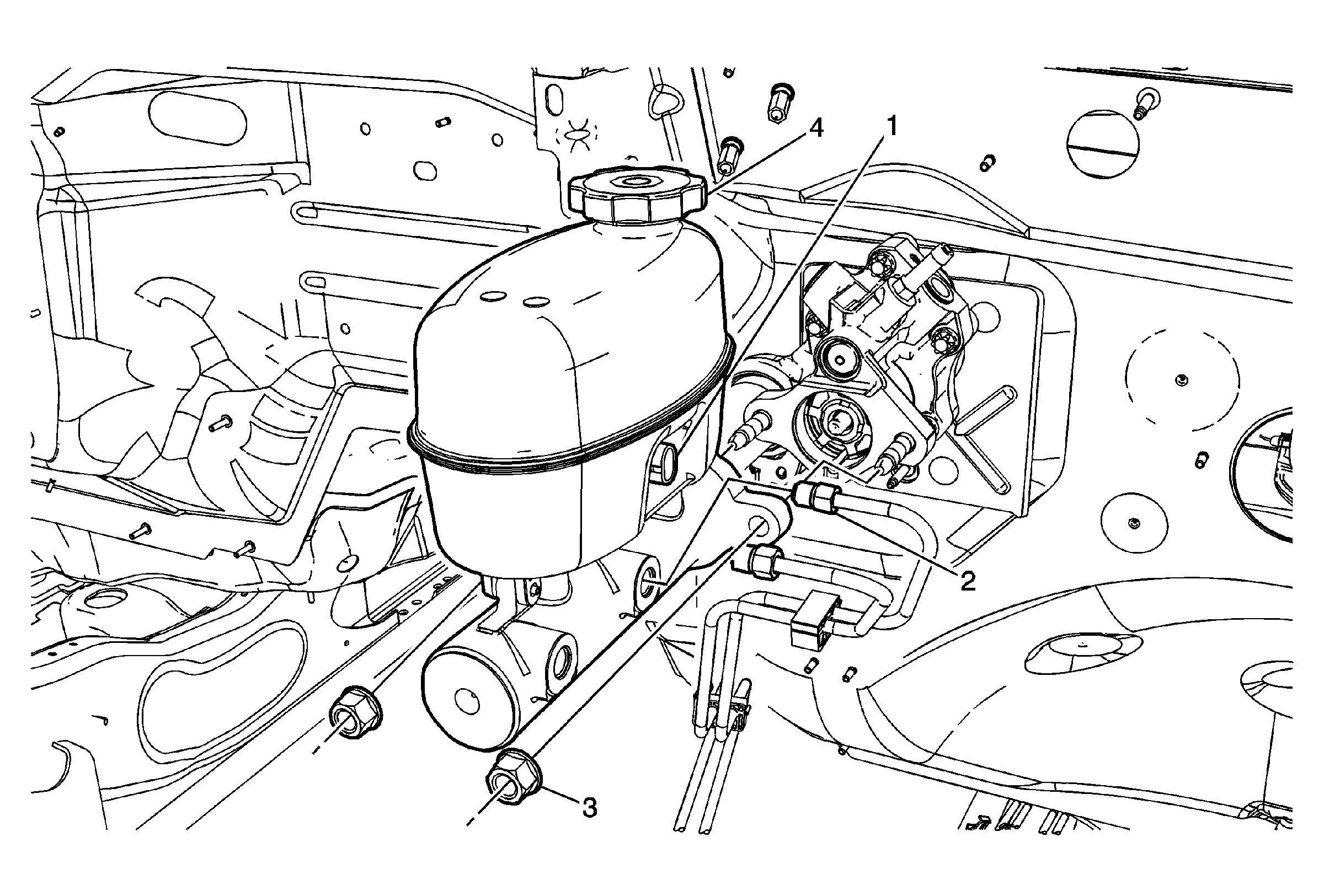
I attached an exploded view of the MC for you to see. Honestly, if there are no leaks and the fluid remains full, this is my first suspect.

Let me know if you have questions or need help.

Take care,
Joe
Feb 22, 2021 at 4:37 PM (Merged)
Avatar
GENERAL.MOTORS
  • MEMBER
  • 21 POSTS
Check for faulty caliper, may piston won't move
Feb 22, 2021 at 4:37 PM (Merged)
Avatar
JACOBANDNICKOLAS
  • CERTIFIED EXPERT
  • 110,175 POSTS
Honestly, if you have a stuck piston, that won't cause the brake pedal to drop to the floor.

Let me know what you find.

Joe
Feb 22, 2021 at 4:37 PM (Merged)
Avatar
GENERAL.MOTORS
  • MEMBER
  • 21 POSTS
Hello jakob, i faced the same problem and noticed that one piston won't move, changed it and the brake pedal start to be normal
Feb 22, 2021 at 4:37 PM (Merged)
Avatar
JACOBANDNICKOLAS
  • CERTIFIED EXPERT
  • 110,175 POSTS
It went to the floor? In my mind I can't see how that would happen. Not saying it couldn't.
Feb 22, 2021 at 4:37 PM (Merged)
Avatar
DAVEERZ17
  • MEMBER
  • 1 POST
I replace the front brake pads. I have also replace the master cylinder. I have bled the brake system. still the brake pedal goes to the floor very easy with or without the truck running.
Feb 22, 2021 at 4:37 PM (Merged)
Avatar
SCGRANTURISMO
  • CERTIFIED EXPERT
  • 4,897 POSTS
Hello,

This could be a problem with air in the system, Double check that all the air has bled out of the system. I have also included a link below for you to go to.

https://www.2carpros.com/articles/brake-pedal-goes-to-the-floor

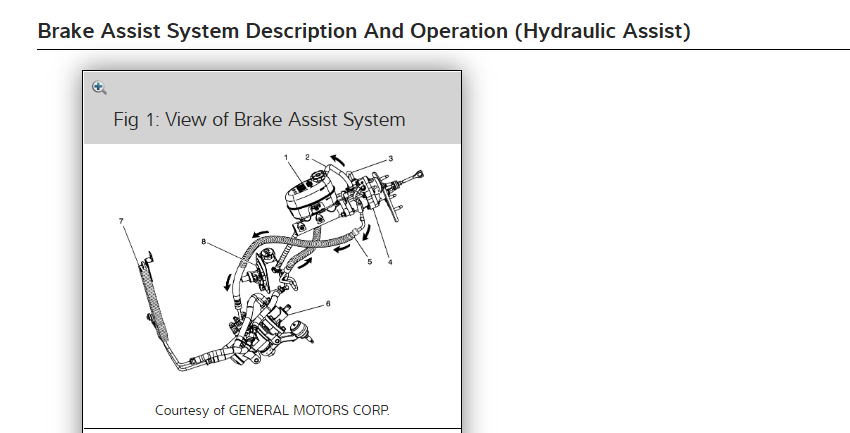
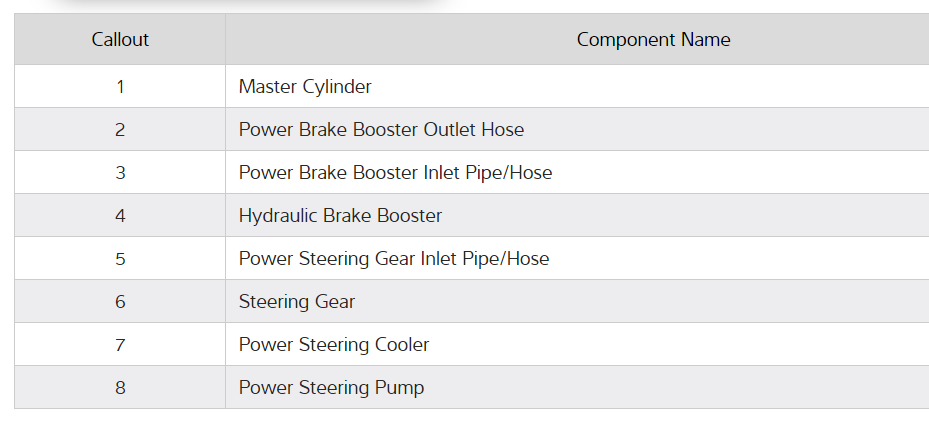
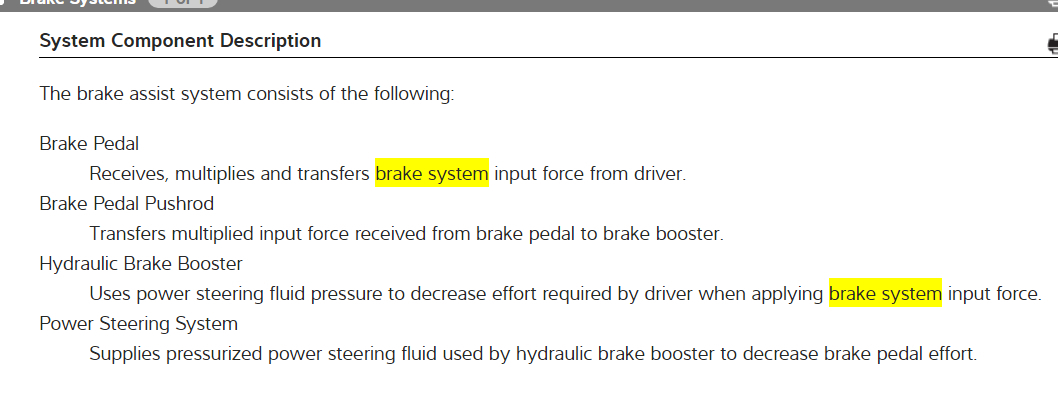
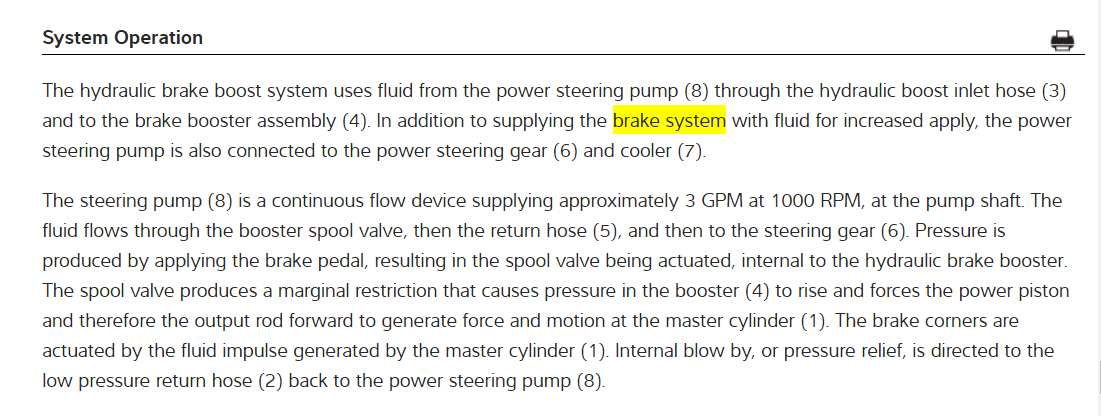
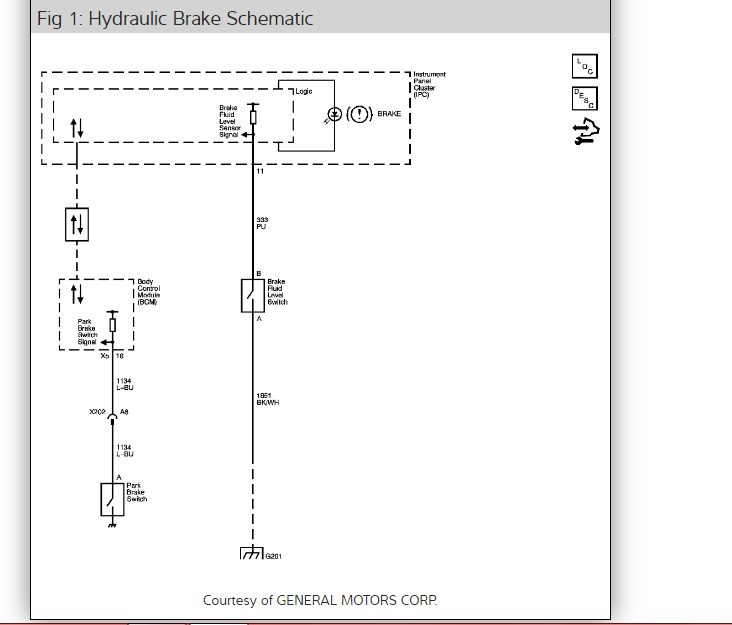
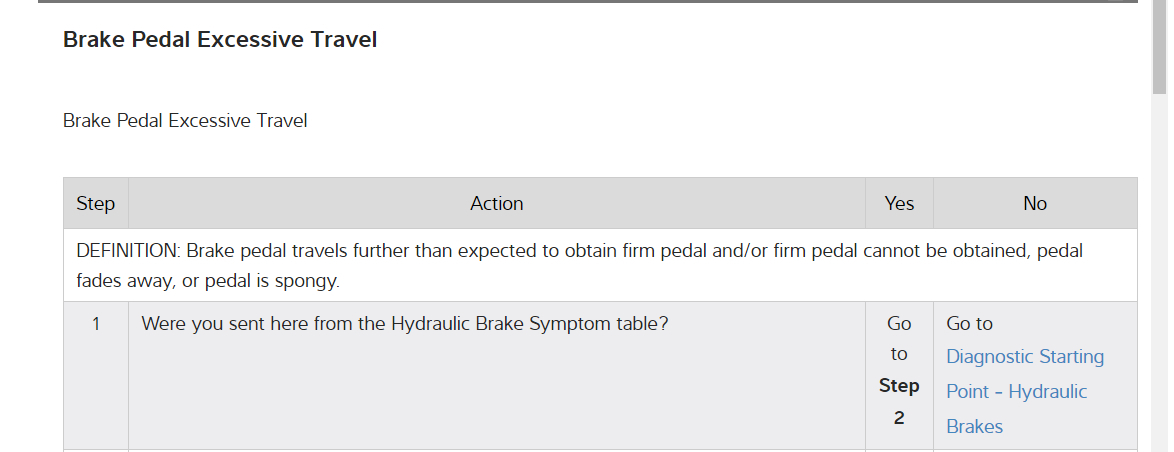
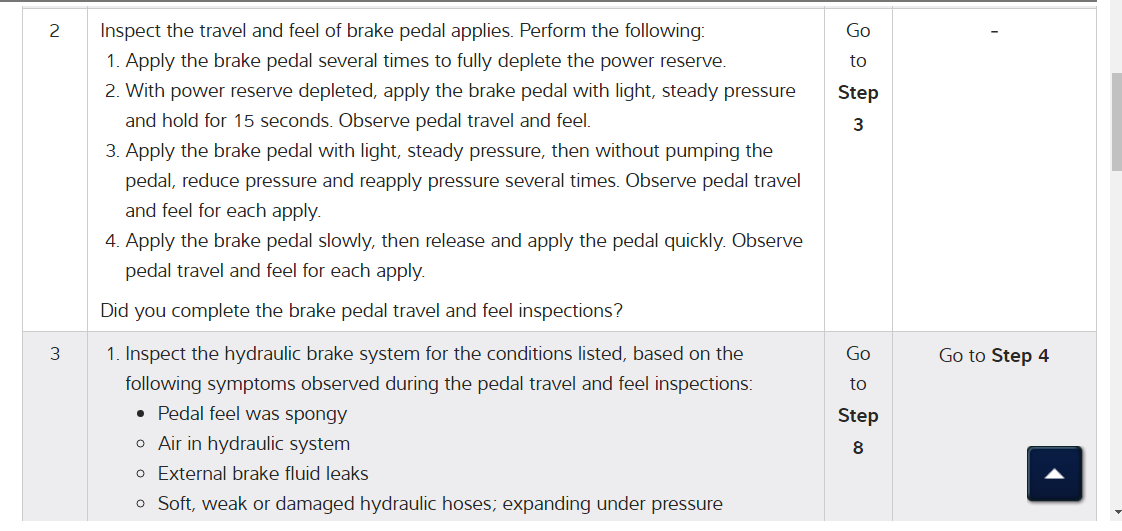
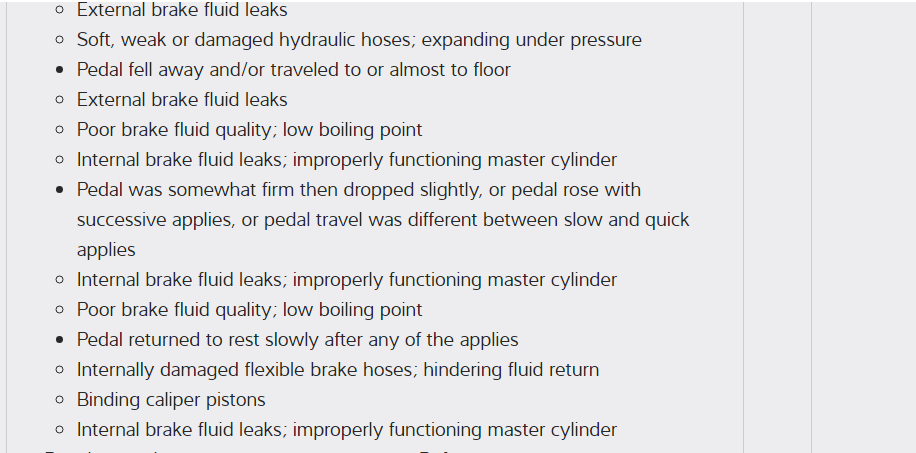
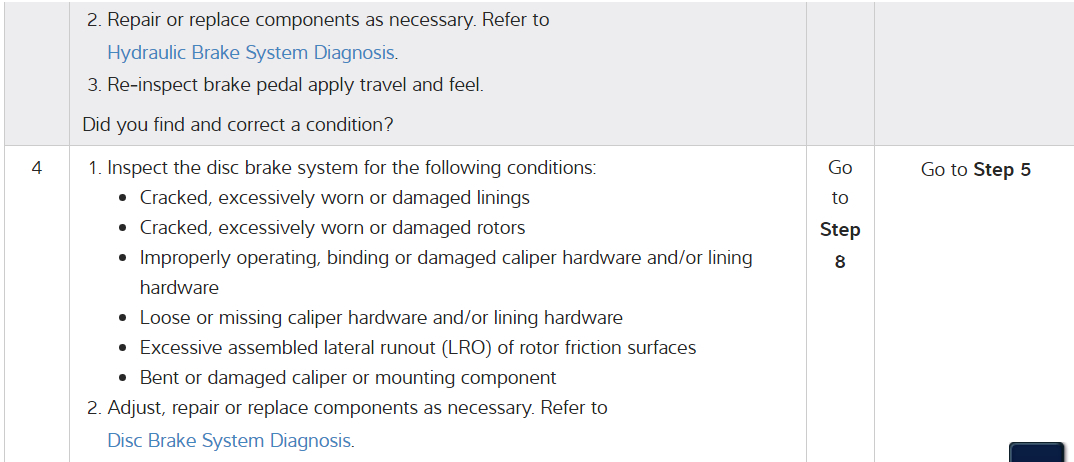
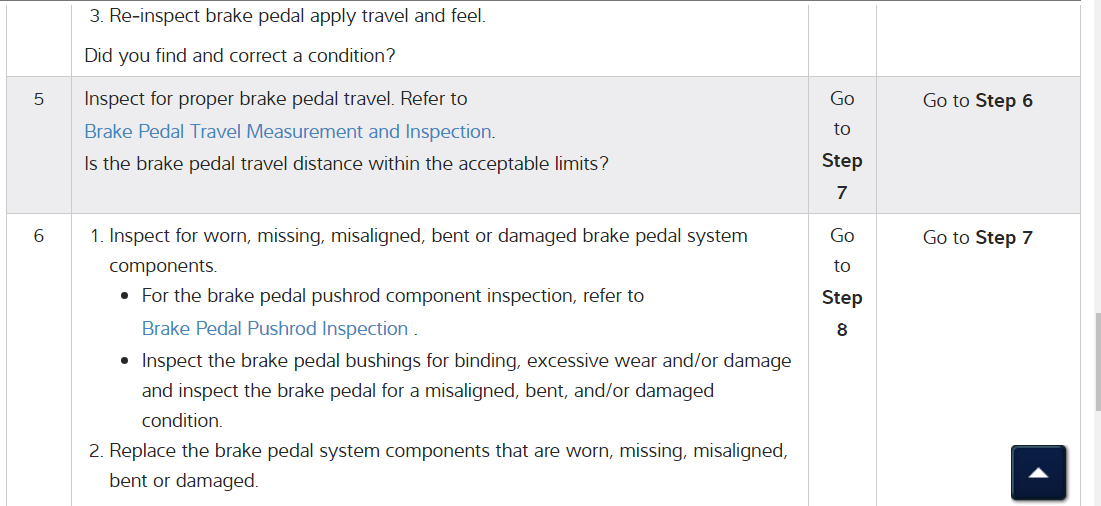
I have also included a factory troubleshooting guide for you down below as well. Please go through these guides and get back to us with what you are able to find out.

Thanks,
Alex
2CarPros
Feb 22, 2021 at 4:37 PM (Merged)
Avatar
  • MEMBER
  • 3 POSTS
Replaced entire brake system. No air in system, clear fluid when bleeding. Pedal goes to floor when engine is on.
Feb 22, 2021 at 4:37 PM (Merged)
Avatar
JACOBANDNICKOLAS
  • CERTIFIED EXPERT
  • 110,175 POSTS
Was the master cylinder replaced? I just went through this same situation today with a trailblaizer. It was the master cylinder.

Take a look through this link:

https://www.2carpros.com/articles/brake-pedal-goes-to-the-floor

Let me know. Also, let me know what prompted all the brake work and if the master cylinder was replaced, was is a new or re-manufactured part.

Take care,
Joe
Feb 22, 2021 at 4:37 PM (Merged)
Avatar
  • MEMBER
  • 3 POSTS
Started with a new rear axle shaft and new suspension parts. master cylinder and power booster all new.
Feb 22, 2021 at 4:37 PM (Merged)
Avatar
JACOBANDNICKOLAS
  • CERTIFIED EXPERT
  • 110,175 POSTS
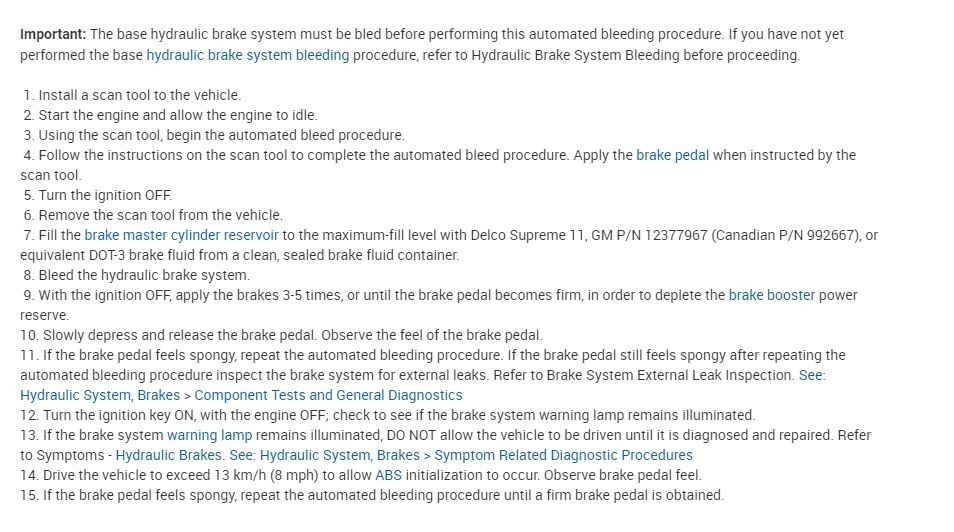
If it is new, then the only thing I can think of is the ABS needs to be bled. It requires a scan tool. Take a look through this and let me know if you have the tools to do it. Note that a standard bleed procedure is required before doing this. You have already done that.

If this doesn't help, I have a feeling you got a bad master cylinder.

If your truck has the vehicle stability enhancement, let me know. There is a different procedure.

____________________________

2007 Chevy Truck Silverado 1500 2WD V6-4.3L
(W/O JL4)
Vehicle Brakes and Traction Control Hydraulic System Brake Bleeding Service and Repair Procedures Antilock Brake System Automated Bleed Procedure (W/O JL4)
(W/O JL4)
Antilock Brake System Automated Bleed Procedure (Without JL4)

Notice: When adding fluid to the brake master cylinder reservoir, use only Delco Supreme 11(R), GM P/N 12377967 (Canadian P/N 992667), or equivalent DOT-3 brake fluid from a clean, sealed brake fluid container. The use of any type of fluid other than the recommended type of brake fluid, may cause contamination which could result in damage to the internal rubber seals and/or rubber linings of hydraulic brake system components.

Notice: Refer to Brake Fluid Effects on Paint and Electrical Components Notice.

Important: This procedure may be performed on all vehicles EXCEPT those equipped with option code JL4, Vehicle Stability Enhancement System (VSES).

Important: The base hydraulic brake system must be bled before performing this automated bleeding procedure. If you have not yet performed the base hydraulic brake system bleeding procedure, refer to Hydraulic Brake System Bleeding (Manual) Hydraulic Brake System Bleeding (Pressure) before proceeding.

1. Install a scan tool to the vehicle.
2. Start the engine and allow the engine to idle.
3. Depress the brake pedal firmly and maintain steady pressure on the pedal.
4. Using the scan tool, begin the automated bleed procedure.
5. Follow the instructions on the scan tool to complete the automated bleed procedure. Release the brake pedal between each test sequence.
6. Turn the ignition OFF.
7. Remove the scan tool from the vehicle.
8. Fill the brake master cylinder reservoir to the maximum-fill level with Delco Supreme 11(R), GM P/N 12377967 (Canadian P/N 992667), or equivalent DOT-3 brake fluid from a clean, sealed brake fluid container.
9. Bleed the hydraulic brake system. Refer to Hydraulic Brake System Bleeding (Manual) Hydraulic Brake System Bleeding (Pressure).
10. With the ignition OFF, apply the brakes 3-5 times, or until the brake pedal becomes firm, in order to deplete the brake booster power reserve.
11. Slowly depress and release the brake pedal. Observe the feel of the brake pedal.
12. If the brake pedal feels spongy, repeat the automated bleeding procedure. If the brake pedal still feels spongy after repeating the automated bleeding procedure inspect the brake system for external leaks. Refer to Brake System External Leak Inspection. See: Hydraulic System, Brakes > Component Tests and General Diagnostics
13. Turn the ignition key ON, with the engine OFF; check to see if the brake system warning lamp remains illuminated.
14. If the brake system warning lamp remains illuminated, DO NOT allow the vehicle to be driven until it is diagnosed and repaired. Refer to Symptoms - Hydraulic Brakes. See: Hydraulic System, Brakes > Symptom Related Diagnostic Procedures > Symptoms - Hydraulic Brakes
15. Drive the vehicle to exceed 13 km/h (8 mph) to allow ABS initialization to occur. Observe brake pedal feel.
16. If the brake pedal feels spongy, repeat the automated bleeding procedure until a firm brake pedal is obtained.

______________________________

Joe
Feb 22, 2021 at 4:37 PM (Merged)
Avatar
  • MEMBER
  • 3 POSTS
Thank you, we will try this hopefully this weekend.
Feb 22, 2021 at 4:37 PM (Merged)
Avatar
JACOBANDNICKOLAS
  • CERTIFIED EXPERT
  • 110,175 POSTS
You are welcome. If you have a chance, let me know if it helped.

Take care,
Joe
Feb 22, 2021 at 4:37 PM (Merged)
Avatar
MDBIRD1991
  • MEMBER
  • 2 POSTS
I found that the master cylinder was leaking fluid into the brake booster, I replaced both the master cylinder and brake booster, and have bled the brakes. When the vehicle is not running, the brake system feels to operate normally. However, once I start the engine, the brake pedal easily pushes straight to the floor, and you can hear a hissing near the brake booster/master cylinder area, as if the booster is just sucking in air.
Feb 22, 2021 at 4:38 PM (Merged)
Avatar
CJ MEDEVAC
  • CERTIFIED EXPERT
  • 11,004 POSTS
If you did not use a scanner (brake shop/dealer) to open up the ABS system valves for bleeding, you probably still have air in the system.

This would make the pedal be low. With the pedal being way down the booster will hiss.

"Repair Guides" is at the top right side of our pages. There is more brake information in there (if you click into it). I went ahead and posted this link from there for you.

https://www.2carpros.com/articles/how-to-bleed-or-flush-a-car-brake-system

Let us know how it is going.

The Medic
Feb 22, 2021 at 4:38 PM (Merged)
Avatar
MDBIRD1991
  • MEMBER
  • 2 POSTS
Thank you for the assist. It ended up being that the new master cylinder that I had installed was faulty. I replaced the master cylinder again, and bled the brakes, which resolved the issue, I haven't had any issue since. The link you gave me, turned me on to testing the new master cylinder that I had previously installed, and it failed. Thank you once again.
Feb 22, 2021 at 4:38 PM (Merged)
Avatar
CJ MEDEVAC
  • CERTIFIED EXPERT
  • 11,004 POSTS
If you or your pals ever need assistance, come on back, there's a bunch of us on this end that do their darndest to get people mobile again.

Thanks for giving us a shot, The Medic
Feb 22, 2021 at 4:38 PM (Merged)
Avatar
CHERIWINDLER
  • MEMBER
  • 1 POST
The brakes can be pushed to the floor and it does not stop the vehicle. Dashboard display reads "check brake system". There is pressure when the vehicle is off. The truck has brake fluid. There was not any squeaking prior to this.
Feb 22, 2021 at 4:38 PM (Merged)
Avatar
CARADIODOC
  • CERTIFIED EXPERT
  • 34,306 POSTS
If you are not losing any brake fluid from the reservoir, a defective master cylinder is the likely suspect. It is normal and acceptable for the fluid level to not be at the top. That is simply a sign the brakes need to be inspected in the near future for normal wear. Do not add any brake fluid as long as the level is above the "Min" mark.

If the fluid level is going lower as you pump the brake pedal, there is an external leak that must be diagnosed and repaired. You will see a wet spot or puddle someplace underneath the truck. Also, be aware that on any vehicle more than about a year old, running the brake pedal all the way to the floor, regardless of the cause, will often damage the master cylinder due to the crud and corrosion that build up in it over time. It is not unusual to need a replacement master cylinder in addition to the original repair.
Feb 22, 2021 at 4:38 PM (Merged)
Avatar
DANICAK95
  • MEMBER
  • 4 POSTS
I replaced all brake lines and master cylinder, bled the system the correct way and the bake pedal still goes down to the floor.
Feb 22, 2021 at 4:38 PM (Merged)
Avatar
ASEMASTER6371
  • CERTIFIED EXPERT
  • 52,796 POSTS
Good afternoon.

Did you use the procedure with a scan tool to bleed the system?

Roy

ABS Automated Bleed Procedure:

Notice: When adding fluid to the brake master cylinder reservoir, use only Delco Supreme II , GM P/N 12377967 (Canadian P/N 992667), or equivalent DOT-3 brake fluid from a clean, sealed brake fluid container. The use of any type of fluid other than the recommended type of brake fluid, may cause contamination which could result in damage to the internal rubber seals and/or rubber linings of hydraulic brake system components.

Notice: Refer to Brake Fluid Effects on Paint and Electrical Components Notice in Service Precautions.

Important: This procedure may be performed on all vehicles EXCEPT those equipped with option code JL4, Vehicle Stability Enhancement System (VSES).

Important: The base hydraulic brake system must be bled before performing this automated bleeding procedure. If you have not yet performed the base hydraulic brake system bleeding procedure, refer to Hydraulic Brake System Bleeding (Manual).

1. Install a scan tool to the vehicle.
2. Start the engine and allow the engine to idle.
3. Depress the brake pedal firmly and maintain steady pressure on the pedal.
4. Using the scan tool, begin the automated bleed procedure.
5. Follow the instructions on the scan tool to complete the automated bleed procedure. Release the brake pedal between each test sequence.
6. Turn the ignition OFF.
7. Remove the scan tool from the vehicle.
8. Fill the brake master cylinder reservoir to the maximum-fill level with Delco Supreme II GM P/N 12377967 (Canadian P/N 992667) or equivalent DOT-3 brake fluid from a clean, sealed brake fluid container.
9. Bleed the hydraulic brake system. Refer to Hydraulic Brake System Bleeding (Manual).
10. With the ignition OFF, apply the brakes 3-5 times, or until the brake pedal becomes firm, in order to deplete the brake booster power reserve.
11. Slowly depress and release the brake pedal. Observe the feel of the brake pedal.
12. If the brake pedal feels spongy, repeat the automated bleeding procedure. If the brake pedal still feels spongy after repeating the automated bleeding procedure inspect the brake system for external leaks. Refer to Brake System External Leak Inspection. See: Hydraulic System, Brakes > Component Tests and General Diagnostics
13. Turn the ignition key ON, with the engine OFF; check to see if the brake system warning lamp remains illuminated.
14. If the brake system warning lamp remains illuminated, DO NOT allow the vehicle to be driven until it is diagnosed and repaired. Refer to Symptoms - Hydraulic Brakes. See: Hydraulic System, Brakes > Symptom Related Diagnostic Procedures
15. Drive the vehicle to exceed 13 kph (8 mph) to allow ABS initialization to occur. Observe brake pedal feel.
16. If the brake pedal feels spongy, repeat the automated bleeding procedure until a firm brake pedal is obtained.
Feb 22, 2021 at 4:38 PM (Merged)
Avatar
DANICAK95
  • MEMBER
  • 4 POSTS
Yeah, I did that on the scanner already and still no pedal.
Feb 22, 2021 at 4:38 PM (Merged)
Avatar
ASEMASTER6371
  • CERTIFIED EXPERT
  • 52,796 POSTS
You may have to do it several times. Tthen also do the manual bleed as well.

If you still have no pedal, you may need a pressure bleeder. You will have to force the air out of the system with pressure. You can rent one at a parts store.

Roy
Feb 22, 2021 at 4:38 PM (Merged)
Avatar
DANICAK95
  • MEMBER
  • 4 POSTS
It has been done several times, that is the issue.
Feb 22, 2021 at 4:38 PM (Merged)
Avatar
DANICAK95
  • MEMBER
  • 4 POSTS
Ordered a pressure bleeder from Snap On should be here tomorrow hopefully.
Feb 22, 2021 at 4:38 PM (Merged)
Avatar
ASEMASTER6371
  • CERTIFIED EXPERT
  • 52,796 POSTS
Okay, keep me updated.

Roy
Feb 22, 2021 at 4:38 PM (Merged)
Avatar
COBRA90
  • MEMBER
  • 3 POSTS
I know this is a old post but I was wondering if you figured out the no pedal because I got the same problem and did everything listed above . It’s driving me crazy, lol.
Feb 22, 2021 at 4:38 PM (Merged)
Avatar
ASEMASTER6371
  • CERTIFIED EXPERT
  • 52,796 POSTS
We did not get any response whether it worked or not.

https://www.2carpros.com/articles/brake-pedal-goes-to-the-floor

Air is most likely the issue and it is tough to get all the air out. Pressure bleeders are the best way to force out all the air.

https://www.2carpros.com/articles/how-to-bleed-or-flush-a-car-brake-system

Roy
Feb 22, 2021 at 4:38 PM (Merged)
Avatar
COBRA90
  • MEMBER
  • 3 POSTS
Thank you for the reply Roy . I’ve been battling with this truck for a while now . And I’ve probably bleed the brakes 20 times . And power bleed 5 and used the scanner at least 10 times . You think there’s still air trapped in the system?
Feb 22, 2021 at 4:38 PM (Merged)
Avatar
ASEMASTER6371
  • CERTIFIED EXPERT
  • 52,796 POSTS
I would use vice grips and clamp off the brake hoses and see if you still have no pedal or is the pedal high and hard.

This way we can narrow where is issue is located.

Roy
Feb 22, 2021 at 4:38 PM (Merged)
Avatar
COBRA90
  • MEMBER
  • 3 POSTS
After many hours of bleeding the system and use the scan tool and power bleeder . I finally figured out what was wrong . The person who had the truck before put calipers on it and they had them reverse. So swap them and boom fixed . Bled it and now I got good pedal . So if someone has this issue check your calipers and make sure your bleeders are on top .
Feb 22, 2021 at 4:38 PM (Merged)
Avatar
ASEMASTER6371
  • CERTIFIED EXPERT
  • 52,796 POSTS
Good find. The bleeders need to be at the top of the calipers, not at the bottom.

Roy
Feb 22, 2021 at 4:38 PM (Merged)