Shuts off while driving, anti theft switch

1996 DODGE RAM
168,000 MILES • 3.9L • 6 CYL • 2WD • AUTOMATIC
Avatar
96DODGERAM
  • MEMBER
  • 63 POSTS
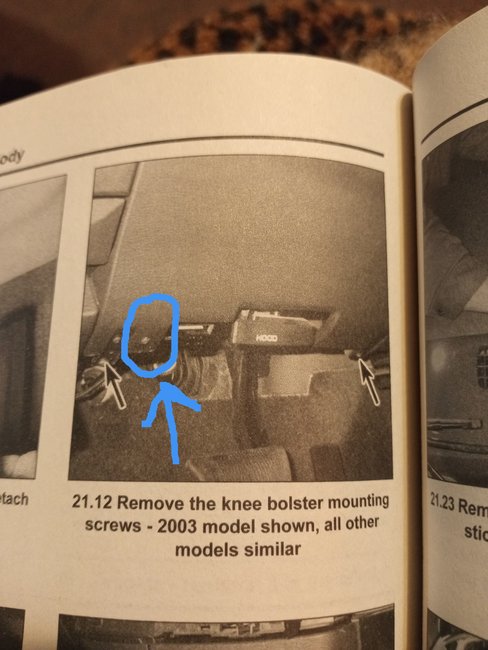
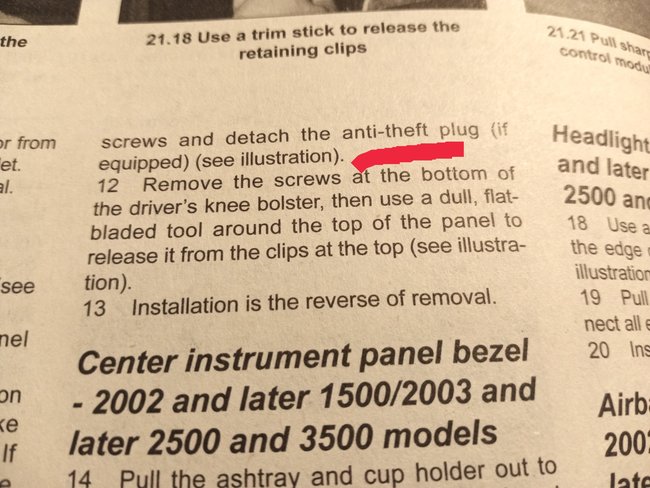
I have an anti theft switch under my steering wheel by where you pop the hood at. Since I bought my truck it has not been connected there are wires that go to it but I never plugged them in because I just found out about it. My question is, is there any way that it got stuck in anti theft mode before it got unplugged? I taped them off at the time because I didn't know what it was but my truck shuts off on me while I'm driving and sometimes comes back on and sometimes takes a minute. Should I plug the wires back in and see what it does? I just don't want to fry anything incase it was unplugged for a reason. I've changed about 30 parts in the truck thinking that was the cause and every time I changed a part it would do good for about a day or two and then back to being stubborn.
Mar 14, 2021 at 1:15 PM
Advertisement
Avatar
CARADIODOC
  • CERTIFIED EXPERT
  • 34,306 POSTS
If that switch was for an anti-theft system, it was for an aftermarket product. Factory-installed systems are activated and deactivated with a key fob or with the power lock switch and outside lock cylinder and key. The fuel pump runs for one second when you turn on the ignition switch, then turns off. It resumes running when the Engine Computer sees engine rotation, meaning cranking or running. The factory anti-theft system works by failing to turn the pump back on during cranking. The typical observation when it's in theft mode is the engine will run for about two seconds on the fuel that's under pressure in the lines. The engine stalls once that pressure is bled off. To get it out of theft mode you must use the key to lock and unlock a front door, or use the "unlock" switch on the key fob.

When the system was activated normally, then it alerts with the horn and flashing lights when you use the key in the lock cylinder, it usually didn't turn off due to broken or frayed wires between the door hinges. When that happens, it can still be turned off with the key fob or with the key in the other front door.

I think when there's a switch added under the dash, that has to be pressed to take an aftermarket anti-theft system out of protection mode so the engine will run. I don't know if the systems disable fuel or the starter motor. For that matter, a switch can be added to secretly make the starter inoperative without the need of any complicated or unreliable computer module. If that switch isn't connected now, there's no way it can cause an intermittent problem. You asked about plugging the wires in as a test. What are you going to plug them into?

Once the engine is running, the factory anti-theft system won't turn the fuel pump off to cause stalling. Treat an intermittent stalling problem like you would with any other vehicle; loss of fuel, loss of spark, or loss of both. With Chrysler products, stalling is caused by loss of spark about two percent of the time, loss of fuel pressure perhaps three percent of the time, and loss of both at the same time a good 95 percent of the time. It's also important to be aware Chrysler and GM fuel pumps fail in the exact opposite ways. GM fuel pumps almost always start up, then they slow down or quit while you're driving. When the brushes in the motor in Chrysler fuel pumps are worn, the motors will intermittently not start up. Often banging on the bottom of the gas tank will jar them enough to get them going. Once they're running, they rarely quit until you stop the engine, at which time they may fail to start up again. This failure to start could occur again the next time you start the engine, or it may not occur again for months.

The first thing for the stalling problem is to observe how it occurs. Does the engine suddenly turn off as though you had turned the ignition switch off? If so, the crankshaft position sensor or the camshaft position sensor are the best suspects. If the engine gradually loses power, or surges a little over a period of a few seconds, loss of fuel pressure is the better suspect. In particular, an elusive cause is the strainer, or screen, on the fuel pick-up tube on the fuel pump housing is somewhat common but hard to identify. Remember, Chrysler fuel pumps almost always keep on running while you're driving. Also, Chrysler fuel filters commonly last the life of the vehicle unless they rust out and start leaking. For a loss-of-fuel problem, those two parts should be way down at the bottom of the list of suspects. The screen is at the top of the list. The easiest way to identify that is to connect a fuel pressure gauge and run the hose under the back of the hood, then clip the gauge under a wiper arm so you can see what happens when the problem occurs.

I've had this happen four times, twice with carbureted engines, (which act differently), and twice with fuel-injected engines. There were two common clues with the fuel-injected engine. The first is the engine always ran fine for at least the first 15 miles, then would sputter to a stop. Once restarted, it would continue to act up about every two to five miles. I had to sit on the side of the road about five minutes before it could be restarted. The second clue is the stalling was most likely to occur when the largest volume of fuel was being pumped, which is during coasting. It ran best at steady highway speeds and when accelerating. Now that I understand what was happening, I think the engine would have run better if I had unplugged the vacuum hose from the fuel pressure regulator on the fuel rail on the engine, and plugged it. That would have raised fuel pressure and made the engine run rich, but it would have kept running.

Fuel pressure is not monitored, so the only way to know if it is involved with stalling is to watch it on the fuel pressure gauge. Everything else is monitored and can be observed with a scanner. Also, the Engine Computer is capable of detecting most defects, or the results of those defects, and can set an appropriate diagnostic fault code. Those codes never say to replace a part or that one is bad. They only indicate the circuit or system that needs further diagnosis, or the unacceptable operating condition. There's three ways to read those fault codes. The first is to have someone at an auto parts store do that for you. It's usually free, but be sure to write down the code numbers. The second way is Chrysler made it much easier to do yourself than any other manufacturer. Cycle the ignition switch from "off" to "run" three times within five seconds without cranking the engine, leave it in "run", then watch the code numbers show up in the odometer display. Either way, you can go here:

https://www.2carpros.com/trouble_codes/obd2

to see the definitions, or I can interpret them for you. The third way is to read the codes yourself with a scanner or an inexpensive code reader. This video is for a newer model, but the procedure is exactly the same:

https://youtu.be/WNsPmjQWkgg

Scanners are much more expensive but they will access all the computers and read their fault codes. Most simple code readers only read codes in Engine Computers. These can cost less than $35.00. Some of the better ones even read ABS and Air Bag codes now.

Fault codes related to the crankshaft position sensor and the camshaft position sensor usually need some time to be detected, as in when a stalled engine is coasting to a stop. They often don't set just from cranking the engine. That means it's important to not erase any codes by disconnecting the battery before they've been read, otherwise that valuable information will be lost. These sensors commonly fail on all car brands by becoming heat-sensitive, then they work again after cooling down for about an hour. Normal air flow while driving keeps them cool. It's when you stop for a short time with a hot engine, as in when stopping for gas, that engine heat migrates up to the sensor and causes one to fail. When there are no fault codes related to these sensors but you still suspect one of them, that can be identified with most scanners. On Chrysler's DRB3 scanner, those sensors are listed with a "No" or "Present" during cranking to show if their signals are showing up at the Engine Computer. When they are both there, the computer turns on the automatic shutdown, (ASD) relay. That relay sends current to the injectors, ignition coil(s), oxygen sensor heaters, alternator field circuit, and the fuel pump or pump relay. If goes one more place. That is right back to another terminal at the Engine Computer. The computer knows it turned the ASD relay on, and that last terminal is where it gets a verification the relay turned on. You don't even have to bother testing for that. The computer did it for you.

If we do suspect one of those sensors, whether or not a fault code is set, based on your observation the engine may resume running or can be restarted in only a few minutes, a heat-related failure is not likely to be the cause. It would be more likely to be due to corrosion between a pair of mating connector terminals, or some other problem with the wiring. On this application, the crankshaft position sensor has also been known to develop a cracked core. The symptom is an intermittent backfire, usually when accelerating, but it would stand to reason there could be other symptoms.
Mar 14, 2021 at 5:15 PM

Avatar
96DODGERAM
  • MEMBER
  • 63 POSTS
I've changed the crankshaft sensor camshaft sensor fuel pump speak plugs/wires coil pack distributor cap ASD relay check and changed fuses. new battery, cleaned the fuel injectors, changed throttle position sensor, cleaned MAF sensor, cleaned idle air control sensor, check for vacuum leaks, and I know I've done more to it. It's random when it shuts off sometimes it turns right on and won't give me problems all day and then the next day hard to start and shuts off when I'm driving. Sometimes I can pump the gas and it'll kick back on but most of the time just shuts off but all lights and everything else stays on and my battery gauge doesn't drain down either. I've had this truck since last October and only put a little over 1,000 miles on it.
Mar 14, 2021 at 6:41 PM
Advertisement
Avatar
96DODGERAM
  • MEMBER
  • 63 POSTS
This is the switch I'm talking about:
Mar 14, 2021 at 6:50 PM
Avatar
CARADIODOC
  • CERTIFIED EXPERT
  • 34,306 POSTS
You're describing the plugged fuel strainer perfectly.

The first time this occurred to my '88 Grand Caravan, it was on the two hottest days of summer, starting 30 miles on the other side of Minneapolis, when I slowed down for the exit I was headed for. Later that day, due to all three bypasses down to one lane of road construction, it took me four hours to nurse it through the city, then it ran fine the next three hours to home. After more trouble the next day, it never acted up again until six months later.

The second this occurred was another 200,000 miles later, but only when dragging a huge tandem-axle enclosed trailer that's bigger than that van. By watching the fuel pressure gauge, I could see pressure slowly drop from 45 -50 psi down to 20 psi. It didn't start to sputter until it hit 15 psi, at which most engines won't even run at all. I found fuel pressure would pop back up to normal by just lifting the accelerator pedal for an instant, then push it again. By doing that I kept speed up to 55 - 60 mph, and others behind me wouldn't even have known I was having a problem.

Remember, fuel pressure isn't monitored by the Engine Computer. That makes the fuel system the best suspect when there's no fault codes.
Mar 14, 2021 at 6:56 PM
Avatar
96DODGERAM
  • MEMBER
  • 63 POSTS
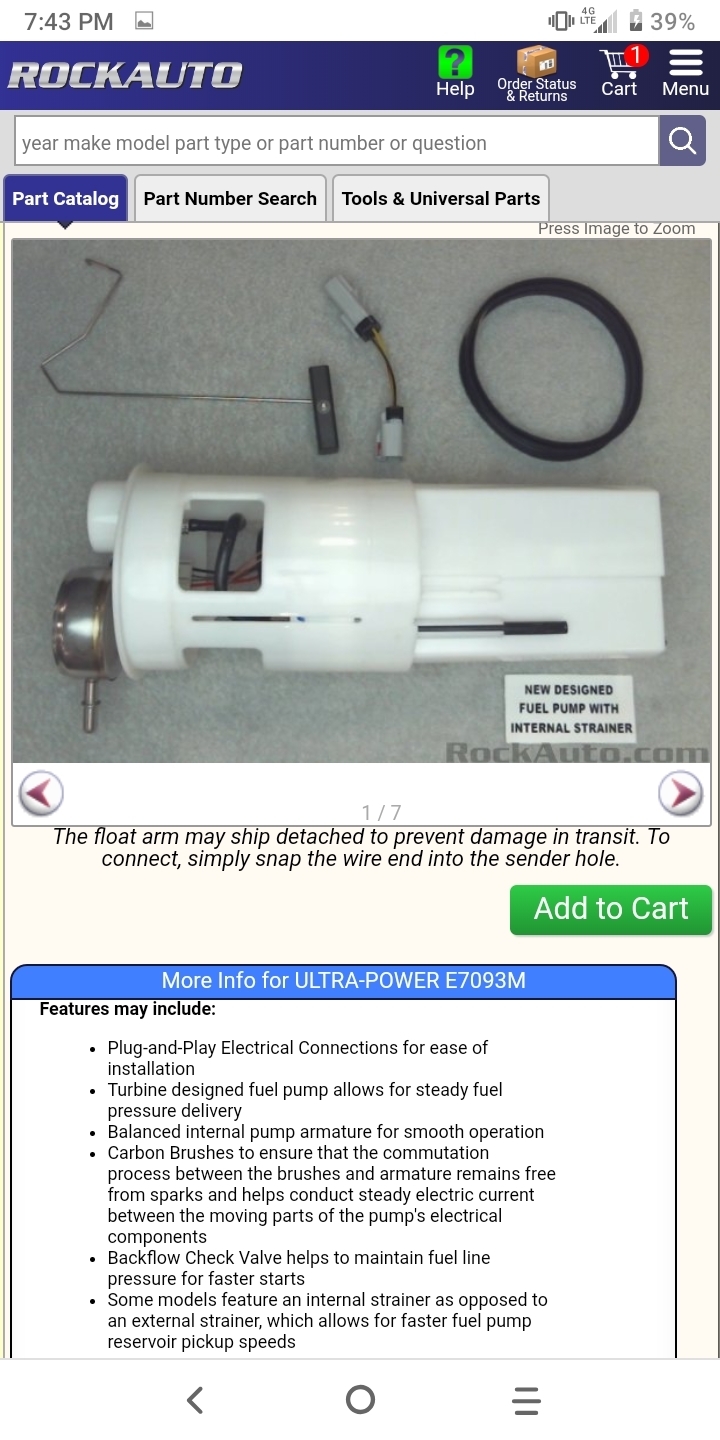
I'm pretty sure the fuel pump I switched my old 1 with had a new strainer on it. This is the one I got:
Mar 14, 2021 at 7:01 PM
Avatar
CARADIODOC
  • CERTIFIED EXPERT
  • 34,306 POSTS
That switch in your photo is not something I ever saw at the dealership. I have a suspicion that is part of a dealer-installed optional system from Chrysler, but as one of their electrical specialist, I never ran into that. I still don't think that has anything to do with the stalling problem. We need data to look at to know where to start looking.
Mar 14, 2021 at 7:02 PM
Avatar
96DODGERAM
  • MEMBER
  • 63 POSTS
Depending on how much I make tomorrow I'll be buying a fuel pressure gauge to check to see what it does when it's acting up.
Mar 14, 2021 at 7:07 PM
Avatar
CARADIODOC
  • CERTIFIED EXPERT
  • 34,306 POSTS
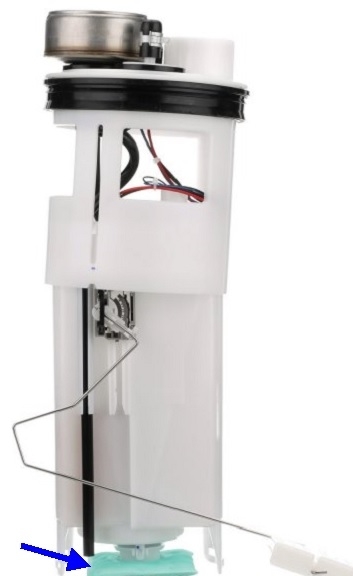
Many people buy the less-expensive pump and motor that has to be transplanted into that housing. When you buy the complete assembly, you usually do get a new strainer, but there are some that either come separate and have to be snapped on, and some that don't include a new strainer, (cheapskates). I don't see the strainer on the bottom, (right side in your photo), but it could be inside the housing.

There used to be another common problem involving multiple fuel pump failures in short succession. That's why fuel pressure tests are what we need to look at. If those remain okay, then we can figure out where to go next.
Mar 14, 2021 at 7:09 PM
Avatar
96DODGERAM
  • MEMBER
  • 63 POSTS
What's the strainer look like and I can tell you if it had it or not.
Mar 14, 2021 at 7:11 PM
Avatar
CARADIODOC
  • CERTIFIED EXPERT
  • 34,306 POSTS
Instead of buying the gauge, check at some local auto parts stores to see if they borrow or rent tools. In my city, they make you buy the tool, then you get a full refund when you take it back. If you choose to keep a tool, you still return it, then they give or order you a brand new one.
Mar 14, 2021 at 7:12 PM
Avatar
96DODGERAM
  • MEMBER
  • 63 POSTS
Ya, Napa has 1 for $40.00 and it has a few attachments and O'Riley's will rent me theirs for $160.00 plus tax.
Mar 14, 2021 at 7:13 PM
Avatar
CARADIODOC
  • CERTIFIED EXPERT
  • 34,306 POSTS
Here's the best photo I have that shows the strainer. I don't see that as being available separately for a '96 model. This was a $12.00 part for my '88 and '89 Grand Caravans. There is also no replacement available separately for my '94 and '95 Grand Caravans. I haven't had that problem with the two newer models, but it would take a new housing assembly to get a new strainer.

The problem I mentioned a minute ago had to do with failures of aftermarket fuel pumps. They'd last up to a week, then lock up. They always got replaced under warranty, then out of frustration, we'd buy one from the dealer and have no more problems. The cause wasn't really the quality of the pumps. What they found was Chrysler pumps were built to very tight tolerances to make them quiet, and microscopic debris in the gas tank was getting into the impellers causing them to bind. By the time you finally installed the dealer's pump, all that debris had been collected. There was a service bulletin issued that told us to have the tank steam-cleaned at a radiator repair shop any time the pump needed to be replaced. That seems to no longer be a problem, probably due to better additives in gas today.
Mar 14, 2021 at 7:47 PM
Avatar
96DODGERAM
  • MEMBER
  • 63 POSTS
That's good to know. but yes, my new fuel pump did have the strainer on it.
Mar 14, 2021 at 7:53 PM
Avatar
JACOBANDNICKOLAS
  • CERTIFIED EXPERT
  • 110,175 POSTS
Hi,

|I noticed we haven't heard from you for a couple of days. Has any progress been made? We're interested in knowing.

Take care and God Bless,

Joe
Mar 17, 2021 at 6:11 PM
Avatar
96DODGERAM
  • MEMBER
  • 63 POSTS
Okay, I just bought a fuel pressure gauge and a vacuum gauge I'm about to hook up the fuel gauge first. I will let you guys know.
Mar 20, 2021 at 5:35 PM
Avatar
JACOBANDNICKOLAS
  • CERTIFIED EXPERT
  • 110,175 POSTS
I was wondering what you found. I'm interested in knowing.

Joe
Mar 21, 2021 at 6:19 PM
Avatar
96DODGERAM
  • MEMBER
  • 63 POSTS
I have good vacuum pressure. I warmed up the truck and it's reading between 18-20 and my fuel pressure is kind of high; it reads between 54-60.
Mar 22, 2021 at 11:20 AM
Avatar
96DODGERAM
  • MEMBER
  • 63 POSTS
Now the needle keeps jumping between 50-60 non-stop.
Mar 22, 2021 at 12:00 PM
Avatar
96DODGERAM
  • MEMBER
  • 63 POSTS
But it didn't shut off on me the whole time I was doing my diagnosis. so I'm still not sure what the fuel pressure is when it shuts off but as soon as it does shut off I'll hook it all back up and check it again.
Mar 22, 2021 at 12:23 PM
Avatar
CARADIODOC
  • CERTIFIED EXPERT
  • 34,306 POSTS
Reconnecting the fuel pressure gauge after the engine is stopped is going to cause enough leakage to bleed off the stored pressure, so that is not going to be of value. Besides, we aren't interested in what happens to fuel pressure after the engine has stopped. We want to know what happens to pressure leading up to the event.
Mar 22, 2021 at 4:39 PM
Avatar
96DODGERAM
  • MEMBER
  • 63 POSTS
Okay, I'll hook it up until it shuts off and see what happens.
Mar 22, 2021 at 4:41 PM
Avatar
CARADIODOC
  • CERTIFIED EXPERT
  • 34,306 POSTS
The first time this happened on my '88 Grand Caravan, I had the hose run under the right wiper arm. The second time, 200,000 miles later, I watched the gauge for over a year before it acted up long enough to find. That time I had it strapped to the radio antenna.
Mar 22, 2021 at 5:52 PM
Avatar
96DODGERAM
  • MEMBER
  • 63 POSTS
So it won't ruin anything if I were to leave hooked up while I drive around?
Mar 22, 2021 at 5:54 PM
Avatar
CARADIODOC
  • CERTIFIED EXPERT
  • 34,306 POSTS
Nope. It's no different than leaving a voltmeter connected to an electrical circuit or a pressure gauge on a compressed air line.
Mar 22, 2021 at 6:00 PM
Avatar
96DODGERAM
  • MEMBER
  • 63 POSTS
Okay, cool. also instead of the needle staying steady it jumps back and for rapidly between 50-60 PSI. why does it jumps back and forth?
Mar 22, 2021 at 6:01 PM
Avatar
96DODGERAM
  • MEMBER
  • 63 POSTS
Videos I've seen the needle jumps a little bit but stays pretty steady.
Mar 22, 2021 at 6:03 PM
Avatar
CARADIODOC
  • CERTIFIED EXPERT
  • 34,306 POSTS
I haven't seen that before. What you can try is to find the two rubber fuel hoses where they cross over from the body to the engine, then, with the engine running, use a hose pinch-off pliers to pinch the smaller hose. That's the return hose for fuel going back to the tank after it squeezed through the spring-loaded pressure regulator. With it pinched, fuel pressure will go up to the maximum the fuel pump can develop. That could be as high as 70 psi. Don't do that any longer than necessary to see the results.

If the pressure remains steady with the hose pinched, remove the pliers, then unplug the vacuum hose from the regulator on the fuel rail, and plug that hose. No vacuum to the regulator equates to hard acceleration. There's two forces acting on a molecule of gas as it leaves the tip of an injector. Manifold vacuum is pulling on it and fuel pressure is pushing on it. Low vacuum during hard acceleration reduces one of those forces, so the regulator adjusts to make fuel pressure higher. As far as that molecule of gas is concerned, the total of the forces acting on it remains constant. You should see fuel pressure go up again. If pressure is smooth or steady, I'd question what is happening with that vacuum source. If pressure is still bouncing around wildly, but it wasn't with the return hose pinched, it would suggest the valve in the regulator is sticking. That would really be unusual, and I'd like to know more about that defect. GM did have a big problem with their regulators leaking fuel into the vacuum hose, but other than that, they have been very trouble-free on all brands and engines.

This might also be an issue with the gauge itself. Most pressure gauges have some sort of damping control to smooth out those confusing pulses. Often that is in the form of a restriction in the hose or the inlet port to the gauge, so it takes a fraction of a second for the gauge to respond to pressure or vacuum changes. That restriction might be missing, but for what we're looking for, that isn't a concern. We want to see if fuel pressure drops when a running problem occurs.

By the way, you will see fuel pressure drop noticeably when you're coasting from highway speed. Opposite as before, when you're coasting, manifold vacuum goes way up and that pulls the gas out of the injector harder. That by itself would result in a very rich coast-down condition. The vacuum applied to the regulator tugs on the spring-loaded valve to help it open sooner to maintain a lower pressure. Again, the total of the two forces remain constant. What took me a while to understand with my van was since the regulator was holding a lower pressure, it was much easier for the gas to push through the valve and go back into the tank. That is why volume goes way up during coasting, and if that volume can't get through the strainer in the tank, vacuum develops between the strainer and the pump. That vacuum offsets some of the pressure the pump is trying to develop. That is what results in the pressure on the gauge dropping too low during coasting if the strainer is plugged.
Mar 23, 2021 at 9:13 PM
Avatar
96DODGERAM
  • MEMBER
  • 63 POSTS
I appreciate all your guys help, but I can't do this anymore. I tried to go to the store a bit ago and it shut off half a block away and I was on the side of the road for over 30 minutes. so I figured the heck with it I'll just go home and that took me about 20 minutes because it would come on shut off come on shut off. I'm going to sell it, sad because I have probably $1000.00 in brand new parts in it.
Mar 24, 2021 at 8:27 AM
Avatar
CARADIODOC
  • CERTIFIED EXPERT
  • 34,306 POSTS
Did you have the gauge on it when this happened?
Mar 24, 2021 at 4:13 PM
Avatar
96DODGERAM
  • MEMBER
  • 63 POSTS
Yes and the pressure stays between 48-50.
Mar 26, 2021 at 9:25 AM
Avatar
JACOBANDNICKOLAS
  • CERTIFIED EXPERT
  • 110,175 POSTS
Hi,

I noticed it's been a couple of days since we heard from you. Has any progress been made? We're interested in knowing.

Joe
Mar 28, 2021 at 8:11 PM
Avatar
96DODGERAM
  • MEMBER
  • 63 POSTS
So I have a theory that's been working out for me. 1. For some reason as long as I fight with it to stay on when I first start it and then let it shut off on its own whether I'm pushing the gas or letting it idle. Most of the time it won't stay on right away. 2. After it shuts off, most of the time it won't start back up right away so then, I'll try to start it up knowing it won't start I try anyway for a couple minutes. After a few minutes of trying to start it I leave it alone for 20-30 minutes and when I go out to try it again it's been starting right up and letting me drive all over town without shutting off at all. Even when I stop at the store and turn it off when I come out it starts right up it's the weirdest vehicle problem I've ever seen.
Mar 29, 2021 at 7:41 PM
Avatar
JACOBANDNICKOLAS
  • CERTIFIED EXPERT
  • 110,175 POSTS
Hi,

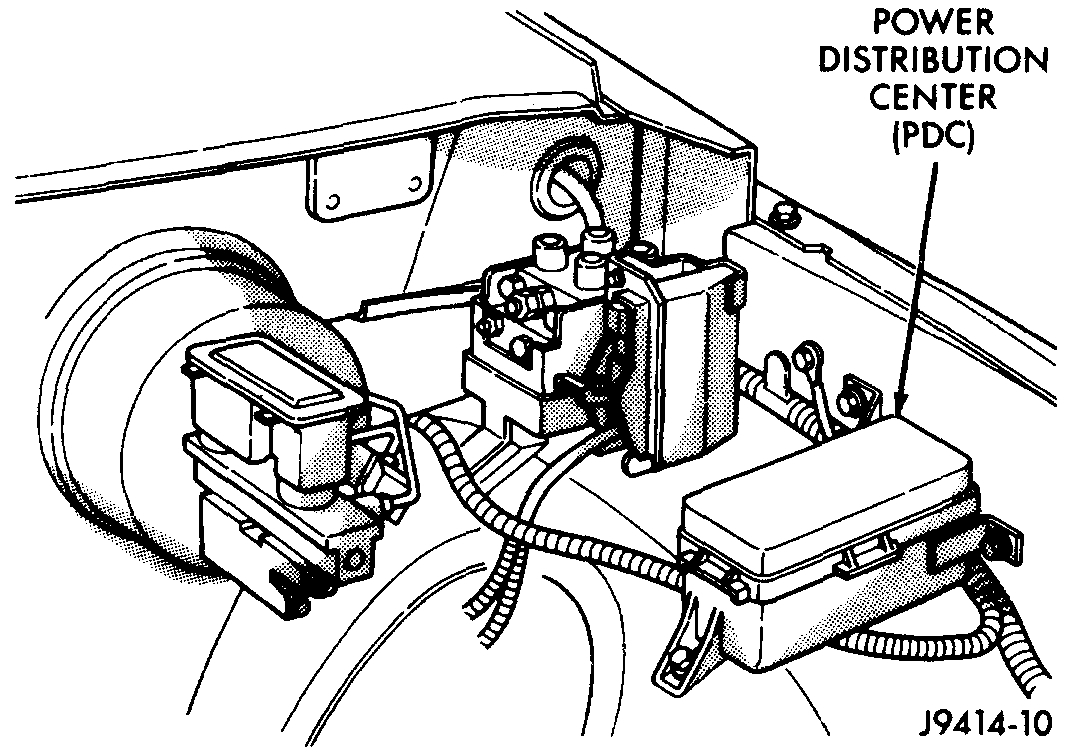
Did you check fuel pressure when it won't start? Does it lose spark when it won't start? Have you tried switching the ASD relay with a different one when it won't start? It is located in the under hood power distribution box. See pic below.

Joe
Mar 30, 2021 at 5:49 PM
Avatar
96DODGERAM
  • MEMBER
  • 63 POSTS
I'm not sure about the spark but the fuel pressure stays the same around 50. I have changed ASD relay. As long as I fight with it to start it at first and then let it sit for 20 minutes it turns on and good after that I made the joke to my buddy earlier.. She just doesn't like to be woke up so after I wake her up I got to let sit and get ready before we take off, lol.
Mar 30, 2021 at 5:53 PM
Avatar
JACOBANDNICKOLAS
  • CERTIFIED EXPERT
  • 110,175 POSTS
LOL Honestly, check for spark when this happens. It could be something simple. Here is a link that you may find helpful:

https://www.2carpros.com/articles/how-to-test-an-ignition-system

Let me know what you find. Either spark or fuel is being lost when it won't start. We just need to determine which. If you don't want to check for spark, see if it will start if you use starting fluid. If it does, then the problem is fuel-related. If it doesn't, then it is likely ignition-related.

Let me know what you find.

Take care,
Joe
Mar 30, 2021 at 6:00 PM
Avatar
96DODGERAM
  • MEMBER
  • 63 POSTS
I'll try that, but my little trick only works sometimes I guess. I got stuck at Walmart today but I just seen your message.
Apr 1, 2021 at 3:25 PM
Avatar
JACOBANDNICKOLAS
  • CERTIFIED EXPERT
  • 110,175 POSTS
Hi,

Not a problem. Try it when you can and let me know what you find.

Joe
Apr 1, 2021 at 6:39 PM
Avatar
96DODGERAM
  • MEMBER
  • 63 POSTS
Here's my update: I made an appointment a while back to take to the shop before I took it I changed the upstream O2 sensor that was stripped and cut off. Man that was a tough job. But after I changed it my truck was still shutting off and was really hard to start so I took it to the shop and they had for a week and could not get it to shut off the whole time they had it they ended up not charging me full price since they couldn't get it to mess up lol I told them that's just my luck so I went and picked it up and it hasn't shut off since, lol. I think I fixed it when I put the O2 sensor but I have not had any problems since.
Apr 29, 2021 at 7:34 PM
Avatar
JACOBANDNICKOLAS
  • CERTIFIED EXPERT
  • 110,175 POSTS
Hi,

That is very possible. It may have taken some time to clean itself out from the bad sensor. Regardless, I'm glad to hear it's running good for you. Let me know if it changes or if you have other questions.

Take care of yourself.

Joe
Apr 29, 2021 at 9:09 PM
Avatar
96DODGERAM
  • MEMBER
  • 63 POSTS
Thank you for your help.
Apr 29, 2021 at 9:11 PM