84 CJ7 258, now-- no click at solenoid, no crank. (Was hard start, and engne cut out when warm)

1984 JEEP CJ7
50,000 MILES
Avatar
AKMILSURP
  • MEMBER
  • 16 POSTS
Greetings from Alaska,

Having a bear of a problem with my 1984 CJ7 Laredo. This is a MUCH modified CJ. 1979 258 block, .030 over, 4.0 HO head, Crane 260H cam, Clifford Headers, Fisher harmonic dampner, 258 manifold modified by Clifford modified to fit 4.0 head, Howell "California" TBI conversion, Jacobs "Prostreet" ignition Triggered by a Ford TFI coil, and Jeep OEM Ford Duraspark ECM, (since I use a GM ECM for the TBI, I don't use the Stock EECU. Ignition is wired direct instead of going through EECU) As much of a mechanics nightmare this may seem, it's been running like a top for about ten years with this configuration.

I had been experiencing hard start issues, and/or sudden cut out of the engine after driving enough to warm it up. THen I had to wait about an hour, and it would start? go figure. I started throwing parts at it, when I should have been troubleshooting via wire diagram and a Multimeter. My TBI is essentially a Chevy 1990 4.3 V6 TBI set up without ignition control. It uses the following sensors: MAP, CTS, TPS, Heated O2. Also a fuel pump relay, and I use an in-line external fuel pump (Airtex E-2000), with a standard 500 CFM 4.3 TBI unit with adjustable fuel pressure regulator. "Alterstart" 180 amp alternator, and "Alterstar"t gear reduction starter.

Basically , it was losing reference pulse intermittently, causing it to either not start--OR die on me at the most inopportune time. Sooooo following advice from a few well meaning individuals---GRRRRR - I started Replacing sensors and electrical parts in this order:

1. Duraspark module-- seemed to fix for a bit... then back to it's old tricks
2. Fuel Pump relay- ditto
3. Fuel Pump- ditto
4. Distributor Assy.- ditto
5. TPS- Ditto
6. GM ECM (For TBI 1227747)- ditto
7. MAP- AND- Ignition Switch-- Ditto
8. Howell "Tach filter" (provides square wave for GM ECM to generate reference pulse, this had to be removed from the wiring harness, and a new one soldered in at the connections.)-
At this point it ran well for about an hour, then died about 6 miles from the house. I waited an hour... then it started right up.
I finally got it home, and..... continued troubleshooting

9. Reference pulse wire to ECM- I thought the connections might be bad, so I removed the crimp connectors and soldered all the junctions and re- taped them.

10. Starter Solenoid- While I was at it I swapped in a new starter solenoid for good measure.

11. TFI Coil- -- why not, they're cheap....

After I did the last three items, the jeep fired right up, but would not keep running, I had to keep blipping the throttle to keep it going. I said hell with it and called it a night.

SO..... the next day I figured Maybe it's not getting enough voltage to the coil. VIOLA- sure enough it was only getting 2.8 volts with the ignition in the "Run" position!!!!. I removed the tape from the wiring harness to find the end of the Resistance wire to the coil. I pulled off the bullet connect...2.8 VOLTS???? Followed resistance wire to it's tie in point near the fuze box. I removed it. It ohms correctly, but I can get Full battery voltage at it's tie in point!!

OK then.... Resistance wire is BAD...... Since a Ford TFI EEC COil runs full bat power, and the Duraspark ECM does as well, I made a 10 guage jumper wire and ran it in place of the resistor wire to give the TFI coil full Batt power.

I figured this will solve the weird issues...

I hook everthing up---- and....... now the engine won't crank. Battery power is good. I can't even hear the solenoid CLick???!!! All fuzes good... I need to have someone put the ignition switch in the start position so I can check voltage to the light blue wire on the solenoid. I should get voltage there IF the ignition is in start position. I even swapped in another spare solenoid... No Dice.

I didn't touch any of the starter power wires when I was fixing splices.....

Generally I'm pretty good at mechanical/electrical issues- this one has me stumped though!

I think if I get it to crank, the ignition reference pulse and coil power issues will be fixed.... I hope.. any ideas on the "No CLick" No crank issues? Or anything else ?


May 2, 2013 at 8:17 PM
Advertisement
Avatar
CARADIODOC
  • CERTIFIED EXPERT
  • 34,306 POSTS
I'll try to help if I can. You should have a Ford starter solenoid, Ford starter, and a Chrysler automatic transmission. The neutral safety switch will be at the left rear of the transmission, right above the pan. In the circuit it is in the ground side of the coil of wire in the solenoid.

There's two versions of that solenoid. One is for what you have. The two ends of the coil are connected to the two small studs. The other version has one end of the coil still connected to the left smaller stud next to the large battery stud, but the other end is attached to the mounting bracket. The second smaller stud gets 12 volts switched onto it during cranking to bypass that ignition resistor.

Step one is to check for voltage to the ignition switch wire that you said is blue. I found a diagram on the internet but I can't make out the wire color. I also have an '84 Mitchell Manual but the closest thing they have is an Eagle. That shows the light blue wire going to ground through the neutral safety switch, and a dark green coming from the ignition switch. That's the one that should have 12 volts during cranking.

Regardless, one of the two smaller wires has to get 12 volts with the ignition switch in the "crank" position. Look for that on both wires. If you find it, use your ohm meter to measure the other small wire to ground. It should be very low in "park" or "neutral".
May 2, 2013 at 9:30 PM
Avatar
AKMILSURP
  • MEMBER
  • 16 POSTS
Yes-- Ford style solenoid is what the Jeep uses. THe starter is an aftermarket gear reduction unit for faster crank, is MUCH lighter, etc., but.. still operates under the same principles as the Ford starter would. Gotta have Juice to Crank!!

I think I'll just jumper the pole under the starter (that goes to the neutral Start Switch) to ground. In effect, the NSS just provides a ground to the relay. If it starts, that should tell me if the NSS is defective. I'm doing a transmission swap upgrade to an GM 7004R (with adapters of course) soon. If it is indeed the switch, I can live without replacing the switch and having it jumpered to ground until I do that.

THe Chiltons manual for Jeep CJ's have excellent wiring schematics that show the wire code colors.

I'll let you know what happens!
May 3, 2013 at 10:51 AM
Advertisement
Avatar
CJ MEDEVAC
  • CERTIFIED EXPERT
  • 11,004 POSTS


OUR SITE IS BEING "REMODELLED" .......PICS AND DIAGRAMS AIN'T SHOWING UP...EVEN ON SOME OF THE OLDER POSTS

I'M GONNA GIVE YOU A COUPLE OF LINKS THAT MAY HELP YOU.......I'D LIKE TO SEND SOME RECENT PICS.....IT JUST AIN'T WORKIN'!

THIS MAY BE "OLD NEWS"......LOOK IT OVER ANYWAY!

https://www.2carpros.com/questions/1996-chevrolet-tahoe-wont-start-sounds-dead-battery-jumpbox-get-same-reults


THIS ONE MIGHT EXPLAIN "MY WAY" OF HOOKING UP THE SOLENOID. LOOK OVER HOW ITS ALL CONNECTED.....AND THE EXPLANATIONS

https://www.2carpros.com/questions/1985-jeep-cj7-1985-jeep-cj7-no-spark


SEE MY 1ST DIAGRAM ON PAGE 3

https://www.2carpros.com/questions/1979-jeep-cj7-79-that-started-ran-prior-problem-now-wont-start-get-spark-out/page/3

I'VE GOT QUITE A FEW PICS OF THE IGNITION SWITCH---TORN DOWN---AND MODS I MADE FOR MINE....JUST CANNOT POST 'EM AT THE PRESENT TIME

LEMME KNOW IF ANY OF THIS HELPS OR IF YOU NEED ME TO KEEP TRYING LINKS OF STUFF I'VE ANSWERED IN THE PAST

GONNA TRY A PIC BELOW, TO SEE IF IT'S WORKING YET!

THE MEDIC

May 3, 2013 at 12:49 PM
Avatar
AKMILSURP
  • MEMBER
  • 16 POSTS
SUCCESS! Frustration got the better of me. Sometimes you just need someone else looking at it externally. I kept thinking "Naw, that couldn't be it". Grins....

I jumpered the Neutral start Switch terminal on the bottom of the Starter solenoid direct to ground. She started right up. So Ignition switch, solenoid, and starter are good. (From original post, the solenoid and ignition switch were new).

Replacing the malfunctioning resistance wire,(that normally powers the coil in the run position) to the TFI coil (which by design can run full battery power, where the stock coil can't) with a 10 gauge jumper solved the previous "start, but no run" issue. Went from 2.8 VDC at coil in run position to 12+ VDC!

SOOOO.... the hard start and cut out while running (and warm) issues appear to be fixed at this point; an extended test drive will tell. (I'm pretty sure I got it though)!

Look at the bright side, I have lots of new electronics and sensors now. (And now, a full set of spares) Think of it as an UBER tune up...LOL
May 3, 2013 at 1:21 PM
Avatar
CJ MEDEVAC
  • CERTIFIED EXPERT
  • 11,004 POSTS


ALONG WITH A "GET BY" SET OF TOOLS

....AND "NORMAL SPARE PARTS".......I CARRY THESE FOR SPARES TOO...FUEL PUMP..IGN MODULE...COIL

------STUFF THAT HAS LEFT ME STRANDED BEFORE


I RECKON "I" TERMINAL GETS YOU BOOSTED AT START UP-------RESISTANCE (WIRE OR BALLAST) HAS YOU RUNNING IN THE IN THE "ON POSITION"....AS PER MY DIAGRAM????

THE MEDIC
May 3, 2013 at 3:49 PM
Avatar
CJ MEDEVAC
  • CERTIFIED EXPERT
  • 11,004 POSTS
WHOLE TOP OF PREVIOUS RESPONSE IS MISSING....AIN'T GOT TIME TO RE-WRITE IT NOW....CHOW TIME, SHE'S LEAVING ME BEHIND!!!!

THE MEDIC
May 3, 2013 at 3:51 PM
Avatar
AKMILSURP
  • MEMBER
  • 16 POSTS
Exactly , CJ! That's why it ran like crap after initial start up two days ago after I cleaned up and soldered the connections for reference pulse to the ECM.

THe resistor wire was bad, so on initial start up it got full power to coil from the solenoid, after the ignition switch returned to "Run" position the coil was only getting 2.8 volts.. No wonder it wouldn't run! lol Now it gets full batt voltage to the TFI coil which can easily handle it.

And now that the "won't crank" is fixed... we're on the road again!

BTW I've owned this CJ for over 20 years, and do most of my own work and mods...... and it has A LOT lol


THanks again for your help!


May 3, 2013 at 6:25 PM
Avatar
CJ MEDEVAC
  • CERTIFIED EXPERT
  • 11,004 POSTS

DO A GOOGLE SEARCH

2CARPROS CJ MEDEVAC

THEN HIT "IMAGES"......SOME OF MY MODS CAN BE SEEN IN THE OLD POSTS I'VE ANSWERED

RETURN TO THIS POST IF YOU WANT TO INSURE YOU GET A HOLD OF ME, KEEP ASKIN' ----I'VE ALWAYS HAD A CJ !..........SO FAR 7.......THE LAST 2 SINCE 1991

POST A PIC OR 2 OF YOURS

THE MEDIC
May 3, 2013 at 7:01 PM
Avatar
AKMILSURP
  • MEMBER
  • 16 POSTS
Glad to post a pic!
May 3, 2013 at 7:59 PM
Avatar
CJ MEDEVAC
  • CERTIFIED EXPERT
  • 11,004 POSTS


NICE JEEP!

COME BACK TO SEE US SOMETIME!

THE MEDIC
May 4, 2013 at 7:53 PM
Avatar
AKMILSURP
  • MEMBER
  • 16 POSTS
Well then.... finally took it for a test drive..... So.. It cranked right up and ran great. I got about 3 miles from the house, and noticed the Oil pressure gauge was not working.... set brake, put in park, and jumped out with it still running, lifted the hood and found the wire to the oil pressure sender unit had come uncrimped.. So got out my Leatherman , recrimped. VIOA! the gauge is working again. Excellent oil pressure. I was about the shut the hood, and @*%$!!!! the jeep engine cut off.

Tried to restart... cranks, fuel pump relay kicks in, fuel good to TBI. No gas spraying from injectors on TBI....

Let it cool down 2 hours.. still no start same issue. I'd say no reference pulse to GM ECM for TBI system..... ARGGGGGG FREAKIN' MADDENING!

Towed the @*&$%!! CJ back home, of course not enough manpower to push it up driveway and into the garage. THank god for winches.. WInched it up the driveway to the garage door, then into the garage.... (an old Scissors jack jammed into the iron pipe floor drain makes a good anchor point! lol)

Soo there has god to be a relay or other wiring issue, perhaps chafed wire, that ONLY acts up when warm......

My wiring harnesses are all taped and zip tied secure, so this is gonna be a bear......
May 6, 2013 at 12:19 PM
Avatar
CJ MEDEVAC
  • CERTIFIED EXPERT
  • 11,004 POSTS


caradiodoc.........THIS NEW COMPUTERIZED STUFF IS UP YOUR ALLEY!

IT'D BE NICE IF IT WAS A "NO SPARK" SITUATION AND THE IGNITION MODULE GOING BAD WHEN IT GOT HOT......I COULD TALK YOU ALL THRU THAT

I EVEN HAVE PICS OF HOW TO BYPASS THE IGNITION STUFF------HOWEVER, I DON'T THINK THAT WOULD POWER UP YOUR INJECTORS

IF YOUR WIRING HAS NOT BEEN TIED UP AND HAS BEEN BOUNCING AROUND FOREVER.....MAYBE SOME JIGGLING/ TUGGING/ PULLING ON THE WIRES AS THEY ENTER YOUR "APPLIANCES" (ANY AND ALL).........WHILE YOUR BUDDY ATTEMPTS TO CRANK IT UP........EVEN A "JOLT OF BUSTING OFF" MIGHT GIVE YOU A HINT THAT YOU ARE PLAYING IN THE RIGHT AREA!

caradiodoc MIGHT GIVE YOU BETTER INFO ON WHAT TO TEST 1ST, WHICH DIRECTION TO FOLLOW AS YOU GO............PROVIDE HIM WITH ACCURATE TEST INFO, SO HE CAN LEAD YOU THRU THE PROCESS

.............HE WAS/ IS AN AUTO MECHANICS TEACHER, REALLY KNOWS HIS STUFF TOO!

I'M STILL IN THE CARB AGES

I'M WATCHING Y'ALL

SOME GOOD UNDER-HOOD PICS MIGHT AID US TOO

THE MEDIC
May 6, 2013 at 4:24 PM
Avatar
CJ MEDEVAC
  • CERTIFIED EXPERT
  • 11,004 POSTS
1ST HALF OF LAST ANSWER..............IN BERMUDA TRIANGLE NOW

THE MEDIC
May 6, 2013 at 4:25 PM
Avatar
AKMILSURP
  • MEMBER
  • 16 POSTS
I'm a fanatic for taped and secured wiring-- learned from my 26 year USAF career.. so literally nothing is loose or moving around in the engine bay or anywhere else in the Jeep.....

I think the 10 gauge wire I sliced in to replace the bad resistance wire, cooked the DuraSpark Ignition module. Some posts I've seen suggest the Duraspark Module is only designed to handle 9 volts back from the coil in stead of 12. Others say don't worry about it if you use a TFI coil or similar aftermarket E-coil. I think more than 9 VDC cooked my module. it lasted about 15 minutes LOL, and the TFI coil got so hot you couldn't touch it.

Some folks say it works , others say the module with last 10 minutes to a couple months then goes PFFFFT.

THe resister wire is #ICR 22 From Napa they said it costs $24. You have to ask specifically for it as their books don't show it as a Jeep application. I bought an old style ballast resister, but it didn't provide enough resistance. YOu need 1.35 ohms, the ballast resistor was 1.2 ohms, so I didn't install it. THe last time I replaced one was in January 2001. (Same Jeep-- Similar issues) I had forgotten about it.

So the new #ICR 22 resistance wire should be in tomorrow, and I'll pick up another Ignition module (under warranty lol) at the same time

I keep records on the CJ like you would for an AIrcraft. (I did learn some thing useful from my USAF Days)!
May 6, 2013 at 5:00 PM
Avatar
CJ MEDEVAC
  • CERTIFIED EXPERT
  • 11,004 POSTS


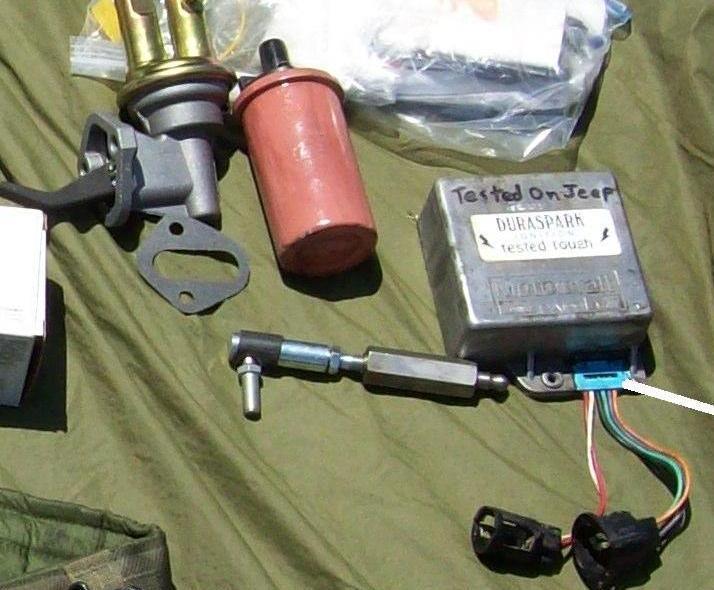
SO YOU 'ARE' USING ONE OF THESE?....1ST PIC

SEE MY "MAY 5TH" ANSWER IN THIS POST.....NEAR THE BOTTOM OF THE ANSWER, REGARDING THE MODULE

https://www.2carpros.com/questions/1977-jeep-wagoneer-77-360-begun-dying-random-only-happens-on-longer-drives-say

WE WOULD GET ALONG REALLY WELL FLY-BOY!......SEE MY ANSWER IN THIS ONE

https://www.2carpros.com/questions/2008-hyundai-tuscon-life-time-brake-pad-warrantees-good-value

PAP RETIRED USAF IN '74.......THIS WAS THE OPEN COCKPIT OF THE NEWEST AF BIRD IN THE HANGER, LATER HE BOARDED AND TOOK TO SEE THE GREAT WING COMMANDER IN DEC 2010.......2ND PIC

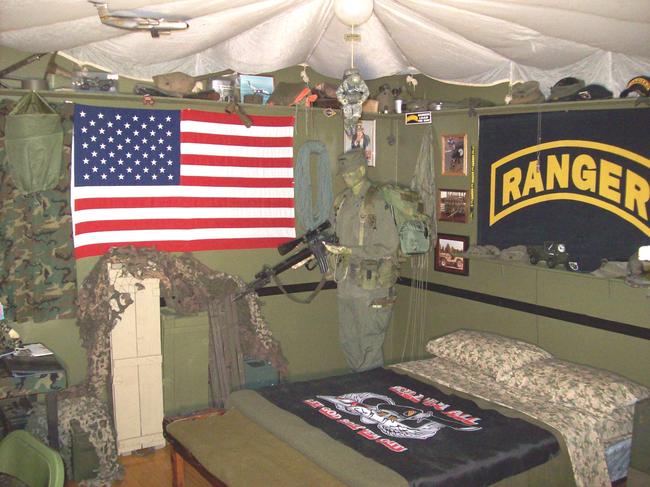
WHEN I GOT IN THE ARMY, THEY TOLD US THAT "LANDING" WAS THE MOST DANGEROUS THING TO DO IN AN AIRPLANE .......SO I BECAME AN AIRBORNE RANGER AND I GOT THE HECK OUT OF 'EM (WHEN I COULD) BEFORE THEY LANDED!.....3RD PIC IS A GLIMPSE OF MY MAN CAVE

THE MEDIC
May 6, 2013 at 6:07 PM
Avatar
CJ MEDEVAC
  • CERTIFIED EXPERT
  • 11,004 POSTS

PIC 3.....FRONT AND CENTER!
May 6, 2013 at 6:10 PM
Avatar
CARADIODOC
  • CERTIFIED EXPERT
  • 34,306 POSTS
The difference between 1.2 ohms and 1.35 ohms is insignificant. Most resistors, if not specified otherwise, have a 10 percent tolerance. The point is there is something there to limit current to a safe value.

That voltage you're measuring can be misleading too. The current is going to be pulsing and so will the voltage dropped across the resistor. Digital voltmeters take a reading, think about it a while, then display it while they take another reading. The actual voltage might vary from 14.0 volts to 8.0 volts, as an example, and the display on the meter will bounce around. You need an old-style meter with a pointer to give an accurate average reading. There could also be a capacitor in the module or in the circuit to smooth out those voltage pulses. That would help a digital meter read the average voltage better, but I still wouldn't put a lot of faith in it.

I never paid much attention to the resistor values in the past. I just checked them for continuity. I DO know the older Chryslers used 1.2 ohms to limit current flow through the breaker points to less than an amp. That was enough to create a nice strong spark. The later electronic systems also used 1.2 ohms for one of the two resistors. GM used that resistor wire which did the same thing, but I never ran into a bad one or measured one to know what normal is.

The goal is to get as much current flow as possible through the ignition coil to build a really strong magnetic field, but that current has to be switched on and off by the module. If there was no resistor in series, the only thing limiting current to a safe value would be the coil's resistance, and that's not much.

It's a pain to go back and reread some of the earlier replies when I have to switch between "page 1" and "page 2", so just let me ask instead, did you measure the old resistor wire, and if so, what did it read? I found a Ford diagram from 1980 with the TFI module. That used a 1.1 ohm resistance wire, so you should be safe with a regular 1.2 ohm resistor. We know from that diagram that it will work properly with that value and give enough spark voltage, but I can't tell if they bypass it during cranking to make up the lower battery voltage.
May 6, 2013 at 8:10 PM
Avatar
AKMILSURP
  • MEMBER
  • 16 POSTS
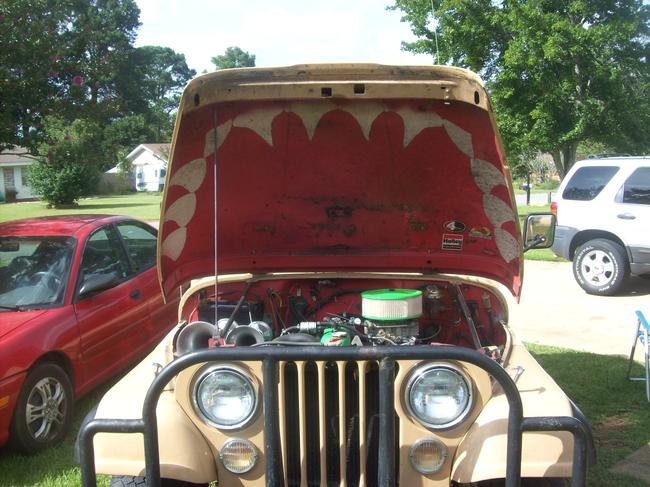
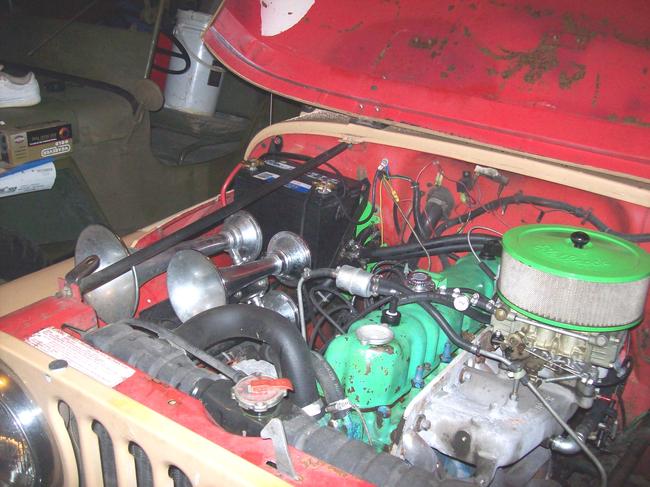
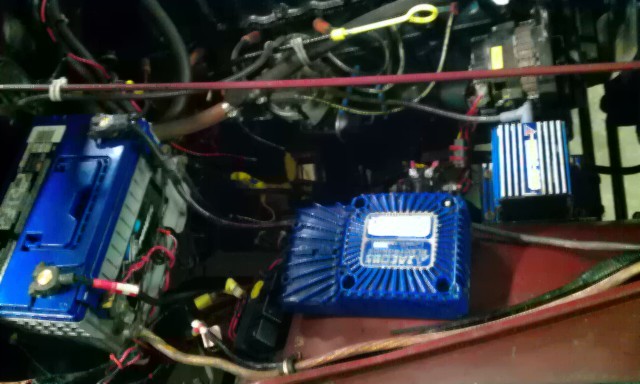
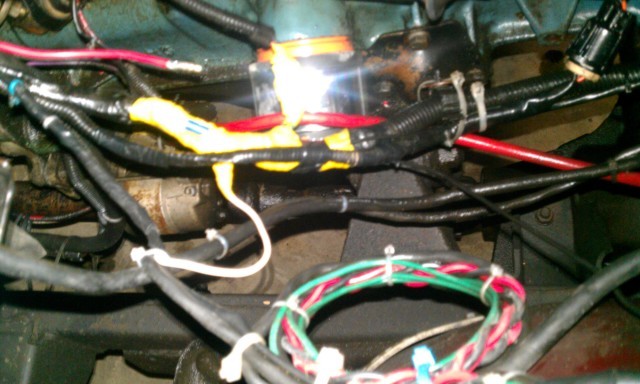
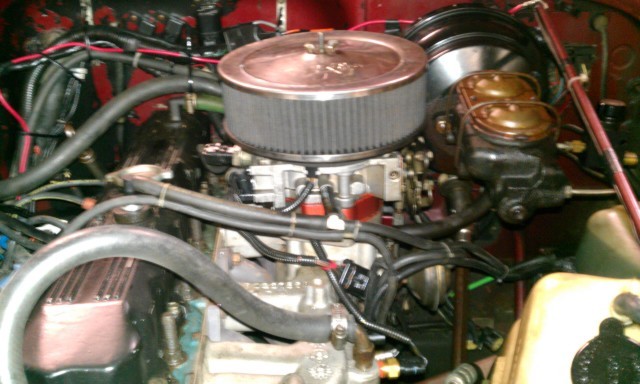
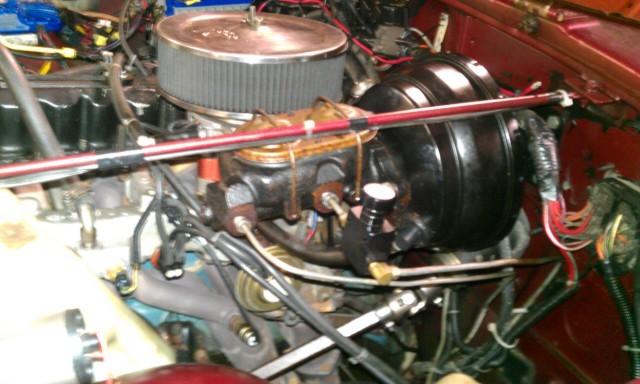
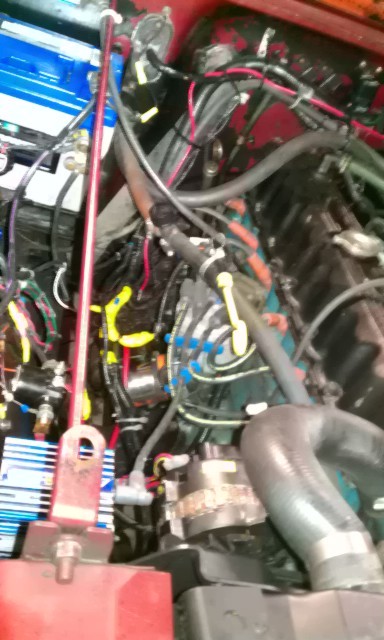
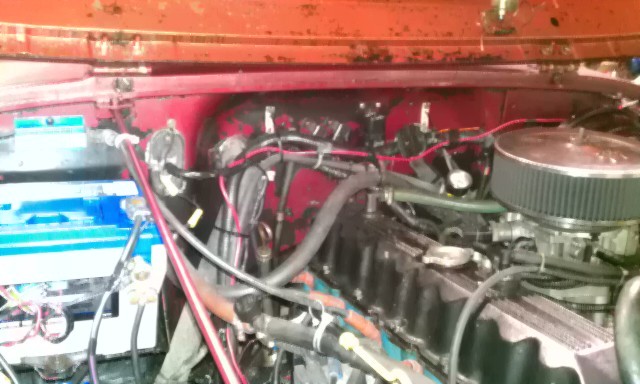
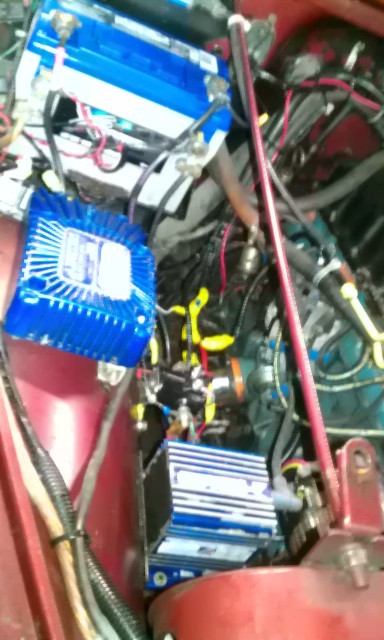
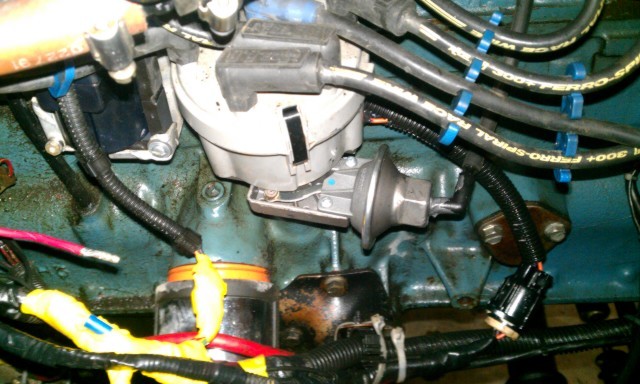
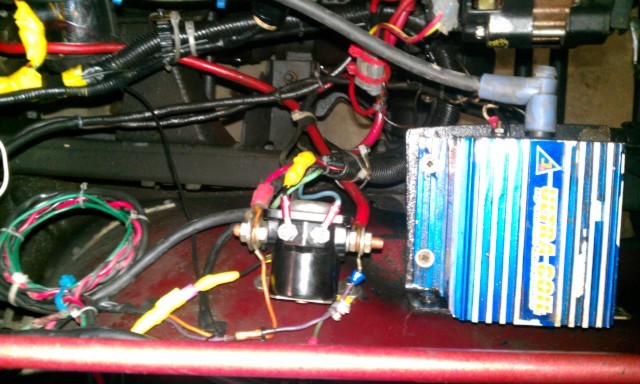
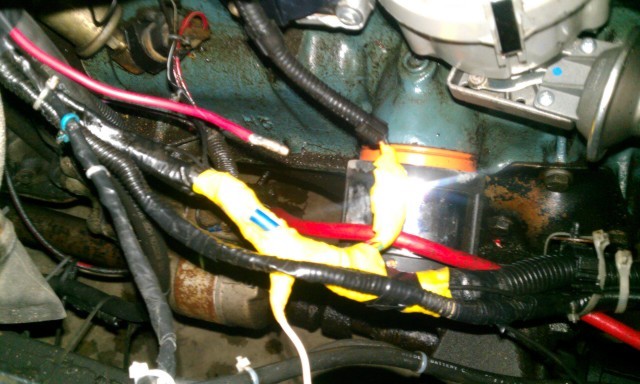
OK-- Pics of my Jeep's engine bay...., Needless to say, this ain't your average CJ7.....


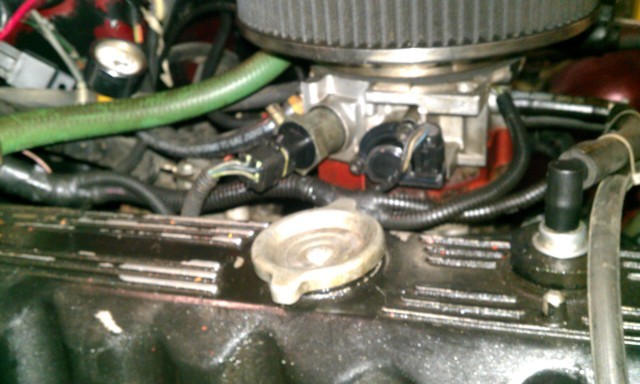
One pic shows the end of the 10 ga jumper wire I used to replace the resistance wire with... THe others show the battery, Jacobs pro-street, large cap conversion of Motorcraft distributor, TFI Coil, well taped and tied down wiring, the TBI unit, 4.0 head on '79 258 block, Headers, O2 sensor, and about 48 feet less vacuum hose than there was before I did the TBI conversion in 1998...... No pulse air valves.... other AMC/Jeep emission do dahm (Other than EGR and PCV)

I ordered the #ICR22 resistance wire replacement, and another Duraspark module... I think that should do it!

for good measure I'll the module tested first. (Assuming the store has a tester)
May 6, 2013 at 9:11 PM
Avatar
CJ MEDEVAC
  • CERTIFIED EXPERT
  • 11,004 POSTS


NICE PICs!!!!

.................NOW I GOTTA QUESTION........WHERE'D YOU GET THE VALVE COVER?

LET US KNOW HOW IT'S GOING

THE MEDIC
May 7, 2013 at 1:16 PM
Avatar
AKMILSURP
  • MEMBER
  • 16 POSTS
Yes I did, at first it measured 1.2 ohms, and when ignition is at the "run " position, I only got 2.8 volts to the coil! THe jumper wire gave me 12.48 VDC.. Ran great until I think it fried the Durapark module. Got a new module, and the replacement Napa #ICR 22 resistance wire. Hopefully once I swap them in, it will fix the issue. I don't think it cooked the TFI coil, but if it did I have a spare TFI coil & new Accell super coil I can use. Both a "ecoil" type

Oddly enough the resistance wire measured 1.8 owns the next day when I rechecked it. It definitely has issues. I replaced it about 10 years ago for a similar issue , if memory serves.


"It's a pain to go back and reread some of the earlier replies when I have to switch between "page 1" and "page 2", so just let me ask instead, did you measure the old resistor wire, and if so, what did it read? I found a Ford diagram from 1980 with the TFI module. That used a 1.1 ohm resistance wire, so you should be safe with a regular 1.2 ohm resistor. We know from that diagram that it will work properly with that value and give enough spark voltage, but I can't tell if they bypass it during cranking to make up the lower battery voltage".

THe Head is from a Jeep 4.0 HO, I believe that's the stock aluminum valve coever for a 1994 Jeep 4.0 head. I just painted it black and found a grommet to run the PCV out of ,,,,,,
May 7, 2013 at 2:26 PM
Avatar
CARADIODOC
  • CERTIFIED EXPERT
  • 34,306 POSTS
When are you finding that 2.8 volts, with the engine running or with it off and the ignition switch on?

I'm trying to picture the wiring diagram and everything I've seen before has battery voltage, (lets say 14.0 volts) applied to the resistor, then current flows through it to the coil primary where the voltage will be lower, through the coil where we would like it to be real low, then through the module which takes the place of the breaker points. It's a switch.

If you're measuring that 2.8 volts right after the resistor where it connects to the coil, that may be fine. 2.8 volts across the coil doesn't sound like much, and not enough to build a nice magnetic field, but that isn't done with voltage. It's done with current. Doing the math, if you have 14.0 volts on one side of the resistor and 2.8 volts on the other, that's a drop of 11.2 volts. Using Ohm's Law, current equals voltage divided by resistance. 11.2 volts divided by 1.1 ohms equals 10.18 amps. That's a pile. Knowing the current we could also calculate the resistance of the coil and module but that is irrelevant. If that was a breaker point system the contacts would be red hot.

If you're measuring that 2.8 volts on the control side of the coil that connects to the module, not where the resistor is connected, we'd have to include the coil's resistance which is typically about 1 ohm or a little less. Lets say the resistor and coil together totaled 2.0 ohms. Current would be 11.2 volts divided by 2 ohms equals 5.6 amps. That's still a real lot but not quite as dramatic as before.

Next, you have to remember that if that 2.8 volts was measured with the engine running, the module turns the current flow off when it wants a spark to occur. That 0.0 amps gives the resistor, coil and module time to cool down until the module turns back on to build the magnetic field for the next spark. If that 2.8 volts was with the engine not running, the module is keeping the current flowing and it's waiting for a signal to turn the current off and make a spark. I could see 2.8 volts at the module but the 5 amps is a lot to expect from that sad little switching transistor in it. Current makes heat and transistors hate heat.

I wish I had the exact diagram to look at. Without one is like trying to drive cross-country with no road map.
May 7, 2013 at 7:59 PM
Avatar
AKMILSURP
  • MEMBER
  • 16 POSTS
THe 2,8 VDC was at the end of the resistance wire with power coming from the ignition switch.

OK... THink I got it fixed..... I think the straight 10GA wire to the Replacement TFI coil fried it, AND the new ignition module!! I had the "New" Module tested and it failed.

Also when it died last time, the coil was so hot you could fry an egg on it. SOOOO... Here's what I found out

I installed the NAPA #ICR 22 Resistance wire, swapped in a NEW, TESTED, Duraspark 2 blue grommet module, using the installed "New" TFI coil. Crank... no start. No reference pulse to TBI.

I have two brand new Accell SUper coils that use ford style TFI plug. I un hooked the TFI coil was hooked up the Accell super coil (E-coil TYpe). FIred right up and ran like a top.

So as above, I'd have to say RUN THE RESISTANCE WIRE BY ALL MEANS!! Running without --fried my NEW TFI coil and NEW Duraspark module within 15 Minutes!!!

From the pics, my engine bay on the passenger side is pretty jam packed. It was a bear to find a suitable space to mount that Accell Super E-coil. It's BIG and has ample cooling fins. It didn't even get WARM with the engine running!

I mounted it on the inside of the passenger side fender next to the Jacobs Prostreet, and above the Jacobs Ultra COil.

Now then.... time for a test drive to see how she runs....
May 8, 2013 at 12:54 PM
Avatar
AKMILSURP
  • MEMBER
  • 16 POSTS
TWO MONGO COILS... LOL BUT, I like the Jacobs prostreet, and it needs a secondary trigger off the Primary ignition system to trigger it. So be it! If the Jacobs craps out I can run the primary ignition system on it's own... all it have to due is decrease the gap to .045 (Jacobs run a wide gap .054-55 to work properly.

Seems like overkill, but it really works well....winks
May 8, 2013 at 1:13 PM
Avatar
CARADIODOC
  • CERTIFIED EXPERT
  • 34,306 POSTS
I have my fingers crossed. Do you still have the same 2.8 volts with the engine running?
May 8, 2013 at 10:20 PM
Avatar
AKMILSURP
  • MEMBER
  • 16 POSTS
Welll--- THought I had it all fixed with the New Coil , resistance wire, and Ignition module. Started right up, so I let it idle for 20 minutes, THEN drove about six miles with it and all seemed great.

Soooo.. the next day, I take it into town (8 miles), hit the bank to make a deposit, and as I'm coiming out of the parking lot... the engine cuts out. AIEEEEEEE!

Got spark definitely! TBI unit not spraying any fuel. Pump is good, everything now is NEW,,,, GRRRRR to me it points to loss of reference pulse.

So, since it died right across the street from Autozone...lol, I puled the ignition module and had them test it. the module is fine CRAP... so by now the jeep is cold again. Reinstalled the Module.... cranks once, twice... no fuel, cranked a third time... the TBI starts spraying fuel and she starts up. Needless to say, I drive straight home!

I pulled into the drive way and shut it down. I immediately tried to restart, and OF COURSE, start.

SInce the Jacobs pro-street ignition triggers off the primary ignition system, I temporarily swapped the coil wire back to the primary ignition... still no start.

Hmmm then I recalled Years ago I'd had an issue with Jacobs "secondary trigger" going bad. I had a spare secondary trigger, sooooo I swapped it in. STILL no start.

OK Let jeep kool down fore three hours..... cranked it once...twice, no start... on the third try, it started up albeit slowly.

Let it warm up.. THe engine seemed to be fine... by then it was 10PM and I was done with it for the day....

My next step is to replace the Duraspark box with an External GM HEI ignition module and see what happens.


I have no freaking idea what's causing this...... everything ing has been replaced in the ignition and TBI system INCLUDING the ECM and ignition modules. the Wiring Shoots good..... ARGHHHHHH

May 11, 2013 at 3:35 PM
Avatar
AKMILSURP
  • MEMBER
  • 16 POSTS
GUYS...... I think I just figured it out!!!!!

Almost 20 years ago I had a no start/ cut out issue on this jeep. (Before the TBI was installed) Turned out to be a malfunctioning Factory Tachometer.

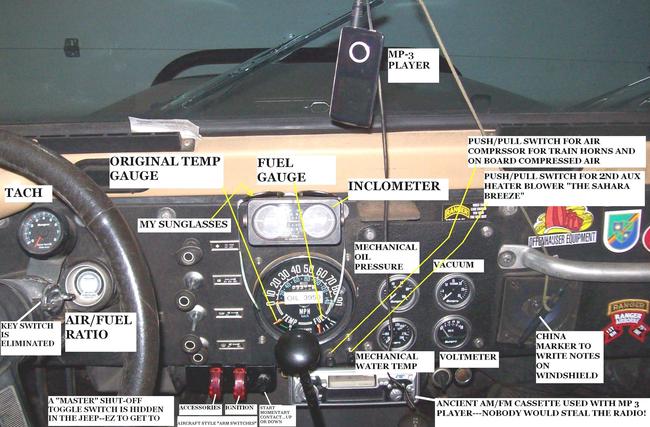
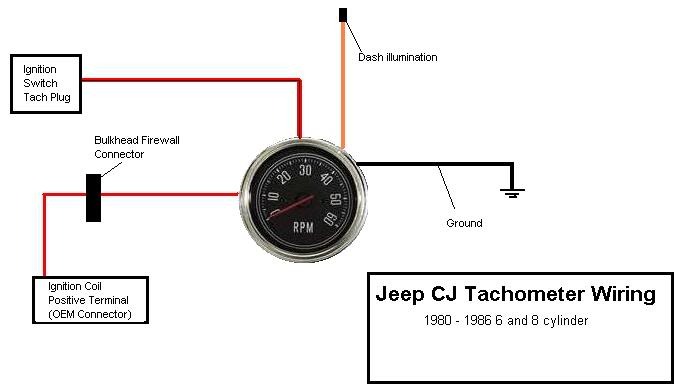
The Jeep factory tach works off the Positive side of the coil-- NOT the negative as most other aftermarket tachometers do. In fact, powers runs from the ignition switch THROUGH the tachometer and out to the coil. It's wired in series with the coil. If your factory tach starts going bad, it WILL cause a host of ignition issues.

Damn! I had forgotten all about this. you can bypass the tach by unplugging the red power wires that run TO and from it (and on to the coil and Ignition module) and then plugging the two together. A CJ without factory tach has these plugged together, instead of two and from the Tach.

I have noticed the tach has been somewhat erratic as far as the needle operation. seems to bounce around a bit.....

THis takes like 5 minutes to unhook and reconnect.

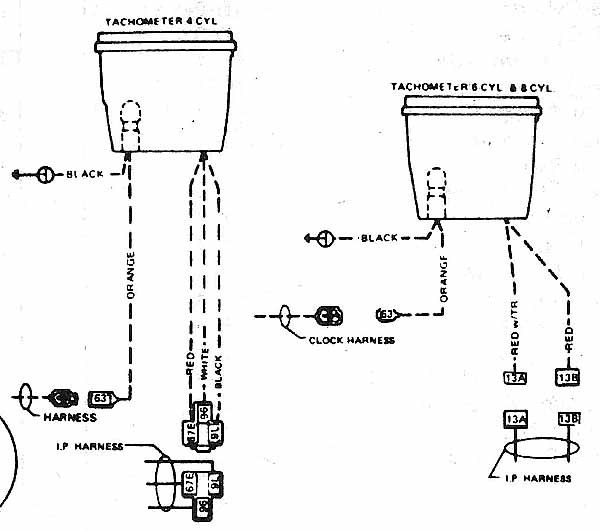
NONE of the factory manuals mention this.... (Tat the OEM tach is in fact wired in series)! Look at the diragrams and pics and you'll see it ....

I'll let you know shortly!
May 13, 2013 at 11:58 AM
Avatar
AKMILSURP
  • MEMBER
  • 16 POSTS
On an 80-86 CJ, the Factory tachometer is wired in SERIES from the ignition switch to the tach BEFORE the coil. IN fact if you disconnect the 13A and 13B connectors from the tach plugs , the Jeep won’t start-- NO power will go to the coil!

IF you connect 13A and 13B together to bypass the tach, the coil is powered and it starts right up.

So the Jeep factory tach is indeed triggered off the positive side of the coil, AND, is wired in series. If you have a bad tach, it can cause you all kinds of grief, and lead to madness! LOL

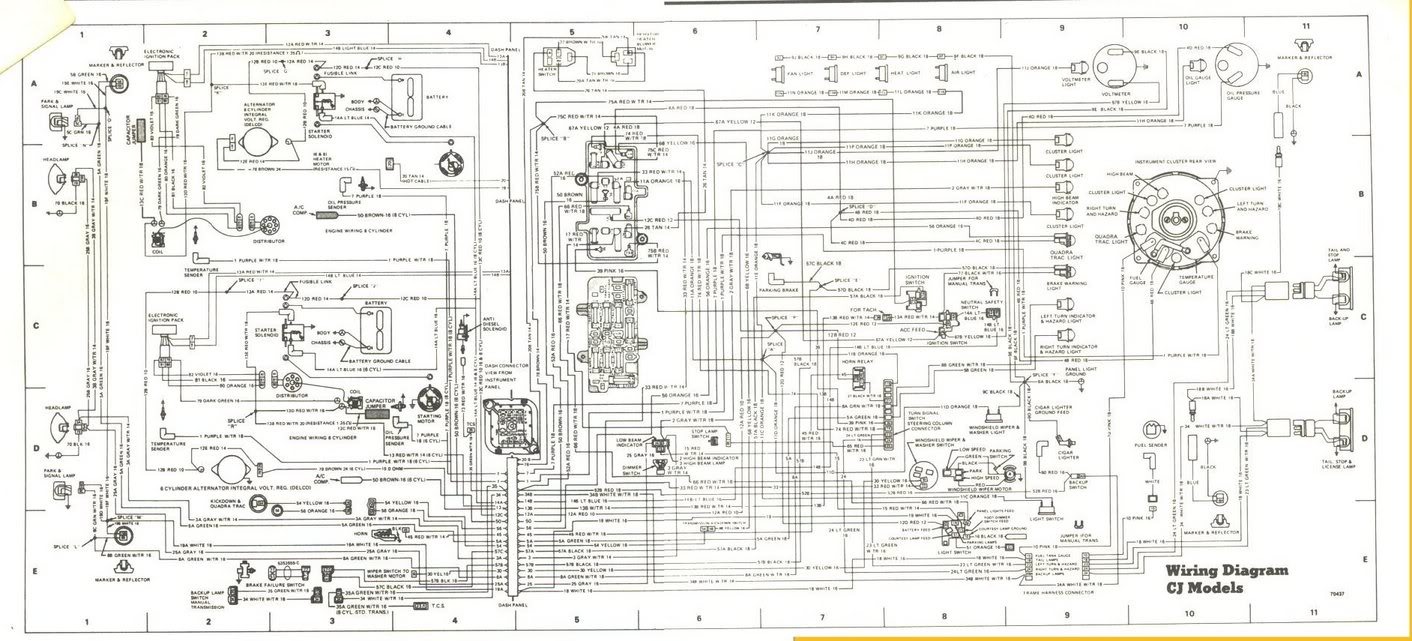
The factory Jeep Schematics do NOT show this, unless you look VERY closely. In fact, you may have to do as I did and look at Pre 1980 CJ diagrams. (much is common with the newer models) Shoot the wires, you’ll see I’m telling the God’s truth here.

If you look at the Early CJ “General wiring” and trace the red power wires coming out of the ignition switch you will see the SAME numbered connectors. IT says “to tach”, but doesn’t SHOW the tach.

Hope this helps someone else!
May 13, 2013 at 1:46 PM
Avatar
CJ MEDEVAC
  • CERTIFIED EXPERT
  • 11,004 POSTS

I'VE NEVER RUN INTO THAT ISSUE, I RECKON I SELDOM SEE A FACTORY TACH, AND NEVER ONE MESSED UP CAUSING THIS

......BUT I DID VERIFY THE SITUATION WITH A FACTORY MANUAL

OK HERE'S THE DEAL---MORRIS 4X4 HAS SQUARED US AWAY...........I HAVE THE PAPER ONE FOR A '79. JUST TO KEEP "ME" IN DEMAND, I USUALLY SHARE THIS INFO AS A GOING AWAY PRESENT TO ANOTHER JEEP GUY

https://www.2carpros.com/articles/mitchell1eautorepair-car-repair-manuals


I HOPE THIS MIGHT HELP YOU.....IT SURELY WILL AID ME

THE MEDIC
May 13, 2013 at 7:07 PM
Avatar
CARADIODOC
  • CERTIFIED EXPERT
  • 34,306 POSTS
I will be very happy if this solves the problem but I'm going to throw a clinker in the works. Actually, it's just to realign your thinking to avoid some confusion. Early '70s Fords also ran the tach in series with the ignition coil. You have that right but it is not triggered from the positive coil terminal. That is the logical assumption since one of the tach wires goes to it, but you will find steady battery voltage there, as it should be, not voltage pulses. The clinker is the tach is not triggering off voltage pulses like aftermarket add-on units do. It's triggering off voltage pulses that RESULT from the current pulses through that circuit. The ignition coil primary current flows through the primary side of a small transformer inside the tach. Its resistance is so low it acts like another ignition resistor so for all practical purposes it's not even there as far as the ignition coil and module are concerned. Still, when the module is turned on and current is flowing through the primary winding in that transformer, the current pulse generates a voltage pulse in the secondary winding just like in any transformer for a cordless phone charger and stuff like that. THAT'S the voltage pulses the tach triggers on. Since it is indeed wired in series with the ignition coil, it could just as easily be placed between the coil's negative terminal and the ignition module and it would work just as well.

There's two reasons to have the tach come first in the circuit. One is that the 12 volts coming from the ignition switch is already right in that same area so only one wire has to run through the firewall to the coil instead of two wires. Second, people who know how tachs work could be confused if they found it tied to the negative coil terminal. They would incorrectly assume the other tach wire was supposed to go to ground like the aftermarket units do. When they see it tied to the positive side that they know has steady battery voltage, they will figure out this is wired differently and works differently.

My cousin had a '73 Mustang, (currently owned by Jamie McMurray's pit crew chief), that had this problem. Being a tv repairman like me, he unwound that transformer and rewound it with new wire. That solved his intermittent no-start problems. After all these years I would be more inclined to suspect bad solder connections on the terminals of your transformer or corroded plug-in terminals.
May 14, 2013 at 1:35 AM
Avatar
AKMILSURP
  • MEMBER
  • 16 POSTS
THe tach was INDEED part of the issue. If it's in the ignition circuit, the tach needle starts bouncing in 300 RPM increments. When it does that you can hear the engine miss, eventually it will be enough to stall the engine.

When I remove it from the ignition circuit, the engine runs smooth.

Now then... after I figured this out... I let it idle for 20 minutes.. at which point the engine cut out as if I'd turned the ignition switch off.

Sooooo.... I ohmed the pick up in the Cardone reman distributor , and the readings were ALL OVER THE PLACE.

Some times 460 ohms, sometimes 850, sometimes 1250- 1400, once 2250, and several times infinite or open circuit!!!!!
I pulled the distributor to inspect. THe wiring to the pickup was fine. the pick up looked like the original OEM mpickup. It merely had a new harness spliced into it.

So.... got a NEW pickup and harness assembly. that checked great on the bench with a steady 460 ohm reading after numerous tests. Swapped it into the distributor, and reinstalled same. Engine fired right up after 3 revs-- good reference pulse to TBI, engine runs smooth. I Let it idle for 30 minutes, revving the engine from time to time. Smooth operation no bobbles.

So, this procedure found a host of issues-- NOT just one. Bad resistance wire, bad magnetic pick up (in a "new" reman distributo)r, and a bad factory tach. IN the process of elimination, everything Spark plug, Coil, sensor, module, relay, or ECM, has been replaced.

Good thing that it's relatively inexpensive to make that happen. I figure less than $500 into that..... not inconsequential, but a damn sight cheaper than a NEW Jeep would cost to do the same on! lol
May 17, 2013 at 10:58 AM
Avatar
AKMILSURP
  • MEMBER
  • 16 POSTS
Well then! This issue is finally resolved. Although other issues cropped up during the troubleshooting, the final culprit for cutting out randomly after the engine warmed up was......

A Fusible link!

It would lose conductivity intermittently when it warmed up, and when cold, acted as if it was a solid wire. Go figure! The link in question was connected to the external Jeep (Ford style) starter solenoid. It was a 14 guage wire fusible link.

Since I replaced it, the Jeep has been running perfectly....
Aug 1, 2013 at 7:40 PM
Avatar
CJ MEDEVAC
  • CERTIFIED EXPERT
  • 11,004 POSTS


GOOD DEAL!

I'VE NEVER COME ACROSS AN INTERMITTENT FUSIBLE LINK....EITHER THEY WORKED OR THEY WERE DEAD........GENERALLY WITH A BAD ONE, THE INSULATION LOOKS "BUBBLED" OR IF YOU TUG ON IT, THE INSULATION STRETCHES OUT LIKE A RUBBER BAND

I RECKON I'LL SLING THAT INFO OUT NEXT TIME....I DO HAVE A POST WITH PICS, WHERE I EXPLAIN THE FUSIBLE LINKS

MAKE SURE YOU REPLACE IT WITH THE SAME/ CORRECT LINK

THE MEDIC
Aug 1, 2013 at 8:01 PM
Avatar
CATAFINA
  • CERTIFIED EXPERT
  • 98 POSTS
CJ can you please! send me the exact location of the ( Crankshaft Position Sensor ) on a 1996 Hyundia Accent SOHC 1.5 liter. I goggle it but nothing seems to come up thank you my friend

Send it in here or catafina the user-thank you again
Jan 23, 2018 at 2:57 PM
Avatar
CARADIODOC
  • CERTIFIED EXPERT
  • 34,306 POSTS
You need to start a new question specific to your car. This question relates to a Jeep.

Unlike other sites where anyone can post a reply, here it becomes a private conversation between you and one or two experts. This shows up on our list of questions that have received replies already. As such, the other experts won't butt in or read your addition, so they won't have a chance to reply. That won't get you the help you need.

When you post your question, be sure to state why you want to find a part. Way too often people are going after a part that can't possibly cause the problem they're trying to solve, and we can make better suggestions based on the symptoms. Also, please be sure to list the engine size, mileage, and transmission type. We need the engine size to find the right wiring diagrams and when looking up parts locations. We use the mileage when making judgments as to the best suspects.
Jan 23, 2018 at 3:39 PM