replace front brake pads?

2006 DODGE DAKOTA
176,000 MILES
Avatar
SLUMBUCKET
  • MEMBER
  • 3 POSTS
I've replaced hubs, brake pads, passenger front caliper, and passenger front rotor, on my 2006 Dodge Dakota Laramie V-6. I've bled the brakes several time in sequence, passenger rear, driver rear, passenger front, driver front. If I pump up the brakes, they fee spongey. If I take my foot off of the brakes for a few seconds, I have to pump them again. What am I doing wrong?
Feb 18, 2013 at 6:36 PM
Advertisement
Avatar
CARADIODOC
  • CERTIFIED EXPERT
  • 34,306 POSTS
At any time did you push the brake pedal all the way to the floor? Either to run the new piston out to contact the pads or while bleeding with a helper? If you did, chances are the master cylinder has been damaged. That will usually cause the red warning light to turn on. If you are able to pump the pedal up and make it high and firm, more likely the rear drum brakes are out of adjustment.
Feb 18, 2013 at 6:46 PM
Avatar
SLUMBUCKET
  • MEMBER
  • 3 POSTS
There is no warning light. Can you still adjust the rear brakes by driving in reverse and hitting the brakes or do you have to do it manually? I will try to bleed them again, after I adjust them. Thank you for your time!
Feb 18, 2013 at 7:06 PM
Advertisement
Avatar
CARADIODOC
  • CERTIFIED EXPERT
  • 34,306 POSTS
They are supposed to adjust when backing up but it is common for the star wheels to rust tight, then the lever skips over it and wears a bald spot in the teeth. It's not uncommon for the adjuster cable to break too. That misadjustment would show up gradually over time as a lower brake pedal but it will still feel firm. Pumping the pedal a few times rapidly will get a higher pedal until you release it for more than a few seconds. If your low pedal started with the recent brake service, there is either still air in the line or the master cylinder lip seals were damaged on the crud and corrosion that build up in the bottoms of the bores they ride in.

If you let the master cylinder run empty while the caliper was off there could be some air in the line to the left caliper or rear wheels. Bleeding those wheels would make the problem worse because that air could travel half way to a wheel and get stuck there. If the reservoir did not run empty, there should be no air in the lines anywhere. When the reservoir does run empty but you catch it just at the last drop, you can avoid having to bleed at the wheels and risking more problems. Fill the reservoir, then slowly push the brake pedal half way to the floor, never more than that. When you release the pedal, let it pop back quickly. Do that a few times. Any air near the master cylinder will have a chance to float back up when you push the pedal slowly, then any bubbles will wash back into the reservoir when the brake fluid comes rushing back.
Feb 19, 2013 at 1:09 AM
Avatar
SLUMBUCKET
  • MEMBER
  • 3 POSTS
Thank you!
Feb 19, 2013 at 12:10 PM
Avatar
KEVINIRE024
  • MEMBER
  • 1 POST
ok i have old brakes can i fix it?
Feb 8, 2021 at 5:02 PM (Merged)
Avatar
JACOBANDNICKOLAS
  • CERTIFIED EXPERT
  • 110,175 POSTS
Hi,

Front brakes are not too hard to replace. First, here is a link that explains in general how it's done. You can use it as a guide:

https://www.2carpros.com/articles/how-to-replace-front-brake-pads-and-rotors-fwd

______________________________________________

2005 Dodge or Ram Truck Dakota 2WD V6-3.7L VIN K
Procedures
Vehicle Brakes and Traction Control Disc Brake System Brake Pad Service and Repair Procedures
PROCEDURES
FRONT DISC BRAKE PADS

REMOVAL

1. Raise and support vehicle.
2. Remove the wheel and tire assemblies.


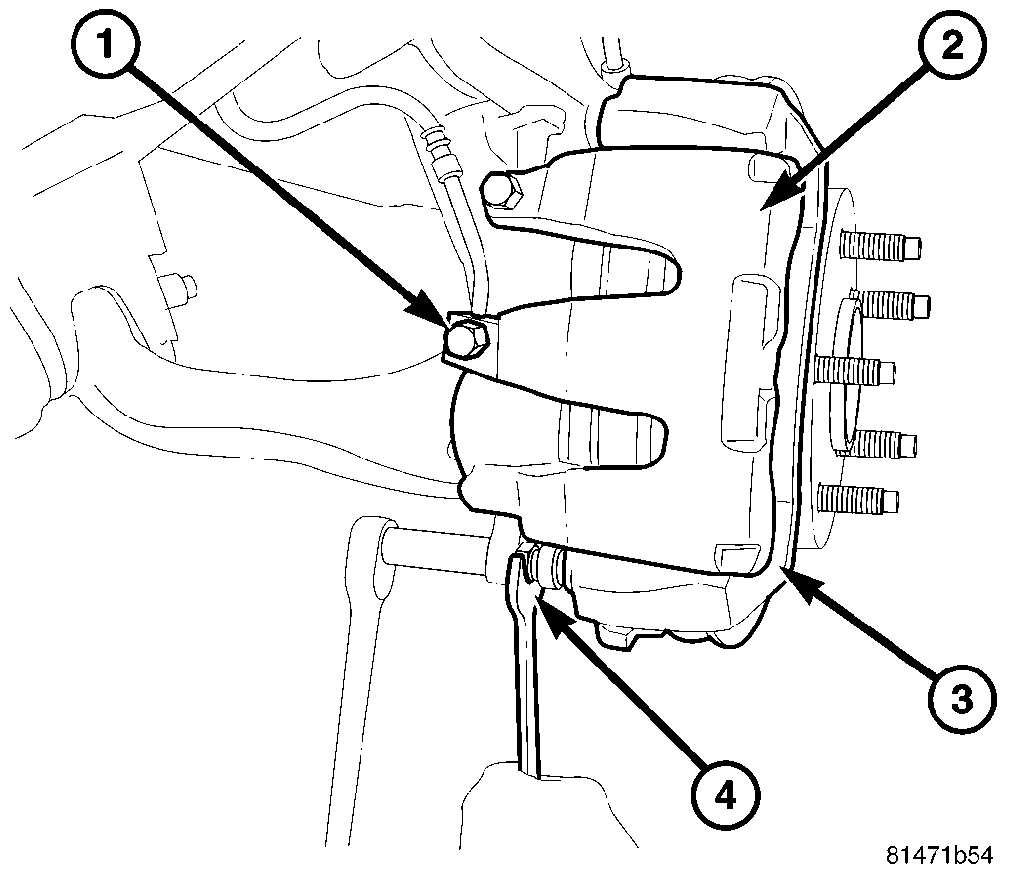
pic 1


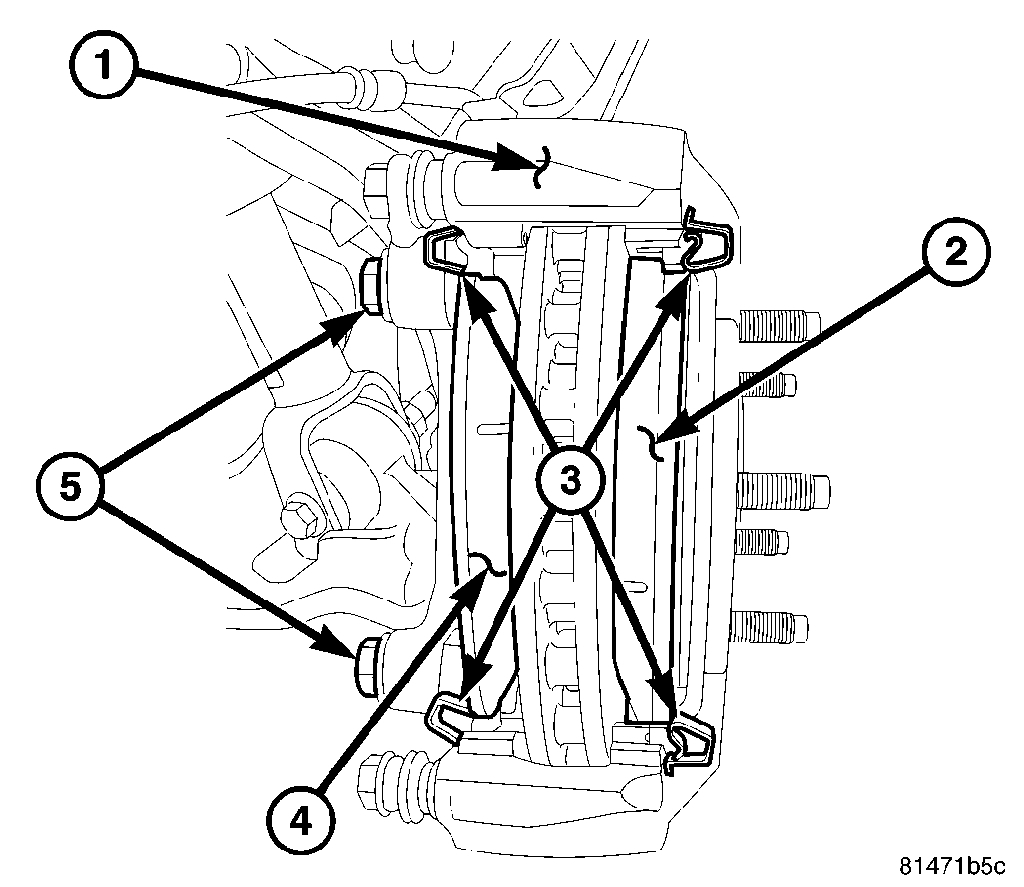
3. Compress the caliper (2).
4. Remove the caliper slide pin bolts (4).


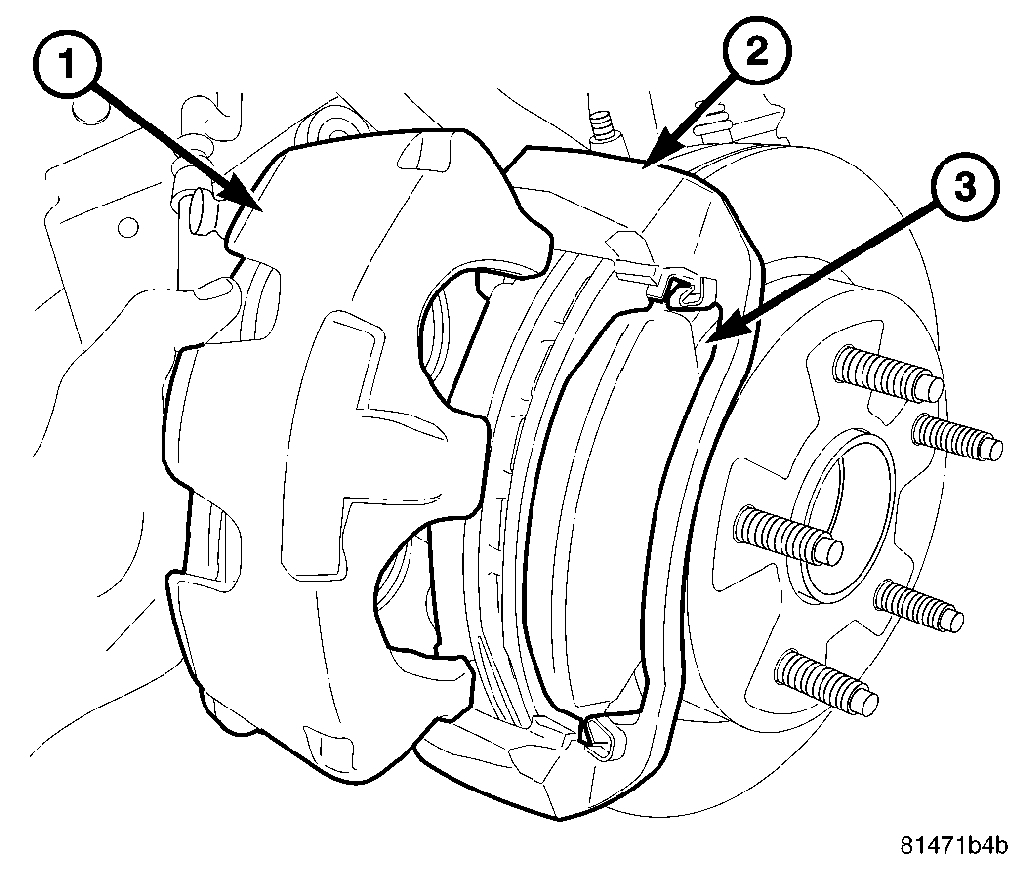
pic 2


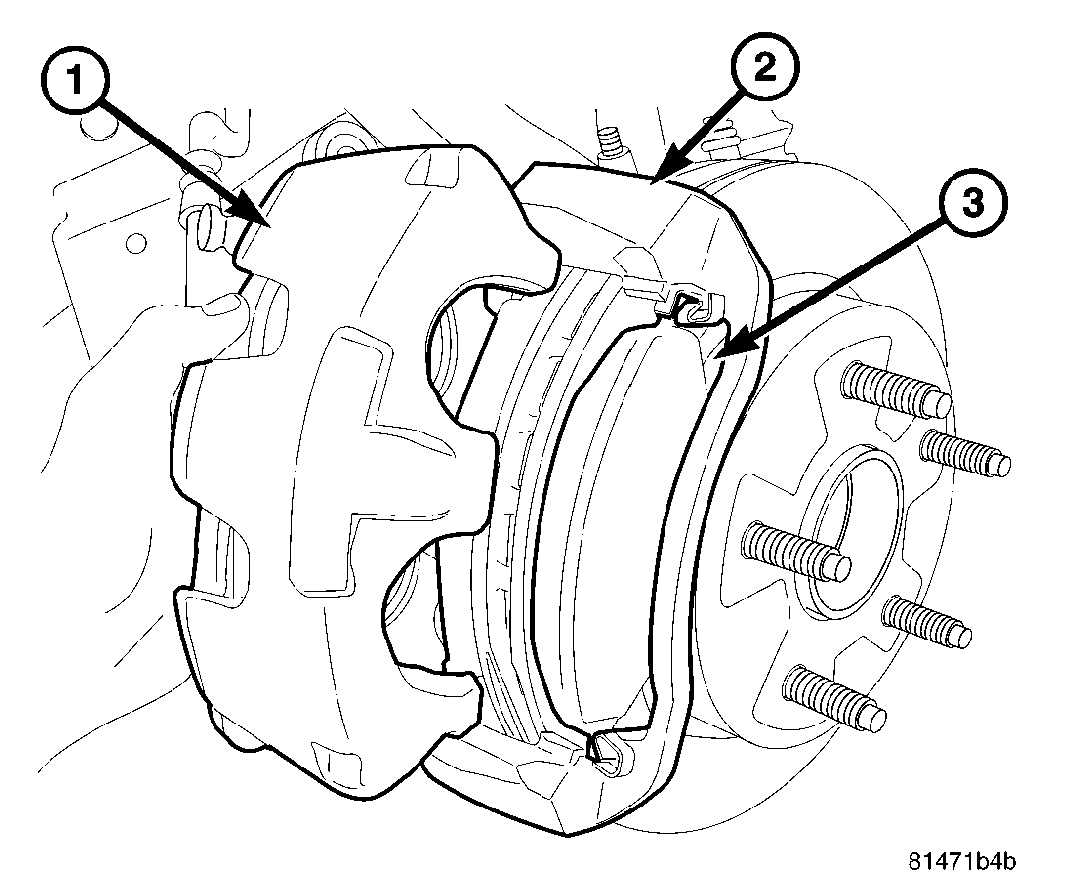
5. Remove the caliper (1) from the caliper adapter (2).

NOTE: Do not allow brake hose to support caliper assembly.

6. Support and hang the caliper.


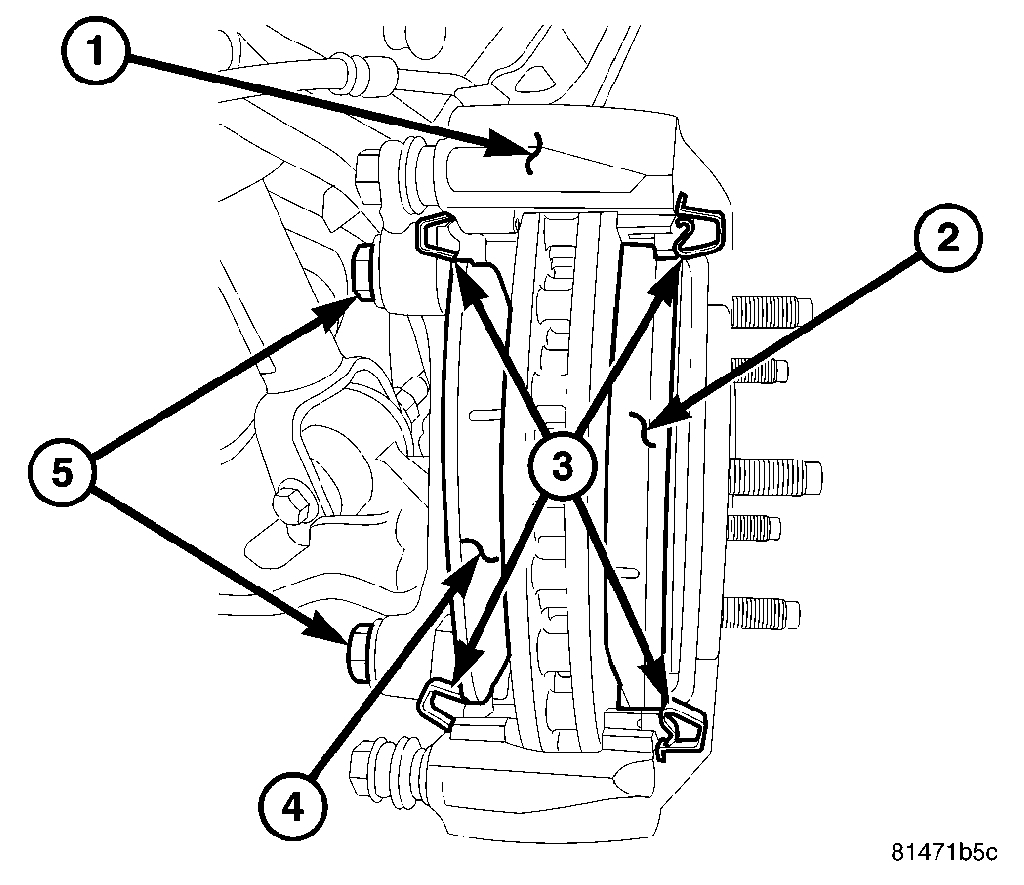
pic 3


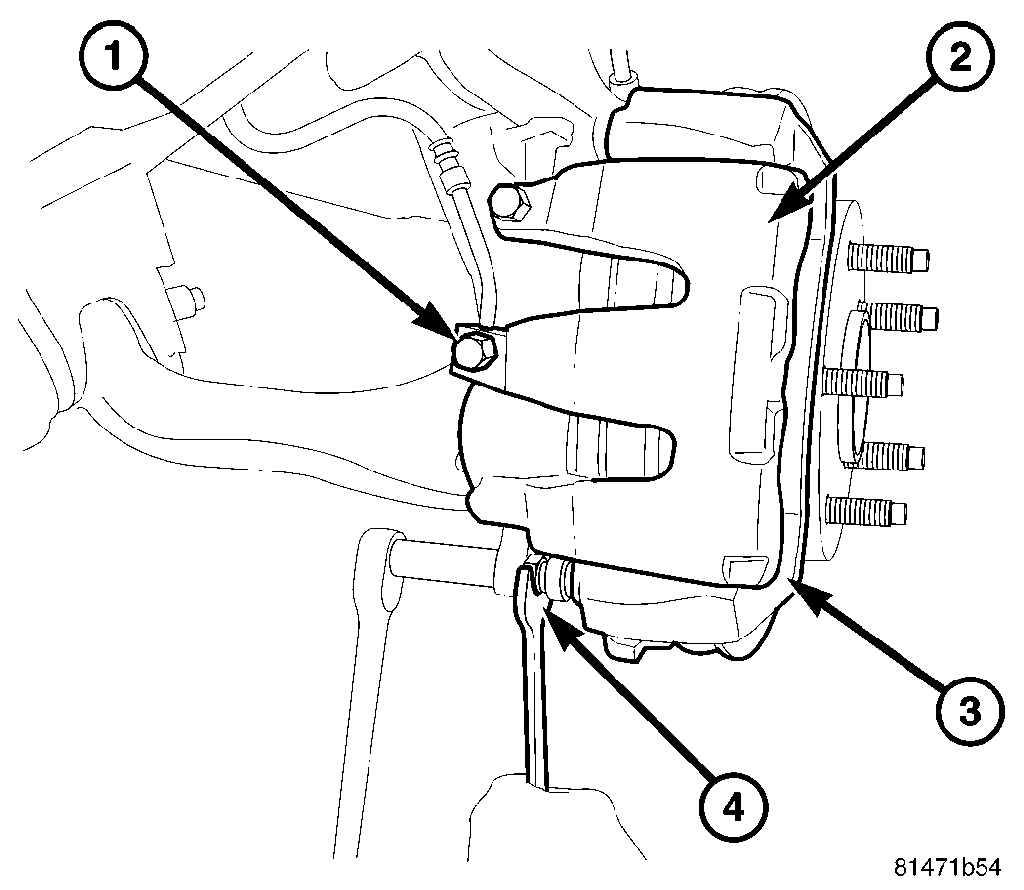
7. Remove the inboard brake pad (4) from the caliper adapter (1).
8. Remove the outboard brake pad (2) from the caliper adapter (1).


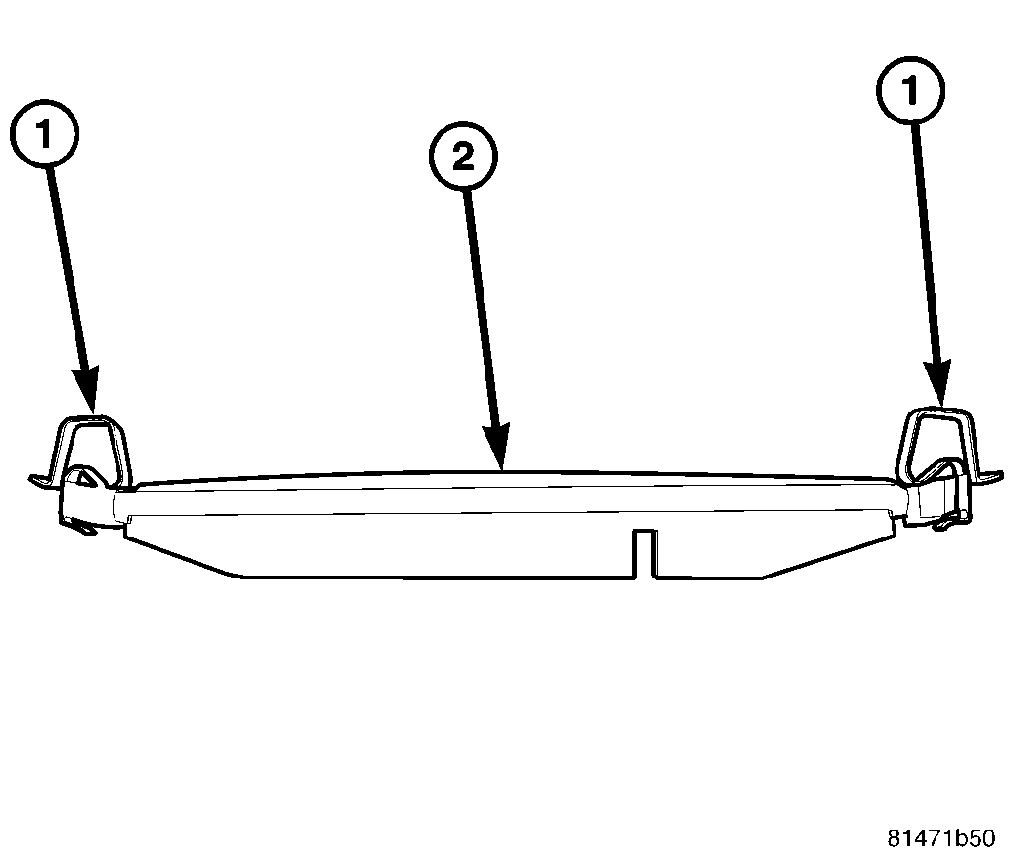
pic 4


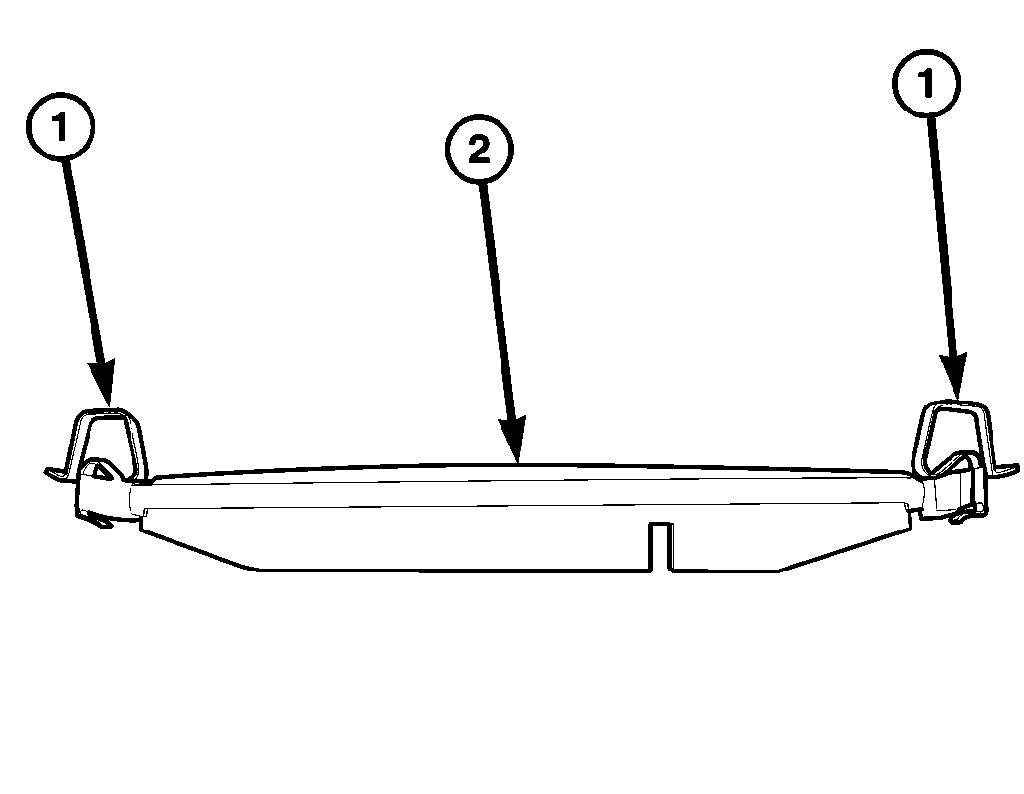
9. Remove the anti-rattle clips (1) from the pad (2).

CLEANING
Clean the individual brake components, including the support plate and wheel cylinder exterior, with a water dampened cloth or with brake cleaner. Do not use any other cleaning agents. Remove light rust and scale from the brake shoe contact pads on the support plate with fine sandpaper.

INSTALLATION

1. Bottom pistons in caliper bore with C-clamp. Place an old brake shoe between a C-clamp and caliper piston.
2. Clean caliper mounting adapter.


pic 5


3. Install new anti-rattle clips (1) to the brake pads (2).


pic 6


4. Install inboard brake pad (4) in adapter (1).
5. Install outboard brake pad (2) in adapter (1).


pic 7


6. Install the caliper (1) over rotor, Then push the caliper onto the adapter (2).


pic 8


7. Install caliper slide pin bolts (4).
8. Install wheel and tire assemblies and lower vehicle.
9. Apply brakes several times to seat caliper pistons and brake shoes and obtain firm pedal.
10. Top off master cylinder fluid level.

_______________________________

I hope this helps. Let me know if you have other questions.

Take care and God Bless,

Joe
Feb 8, 2021 at 5:02 PM (Merged)
Avatar
MUSTANGXXX
  • MEMBER
  • 27 POSTS
I just put new front brake pads on my 2002 dodge dakota I am somewhat used to the bleeding process but would like a proffessionals view of the best and easiest way to bleed front brakes
Feb 8, 2021 at 5:02 PM (Merged)
Avatar
CARADIODOC
  • CERTIFIED EXPERT
  • 34,306 POSTS
Did you replace the calipers? If not, you don't have to bleed the system but it's good maintenance to get the old fluid out since it will have absorbed moisture. Open the bleeder screws, crack the cap on the master cylinder to prevent a vacuum from building, and let the fluid run out. Keep the reservoir filled with clean fresh fluid. When the fluid coming out is relatively clear at one caliper, close the bleeder screw and move on to the other one.

If you did replace the calipers, did the master cylinder run empty? That makes bleeding more involved. To avoid that, place a stick between the seat and brake pedal to hold the pedal down about an inch while the hoses are disconnected. That will stop the reservoir from running empty. When you do start bleeding, you might have to irritate the brake pedal a little to get the fluid to start flowing. Close the bleeder screws when no more bubbles are coming out. Stroke the pedal a couple of times to wash any remaining air bubbles into the calipers, then crack the bleeder screws open once more for a few seconds.

Some people think you have to have a helper to push the brake pedal to pedal-bleed the system but gravity bleeding is just as effective. One thing of major importance whenever pushing the pedal is to never ever push it all the way to the floor. Crud and corrosion build up in the lower halves of the master cylinder bores where the pistons don't normally travel. Pushing the pedal all the way down runs the lip seals over that crud and can rip them. At first that will result in a slowly sinking pedal when you hold steady pressure on it. Eventually you'll have no brakes.

Also be sure to avoid getting any hint of grease or other petroleum product in the brake fluid. That is a very expensive mistake because the only proper repair is to replace every part that has rubber parts that contact the brake fluid, and to flush and dry the steel lines. Most professionals even wash their hands before working on the hydraulics to prevent getting fingerprint oil in the brake fluid.
Feb 8, 2021 at 5:02 PM (Merged)
Avatar
MUSTANGXXX
  • MEMBER
  • 27 POSTS
I am changing front brake pads on my truck and usualy is a pretty easy job but of course this time one of the bolts that holds the caliper on the rotor ...the allen head screw, is stripped how do I get it off the easiest way?
Feb 8, 2021 at 5:02 PM (Merged)
Avatar
ASEMASTER6371
  • CERTIFIED EXPERT
  • 52,796 POSTS
the easy way is with a socket.

if it is stripped, that is, spinning and not coming out, you will have to apply pressure to remove it and use an oversize bolt.

if the head is stripped, then use a pair of vise grips and replace the bolt.

Roy
Feb 8, 2021 at 5:02 PM (Merged)
Avatar
HDPLUS
  • MEMBER
  • 1 POST
how to change front disc brakes
Feb 8, 2021 at 5:02 PM (Merged)
Avatar
KHLOW2008
  • CERTIFIED EXPERT
  • 41,814 POSTS
DISC BRAKE SHOES
Removal
1. Clean master cylinder reservoir ad filler caps.

2. Remove reservoir filler cap and drain approximately 1/4 of fluid from reservoir. Use clean suction gun or similar device to drain fluid.

3. Raise and support vehicle.

4. Remove front wheel and tire assemblies.

5. Bottom caliper pistons in bores with large C-clamp. Position clamp frame on rear of caliper and clamp screw on outboard brake shoe.

6. With a screw driver pry up on the caliper spring and pull the spring out of the caliper holes

7. Remove caliper slide pins.

8. Remove caliper and brake shoes. See CALIPER.

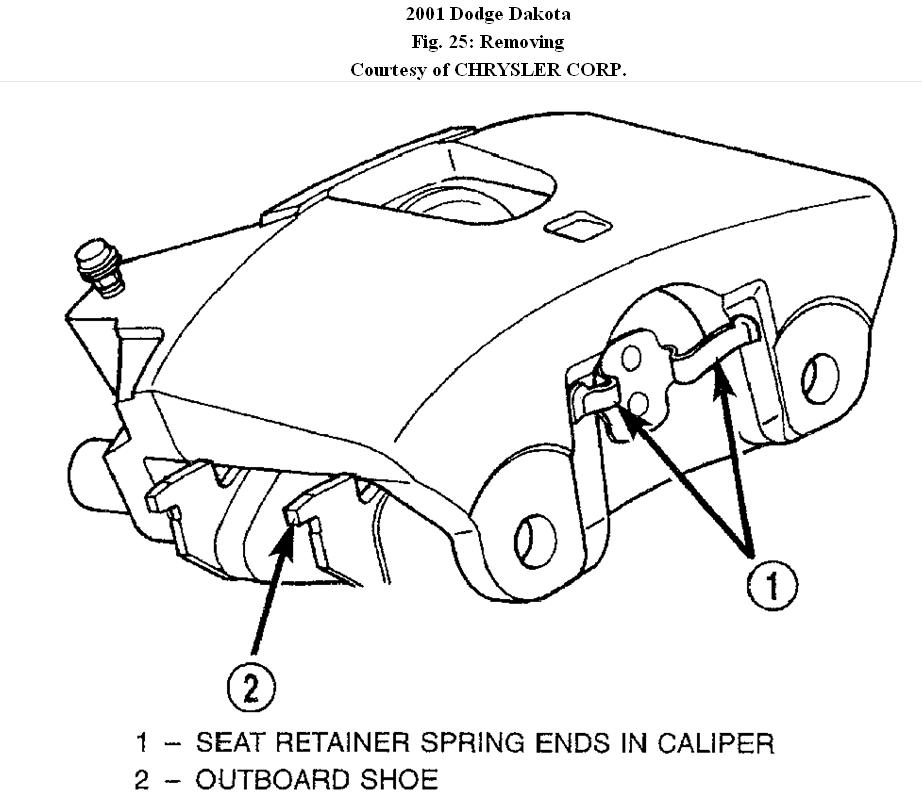
9. Remove outboard brake shoe. Pry one end of shoe retainer spring away from caliper. See Fig. 25 . Then tilt shoe upward and rotate it out of caliper.

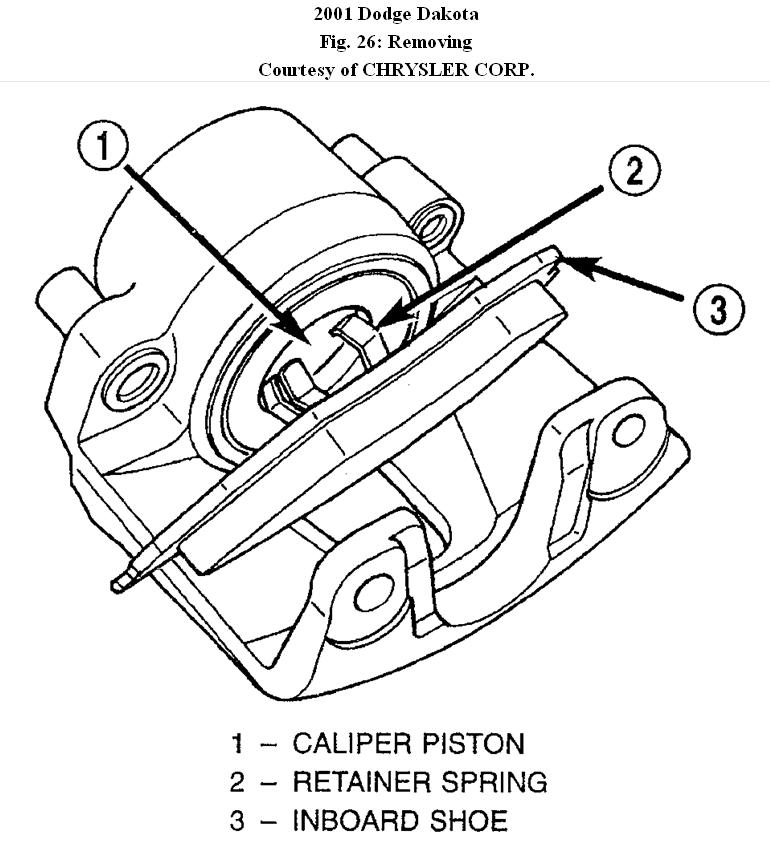
10. Remove inboard shoe by tilting shoe outward until retainer spring is clear of caliper piston. See Fig. 26 .

CAUTION:DO NOT allow brake hose to support caliper weight.

11. Support caliper with wire from suspension component.

Installation
1. Clean slide surfaces of adapter ledges with a wire brush. The lubricate surfaces with a thin coat of high temperature grease.

2. Install new slide pin bushings if necessary.

3. Install inboard shoe. Be sure retainer spring is firmly seated in caliper piston. See Fig. 26 .

4. Insert outboard brake shoe in caliper. Insure outboard shoe retainer spring are seated in the caliper. See Fig. 25 .

5. Install caliper and brake shoes over rotor and into adapter.

CAUTION: Start the slide pins by hand before tightening. DO NOT cross
thread the pins.

6. Install and tighten caliper pins.

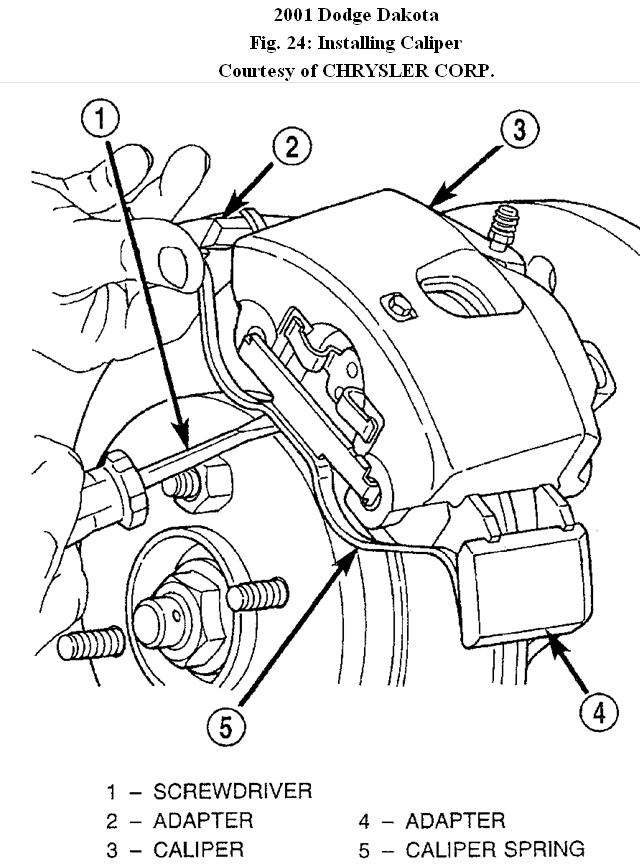
7. Install caliper spring into one caliper hole and under the adapter. Pull down on the opposite end of the spring and hold the end under the spring. See Fig. 24 . With a screwdriver, pry up on the spring to seat the spring into the other caliper hole.

8. Install wheel and tire assembly.

9. Remove support and lower vehicle.

10. Pump brake pedal to seat brake shoes.

11. Fill brake fluid reservoir.

12. Verify a firm brake pedal before moving vehicle.


© 2008 Mitchell Repair Information Co., LLC.

CALIPER
Removal
1. Clean master reservoir and filler caps.

2. Remove reservoir filler cap. Use clean suction gun or similar device to drain approximately 1/4 of fluid from the reservoir.

3. Raise and support vehicle.

4. Remove front wheel and tire assemblies.

5. Bottom caliper pistons in bores with large C-clamp. Position clamp frame on rear of caliper and clamp screw on outboard brake shoe.

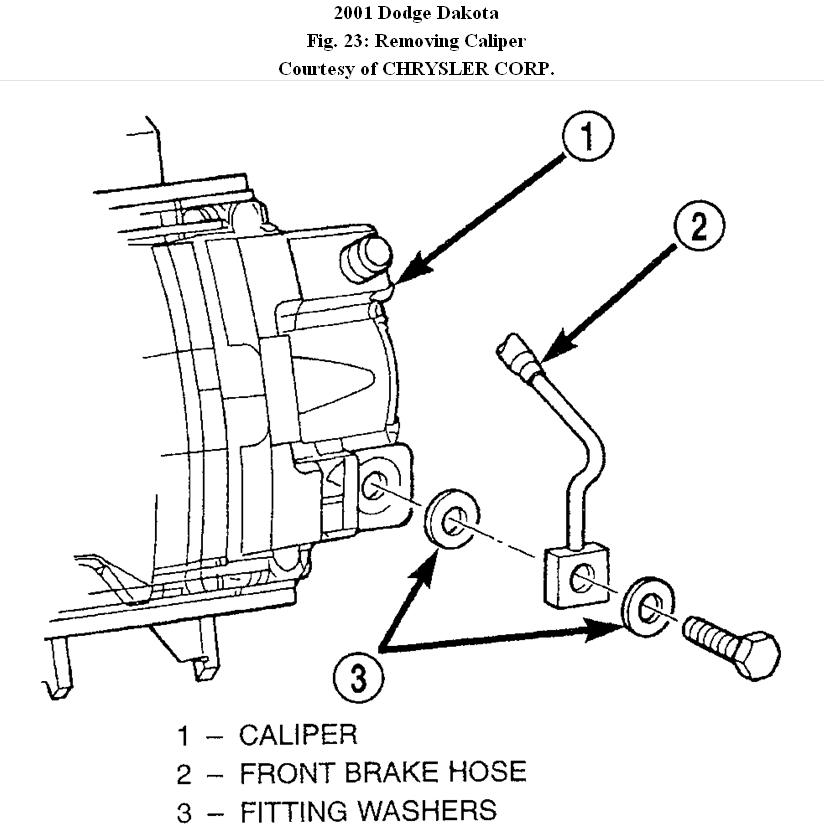
6. Disconnect brake hose at caliper. Discard hose fitting washers if worn, or damaged. See Fig. 23 .

7. With a screw pry upon the caliper spring and pull the spring out of the caliper holes.

8. Remove caliper and brake shoes from caliper. See DISC BRAKE SHOES .


Installation

1. Install brake shoes in caliper. See DISC BRAKE SHOES .

2. Install caliper and shoes over rotor and into ledges in steering knuckle. Be sure ends of brake shoes are properly seated on slide surfaces of ledges.

CAUTION: Start the slide pins by hand before tightening. DO NOT cross
thread the pins.

3. Install and tighten caliper slide pins.

4. Install caliper spring into one caliper hole and under the adapter. Pull down on the opposite end of the spring. With a screwdriver pry up on the spring to seat the spring into the other caliper hole. See Fig. 24.

CAUTION:Verify brake hose is not twisted or kinked before tightening
fitting bolt.

5. Install brake hose to caliper with new seal washers and tighten fitting bolt.

6. Bleed brake system.

7. Install wheel and tire assemblies.

8. Remove supports and lower vehicle.

9. Pump brake pedal to seal brake shoes.

10. Fill brake fluid reservoir.

11. Verify firm pedal before moving vehicle.

© 2008 Mitchell Repair Information Co., LLC.
Feb 8, 2021 at 5:02 PM (Merged)
Avatar
M1MHN00
  • MEMBER
  • 1 POST
I recently change the front brakes but why is it still shaking when put on brake?
Feb 8, 2021 at 5:02 PM (Merged)
Avatar
LEGITIMATE007
  • CERTIFIED EXPERT
  • 5,121 POSTS
it could be that the rotors need turning. or that the control arm bushings are bad or ball joints are bad, it can be a lot of things, but you wont know until a trained eye has inspected it
Feb 8, 2021 at 5:02 PM (Merged)
Avatar
DONB31
  • MEMBER
  • 3 POSTS
I have to change front brakes on this dakota . What size allen wrench do I need to take the caliper off
Feb 8, 2021 at 5:02 PM (Merged)
Avatar
OBXAUTOMEDIC
  • CERTIFIED EXPERT
  • 3,711 POSTS
[quote:0b5312754e="donb31"]Brakes problem
1998 Dodge Dakota 6 cyl Four Wheel Drive Automatic 79000 miles

I have to change front brakes on this dakota . What size allen wrench do I need to take the caliper off[/quote:0b5312754e]


Hello,

I want to say it is a 3/8's. But to make sure if you have to purchase the allen wrench just ask them to look up the caliper bolt and check it.


.
Feb 8, 2021 at 5:02 PM (Merged)
Avatar
DONB31
  • MEMBER
  • 3 POSTS
after going to a parts store, they looked up the bolt we tried different size allens according to thier books and size of bolt it was a 7/32 but I knew that wasnt the case I said it was at least a 7mm so we took one outside and tried it on the truck. I was right it was a 7mm
Feb 8, 2021 at 5:02 PM (Merged)
Avatar
OBXAUTOMEDIC
  • CERTIFIED EXPERT
  • 3,711 POSTS
Good Job.
Feb 8, 2021 at 5:02 PM (Merged)
Avatar
BUTTERUP
  • MEMBER
  • 3 POSTS
I replaced the front brake pads which were worn but not to the rivets. No brake lines were removed, fittings loosened or any other source where air could enter the system. Yet after the simple replacement, the brake pedal was very low and has not returned to a normal height. i adjusted the rear brake shoes until they drug the drums to where the rear wheels are nearly stopped yet the brake pedal is still low.
The pedal is solid not spongey.
Suggestions ?
Feb 8, 2021 at 5:02 PM (Merged)
Avatar
JAY6647
  • MEMBER
  • 17 POSTS
There are only 2 possible reasons why you may have a low brake pedal. Air in the system or excessive travel between lining & rotor/drum. With that being said, how was the pedal prior to the pads replacement. If it was the same....then probably you might have a leak in your hydraulic system (ie; brake lines, master cylinder, wheel cylinder, etc, etc, etc. There is also a possibility that there maybe air trapped in the ABS system. Try bleeding the system & go from there. Start with the rear wheels first then the fronts. Also, if your rotors have been resurfaced too many times, they may be too thin. If so, replace them. Visually inspect all the brake lines, master cylinder, ABS unit & importantly the wheel cylinders(inside the drum) for moisture as it may be an indication of a leak.
Hope this helps. Good luck!!!!!!!!
Feb 8, 2021 at 5:02 PM (Merged)
Avatar
CARADIODOC
  • CERTIFIED EXPERT
  • 34,306 POSTS
There's another often-overlooked cause of low brake pedal. Remember, if the hydraulic system wasn't opened, as in replacing calipers, wheel cylinders, or brake lines, there's no need to bleed the system and no way for air to get into that system.

The pistons had to be pressed back into the caliper housings to make room for the new, thicker pads. Once everything is reassembled, those pistons must be run back out to adjust them. A common mistake made by many competent do-it-yourselfers is they push the brake pedal all the way to the floor multiple times. If you're lucky, or if the master cylinder is less than about a year old, that will work. The brake pedal will become high and hard, as normal, and at that point the calipers are adjusted. If you're not lucky, the master cylinder will be damaged and have to be replaced.

Crud and corrosion builds up in lower halves of the bores where the pistons don't normally travel in the master cylinder. When the pedal is pushed more than half way to the floor, the rubber lip seals are run over that crud and that can rip them. That results in internal leakage. You won't lose brake fluid, but it will bypass those seals rather than being pushed down to the wheels.

Rotors that are thinner than the published legal limits will not cause a low brake pedal. The pistons will simply run further out of the caliper housings to self-adjust, like normal. No professional will machine a rotor beyond it's "machine-to" spec. That puts their reputation at stake and leaves them open to a lawsuit. Beyond that, rotors have another "discard" spec that allows them to wear a little more than what they can be machined to. Calipers are designed to accommodate that rotor wear, plus a little more. If a do-it-yourselfer were to machine a rotor way too much, or a driver ignores grinding brakes and the rotor becomes much too thin, the piston will twist in the caliper or it will fall out. Either way, you'd have a real low brake pedal, but also a huge pile of brake fluid on the ground just inside that tire. If you're not losing brake fluid, rotor thickness isn't an issue as far as pedal feel and height is concerned.

The order you bleed brakes is of no concern. Some people do the left front one first because it takes the least amount of fluid to get one circuit fully-bled. Some start with the right rear to get the most air out of the system with the first wheel. Also, a lot of rear-wheel-drive vehicles have just one brake line running to the rear, then it splits and goes to each rear wheel. Bleeding the left or right rear wheel is the same and removes the same amount of air. When I used to rebuild calipers and wheel cylinders as part of a standard brake job, (1980s), I always bled the wheel I was standing closest to first, and I always used only gravity-bleeding. When brake fluid started to drip from a bleeder screw, I tightened that one, then waited for the next one to start dripping. If a customer was in a hurry, we might get a helper involved to push the brake pedal, but never more than half-way to the floor, and just enough to get the fluid flowing. Once all four bleeder screws were closed, I would irritate the brake pedal a couple of times by hand. With no power assist, the pedal can only be pushed about two inches, and much less on GM cars. That was enough to wash any stuck air bubbles into the wheel cylinders and calipers. You'd already have a solid pedal, but I'd open each bleeder screw once more to let those little bubbles out.

The order of bleeding, like so many warnings, goes back to a problem with GM front-wheel-drive cars. They have a valve in the master cylinder that blocks fluid flow when it's tripped. Think of a teeter totter that's level and balanced, and it's between the two outlet ports. As long as equal fluid pressure builds up in both halves of the hydraulic system, that valve stays balanced, and no port is blocked. Now, if you were to develop an external leak, pressure could only build up on the side without the leak. That unequal pressure will cause the valve to move and block the port feeding the leak. That prevents loss of brake fluid so it keeps the good side working. In fact, it works so well that many drivers don't even notice a problem except the red "Brake" warning light turns on.

The same thing happens when you bleed with a helper. With one bleeder screw open, no pressure can build in that half of the system when the pedal is pressed. That trips the valve, then no fluid will flow to that front wheel or the opposite rear wheel. Many professionals think that can be avoided by bleeding in a certain order, but that doesn't make sense. How does that valve know the difference between bleeding that one wheel or there's a leak in that wheel's circuit? Many do-it-yourselfers also replace the master cylinder when they can't get fluid to flow from that one port, then they run into the same problem with the new one when they again resort to pedal-bleeding with a helper. (By the way, the only way I've ever found to reset those valves was to go to one of the wheels that won't flow any fluid, open that bleeder screw, then give it a quick, short burst of compressed air, then let it gravity-bleed. You don't want to send air back into the line any more than necessary. It just takes a little to reset the valve).

There have been multiple contributors to this problem, and in most cases the model year, engine size, mileage, and transmission type aren't listed. Mileage is used to make generalizations as to best suspects. Different model years use different anti-lock brake systems, and the engine and transmission used can affect the type of ABS system used. If a truck has a rear-wheel-anti-lock, (RWAL) system, when it comes to bleeding brakes, you treat the valve as if it isn't even there. They don't interfere with anything, and air won't be trapped inside them.

Chrysler typically uses four independent circuits with their four-wheel-ABS systems, so any one wheel's braking force can be modulated independently. GM often used similar systems, but they tie the two rear wheels together and have a three-channel control system. Brake fluid pressure is reduced to both rear wheels when just one of them slows down too quickly. These systems operate by blocking fluid flow to a wheel that's slowing down too quickly. If it doesn't pick speed back up to match the second and third-fastest wheels, it bleeds off some fluid pressure. Once wheel speed comes back up, it opens a different valve to apply stored fluid to reapply that brake, That sequence of "block, bleed, apply" can occur is rapidly as 30 times per second, but 15 times is more common. That's the buzzing and vibrating observed when the system engages.

That "apply" function can deliver pressurized brake fluid from a motor-driven pump that ramps up the instant a skid is detected, (Neons) or that can come from highly-pressurized fluid that's stored in an accumulator. Many of those systems also use that pressurized fluid for the power assist function. You'll hear the pumps run sometimes when just starting the engine, then again after multiple normal stops as the pressurized fluid is used up. It can take as many as 40 pedal applications with the ignition switch off to totally empty the accumulator. At that point, any air that might have gotten in it will be expelled back to the reservoir.

Some systems use a different design to store a small amount of pressurized brake fluid in separate chambers for each circuit. This is where air can become trapped, but only if the brake fluid is drained out of the reservoir, and then new fluid is sent down along with the air in the lines leading from the master cylinder. There is usually no way to get that air out without using a scanner. It will command the ABS Computer to open those valves briefly while you're instructed to open two bleeder screws. The valves will open, and the fluid with the air in it will have somewhere to flow to. This is where a lot of people are running into problems with low brake pedals after bleeding the system.

If you find you need to replace the master cylinder, bench-bleeding is mandatory, and a simple procedure, but then everyone thinks you have to bleed at the wheels. If you think about this logically, there won't be any air in the lines except for the first inch or two, since brake fluid isn't going to run up and air isn't going to flow down through the brake fluid. I've replaced dozens of master cylinders since the 1980s, and especially in the last 25 years, I've never needed to bleed at the wheels. My procedure is to loosen the soft metal line nuts, remove the master cylinder's mounting nuts, pull the master cylinder forward off the studs, then use it as a handle to bend the brake lines up a little. That will prevent brake fluid from running out of those lines. Unscrew the lines, (use rags to prevent brake fluid from dripping on the paint), then screw the lines into the freshly bench-bled new master cylinder. While you're installing the line nuts, a tiny amount of air will start to flow up towards the reservoir, and brake fluid will flow down to replace it. Bend the lines back down and reinstall the master cylinder to the power booster. Snug the line nuts, then back one off about 1/4 turn. Have a helper press the brake pedal very slowly, but no more than half way. (He's usually the new guy in the shop and you want to get him in the habit of never pressing the brake pedal more than half-way to the floor). It should take about 15 seconds to push the pedal that far. Snug that line nut, then have the helper release the brake pedal quickly. Open that nut again and repeat the procedure if needed until no air bubbles come out. Tighten that nut, then do the same thing for the other line. Pushing the pedal slowly gives air time to float back up as the fluid is going down. Releasing it quickly washes any air bubbles back into the reservoir along with the fluid that's rushing back.

Using the helper in this manner is also not necessary. I've replaced a few master cylinders on my own vehicles, at home, with no one to help. Just install the bench-bled new unit, then go out and drive it like normal. Any air bubbles that might be in the lines aren't going to go down to the wheels. They'll keep floating back up and will flow into the reservoir.
Feb 9, 2021 at 3:27 PM