I replaced my pads now the brake pedal goes to the floor

2004 CHEVROLET SILVERADO
132,000 MILES • V8 • 2WD • AUTOMATIC
Avatar
MIKE DESROSIERS
  • MEMBER
  • 5 POSTS
I replaced my pads on my 2004 chevy silverado and bled the brakes. I know I did all this right. The brakes are fine until I turn the car on. Then the brakes go right to the floor like the system is full of air. I have 130K+ on this truck and hear that they were made with faulty master cylinders. I can change that very easily. My question is how do I know it is not the brake power booster unit. Is there a way to check the master cyl vs the power unit. Thanks for your help,
Mike
Aug 21, 2011 at 4:28 PM
Advertisement
Avatar
RASMATAZ
  • CERTIFIED EXPERT
  • 75,992 POSTS
If you're not leaking anywhere-and is sinking to the floor-replace the master cylinder,its not coming from the booster.

These guides can help you fix it.

https://youtu.be/w7gUsj2us0U

and

https://youtu.be/WDxvEQrMkBg

and

https://www.2carpros.com/articles/brake-pedal-goes-to-the-floor

Please run down this guide and report back.
Aug 21, 2011 at 4:30 PM
Avatar
MIKE DESROSIERS
  • MEMBER
  • 5 POSTS
I have thoroughly checked for leaks (thinking that was the problem).
I will replace the master cyl and start from there.
Aug 21, 2011 at 4:48 PM
Advertisement
Avatar
MIKE DESROSIERS
  • MEMBER
  • 5 POSTS
I do have a question about bleeding the brakes on this truck. Should I try bleeding the brakes with the power on or with the truck running?
Aug 21, 2011 at 5:25 PM
Avatar
RASMATAZ
  • CERTIFIED EXPERT
  • 75,992 POSTS
You can follow this guide explains is perfectly.

https://www.2carpros.com/articles/how-to-bleed-or-flush-a-car-brake-system

Aug 21, 2011 at 5:31 PM
Avatar
MIKE DESROSIERS
  • MEMBER
  • 5 POSTS
I ordered a new master cylinder from Autozone (they were the only ones that could get it for me the same day). I received it at 5:30 pm Sunday night. After I bench bled the new master cylinder per the new manufacturer instructions, I installed the MC. I bled the brakes, and I have done many disc and drum brake jobs over the years for my family and I (and we are all still alive), and the same problem still exists. The brakes get hard when we are sitting there bleeding them, but once I start the engine, they go straight down to the floor I have checked thoroughly for leaks and have not found any. Since I have replaced the master cylinder (MC), it seems like the only choice left is the power booster. Yet, a problem like this sure seems like there is air somewhere in the lines. It seems like there is a possibility that there is some sort of leak that I am not able to detect. I am thinking that my next move is to take it to a brake shop and get the system vacuum bled. What are your thoughts with my problem?
Thanks,
Mike
Aug 22, 2011 at 3:46 AM
Avatar
RASMATAZ
  • CERTIFIED EXPERT
  • 75,992 POSTS
You may need a scanner to open the valve in the ABS while bleeding I have seen this problem before.
Aug 22, 2011 at 6:04 AM
Avatar
MIKE DESROSIERS
  • MEMBER
  • 5 POSTS
You were right I took the truck to the shop and they had to used their scanner to open the valve to get the air out, All fixed thanks again for you help.


Aug 22, 2011 at 3:36 PM
Avatar
RASMATAZ
  • CERTIFIED EXPERT
  • 75,992 POSTS
Glad you could get it fixed, that kind of problem can be tough. Please use 2CarPros anytime we are here to help

Cheers
Aug 22, 2011 at 5:26 PM
Avatar
APRYLBAKER
  • MEMBER
  • 3 POSTS
I changed out the brake lines, the master cylander and the booster. There are not front brakes. I used the computer to test the ABS module. It is working. I manually bled the master cylander. I bled all four wheels. Still no brakes. Not sure what is causing it with everything brand new. It's getting fluid. It will pump up when the car is off, but as soon as it's started, it goes to the floor.
Feb 22, 2021 at 5:22 PM (Merged)
Avatar
ASEMASTER6371
  • CERTIFIED EXPERT
  • 52,796 POSTS
Good afternoon,

Since you have a scan tool, I would do the automated bleed procedure for the ABS module. Sounds like you have air in the ABS module.

Roy


ABS Automated Bleed Procedure

Notice: When adding fluid to the brake master cylinder reservoir, use only Delco Supreme 11 , GM P/N 12377967 (Canadian P/N 992667), or equivalent DOT-3 brake fluid from a clean, sealed brake fluid container. The use of any type of fluid other than the recommended type of brake fluid, may cause contamination which could result in damage to the internal rubber seals and/or rubber linings of hydraulic brake system components.

Notice: Refer to Brake Fluid Effects on Paint and Electrical Components Notice in Service Precautions.

Important: This procedure may be performed on all vehicles EXCEPT those equipped with option code JL4, Vehicle Stability Enhancement System (VSES).

Important: The base hydraulic brake system must be bled before performing this automated bleeding procedure. If you have not yet performed the base hydraulic brake system bleeding procedure, refer to Hydraulic Brake System Bleeding (Manual) Hydraulic Brake System Bleeding (Pressure) in Hydraulic Brakes before proceeding.

1. Install a scan tool to the vehicle.
2. Start the engine and allow the engine to idle.
3. Depress the brake pedal firmly and maintain steady pressure on the pedal.
4. Using the scan tool, begin the automated bleed procedure.
5. Follow the instructions on the scan tool to complete the automated bleed procedure. Release the brake pedal between each test sequence.
6. Turn the ignition OFF.
7. Remove the scan tool from the vehicle.
8. Fill the brake master cylinder reservoir to the maximum-fill level with Delco Supreme 11 GM P/N 12377967 (Canadian P/N 992667) or equivalent DOT-3 brake fluid from a clean, sealed brake fluid container.
9. Bleed the hydraulic brake system. Refer to Hydraulic Brake System Bleeding (Manual) Hydraulic Brake System Bleeding (Pressure) in Hydraulic brakes.
10. With the ignition OFF, apply the brakes 3-5 times, or until the brake pedal becomes firm, in order to deplete the brake booster power reserve.
11. Slowly depress and release the brake pedal. Observe the feel of the brake pedal.
12. If the brake pedal feels spongy, repeat the automated bleeding procedure. If the brake pedal still feels spongy after repeating the automated bleeding procedure inspect the brake system for external leaks. Refer to Brake System External Leak Inspection in Hydraulic Brakes.
13. Turn the ignition key ON, with the engine OFF; check to see if the brake system warning lamp remains illuminated.
14. If the brake system warning lamp remains illuminated, DO NOT allow the vehicle to be driven until it is diagnosed and repaired. Refer to Symptoms - Hydraulic Brakes.
15. Drive the vehicle to exceed 13 kph (8 mph) to allow ABS initialization to occur. Observe brake pedal feel.
16. If the brake pedal feels spongy, repeat the automated bleeding procedure until a firm brake pedal is obtained.
Feb 22, 2021 at 5:22 PM (Merged)

Avatar
APRYLBAKER
  • MEMBER
  • 3 POSTS
I will try that, thanks.
Feb 22, 2021 at 5:22 PM (Merged)
Avatar
ASEMASTER6371
  • CERTIFIED EXPERT
  • 52,796 POSTS
Okay, then you will need a pressure bleeder. That is where you put an adapter on top of the master cylinder and apply air pressure to the fluid. Then open the bleeders one by one until all the air is out.

You have air trapped in the lines and the foot method of bleeding is not enough to get the air out of the system.

Roy
Feb 22, 2021 at 5:22 PM (Merged)
Avatar
APRYLBAKER
  • MEMBER
  • 3 POSTS
I will try that, thanks.
Feb 22, 2021 at 5:22 PM (Merged)
Avatar
ASEMASTER6371
  • CERTIFIED EXPERT
  • 52,796 POSTS
You are welcome.

Always glad to help.

Roy
Feb 22, 2021 at 5:22 PM (Merged)
Avatar
EMMA ADAMS
  • MEMBER
  • 1 POST
i put new brake lines new rotors,calipers,pads, bled the master cylinder. i have ABS brakes. i bought a scanner tool i bled the ABS system. also,when the engine is off i got full pedal,when the engine is running i push on the pedal it goes to the floor.
Feb 22, 2021 at 5:22 PM (Merged)
Avatar
ASEMASTER6371
  • CERTIFIED EXPERT
  • 52,796 POSTS
Good evening,

This sounds like you still have air in the system.

https://www.2carpros.com/articles/brake-pedal-goes-to-the-floor

When you bled the system, did you use a pressure bleeder? With it being a truck, using someone to push the pedal will not force the air out of the system.

I would rent a pressure bleeder and bleed the system.

https://www.2carpros.com/articles/how-to-bleed-or-flush-a-car-brake-system

I also noticed you did not replace the master cylinder. That may be the issue.

https://www.2carpros.com/articles/how-to-replace-a-brake-master-cylinder

Roy
Feb 22, 2021 at 5:22 PM (Merged)
Avatar
SHERIHOJEM
  • MEMBER
  • 1 POST
Replaced all four brake pads and rotors, calipers, master cylinder, booster, ABS pump and control, bled brakes many times, still brake pedal going to floor. no pressure, brake lines not leaking. please hep
Feb 22, 2021 at 5:22 PM (Merged)
Avatar
ASEMASTER6371
  • CERTIFIED EXPERT
  • 52,796 POSTS
Good morning,

Did you bench bleed the master before installing?

https://www.2carpros.com/articles/brake-pedal-goes-to-the-floor

You most likely have air in the ABS unit. You need a scan tool to do the automated bleed procedure. I attached the procedure for you.

Roy

Change Vehicle Bookmarks Library Request Conversion Calculator Technician's Reference - Collision

brake bleeding
44
Community 26 Create Quote
2003 Chevy Truck C 1500 Truck 2WD V6-4.3L VIN X
ABS Automated Bleed Procedure
Vehicle Brakes and Traction Control Hydraulic System Brake Bleeding Service and Repair Procedures ABS Automated Bleed Procedure
ABS AUTOMATED BLEED PROCEDURE
Antilock Brake System

Repair Instructions

ABS Automated Bleed Procedure

Note: When adding fluid to the brake master cylinder reservoir, use only Delco Supreme 11(r), GM P/N 12377967 (Canadian P/N 992667), or equivalent DOT-3 brake fluid from a clean, sealed brake fluid container. The use of any type of fluid other than the recommended type of brake fluid may cause contamination which could result in damage to the internal rubber seals and/or rubber linings of hydraulic brake system components.

Note: Refer to Brake Fluid Effects on Paint and Electrical Components Notice in Cautions and Notices.

Important: This procedure may be performed on all vehicles EXCEPT those equipped with option code JL4, Vehicle Stability Enhancement System (VSES).

Important: The base hydraulic brake system must be bled before performing this automated bleeding procedure. If you have not yet performed the base hydraulic brake system bleeding procedure, refer to Hydraulic Brake System Bleeding (Manual) Hydraulic Brake System Bleeding (Pressure) in Hydraulic Brakes before proceeding.

1. Install a scan tool to the vehicle.
2. Start the engine and allow the engine to idle.
3. Depress the brake pedal firmly and maintain steady pressure on the pedal.
4. Using the scan tool, begin the automated bleed procedure.
5. Follow the instructions on the scan tool to complete the automated bleed procedure. Release the brake pedal between each test sequence.
6. Turn the ignition OFF.
7. Remove the scan tool from the vehicle.
8. Fill the brake master cylinder reservoir to the maximum-fill level with Delco Supreme 11(r) GM P/N 12377967 (Canadian P/N 992667) or equivalent DOT-3 brake fluid from a clean, sealed brake fluid container.
9. Bleed the hydraulic brake system. Refer to Hydraulic Brake System Bleeding (Manual) Hydraulic Brake System Bleeding (Pressure) in Hydraulic brakes.
10. With the ignition OFF, apply the brakes 3-5 times, or until the brake pedal becomes firm, in order to deplete the brake booster power reserve.
11. Slowly depress and release the brake pedal. Observe the feel of the brake pedal.
12. If the brake pedal feels spongy, repeat the automated bleeding procedure. If the brake pedal still feels spongy after repeating the automated bleeding procedure inspect the brake system for external leaks. Refer to Brake System External Leak Inspection in Hydraulic Brakes.
13. Turn the ignition key ON, with the engine OFF; check to see if the brake system warning lamp remains illuminated.
14. If the brake system warning lamp remains illuminated, DO NOT allow the vehicle to be driven until it is diagnosed and repaired. Refer to Symptoms - Hydraulic Brakes in Hydraulic Brakes.
15. Drive the vehicle to exceed 13 kph (8 mph) to allow ABS initialization to occur. Observe brake pedal feel.
16. If the brake pedal feels spongy, repeat the automated bleeding procedure until a firm brake pedal is obtained.
Feb 22, 2021 at 5:22 PM (Merged)

Avatar
IVY KING
  • MEMBER
  • 1 POST
Blew a brake line replaced brake line and pedal bled all brakes starting at the passenger rear. no air was coming out any more but still do not have brakes.
Feb 22, 2021 at 5:23 PM (Merged)
Avatar
CARADIODOC
  • CERTIFIED EXPERT
  • 34,306 POSTS
I assume the symptom is the brake pedal goes too far to the floor. If that is what is happening, the best suspect is the master cylinder was damaged. Crud and corrosion builds up in the lower halves of the bores where the pistons do not normally travel. When surprised by a sudden leak, we almost always push the pedal as far as possible, and that runs the rubber lip seals over that crud and can rip them. The same thing happens when do-it-yourselfers pedal-bleed improperly with a helper. Pushing the brake pedal over half way is likely to damage the master cylinder. This does not apply to a master cylinder that is less than about a year old.

Also, if the reservoir was run empty, and the truck has four-wheel-anti-lock brakes, you may need to bleed the system with a scanner. That will allow you to command the computer to open two valves to allow those chambers to be bled. If you have rear-wheel-ABS (RWAL), which used to be more common on trucks, no special procedure is needed when bleeding those vehicles.

If you need to replace the master cylinder and the truck does not have four-wheel-ABS, I can share a trick so you do not have to bleed at the wheels. This also works with ABS if you never let the reservoir run empty so there is no air in the hydraulic controller.
Feb 22, 2021 at 5:23 PM (Merged)
Avatar
AL Z
  • MEMBER
  • 1 POST
I replaced the brake line going to the rear and replaced both front calipers,bled the brakes numerous times and getting no air,but brake pedal goes to floor. replaced master cylinder after bench bleeding it. Pedal still goes to the floor after bleeding and of course the brake warning light is on as well as the service brake warning and chimes! I took it and had a scanner do the ABS module bleed, came home and re bled all 4 corners,got a few bubbles of air out of the right rear, pedal still goes to the floor. I took it around the block on dirt roads and hit the brakes to try and imitate what the scanner did, rear brakes would lock up sometimes but no kind of anti lock action from the pedal. I am a retired Chevrolet technician and bled hundreds of vehicles and never encountered this. What do you think?
Feb 22, 2021 at 5:23 PM (Merged)
Avatar
STRAILER
  • CERTIFIED EXPERT
  • 53,854 POSTS
I would check the rear brake shoes to see if they are worn. Also gently install three vise grips to gently pinch off the brake flex hoses to try and isolate from the wheels from the master and ABS brake system. This guide will help:

https://www.2carpros.com/articles/brake-pedal-goes-to-the-floor

Please run down this guide and report back.
Feb 22, 2021 at 5:23 PM (Merged)
Avatar
FAITH70
  • MEMBER
  • 2 POSTS
Have new booster and master cylinder have bled brakes over and over even auto bled ABS pedal. good until I start truck then goes to floor.
Feb 22, 2021 at 5:23 PM (Merged)
Avatar
SCGRANTURISMO
  • CERTIFIED EXPERT
  • 4,897 POSTS
Hello,

Okay, you either still have air in the lines, or more than likely you have a leak somewhere. Double check all your brake lines with an assistant pressing the brake pedal. You should be able to find it. I have included a link below for you to go to.

https://www.2carpros.com/articles/brake-pedal-goes-to-the-floor

Please get back to us with what you are able to find out.

Thanks,
Alex
2CarPros
Feb 22, 2021 at 5:23 PM (Merged)
Avatar
FAITH70
  • MEMBER
  • 2 POSTS
Ty how likely is it that a vacume supplemental assist pump goes bad
Feb 22, 2021 at 5:23 PM (Merged)
Avatar
SCGRANTURISMO
  • CERTIFIED EXPERT
  • 4,897 POSTS
Hello again,

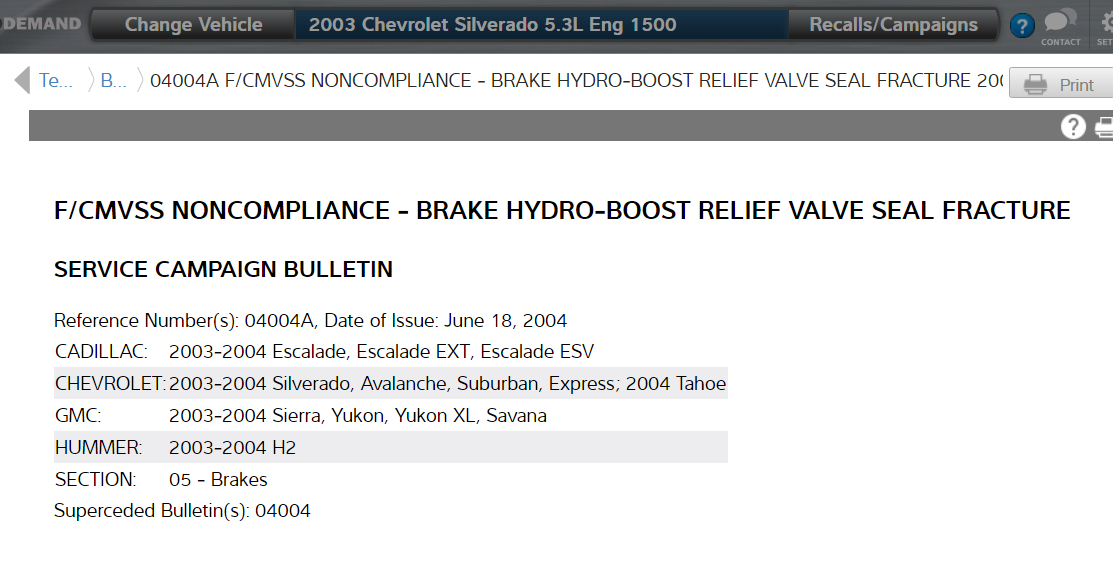
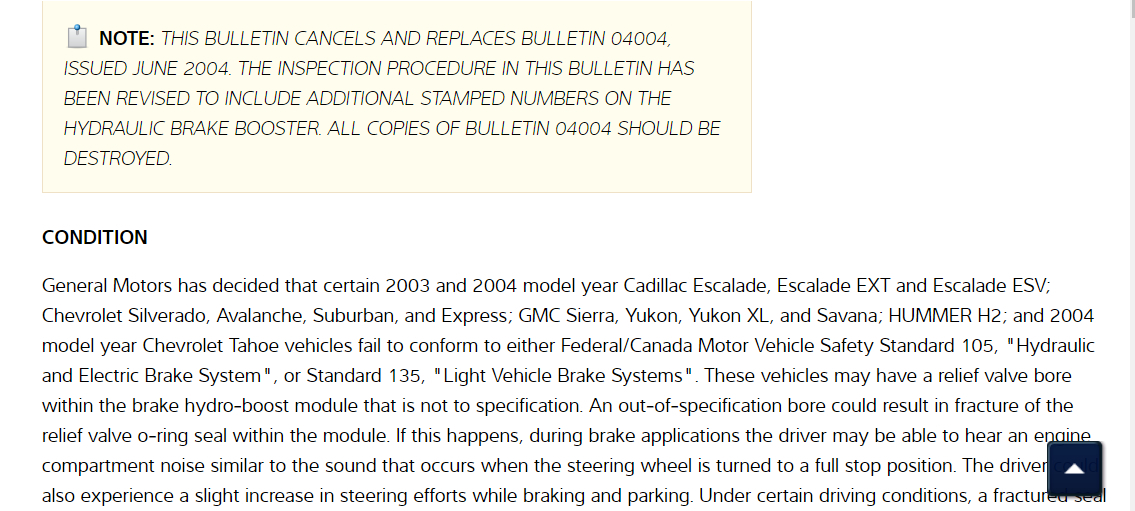
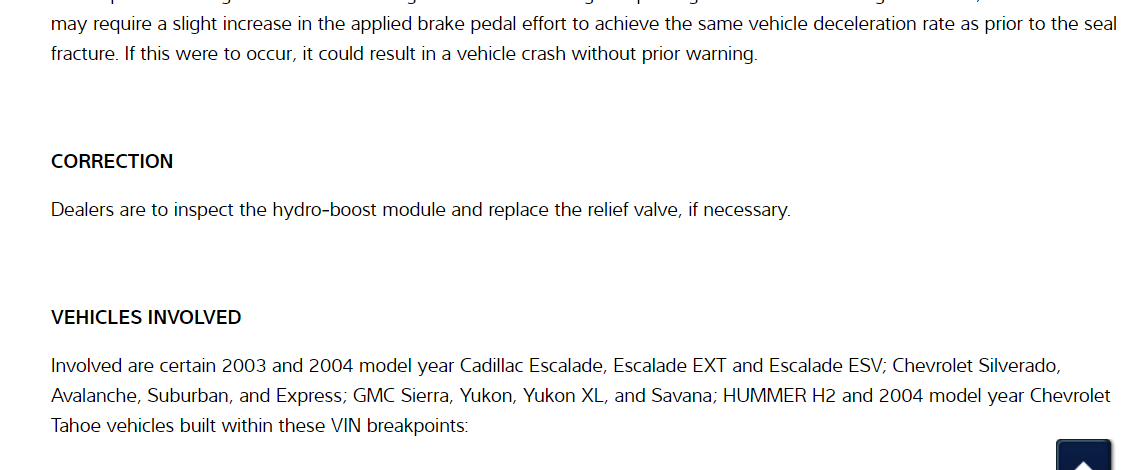
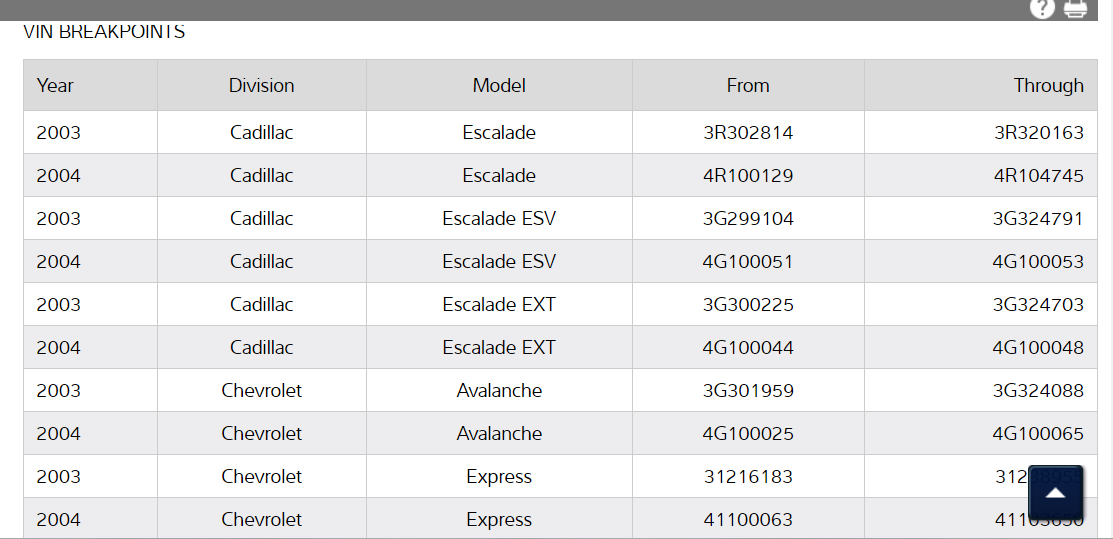
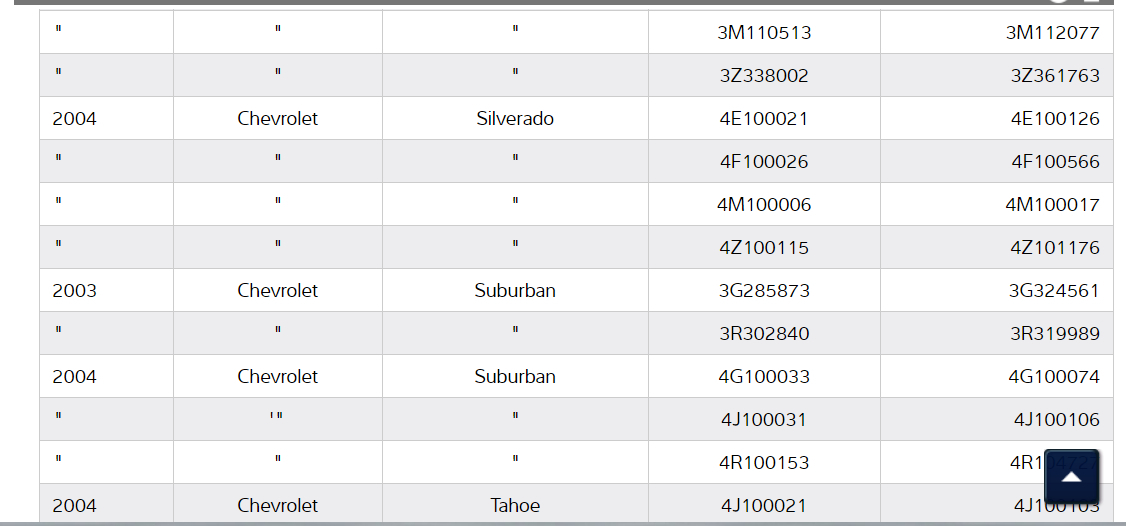
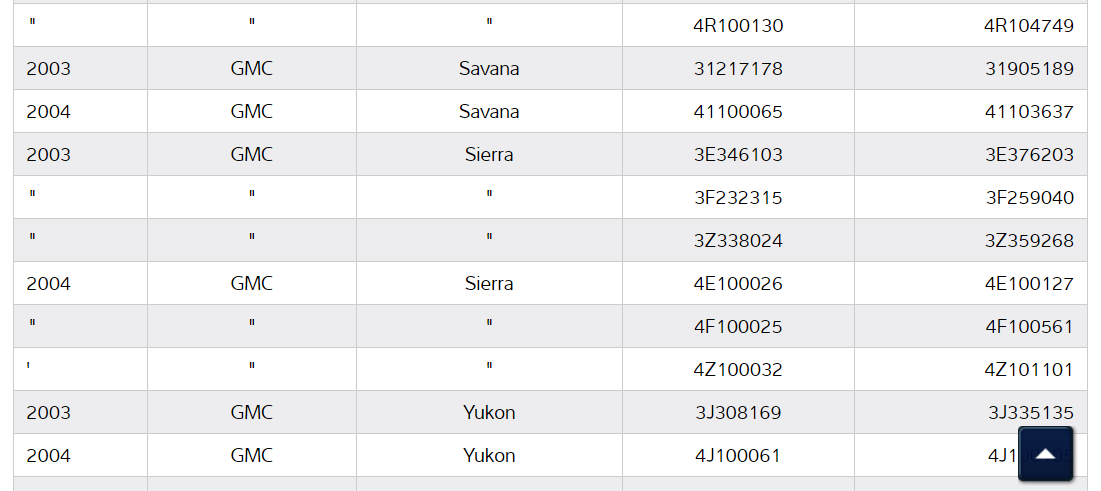
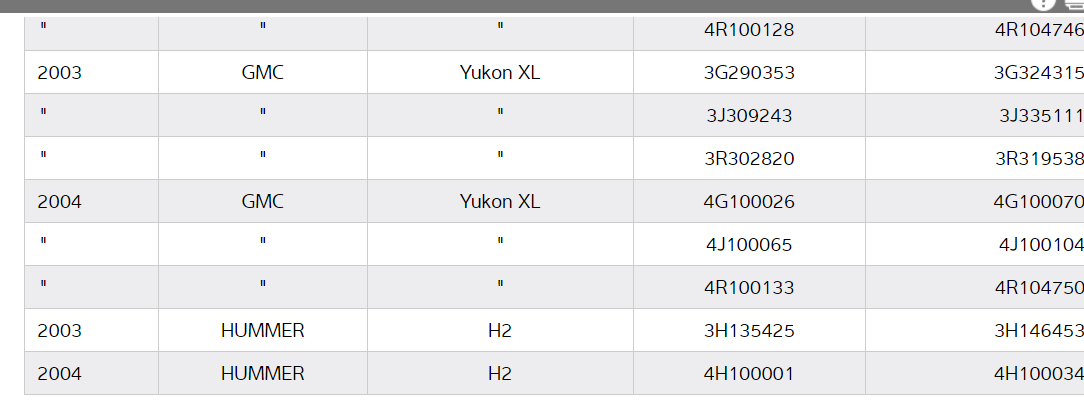
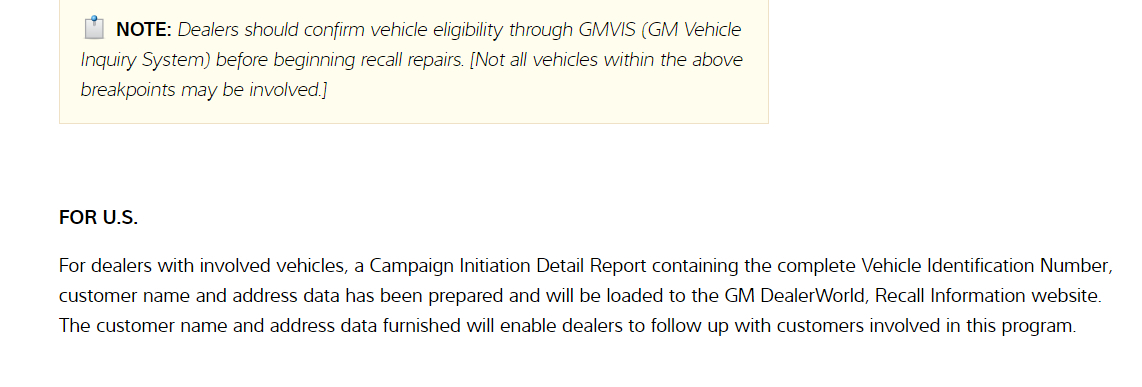
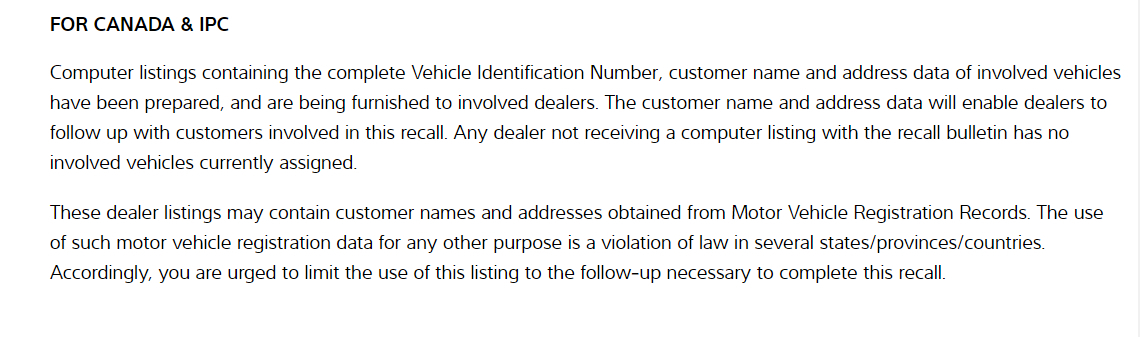
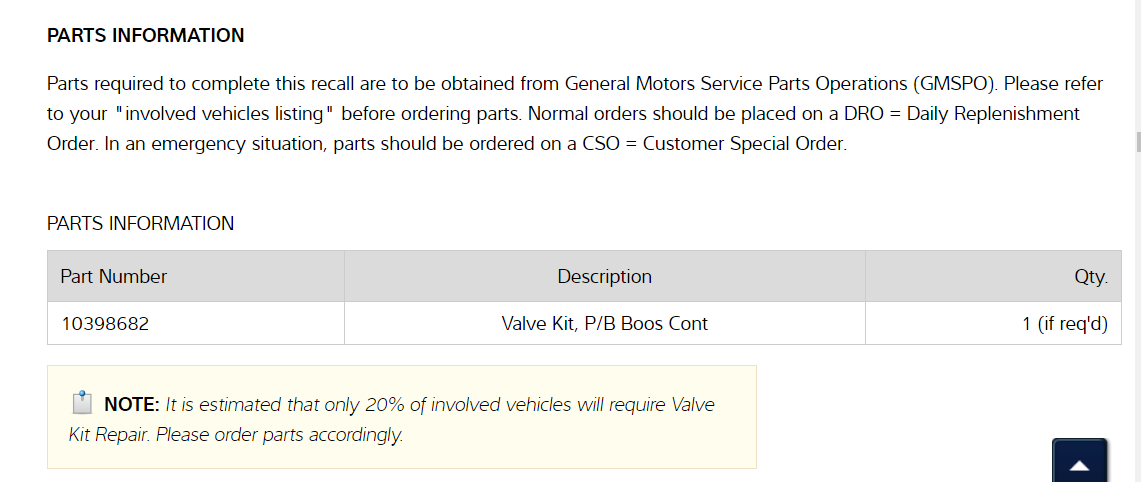
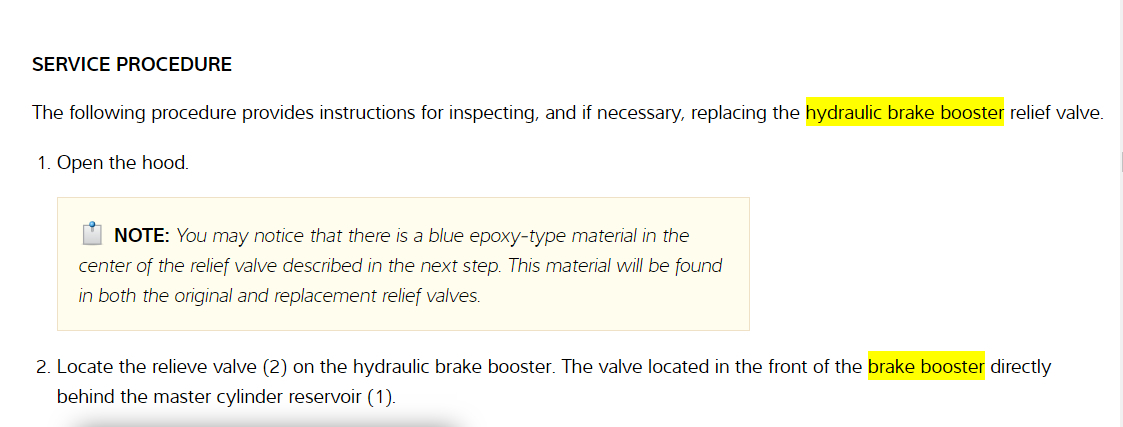
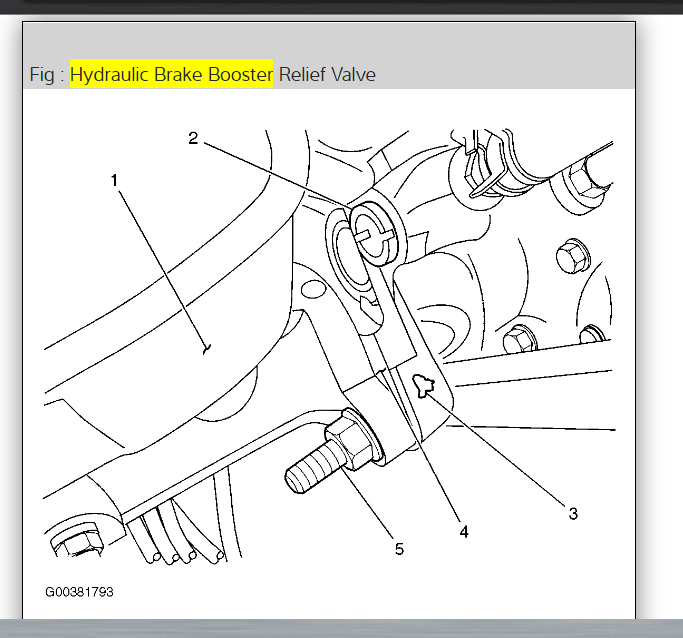
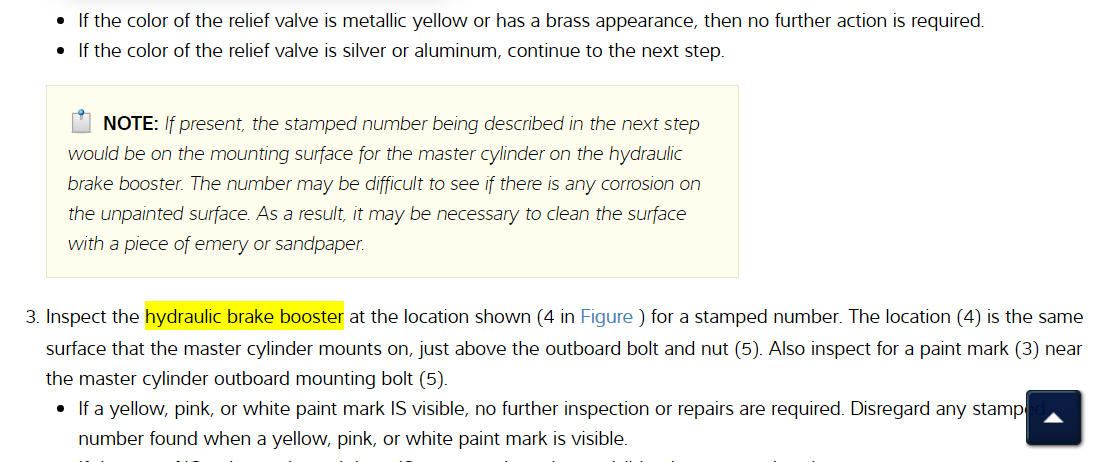
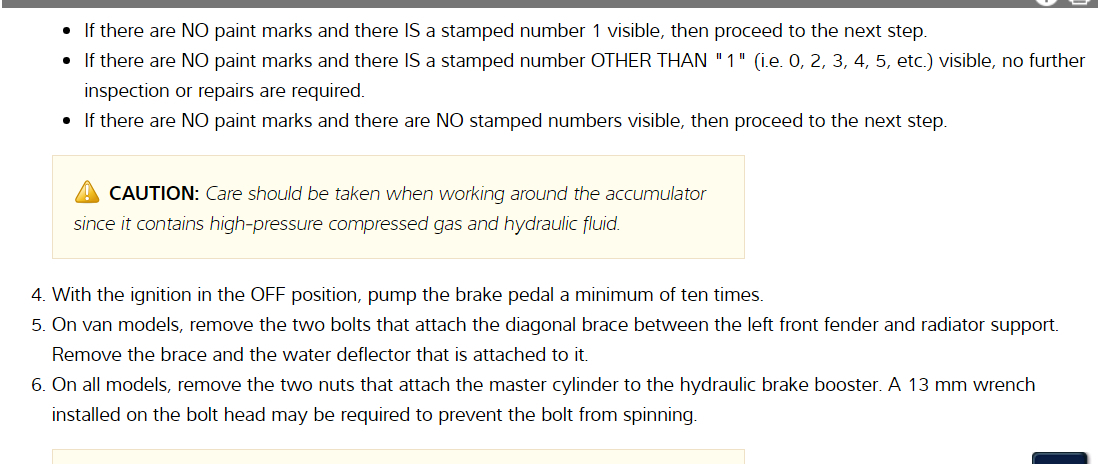
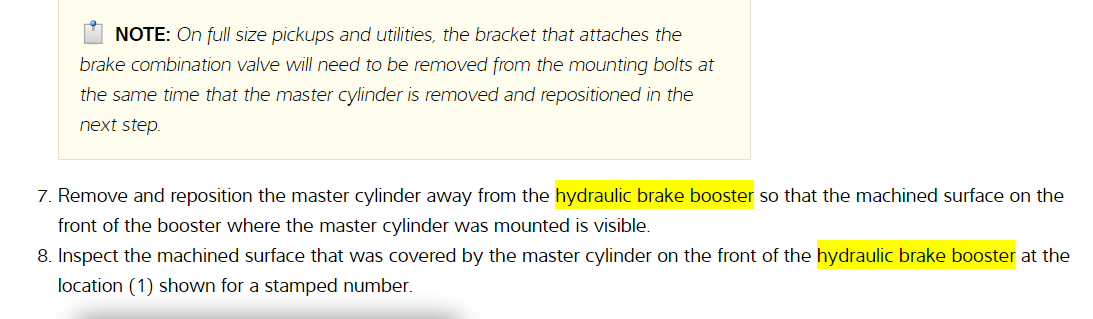
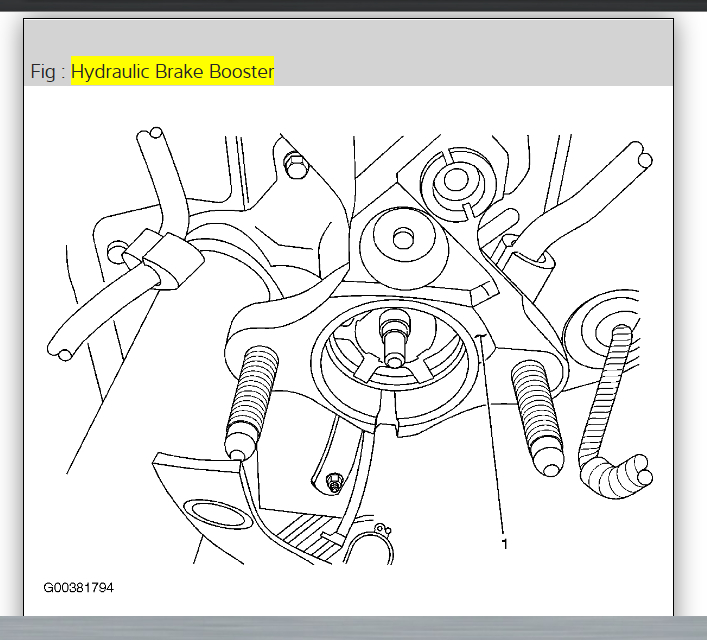
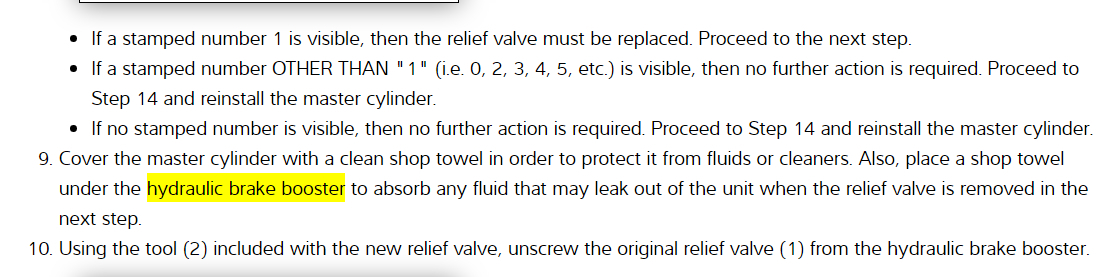
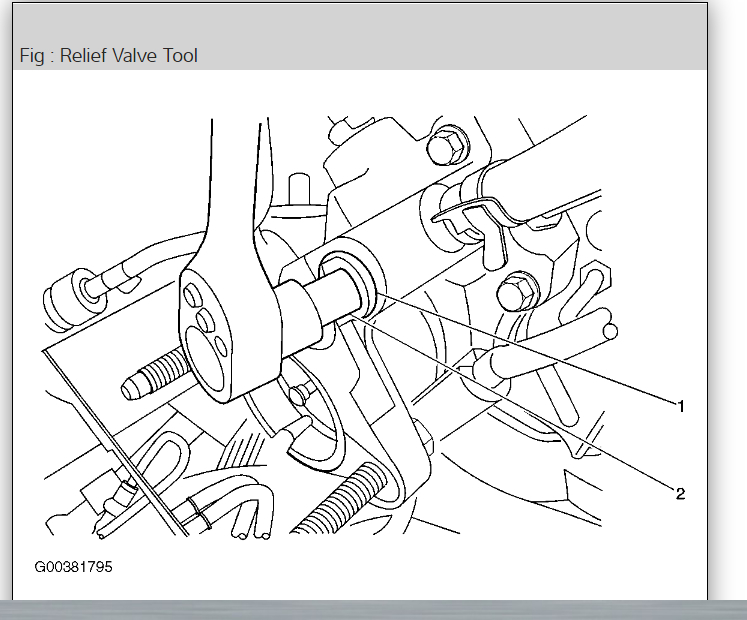
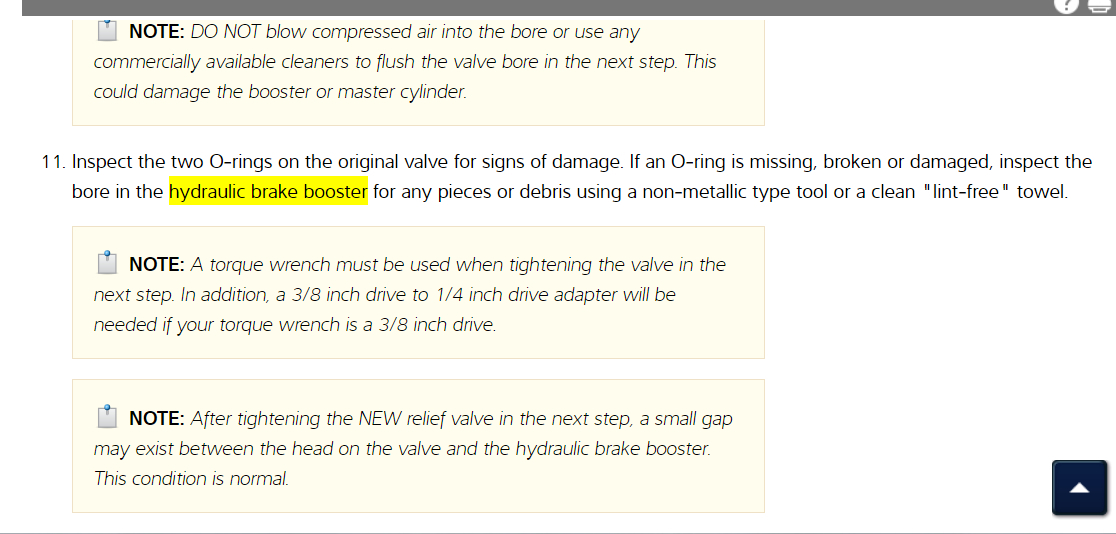
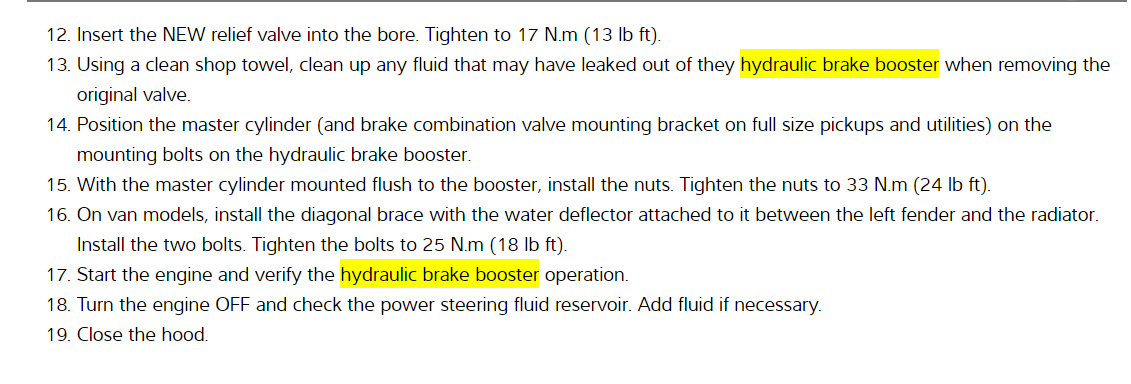
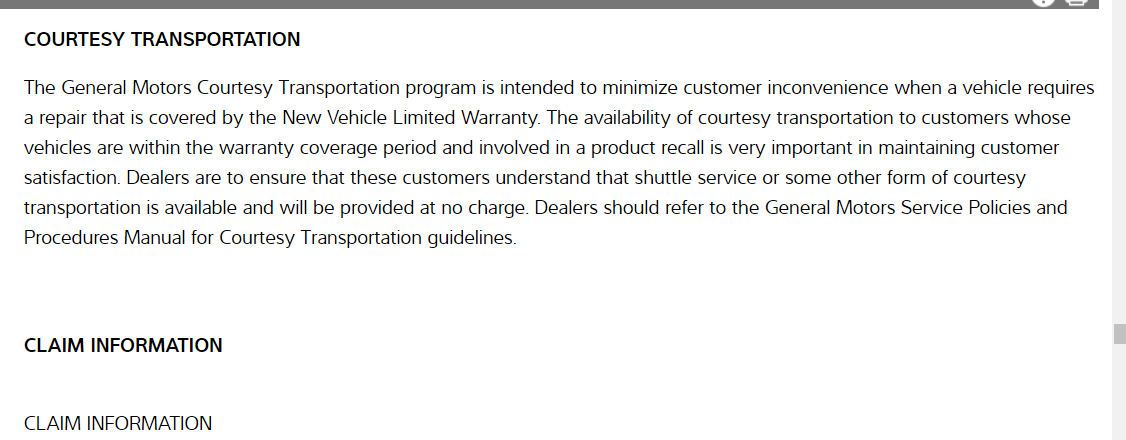
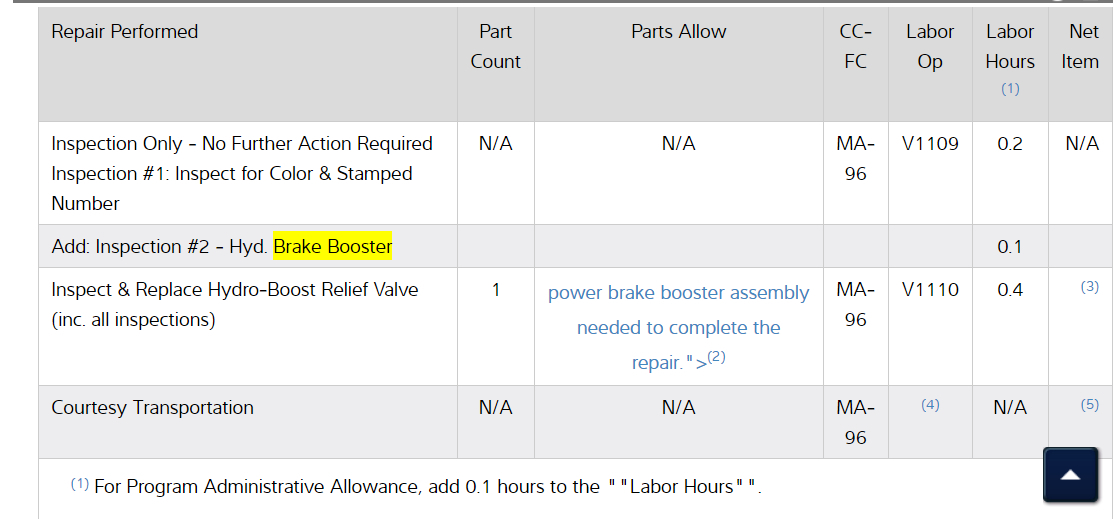
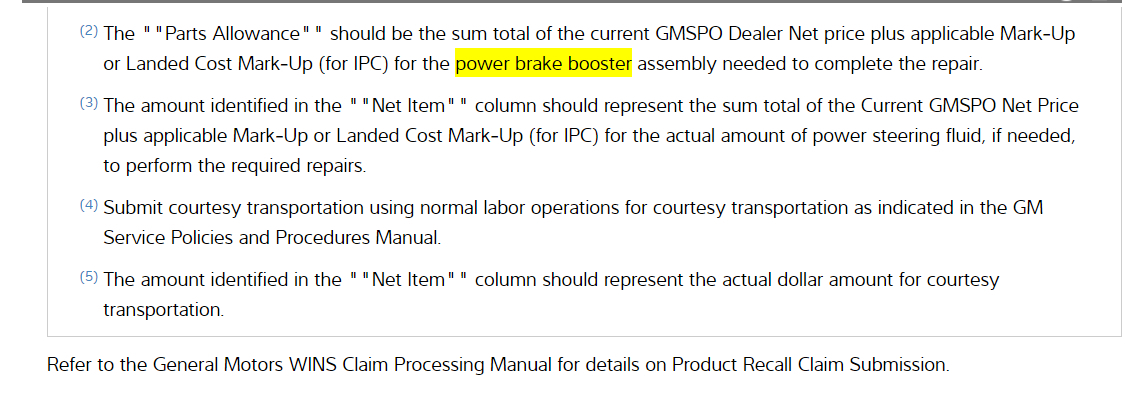
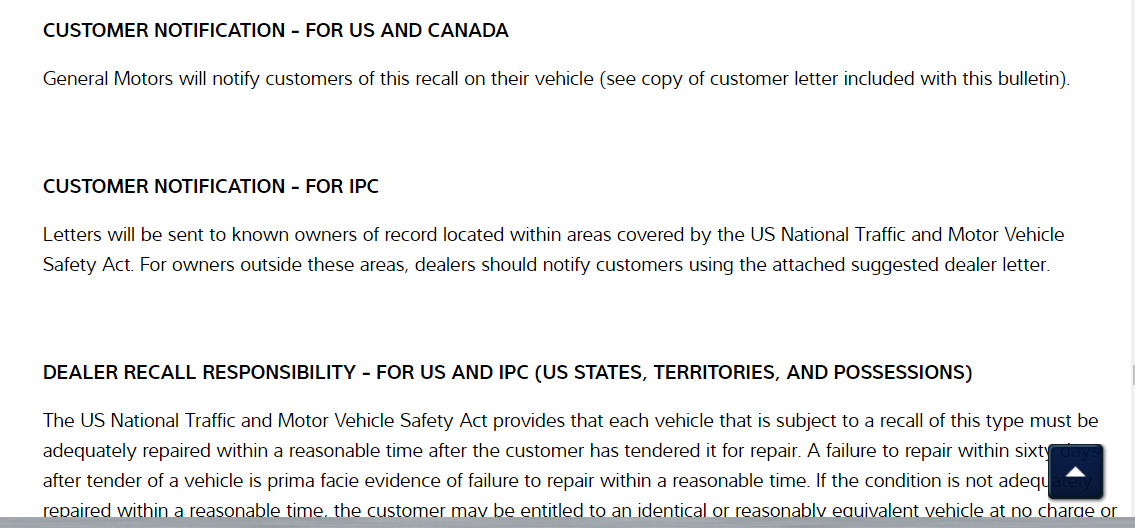
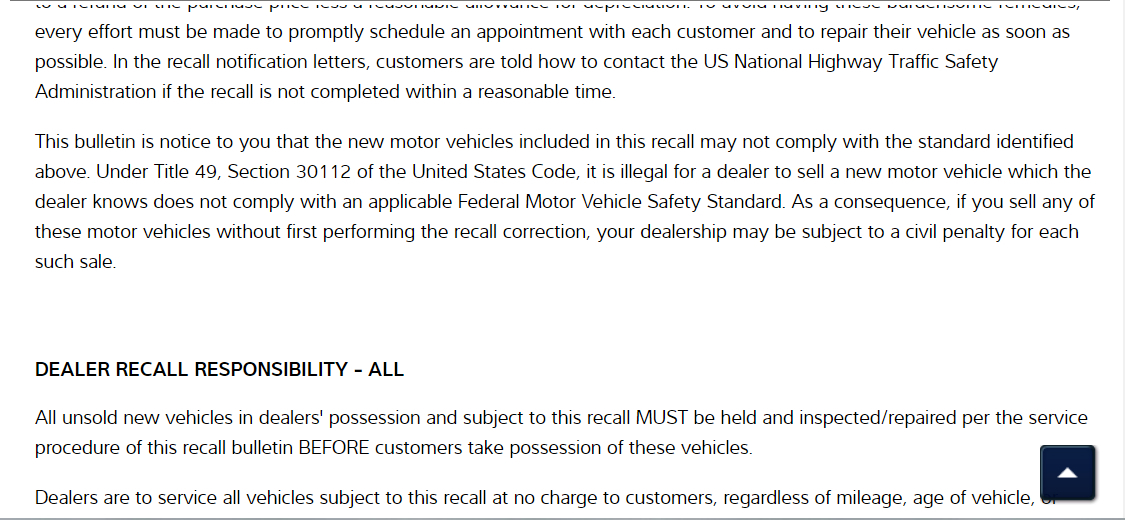
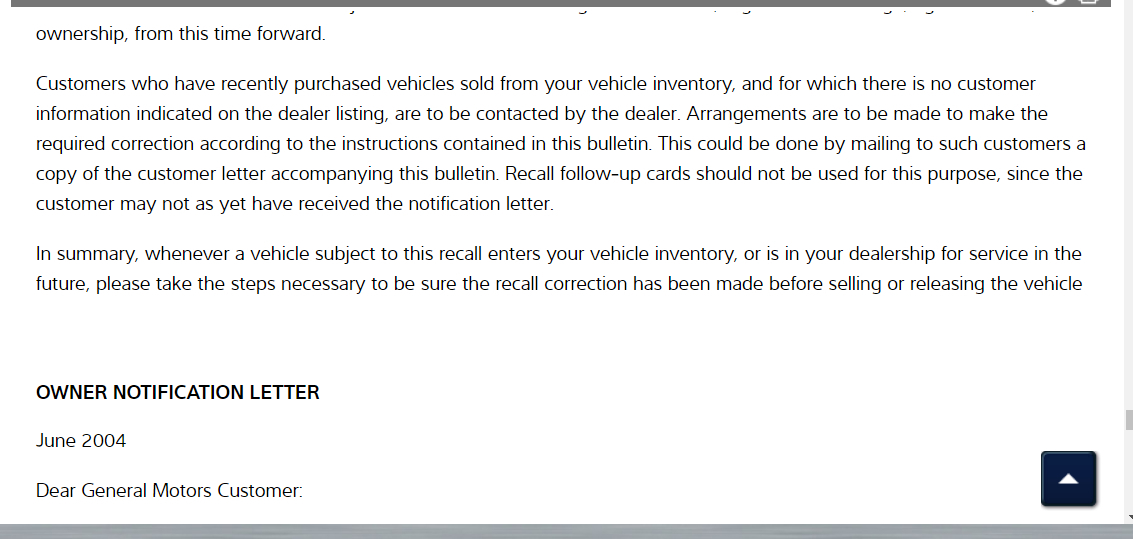
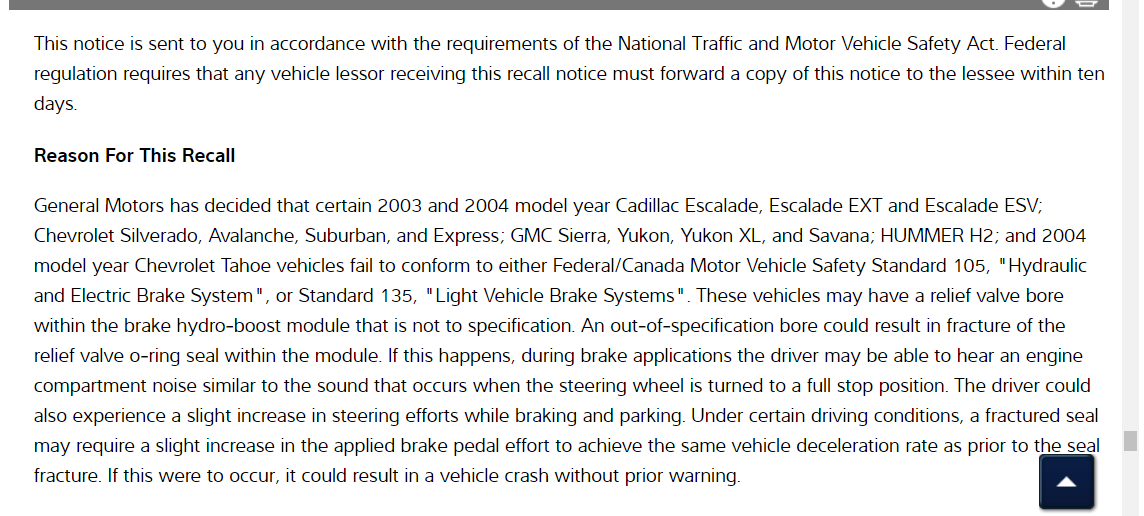
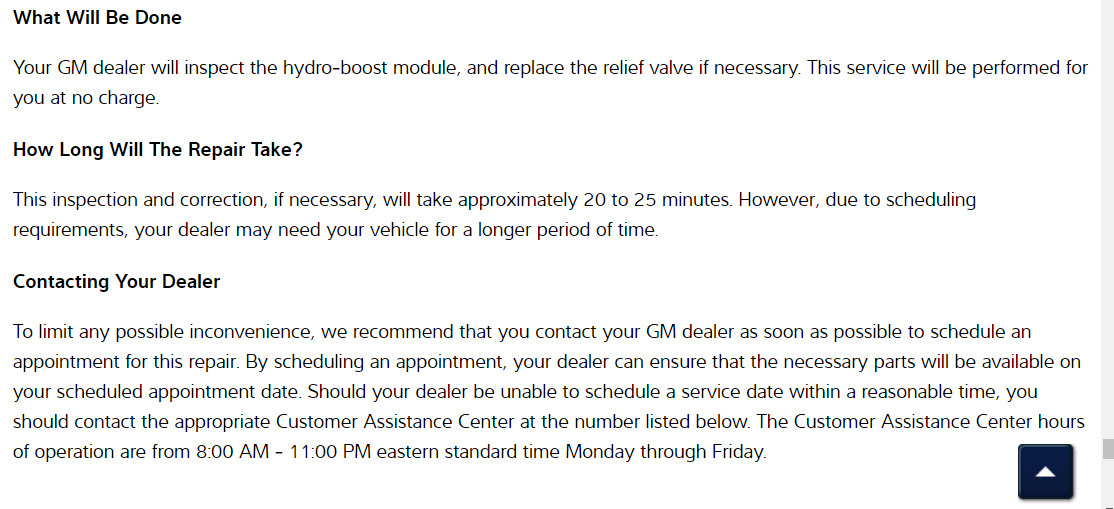
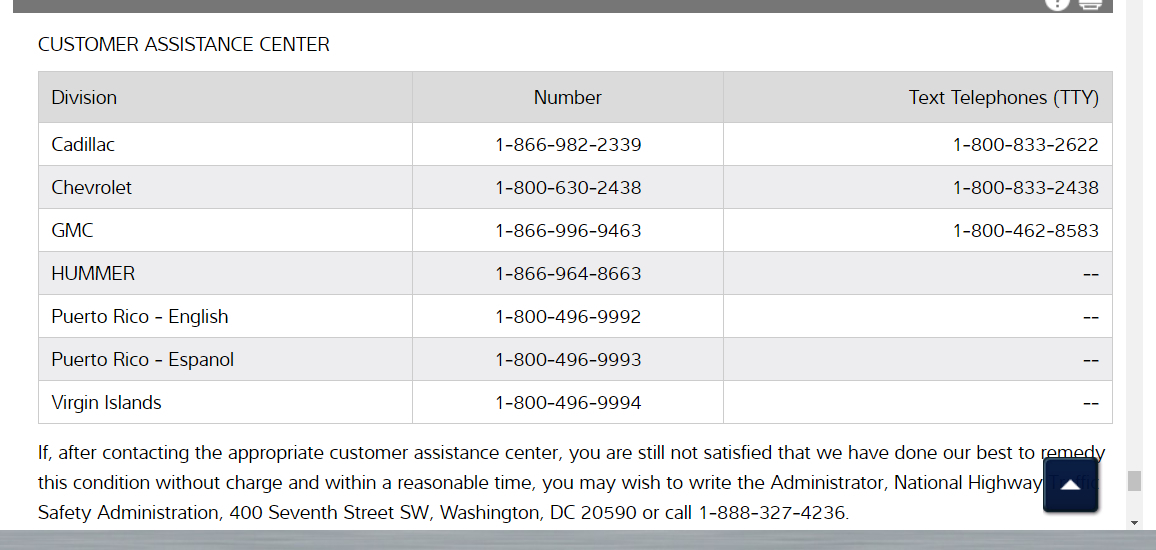
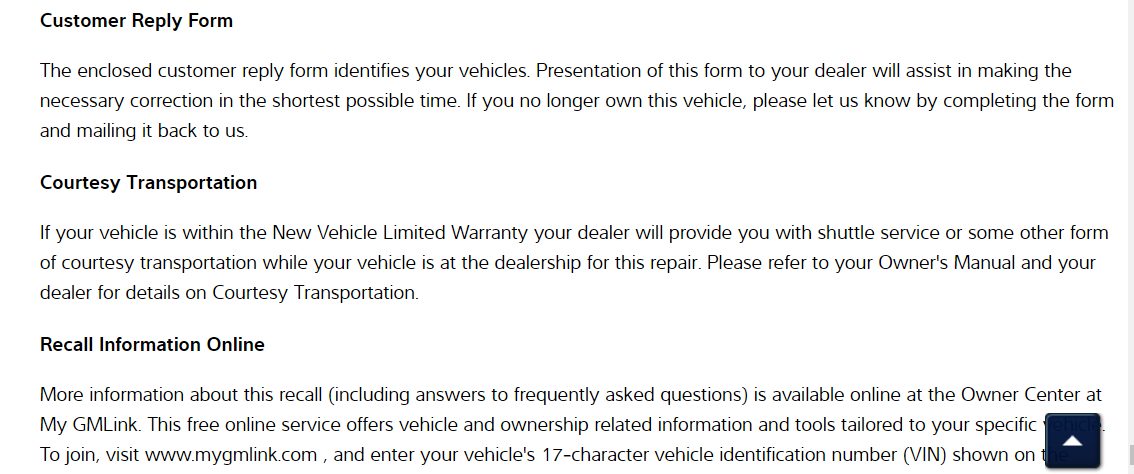
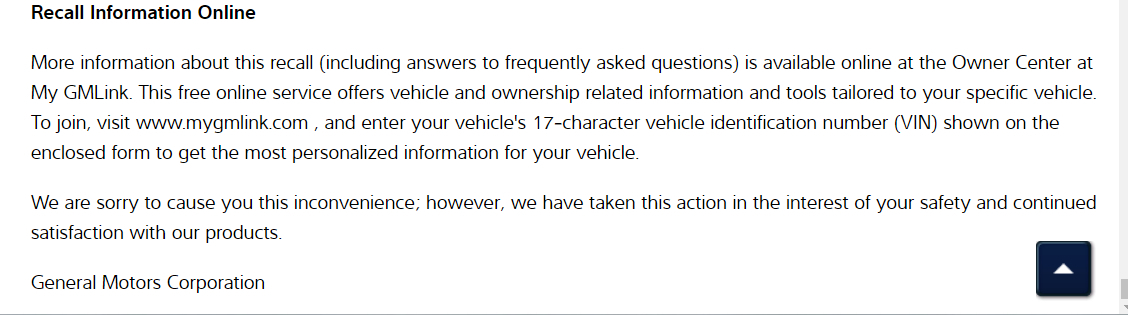
I am so sorry. I thought somebody named Ty answered your question and hadn't answered back, so I assumed you had it fixed. My bad, I apologize. Okay, when I was doing a little more research on your vehicle I came across this Technical Service Bulletin(Recall) for your vehicle. I have included it in the diagrams down below. I do not see an expiration on it anywhere, so it is probably still good. Go through it and give your local dealer a call. You might be able to have them fix it for free. Get back to us with what they say. If not, we will just go from there.

Thanks,
Alex
2CarPros
Feb 22, 2021 at 5:24 PM (Merged)
Avatar
DUANE GROSHEK
  • MEMBER
  • 3 POSTS
My pedal goes almost to the floor even after I have bled all four wheels several times.
Feb 22, 2021 at 5:24 PM (Merged)

Avatar
STEVE W.
  • CERTIFIED EXPERT
  • 15,113 POSTS
The early 2000's trucks never had the best pedal feel, but that still sounds poor. Did you get any air in the system? If so you may need to use a scan tool to activate the ABS unit to bleed it fully. Why did you need to bleed them originally?
Feb 22, 2021 at 5:24 PM (Merged)
Avatar
DUANE GROSHEK
  • MEMBER
  • 3 POSTS
I changed all of the calipers because the bleeders were so corroded that I could not open them without snapping them. I wanted to bleed the system assuming there was air in the lines.
Feb 22, 2021 at 5:24 PM (Merged)
Avatar
DUANE GROSHEK
  • MEMBER
  • 3 POSTS
I bought the truck used and noticed a softer pedal right from the get-go. Could there possibly be an issue with bypass in the master cylinder?
Feb 22, 2021 at 5:24 PM (Merged)
Avatar
STEVE W.
  • CERTIFIED EXPERT
  • 15,113 POSTS
Bypass is easy to find, pump the brake a couple times with the engine off, then step on the pedal and hold it, if it sinks you have bad seals in the master or a leak. If it stays solid until you start the engine you probably have an ABS related issue.
Feb 22, 2021 at 5:24 PM (Merged)