soft pedal - brakes go to the floor?

2001 CHEVROLET SILVERADO
100,000 MILES • 6.0L • V8 • RWD • AUTOMATIC
Avatar
TCOB
  • MEMBER
  • 19 POSTS
Feels as if you have barely any braking power to stop,have to anticipate and apply several car links ahead to stop. found leaking master cylinder and hydro boost also they were changed and still no better,did bench bleed master cylinder and I did bleed hydro boost.Peddle comes back slow and brakes seem to be squeaking some. Can anyone help
Jun 13, 2014 at 2:32 PM
Advertisement
Avatar
HMAC300
  • CERTIFIED EXPERT
  • 48,601 POSTS
it probably has air in anti lock unit you'll have to rebleed it and or have a pro do it so he can open the valves on the abs with a scanner. can take up to 3 qts. These guides can help you fix it.

https://youtu.be/w7gUsj2us0U

and

https://youtu.be/WDxvEQrMkBg

and

https://www.2carpros.com/articles/brake-pedal-goes-to-the-floor

Please run down this guide and report back.
Nov 22, 2017 at 11:27 AM
Avatar
TCOB
  • MEMBER
  • 19 POSTS
Thank you. Very helpful to know. I think I went thru that much fluid and no good so again I thank you!!!
Nov 22, 2017 at 11:27 AM
Advertisement
Avatar
CHJONAS
  • MEMBER
  • 2 POSTS
Brakes problem
2001 Chevy Silverado V8 Four Wheel Drive Automatic alot miles

I was wanting to know if you can answer my question because i have done everything that I know to do. My brake pedal goes to the floor when my truck is running I have checked for any visible leaks , bled the whole system , and installed a new master cylinder. I even went as far as cleaning out the brake calipers. Nothing seems to help the fact that I have absolutely no brake pedal. I am getting ample amount of fluid to each caliper. Is there any way to adjust the push rod on the brake booster itself? Any help that you can give me will be greatly appreciated. Thanks . It is a vacuum Brake booster ,too.
Feb 22, 2021 at 5:26 PM (Merged)
Avatar
JACOBANDNICKOLAS
  • CERTIFIED EXPERT
  • 110,175 POSTS
Are you sure there are no leaks at the rear wheel cylenders? Have you checked the rubber brake hoses to the calipers to see if they are expanding when the brake is applied? As far as adjustment, I would suggest double checking to see if there is one on the pushrod. However, I don't believe there is on this vehicle.

Let me know what you find.
Feb 22, 2021 at 5:26 PM (Merged)
Avatar
CHJONAS
  • MEMBER
  • 2 POSTS
Four Wheel Disc Brakes. Braided Stainless lines no rubber ones. In the process of rebuilding all four calipers, but just can't figure out why the brake pedal goes to the floor. when engine is off you can pump the brakes and you can feel the pedal stiffen up but soon as you start it there is absolutely NO pedal. Everything seems to be correct by all the checks in my Haynes manual. Maybe I will stumble across it , soon I hope.
Feb 22, 2021 at 5:26 PM (Merged)
Avatar
JACOBANDNICKOLAS
  • CERTIFIED EXPERT
  • 110,175 POSTS
Let me know. If there is no adjustment on the pushrod and nothing is leaking, my guess is you got another bad master cylender. Brakes are really a simple system. You get a pedal, but as soon as you get the assist, you are able to push the pedal to the floor. That sounds like the MC. If there are no leaks, everything is bled, the calipers are good... fluid then has to be bypassing in the MC.

Do you have 4 wheel disc or rear drum brakes?
Feb 22, 2021 at 5:26 PM (Merged)
Avatar
SPCQUIGGA
  • MEMBER
  • 4 POSTS
It sounds like air in the ABS system. I have the same issue with my truck, this is what i was told it was.
Feb 22, 2021 at 5:26 PM (Merged)
Avatar
PIPERJR
  • MEMBER
  • 2 POSTS
I have replaced my master cylinder,rotors,calipers and completely bled my brake system and still have no pedal I have thoroughly checked for leaks and have none, what am I missing I would love to give a donation but I have just spent 700 bucks and am flat broke will someone please help me out

I tracked it down in searching for leaks but found no bleeder. Do I just crack the line, and if so how to know which one there are 5.
Feb 22, 2021 at 5:26 PM (Merged)
Avatar
RASMATAZ
  • CERTIFIED EXPERT
  • 75,992 POSTS
You need a special tool to bleed it-check the parts store but here is a guide that will help you as well

https://www.2carpros.com/articles/brake-pedal-goes-to-the-floor

Feb 22, 2021 at 5:26 PM (Merged)
Avatar
PIPERJR
  • MEMBER
  • 2 POSTS
thank you
Feb 22, 2021 at 5:26 PM (Merged)
Avatar
FRANK VAUGHN
  • MEMBER
  • 2 POSTS
My truck is a 2500hd with hydroboost.

I have put on new:
A master cylinder.
An ABS unit.
Complete brake line set .
Calipers .
Rotors .
Pads.
I still have now pedal with the engine running bit a moderate pedal with engine off.
Feb 22, 2021 at 5:26 PM (Merged)
Avatar
MHPAUTOS
  • CERTIFIED EXPERT
  • 31,937 POSTS
Sounds as if you still have air trapped in the hydraulic system. This guide can help you fix it.

https://youtu.be/w7gUsj2us0U

and

https://youtu.be/WDxvEQrMkBg

and

https://www.2carpros.com/articles/brake-pedal-goes-to-the-floor

Please run down this guide and report back.
Feb 22, 2021 at 5:26 PM (Merged)
Avatar
FRANK VAUGHN
  • MEMBER
  • 2 POSTS
I have done the automated bleed with the scan tool many times, it still does not yield any different results.
Feb 22, 2021 at 5:26 PM (Merged)
Avatar
MHPAUTOS
  • CERTIFIED EXPERT
  • 31,937 POSTS
is the pedal free play excessive? you only need a few mm or so, excessive pedal free play will give a low pedal.
Feb 22, 2021 at 5:26 PM (Merged)
Avatar
FRANKVAUGH69
  • MEMBER
  • 1 POST
No free play if engine is running the peddle will not return and there is no brakes until you get to the floor
Feb 22, 2021 at 5:26 PM (Merged)
Avatar
MHPAUTOS
  • CERTIFIED EXPERT
  • 31,937 POSTS
typical of air still trapped in system, you may have one circuit affected, try clamping off all flexi hoses and see if pedal is ok, if so remove one clamp at a time and see what the pedal does.
Feb 22, 2021 at 5:26 PM (Merged)
Avatar
LM7_AR501
  • MEMBER
  • 2 POSTS
My brakes keep going out when I fully turn my steering wheel on either side. Brake pedal will get really hard when I completely turn the steering wheel and when I let go of the steering wheel the brake pedal just sinks and brakes go out I have to pump the pedal for them to come back. Works perfectly fine when going straight. I’ve already replaced master cylinder and brake booster and still no difference. Truck does have a cam Not sure if that could be causing problems but I’m just out of luck and can’t find anything on the internet. Any help would be very much appreciated!
Feb 22, 2021 at 5:26 PM (Merged)
Avatar
JACOBANDNICKOLAS
  • CERTIFIED EXPERT
  • 110,175 POSTS
Hi,

That is odd. The brakes are a simple hydraulic unit. It shouldn't matter if you are turning the wheel when braking.

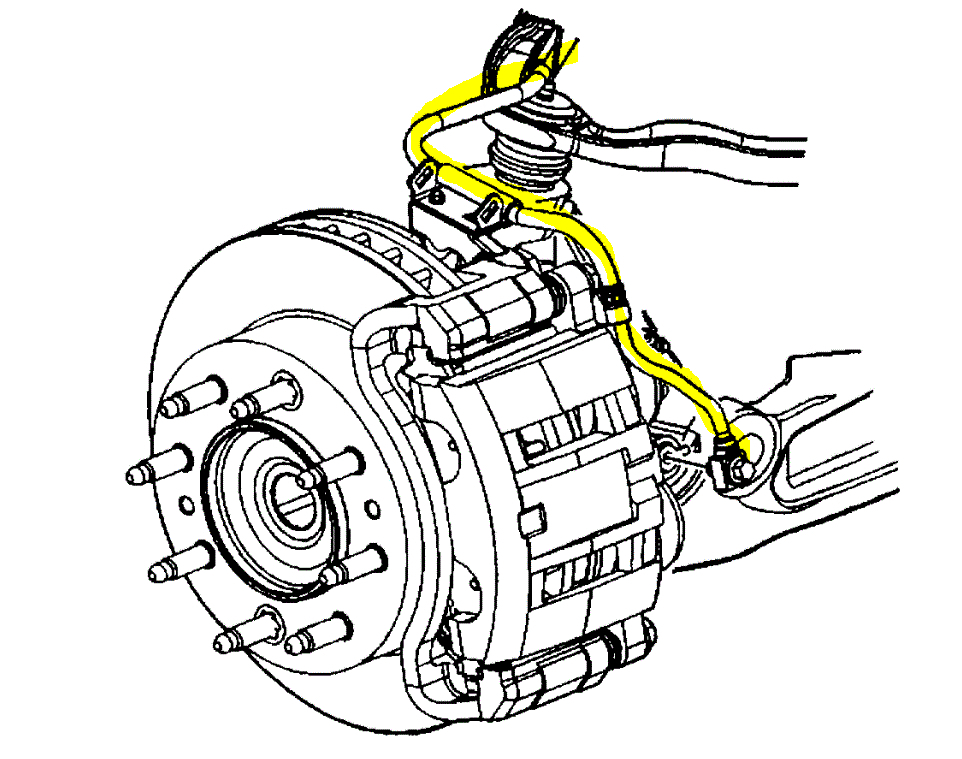
Tell me, is it the brake pedal gets hard to push when turning or it goes to the floor? If it goes to the floor, try something. Have a helper turn the wheels and apply the brakes while you watch the rubber brake hoses which attach to the rear of the brake calipers. See if one is expanding. I attached a pic and highlighted what I'm referring to.

Also, let me know if the vehicle has a traditional vacuum brake booster or if it is a hydrostatic system that functions via the power steering pump pressure.

Let me know.

Joe
Feb 22, 2021 at 5:26 PM (Merged)
Avatar
LM7_AR501
  • MEMBER
  • 2 POSTS
When I fully turn I can feel the brake pedal pushing back and getting hard but as soon as I let go of the steering wheel it completely sinks down and I have to press it a few times as I straighten out the steering wheel to get my brakes back. I believe it does have the traditional vacuum brake booster.
Feb 22, 2021 at 5:26 PM (Merged)
Avatar
JACOBANDNICKOLAS
  • CERTIFIED EXPERT
  • 110,175 POSTS
Okay, I need to confirm which system you have. Interestingly, the hydro-boost systems show technical service bulletins related to full turns and brakes applying themselves.

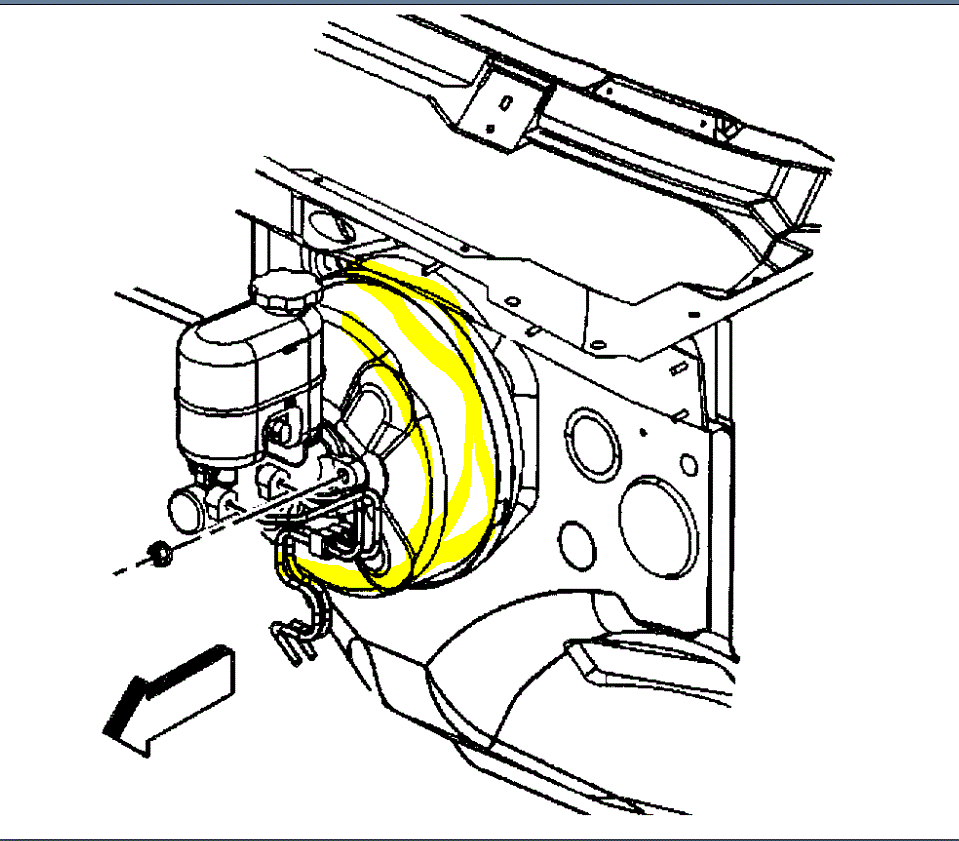
Take a look at the pic below. I highlighted a vacuum brake booster. Is that what is located behind the brake master cylinder?

Let me know.
Joe
Feb 22, 2021 at 5:26 PM (Merged)
Avatar
STRAILER
  • CERTIFIED EXPERT
  • 53,854 POSTS
It sounds like the bearing hubs are going out forcing the brake pad back into the caliper. here is a video on how to change them out:

https://youtu.be/ZgiPRG6jffc

Check out the diagrams (below). Let us know what happens and please upload pictures or videos of the problem.

Feb 22, 2021 at 5:26 PM (Merged)
Avatar
  • MEMBER
  • 3 POSTS
New master, new brake lines, no ABS light, ABS works, pedal goes almost all the way down! 2 inches away from floor, has brakes, cant build the pedal back up. And code reader says o link to bleed anti-lock??
Feb 22, 2021 at 5:26 PM (Merged)
Avatar
JACOBANDNICKOLAS
  • CERTIFIED EXPERT
  • 110,175 POSTS
Hi,

How were the brakes bleed after the work was done? Here is a link that shows how to bleed and flush a system. Since you replaced the lines and master cylinder, there should be no reason to flush it. However, take a look through the bleeding procedure to confirm you did it the same way.

https://www.2carpros.com/articles/how-to-bleed-or-flush-a-car-brake-system


Let me know.

Joe
Feb 22, 2021 at 5:26 PM (Merged)
Avatar
  • MEMBER
  • 3 POSTS
Had no brakes at all, pedal went to floor.
Feb 22, 2021 at 5:26 PM (Merged)
Avatar
  • MEMBER
  • 3 POSTS
Do you have a phone number I could talk in person?
Feb 22, 2021 at 5:26 PM (Merged)
Avatar
JACOBANDNICKOLAS
  • CERTIFIED EXPERT
  • 110,175 POSTS
Hi,

We are not permitted to reply on the phone. I'm sorry. Listen, are you getting fluid from each wheel when you bleed them? Have you started from the wheel furthest away from MC (RR, LF, RF, LF)? Also, there are two options when it comes to rear brakes, disc or drum. Are you sure the rear brakes are properly adjusted? If everything I mentioned is good, you still have air in the system. You will need to perform an automated bleed procedure which requires a scan tool. I suspect there is air in the abs.

Here are the directions which start the same as traditional bleeding. However, at step 10 is where the computer has to do its job. Since you have some pedal, this is my first suspect.

__________________________________________________

2000 Chevy Truck K 2500 Truck 4WD V8-6.0L VIN U
Automated Bleed Procedure
Vehicle Brakes and Traction Control Hydraulic System Brake Bleeding Service and Repair Procedures Automated Bleed Procedure
AUTOMATED BLEED PROCEDURE
Important:
^ Use the two-person bleed procedure under the following conditions:
- Installing a new Electro-Hydraulic Control Unit (EHCU) or new Brake Pressure Modulator Valve (BPMV).
- Air is trapped in the valve body
^ Do not drive the vehicle until the brake pedal feels firm.
^ Do not reuse brake fluid that is used during bleeding.
^ Use the vacuum, the pressure and the gravity bleeding procedures only for base brake bleeding.

Two Person Procedure

1. Raise the vehicle in order to access the system bleed screws.
2. Bleed the system at the right rear wheel first.
3. Install a clear hose on the bleed screw.
4. Immerse the opposite end of the hose into a container partially filled with clean DOT 3 brake fluid.
5. Open the bleed screw 1/2 to one full turn.
6. Slowly depress the brake pedal. While the pedal is depressed to its full extent, tighten the bleed screw.
7. Release the brake pedal and wait 10 - 15 seconds for the master cylinder pistons to return to the home position.
8. Repeat the previous steps for the remaining wheels. The brake fluid which is present at each bleed screw, should be clean and free of air.
9. This procedure may use more than a pint of fluid per wheel. Check the master cylinder fluid level every four to six strokes of the brake pedal in order to avoid running the system dry.
10. Press the brake pedal firmly and run the Scan Tool Automated Bleed procedure (all except diesels above 15,000 GVW) once, or run the Function Test (diesels above 15,000 GVW) four times. Release the brake pedal between each test.
11. Bleed all four wheels again using Steps 3 - 9. This will remove the remaining air from the brake system.
12. Evaluate the feel of the brake pedal before attempting to drive the vehicle.
13. Bleed the system as many times as necessary in order to obtain the appropriate feel of the pedal.

_______________________________________

Let me know if that helps.

Joe
Feb 22, 2021 at 5:26 PM (Merged)

Avatar
DYLANDUDE15
  • MEMBER
  • 1 POST
I have replaced my two front brake calipers and pads. I also have bleed them number of times and still going to the floor. There is no leaks what so ever. I even flushed my lines and fluid reservoir. Still do not understand why my pedal is going to the floor. Would the master cylinder be bad, even if it does not leak? Do I have check valves in my brake lines?
Feb 22, 2021 at 5:26 PM (Merged)
Avatar
ASEMASTER6371
  • CERTIFIED EXPERT
  • 52,796 POSTS
Good evening.

Yes, the master cylinder can be bad. The seals internally may not be holding pressure and allowing the fluid to bypass instead of building pressure.

Do you have ABS?

Roy

https://www.2carpros.com/articles/brake-pedal-goes-to-the-floor

Important:
^ Use the two-person bleed procedure under the following conditions:
- Installing a new Electro-Hydraulic Control Unit (EHCU) or new Brake Pressure Modulator Valve (BPMV).
- Air is trapped in the valve body
^ Do not drive the vehicle until the brake pedal feels firm.
^ Do not reuse brake fluid that is used during bleeding.
^ Use the vacuum, the pressure and the gravity bleeding procedures only for base brake bleeding.

Two Person Procedure

1. Raise the vehicle in order to access the system bleed screws.
2. Bleed the system at the right rear wheel first.
3. Install a clear hose on the bleed screw.
4. Immerse the opposite end of the hose into a container partially filled with clean DOT 3 brake fluid.
5. Open the bleed screw 1/2 to one full turn.
6. Slowly depress the brake pedal. While the pedal is depressed to its full extent, tighten the bleed screw.
7. Release the brake pedal and wait 10 - 15 seconds for the master cylinder pistons to return to the home position.
8. Repeat the previous steps for the remaining wheels. The brake fluid which is present at each bleed screw, should be clean and free of air.
9. This procedure may use more than a pint of fluid per wheel. Check the master cylinder fluid level every four to six strokes of the brake pedal in order to avoid running the system dry.
10. Press the brake pedal firmly and run the Scan Tool Automated Bleed procedure (all except diesels above 15,000 GVW) once, or run the Function Test (diesels above 15,000 GVW) four times. Release the brake pedal between each test.
11. Bleed all four wheels again using Steps 3 - 9. This will remove the remaining air from the brake system.
12. Evaluate the feel of the brake pedal before attempting to drive the vehicle.
13. Bleed the system as many times as necessary in order to obtain the appropriate feel of the pedal.
Feb 22, 2021 at 5:26 PM (Merged)
Avatar
LIMADOTY
  • MEMBER
  • 3 POSTS
Just replace my pads and rotors on all four wheels. Flushed the brake fluid and bled the brakes multiple times. No visible bubbles. Pedal still goes to the floor. Brakes were working before i changed pads, rotors, fluid.
Feb 22, 2021 at 5:27 PM (Merged)
Avatar
ASEMASTER6371
  • CERTIFIED EXPERT
  • 52,796 POSTS
Good afternoon

Was this an issue prior to the repair? This guide can help you fix it.

https://youtu.be/w7gUsj2us0U

and

https://youtu.be/WDxvEQrMkBg

and

https://www.2carpros.com/articles/brake-pedal-goes-to-the-floor

Please run down this guide and report back.

Did you bleed the ABS with a scan tool? There is an automated brake bleeding procedure for the ABS. Without a scan tool, you will have this issue.

Did you check the master cylinder to be sure it is putting out pressure?

Roy

AUTOMATED BLEED PROCEDURE
Important:
^ Use the two-person bleed procedure under the following conditions:
- Installing a new Electro-Hydraulic Control Unit (EHCU) or new Brake Pressure Modulator Valve (BPMV).
- Air is trapped in the valve body
^ Do not drive the vehicle until the brake pedal feels firm.
^ Do not reuse brake fluid that is used during bleeding.
^ Use the vacuum, the pressure and the gravity bleeding procedures only for base brake bleeding.

Two Person Procedure

1. Raise the vehicle in order to access the system bleed screws.
2. Bleed the system at the right rear wheel first.
3. Install a clear hose on the bleed screw.
4. Immerse the opposite end of the hose into a container partially filled with clean DOT 3 brake fluid.
5. Open the bleed screw 1/2 to one full turn.
6. Slowly depress the brake pedal. While the pedal is depressed to its full extent, tighten the bleed screw.
7. Release the brake pedal and wait 10 - 15 seconds for the master cylinder pistons to return to the home position.
8. Repeat the previous steps for the remaining wheels. The brake fluid which is present at each bleed screw, should be clean and free of air.
9. This procedure may use more than a pint of fluid per wheel. Check the master cylinder fluid level every four to six strokes of the brake pedal in order to avoid running the system dry.
10. Press the brake pedal firmly and run the Scan Tool Automated Bleed procedure (all except diesels above 15,000 GVW) once, or run the Function Test (diesels above 15,000 GVW) four times. Release the brake pedal between each test.
11. Bleed all four wheels again using Steps 3 - 9. This will remove the remaining air from the brake system.
12. Evaluate the feel of the brake pedal before attempting to drive the vehicle.
13. Bleed the system as many times as necessary in order to obtain the appropriate feel of the pedal.
Feb 22, 2021 at 5:27 PM (Merged)
Avatar
LIMADOTY
  • MEMBER
  • 3 POSTS
Was not a problem before. I do not have a scan tool, but by some miracle and surprise I was able to find a shop open on Sunday's. With some further google searches, I came to a similar conclusion as you answered. Need the ABS bled completed. So here is to hoping that your solution gets me back on the road soon. Hope to know something in the next hour or so.
Feb 22, 2021 at 5:27 PM (Merged)
Avatar
ASEMASTER6371
  • CERTIFIED EXPERT
  • 52,796 POSTS
Sounds good. Keep me updated.

Roy
Feb 22, 2021 at 5:27 PM (Merged)
Avatar
LIMADOTY
  • MEMBER
  • 3 POSTS
ABS bleeding was the fix.
Feb 22, 2021 at 5:27 PM (Merged)
Avatar
ASEMASTER6371
  • CERTIFIED EXPERT
  • 52,796 POSTS
Good deal. Glad it is fixed.

Roy
Feb 22, 2021 at 5:27 PM (Merged)
Avatar
  • MEMBER
  • 1 POST
pedal goes to the floor and only works so so in last !". Installed new brakes and calipers a year ago they were working okay. A week ago the pedal went to the floor as I described. So I installed new master cylinder and no change. There are no leaks and I see no other problems?
Feb 22, 2021 at 5:27 PM (Merged)
Avatar
ASEMASTER6371
  • CERTIFIED EXPERT
  • 52,796 POSTS
Good afternoon,

Did you bleed the ABS?

https://www.2carpros.com/articles/brake-pedal-goes-to-the-floor

https://www.2carpros.com/articles/how-to-bleed-or-flush-a-car-brake-system

Roy

Important:
Use the two-person bleed procedure under the following conditions:
Installing a new Electro-Hydraulic Control Unit (EHCU) or new Brake Pressure Modulator Valve (BPMV).
Air is trapped in the valve body
Do not drive the vehicle until the brake pedal feels firm.
Do not reuse brake fluid that is used during bleeding.
Use the vacuum, the pressure and the gravity bleeding procedures only for base brake bleeding.

Two Person Procedure

1. Raise the vehicle in order to access the system bleed screws.
2. Bleed the system at the right rear wheel first.
3. Install a clear hose on the bleed screw.
4. Immerse the opposite end of the hose into a container partially filled with clean DOT 3 brake fluid.
5. Open the bleed screw 1/2 to one full turn.
6. Slowly depress the brake pedal. While the pedal is depressed to its full extent, tighten the bleed screw.
7. Release the brake pedal and wait 10 - 15 seconds for the master cylinder pistons to return to the home position.
8. Repeat the previous steps for the remaining wheels. The brake fluid which is present at each bleed screw, should be clean and free of air.
9. This procedure may use more than a pint of fluid per wheel. Check the master cylinder fluid level every four to six strokes of the brake pedal in order to avoid running the system dry.
10. Press the brake pedal firmly and run the Scan Tool Automated Bleed procedure (all except diesels above 15,000 GVW) once, or run the Function Test (diesels above 15,000 GVW) four times. Release the brake pedal between each test.
11. Bleed all four wheels again using Steps 3 - 9. This will remove the remaining air from the brake system.
12. Evaluate the feel of the brake pedal before attempting to drive the vehicle.
13. Bleed the system as many times as necessary in order to obtain the appropriate feel of the pedal.
Feb 22, 2021 at 5:27 PM (Merged)
Avatar
AEHSTER
  • MEMBER
  • 3 POSTS
A couple days ago I was braking coming down a steep hill and the brakes lost pressure. The brakes work but you pretty much need to stand on them to stop. I live in a hilly area of Pennsylvania so brakes are kind of important.

The reservoir on the master cylinder is full. Right under the drivers seat there was some type of leak that smelled like brake fluid but the truck was parked on the street, at night and I could not do a close examination. Took it to the mechanic and he said there was a massive leak right under the drivers seat. Like I said I saw some kind of leak but was uncertain but it is in the same area I detected some fluid. Said the truck needs all or the majority of the brake lines replaced. $500.00. I cannot figure why the reservoir would be full if I had such a leak. There can be internal master cylinder leaks but this is not what he diagnosed. I have searched the internet but nothing that addresses this scenario. I just do not want to be ripped off for $500.00. I thought maybe it could just be air in the lines but when he told me it was leaking and the fact that another mechanic I called said deteriorated brake lines on my truck is a common problem. Any ideas? Thanks in advance.
Feb 22, 2021 at 5:27 PM (Merged)
Avatar
JIS001
  • CERTIFIED EXPERT
  • 3,412 POSTS
Can you upload a picture or video of the problem area to get a better understanding? Also, a picture of the master cylinder area to see what type of brake booster you have there.
Feb 22, 2021 at 5:27 PM (Merged)
Avatar
AEHSTER
  • MEMBER
  • 3 POSTS
Sorry, but it is with the mechanic and I do not have access to the vehicle. What I will tell you is that I visually inspected that area and there was absolutely no visible leaks in the master cylinder.
Feb 22, 2021 at 5:27 PM (Merged)
Avatar
JACOBANDNICKOLAS
  • CERTIFIED EXPERT
  • 110,175 POSTS
I live near Pittsburgh, so I am quite used to the hills. But more importantly, rust. Yes, it is common for the brake lines to fail due to rust around here, but if you lost that much fluid, it should have gone down in the master cylinder. If the leak was under the seat, there are only two things it could be, fuel or brake fluid. Without seeing and analyzing the problem, it is hard to say because you are correct saying the fluid should have dropped in the master cylinder. As far as the spongy brake, yes a worn master cylinder can allow brake fluid to bypass the plunger. The easiest way to determine that is to simply put pressure on the brake pedal and hold. If it is bypassing internally, the pedal will slowly go to the floor.

I hope that helps.

PS: If the fuel lines are original, expect them to be next.
Feb 22, 2021 at 5:27 PM (Merged)