Lifters

1998 FORD EXPLORER
205,000 MILES • 4.0L • V6 • 2WD • AUTOMATIC
Avatar
OHYEA
  • MEMBER
  • 153 POSTS
When replacing lifters is it a must to replace the camshaft too? And is there a possibility to clean the lifter to bring it back to life?
Jun 30, 2015 at 4:49 PM
Advertisement
Avatar
CARADIODOC
  • CERTIFIED EXPERT
  • 34,306 POSTS
Lifters and camshaft lobes develop matching wear patterns so the camshaft and lifters are always replaced as a set, and when parts are reused, the lifters must be returned to their original locations.

The exception to this is your engine uses roller lifters. The camshaft lobes are perfectly flat unlike those that use standard lifters. Those are slanted to force the lifters to rotate and develop even wear. Roller lifters can be replaced without replacing the camshaft, but a lot of professionals still frown on that.

As for cleaning a lifter, you would have to spend a lot of time taking it apart, then hope you find a piece of debris in it. If a mechanic did that to a customer, the shop would have to charge way more for labor than the cost of a replacement lifter. That would not make for a happy car owner and it would not be in their best interest. Besides costing a real lot more, there is no way to guarantee the quality of the repair.
Jun 30, 2015 at 5:13 PM
Avatar
OHYEA
  • MEMBER
  • 153 POSTS
Great thank you very much
Jun 30, 2015 at 5:17 PM
Advertisement
Avatar
OHYEA
  • MEMBER
  • 153 POSTS
Is there a way to diagnose a bad roller lifter? Or to find/pinpoint which one(s) are failing
Jun 30, 2015 at 11:40 PM
Avatar
CARADIODOC
  • CERTIFIED EXPERT
  • 34,306 POSTS
Some people remove the valve covers, then listen next to each one with a stethoscope. When you have rocker arms run by push rods, you can rest your finger on the center of the rocker arm and feel a clicking if the lifter isn't pumped up.

Also look for the obvious signs of lack of oiling. You don't want to see blue cam lobes or scratches in them. A few years back Ford had a lot of trouble on the 4.0L engines that used push rods with them developing real bad wear where the push rod contacted the rocker arm. Those made a clicking sound that sounded very much like a collapsed lifter. That was caused by poor oiling and a failure of the push rod to rotate while in operation.
Jul 1, 2015 at 12:04 AM
Avatar
OHYEA
  • MEMBER
  • 153 POSTS
Ok so in the process of taking valve covers off, got the passenger valve cover off and notice minor sludge, tried pressing the rocker arm down but no movement. Is there any other components that will cause the lifter tick so I can make a list of what to check?
Jul 2, 2015 at 9:24 PM
Avatar
OHYEA
  • MEMBER
  • 153 POSTS
Also do you think it is a good idea to get cylinder heads from a junkyard?
Jul 2, 2015 at 10:04 PM
Avatar
CARADIODOC
  • CERTIFIED EXPERT
  • 34,306 POSTS
There are variations in the valve train design depending on if it's a single cam or double camshaft, years, and things like that. When you have push rods, GM and Ford used to run oil through them to lube the rocker arms. There was a hole in the rocker arm that lines up with the hollow push rod's hole. Oil would squirt from those holes so you had to fashion a shield out of cardboard to make the oil run back into the head. If you found one with no oil squirting out, the most common cause was a plugged push rod, and next was a lifter with a plugged oil feed hole. Those usually didn't make noise until excessive wear took place between the push rod and rocker arm.

Roller lifters can oil the rocker arms the same way or the oil can get there through passages from the camshaft bearings. That's how Chrysler did it years ago. Actually, there's so many variations, you're better off looking in the service manual for your specific engine. There will be a diagram that shows the oil passages.

if you have a low-oil pressure problem, all of the lifters will make noise. When there's just one that's noisy, you often have to disassemble things to look for wear patterns. There are a few engines that use "mushroom" lifters. You have to remove the cylinder head to get those out. For the regular lifters you can slide them out, then stroke them in a container of oil to see if they'll pump up. If they do, you know they're okay. If one doesn't, that may confirm the noise you heard it making, but some just don't pump up unless they're running in the engine with pressurized oil feeding them.
Jul 2, 2015 at 10:30 PM

Avatar
CARADIODOC
  • CERTIFIED EXPERT
  • 34,306 POSTS
It doesn't matter where cylinder heads come from. They have to be handled with reasonable care, but you will want to have them checked at an engine machine shop before going through all the work of installing them. First they will check them for flatness, then do a visual inspection for cracks. They can also do more in-depth checking for cracks.

You can check the valves for sealing by propping the head up, then pouring in some brake parts cleaner or carburetor cleaner into the runners. You'll see a little wetness appear at the valve head, but that shouldn't be excessive. If you see one leaking more than the rest, that valve and seat need attention. It's unlikely they all would leak excessively because the previous owner would have repaired the engine before it got that bad.
Jul 2, 2015 at 10:44 PM
Avatar
OHYEA
  • MEMBER
  • 153 POSTS
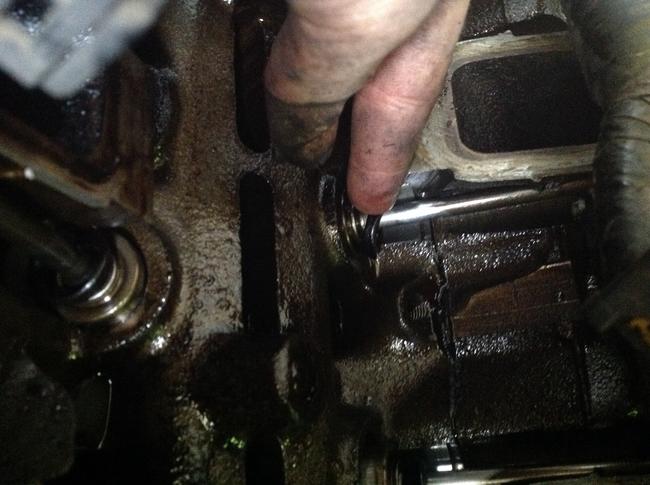
Ok I'm at the lifters and noticed that the black little cups move freely is that normal?
Jul 3, 2015 at 4:31 PM
Avatar
OHYEA
  • MEMBER
  • 153 POSTS
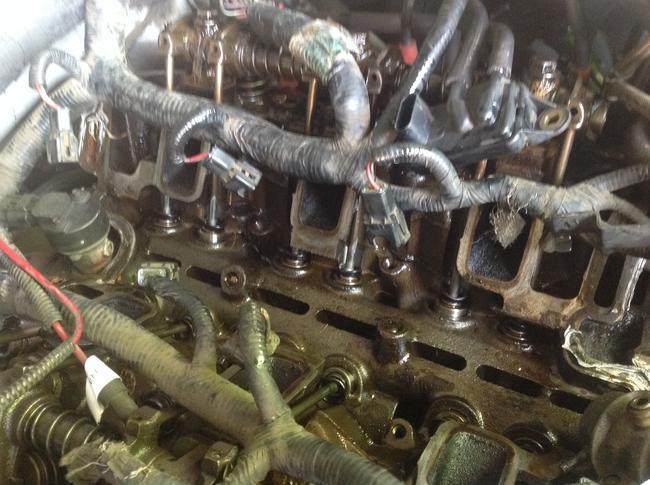
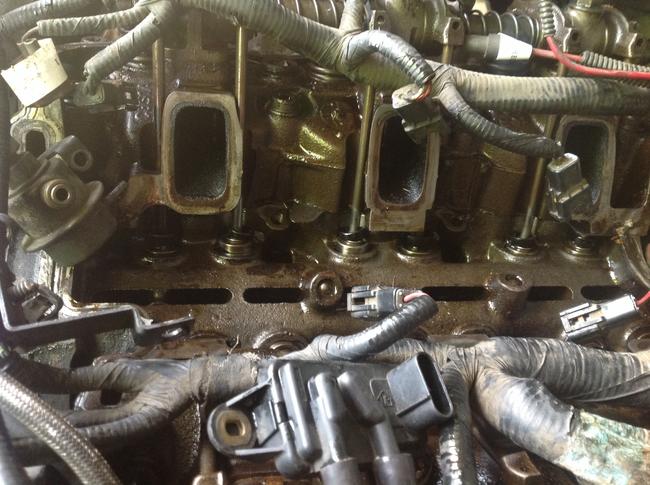
Also both cylinder #3 and #5 lifters were both compressed down while other cylinders had one up and one down
Here's driver side
Jul 3, 2015 at 5:03 PM
Avatar
OHYEA
  • MEMBER
  • 153 POSTS
Here's passenger
Jul 3, 2015 at 5:04 PM
Avatar
CARADIODOC
  • CERTIFIED EXPERT
  • 34,306 POSTS
This is hard to tell from pictures. What you might consider is turning the crankshaft by hand a quarter turn at a time for two revolutions to insure at some point each lifter is on the low spot on the camshaft's lobe, and feel each push rod for looseness.

If you see one or two lifters that don't have the center pushed up like the rest, turn the crankshaft until those rocker arms are relaxed, then feel those push rods again for looseness. The problem with this is a lifter could have nothing wrong with it but it still might bleed down if it's under pressure from holding its valve open.
Jul 3, 2015 at 8:33 PM
Avatar
OHYEA
  • MEMBER
  • 153 POSTS
Ok noticed that the back end of my lower intake gasket was fully flush to where coolant could get in, and found coolant over the back lifters, will the lifters come back to lifter after putting new gasket or should I keep going and take off cylinder head to get to each lifter?
Jul 4, 2015 at 3:13 PM
Avatar
CARADIODOC
  • CERTIFIED EXPERT
  • 34,306 POSTS
It's pretty likely there's at least one coolant passage going through the intake manifold, or there's an access hole that gets blocked by the intake manifold gasket. Either way, it's common for some coolant to dribble in when the intake is removed. I just mop that up with disposable paper towels. As for what you're asking about accessing some of the lifters, removing cylinder heads entails a lot of extra work, that may not be necessary. I would make a trip to your nearest engine machine shop and ask them for their advice. They will be able to tell you all the common problems, and more importantly, how to solve them. The aftermarket industry very often comes up with solutions even the dealers don't know about.
Jul 5, 2015 at 11:48 PM
Avatar
OHYEA
  • MEMBER
  • 153 POSTS
Ok I forgot to mention the my explorer has been going through coolant, meaning I would have to fill once a week. But I tried popping the lifter out but the cylinder head has a little lip that's preventing me which sucks. So I'm not to sure there's any other way? Thanks for sticking with me through all this btw.
Jul 6, 2015 at 1:04 AM
Avatar
CARADIODOC
  • CERTIFIED EXPERT
  • 34,306 POSTS
Rats. Too bad this didn't come up sooner. A good test for a leaking head gasket is to add a small bottle of dark purple dye to the coolant, then search a little while later with a black light. The dye will show up as a bright yellow stain that you can follow back to the source. If the head gasket is leaking, you'll find the dye inside the tail pipe. Auto parts stores have the dye, and those that rent or borrow tools will usually have the black light.
Jul 6, 2015 at 1:41 AM
Avatar
OHYEA
  • MEMBER
  • 153 POSTS
Ok, but to be honest I am thinking that it was intake gasket that was causing the problem to coolant loss, but that's another story. So do you think that fixing the faulty intake gasket to prevent coolant leakage into the lifter valley will help the lifters come back to life or shall I just take off head and replace the bad ones? If it comes to that I have the repair manual and Internet to help me haha. Plus all that is left to remove head is exhaust bolts and head bolts...
Jul 6, 2015 at 3:02 AM
Avatar
CARADIODOC
  • CERTIFIED EXPERT
  • 34,306 POSTS
If coolant was leaking into the oil, you should have seen a brownish-colored mud instead of oil. The first things to go would be the crankshaft and connecting rod bearings. Antifreeze dissolves the soft first layer of metal. The lifters don't really care what liquid is in them as long as it's something that can't be compressed. Obviously they want to be lubricated, but lack of lubrication would take out the lobes on the camshaft first and the bottoms of the lifters. You have roller lifters so even that is not very likely to happen.
Jul 6, 2015 at 3:13 AM
Avatar
OHYEA
  • MEMBER
  • 153 POSTS
Yes, there was a white tannish milky substance but only on the valve cover walls. So what would you do if you were me, keep going to taking off head to replace lifters or stop replace faulty intake gasket and just put everything bAck and hope that the lifters will go back to normal?
Jul 6, 2015 at 12:41 PM
Avatar
CARADIODOC
  • CERTIFIED EXPERT
  • 34,306 POSTS
If this was my engine, and since these are roller lifters that aren't so critical with matching wear patterns, I would probably replace any that are suspect as long as I didn't have to remove a cylinder head. If I had to go through all the work of removing a head, I'd replace the camshaft and all the lifters.

If this was a customer's engine, I'd give them multiple options along with enough information for them to make an informed decision. If they go the cheap route, then have problems later, that kind of leaves me off the hook. If the problem comes back or is not solved at all, I'd be asking if it's a noise they can live with or if they're willing to pay again for the same repair plus whatever additional work and parts are needed.
Jul 7, 2015 at 9:14 PM
Avatar
OHYEA
  • MEMBER
  • 153 POSTS
Ok, thank you very much. appreciate you helping me. I will take off head inspect all lifters replace what is needed.
Jul 7, 2015 at 9:47 PM
Avatar
OHYEA
  • MEMBER
  • 153 POSTS
Hello again, I was searching around the Internet and found a forum to clean lifters and read that he had a collapsed lifter because spring broke, now if I have same situation could I just get a spring from like Home Depot or any hardware store or does it have to be a autoparts part?
Jul 15, 2015 at 2:52 PM
Avatar
CARADIODOC
  • CERTIFIED EXPERT
  • 34,306 POSTS
Don't even waste your time trying to repair such an inexpensive assembly. Put a new lifter in. You won't even find the spring listed at the Ford dealer's parts department. A hardware store spring won't hold up to the constant pounding or the heat, and the originals are usually carefully-calibrated for the application.

Even if you could repair a lifter, how are you going to warranty that repair? If that lifter fails again, or if anything else even remotely related breaks in the future, all the owner is going to know is they are inconvenienced at having to come back again. Every mechanic has horror stories of cases where they thought they were doing their customer a huge favor by repairing rather than replacing to save them money, then they got bit in the butt later when the repair went sour. In every case the customer forgets our good intentions and remembers what they perceive as incompetence. That's why I can replace the nine-dollar brush assembly in my alternator, but I would never do it for my customer. I can replace a pair of three-dollar contacts in my starter solenoid, but I'm going to sell a rebuilt starter with a warranty to my customer. Customers get angry with us anyway, no matter how conscientious we are or how much money we try to save them. Don't give them more chances to be unhappy by trying to cut corners, especially when the part is so inexpensive.
Jul 16, 2015 at 9:09 PM
Avatar
OHYEA
  • MEMBER
  • 153 POSTS
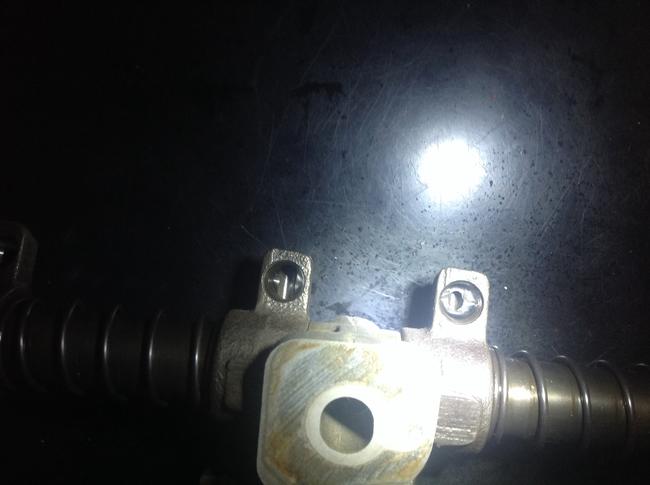
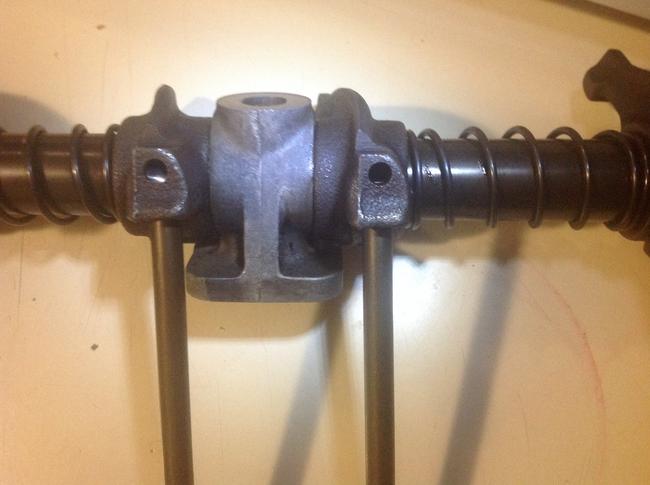
Ok, I will get new ones, I recall you saying rocker arm and push rod contact will cause a ticking noise and I am wondering if these rocker arms are any good, took them out of my explorer they are the same for both sides(sets)
Jul 16, 2015 at 10:11 PM
Avatar
OHYEA
  • MEMBER
  • 153 POSTS
The lifters are solid like they won't even budge to be pressed down so maybe it isn't a lifter problem maybe the rocker arms showed above and maybe I have an exhaust manifold leak? Here's a video of what it sounded like before I took everything off. http://youtu.be/oU0cgj8XkQ4
Jul 17, 2015 at 2:09 PM
Avatar
OHYEA
  • MEMBER
  • 153 POSTS
It must be the rocker arm because one lets a pushrod go all the way through blocking an oil hole while the rest do not before the oil hole, so I guess the one that that lets pushrod go further must be causing the loud ticking?
Jul 17, 2015 at 8:04 PM
Avatar
CARADIODOC
  • CERTIFIED EXPERT
  • 34,306 POSTS
You're in an area that I'm not an expert in. I've heard noisy push rods years ago but I ever repaired an engine for that. If I had to guess, I'd look closer at the right rocker arm in your photo. I see what looks like hairline scratches on it where it contacts the push rod. That surface should be smooth and shiny. If in doubt, I'd mark the locations of the parts, then take them to an engine machine shop to get a professional evaluation.
Jul 18, 2015 at 10:32 PM
Avatar
OHYEA
  • MEMBER
  • 153 POSTS
Ok, but since there is more of a deep indentation in one rocker arm than the rest wouldn't it create a tick since its metal being pounded together at a fast rate? The left pushrod of cylinder two rocker arms goes furthest than the rest. So since the lifters are solid as a Rock and won't depress as if one is collapsed I believe we can cross those out and leave it to the rocker arm assembly? Do you agree? I'm for some reason feeling positive about it just need extra advise. Not sure if a machine shop will help me in this because they would probably call for some type of large payment to just tell me the same thing.
Jul 18, 2015 at 10:50 PM
Avatar
OHYEA
  • MEMBER
  • 153 POSTS
And if you agree if I replace them with a new set do I have to change pushrods? Or maybe get some rocker arms at a junkyard.
Jul 18, 2015 at 11:06 PM
Avatar
OHYEA
  • MEMBER
  • 153 POSTS
One last thing to add is that all pushrods are the same length no bending etc
Jul 18, 2015 at 11:07 PM
Avatar
CARADIODOC
  • CERTIFIED EXPERT
  • 34,306 POSTS
Normally when you replace a part that develops a wear pattern with a mating part, you must replace both of them, otherwise the worn part will just transfer that pattern to the new part, and you'll have the same problem. In this case I would just replace a rocker arm and its push rod. You might want to replace all of them to insure if this is the cause of the noise, you won't be overlooking anything.
Jul 18, 2015 at 11:45 PM
Avatar
OHYEA
  • MEMBER
  • 153 POSTS
Ok I understand. Now are these lifters suppose to be rock solid?
Jul 19, 2015 at 9:38 PM
Avatar
CARADIODOC
  • CERTIFIED EXPERT
  • 34,306 POSTS
Normally lifters should remain solid under hand pressure. Some may bleed down from the pressure of an open valve's spring when the engine is not running, but they will pump back up very quickly when the engine is started.
Jul 20, 2015 at 9:03 PM
Avatar
OHYEA
  • MEMBER
  • 153 POSTS
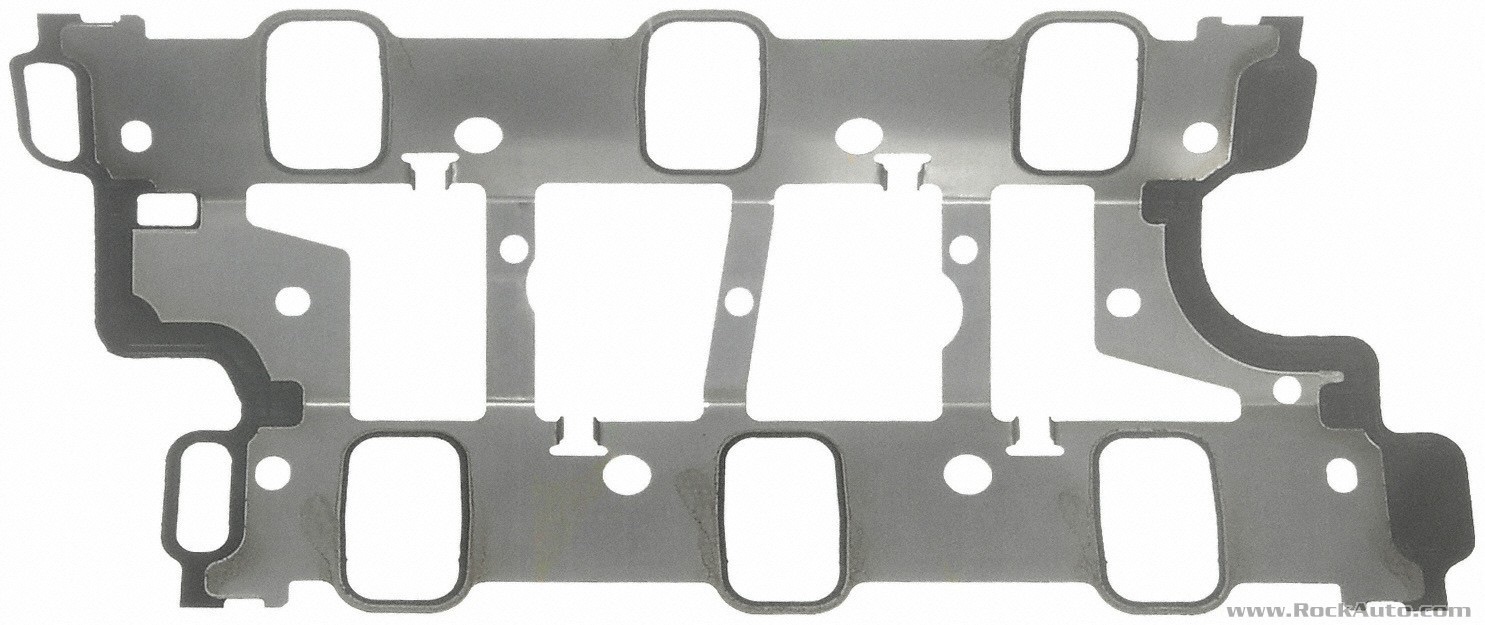
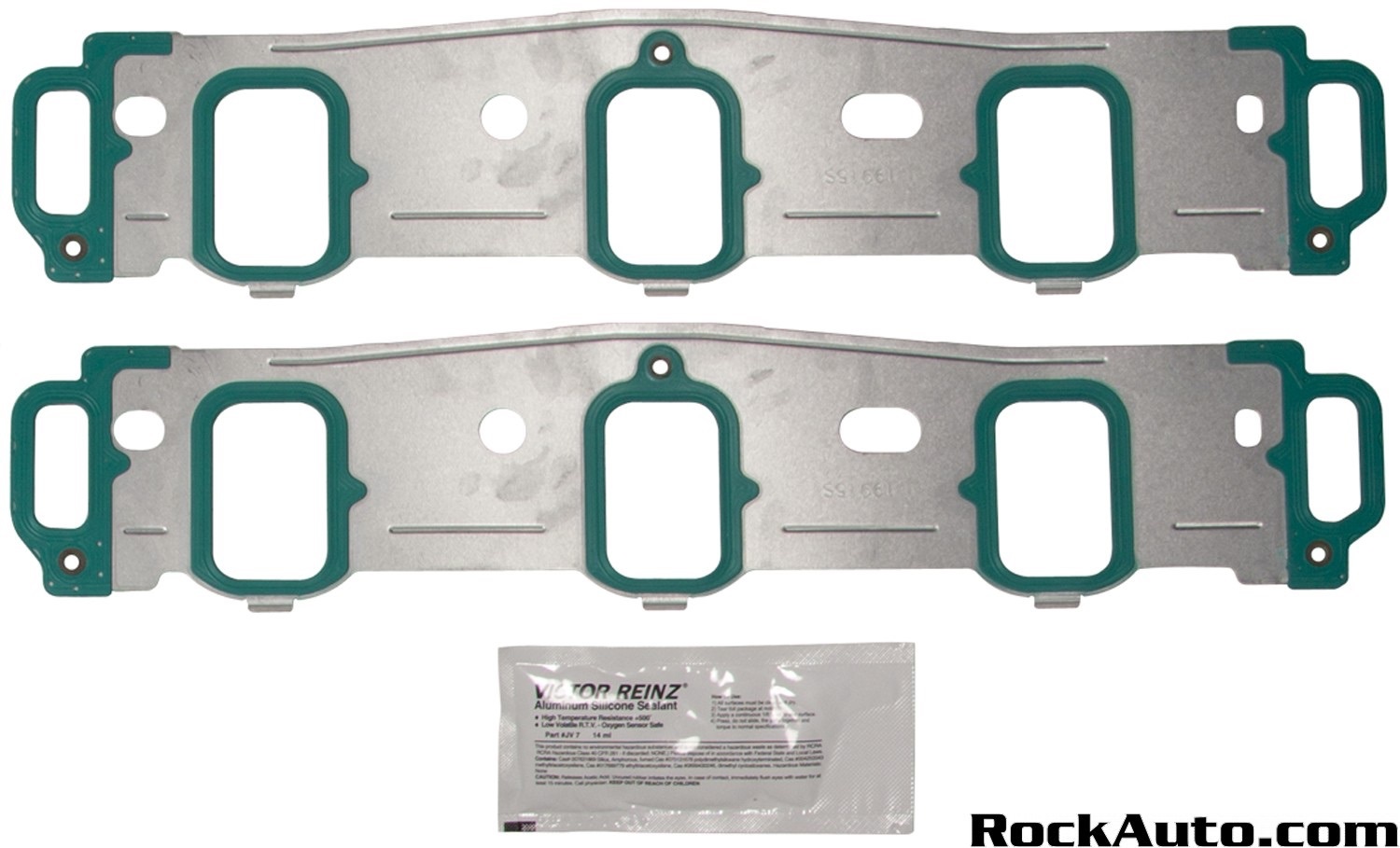
Ok so I'm looking for gasket online and I'm trying to find a set but the thing is that most sets only have the gasket in image 2 but my car has the gasket shown in image 1. Am I able to switch gasket style?
Jul 22, 2015 at 7:17 PM
Avatar
CARADIODOC
  • CERTIFIED EXPERT
  • 34,306 POSTS
Nope. The holes won't line up with the runners in the intake manifold. You have gaskets for two different variations. The dealer's parts department is the best place to get answers to that. You might also try the Rock Auto web site. Look up that gasket for your year and engine, and they'll have a list of gaskets from a bunch of different suppliers, and they'll include the "with this" and "with that" options.
Jul 23, 2015 at 11:37 PM
Avatar
OHYEA
  • MEMBER
  • 153 POSTS
Hello, well I finished everything with new rocker/pushrods and lubed everything that was needed, with new gaskets. Well when starting and warming up. It was vibrating a lot and sort of jumping. With some smoke didn't smell like burning oil. What is going on? There was a little rattling noise from like the bottom. I turned car off after like 4-5 min. I made sure all parts were torqued to the books specification. If you need video of it I will post a link to video if you need me to create one. Also the loud ticking is gone
Jul 29, 2015 at 8:22 PM
Avatar
CARADIODOC
  • CERTIFIED EXPERT
  • 34,306 POSTS
I can only guess about the smoke. It's common for oil to run down the side of the engine when it is disassembled, then it vaporizes and burns off when the engine gets hot. Engine assembly lube does that too, but when it's inside the engine, you don't see it because the fumes get drawn out to be burned.
Aug 4, 2015 at 12:51 AM
Avatar
OHYEA
  • MEMBER
  • 153 POSTS
Yea the smoking stopped but still have vibrations low rpm and a rattling noise, thought it would be a vacuum leak on lower intake so I retourqed by the book again with the last torque a little higher but no difference. So I looked on the web and a forum site said that under torqued or over torqued rockers can cause pushrods to go deeper into pushrods causing low rpm or something like that. My Haynes book said 46-52 ft lbs but an expert on here gave me a torque of 22-25 ft lbs then turn an additional 90*, do you think this will solve the problem? Also is there something I'm suppose to do before I start engine like turn engine by hand or something?
Aug 5, 2015 at 6:19 PM
Avatar
CARADIODOC
  • CERTIFIED EXPERT
  • 34,306 POSTS
Depends on what you're torquing. The main thing to worry about is when the rocker arms are adjustable. There's a procedure for setting those.
Aug 5, 2015 at 9:58 PM
Avatar
OHYEA
  • MEMBER
  • 153 POSTS
Torquing the rocker arm shaft assembly, don't believe they are adjustable. I probably followed the wrong procedure I guess but it did say 46 to 52 ft lbs for my engine year. Vin X engine. I read that over tighten the rockerarms will cause valves to not close and therefore engine will not run properly. Do you agree with that? I will follow the other torque specifications of the other years then. Thank you.
Aug 5, 2015 at 10:13 PM