I cant figure out my random cylinder misfire in all 6 cylinders.

1996 CHRYSLER SEBRING
166,000 MILES
Avatar
KODYCLARENCE
  • MEMBER
  • 11 POSTS
My vehicles check engine light flashes quite often at random times, and random speed. It gives me random cylinder misfire codes from P0300 to P0306. I have changed the EGR valve, distributer cap, rotor, plugs, and wires and would like to know where to go from here.
Oct 7, 2012 at 7:14 AM
Advertisement
Avatar
KHLOW2008
  • CERTIFIED EXPERT
  • 41,814 POSTS
Check the fuel pressure and try replacing the fuel filter if it is a long time since it was last replaced.
Oct 7, 2012 at 8:03 AM
Avatar
KODYCLARENCE
  • MEMBER
  • 11 POSTS
Ok. I will do that. I don't believe my vehicle has a fuel filter. I haven't checked but it was mentioned to me that that particular vehicle doesn't. Another thing is when I am driving and my vehicle starts to misfire the car will jerk once for just a second and it shuts the check engine light off and turns it back on. Not like a flash like when it misfires. Sometimes it will do that a couple times in about 2-3 second intervals. Now that you mention fuel pressure it could be that it loses fuel completely for a second.
Oct 7, 2012 at 8:41 AM
Advertisement
Avatar
KHLOW2008
  • CERTIFIED EXPERT
  • 41,814 POSTS
With such symptoms, I believe it is more likely to be electrical rather than the fuel pressure.

Check for loose connections of wire connectors, especially those around the PCM.

All vehicles would have a fuel filter only the location differs. Which engine do you have?
Oct 7, 2012 at 8:55 AM
Avatar
KODYCLARENCE
  • MEMBER
  • 11 POSTS
It is the 2.5 V6 DOHC. I've checked all of the wiring to emissions components and things like that and they all seem to be fine. No cracks, corrosion, loose connections, nothing. I thought maybe the 02 sensors were setting it off, but no 02 sensor codes are popping up. I've hooked a scan tool up to it and checked the freeze frames and it says its setting the codes off at about 68 MPH. But the engine light will go off at random speeds.
Oct 7, 2012 at 9:27 AM
Avatar
KHLOW2008
  • CERTIFIED EXPERT
  • 41,814 POSTS
If thee is a fault, the MIL should stay on under normal circumstances. Blinking MIL indicates it is most likely related to the PCM.
Oct 7, 2012 at 9:30 AM
Avatar
KODYCLARENCE
  • MEMBER
  • 11 POSTS
Is that the computer of the vehicle?
Oct 7, 2012 at 9:38 AM
Avatar
CJ MEDEVAC
  • CERTIFIED EXPERT
  • 11,004 POSTS
Fuel-Filter
IF THIS AIN'T BEEN CHANGED IN .......LIKE FOREVER

IT'S TIME!

WHETHER THIS IS THE PROBLEM NOW...OR NOT

THE "ASTU MAINTENANCE SCHEDULE" (AS STUFF TEARS UP) WORKS, BUT USUALLY IS IMPLEMENTED AFTER MUCH PREVENTABLE HEARTACHE

"THE PREVENTATIVE MAINTENANCE PROGRAM" GENERALLY KEEPS YOU.....HAPPY AND WITH A SMILE ON YOUR FACE!......THIS MIGHT BE THE KEY TO MANY OF YOUR PROBLEMS.....SEE MY LINK

https://www.2carpros.com/questions/2007-ford-taurus-tune-up

NOW THAT YOU HAVE BEEN INTRODUCED TO WHAT A BOOK CAN DO FOR YOU,

SORRY.......YOU WERE ALSO EXPOSED TO "REAL VEHICLES" IN THAT LINK...SEE THIS LINK ALSO

https://www.2carpros.com/questions/1995-mitsubishi-eclipse-knocks-smokes

KEEP US POSTED

THE MEDIC

Oct 7, 2012 at 1:35 PM
Avatar
KHLOW2008
  • CERTIFIED EXPERT
  • 41,814 POSTS
Yes, PCM is the engine computer.
Oct 7, 2012 at 1:40 PM
Avatar
CJ MEDEVAC
  • CERTIFIED EXPERT
  • 11,004 POSTS
MORNIN' TO YA KHLow2008

WON'T YA SWING BY HERE AND PICK ME UP....WE COULD GRAB US TWO SAUSAGE, EGG, AND CHEESE BISCUITS, A BOWL OF GRITS, TWO INDUSTRIAL SIZED GLASSES OF 32.2 DEGREE FAHRENHEIT MOO JUICES (MILK)???? .....EACH, THAT IS, AND YOU COULD PICK UP THE TAB.....'LESS-UN YOU WANNA GO IN ONE OF MY JEEPS....AND STILL PICK UP THE TAB!

HURRY!!!!.......I AM PRETTY HUNGRY!

THE MEDIC
Oct 7, 2012 at 1:59 PM
Avatar
KHLOW2008
  • CERTIFIED EXPERT
  • 41,814 POSTS
Just past the 10 pm mark here, I should be going for supper, lol.
Oct 7, 2012 at 2:05 PM
Avatar
KODYCLARENCE
  • MEMBER
  • 11 POSTS
Ok. Well ill check fuel pressure and change the fuel filter first. I can imagine that is cheaper than the PCM. I have had the vehicle for 2 years now and haven't changed the fuel filter and I highly doubt the people that had it before me did either. Ill throw some Sea Foam in the tank afterwards as well. If that doesn't solve the issue and I get a new PCM will I have to get it flashed like an ECM?
Oct 7, 2012 at 2:38 PM
Avatar
KHLOW2008
  • CERTIFIED EXPERT
  • 41,814 POSTS
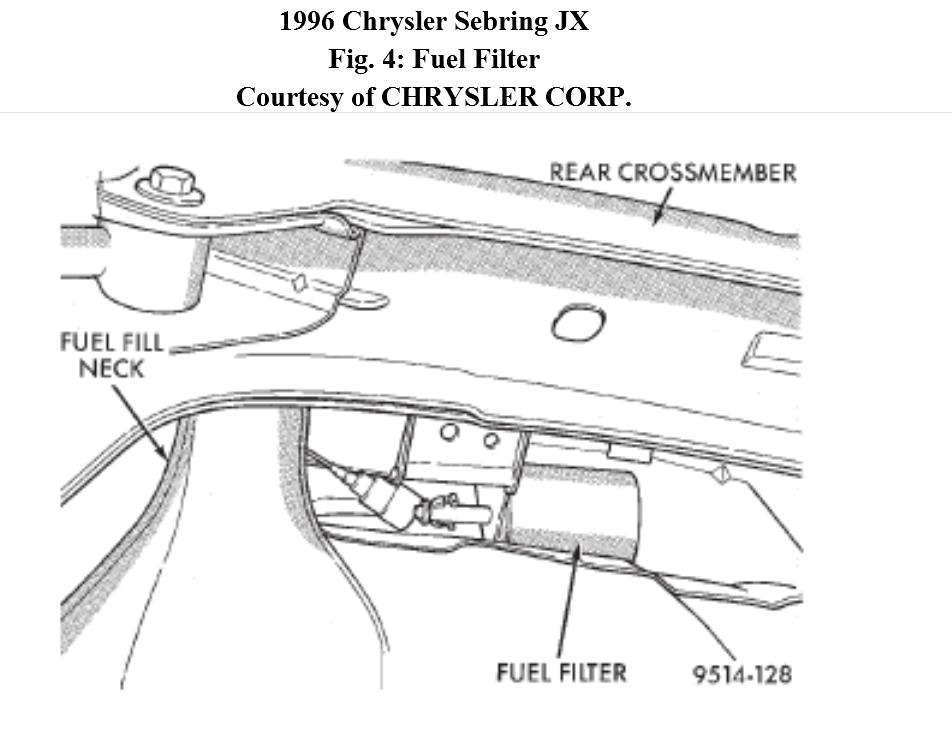
Changing the fuel filter is not as easy as it seems for the V6. You might have problem accessing it and according to the manual, the tank has to be drained and partially dropped.
Oct 7, 2012 at 2:51 PM
Avatar
KODYCLARENCE
  • MEMBER
  • 11 POSTS
That's ok. I've got a car lift and a transmission Jack. I noticed that it sputters and misfires A LOT more when I have overdrive off. I usually drive with it on.
Oct 8, 2012 at 2:14 AM
Avatar
KHLOW2008
  • CERTIFIED EXPERT
  • 41,814 POSTS
With OD off, the engine would be runnig at a higher rpm and with more engine torque, the misfiring shoud be felt less.
Oct 8, 2012 at 2:26 AM
Avatar
KODYCLARENCE
  • MEMBER
  • 11 POSTS
It runs around 3500 RPM with OD off on the highway and it does misfire and sputter a lot more. Then when I turn overdrive on and the RPMs drop it stops. sputtering and misfiring as much.
Oct 8, 2012 at 2:39 AM
Avatar
KHLOW2008
  • CERTIFIED EXPERT
  • 41,814 POSTS
Get the fuel filter replaced and see if it makes any changes.
Oct 8, 2012 at 3:14 AM
Avatar
KODYCLARENCE
  • MEMBER
  • 11 POSTS
Ok. Ill do that.
Oct 8, 2012 at 6:44 AM
Avatar
KODYCLARENCE
  • MEMBER
  • 11 POSTS
I changed the fuel filter. It was bolted to the frame so I did not need to drop the tank. But it is still misfiring :/
Oct 12, 2012 at 11:57 AM
Avatar
KHLOW2008
  • CERTIFIED EXPERT
  • 41,814 POSTS
Are the trouble codes still showing the same codes or are there any additional codes?
Oct 12, 2012 at 12:43 PM
Avatar
KODYCLARENCE
  • MEMBER
  • 11 POSTS
They're all the same.
Oct 12, 2012 at 4:32 PM
Avatar
KHLOW2008
  • CERTIFIED EXPERT
  • 41,814 POSTS
Try swapping the # 6 injector with another cylinder and if problem migrates, the injector is bad.
Oct 12, 2012 at 5:01 PM
Avatar
KODYCLARENCE
  • MEMBER
  • 11 POSTS
Its a random cylinder misfire in all 6 cylinders...
Oct 12, 2012 at 10:33 PM
Avatar
KHLOW2008
  • CERTIFIED EXPERT
  • 41,814 POSTS
Random misfires are usually fuel related. Vacuum leaks can contribute to this. Check out the following to see if you can find anything. If you want more information on any procedures refered to, let me know.

TEST TC-106A - MULTIPLE CYLINDER MISFIRE

1. Repair any other Diagnostic Trouble Codes (DTCs) before proceeding with this test. This DTC will only set if condition occurs during 2 driving cycles. Using scan tool, erase trouble codes.

2. Start engine. Drive vehicle until normal operating temperature is reached. Ensure engine speed goes more than 1200 RPM. Drive vehicle at a steady rate at various MAP and RPM ranges. DO NOT perform any sharp maneuvers with vehicle, these actions will disable misfire detection. During road test, pull vehicle to side and turn ignition off, then restart engine and continue driving vehicle. Go to next
step.

3. Using scan tool, read trouble codes. If MULTIPLE CYLINDER MISFIRE DTC returned, go to step 8). If MULTIPLE CYLINDER MISFIRE DTC did not return, go to next step.

4. If CYLINDER NO. 1-6 MISFIRE DTC returned, go to TEST TC-107A. If
CYLINDER NO. 1-6 MISFIRE DTC did not return, connect an engine analyzer to vehicle. Start engine. Using equipment manufacturer's instructions, analyze secondary ignition pattern. If secondary ignition pattern is okay, go to next step. If secondary ignition pattern is not okay, repair secondary ignition system as
necessary. Perform TEST VER-2A.

5. Using a spray bottle with water, spray secondary ignition cables. DO NOT spray inductive pickup of test equipment. If ignition pattern did not change, go to next step. If ignition pattern changed, repair secondary ignition system as necessary. Perform TEST VER-2A.

6. Condition to set trouble code is not present at this time. MULTIPLE CYLINDER MISFIRE DTC sets when a more than 1-3 percent misfire rate is measured during 2 trips or with a 3-14 percent misfire rate during one trip and at least 2 cylinders are misfiring. Possible causes are: ignition coil circuit failure, failed spark plug or wire, malfunctioning fuel pump or restricted fuel filter,
mechanical engine failure, EGR malfunction, injector malfunction, restricted exhaust, low vehicle fuel level, intake restriction, poor Powertrain Control Module (PCM) power grounds, malfunctioning EVAP system or failed PCM. Go to next step.

7. Inspect all related wiring and connectors and repair as necessary. If no problems were found with wiring and connectors, see
INACTIVE TROUBLE CODE CONDITION . Test is complete. Perform TEST VER-2A. If related wiring and connectors were repaired, perform TEST VER-2A.

8. Turn ignition off. Connect an engine analyzer to vehicle. Start engine and let it idle. If engine will not idle, maintain a constant engine RPM. Inspect ignition cables for proper location. If ignition cables are properly routed, go to next step. If ignition cables are not properly routed, repair as necessary. Perform TEST VER-2A.

9. Using scan tool, monitor Idle Air Control (IAC) motor. Disconnect one injector at a time, then reconnect. If IAC motor stepped up idle for each injector, go to next step. If IAC motor did not step up idle for each injector, before replacing injector(s), ensure no mechanical problems are present with cylinder. Replace injector(s) as necessary. Perform TEST VER-2A.

10. Connect an engine analyzer to vehicle. Start engine. Using equipment manufacturer's instructions, analyze secondary ignition pattern. If secondary ignition pattern is okay, go to next step. If secondary ignition pattern is not okay, repair secondary ignition system as necessary. Perform TEST VER-2A.

11. Using a spray bottle with water, spray secondary ignition cables. DO NOT spray inductive pick-up of test equipment. If ignition pattern did not change, go to next step. If ignition pattern changed, repair secondary ignition system as necessary.
Perform TEST VER-2A.

12. Turn engine off. Connect a vacuum gauge to engine intake. Start engine and run until normal operating temperature is reached. Apply parking brake. Put transmission in Neutral. Observe vacuum
gauge. If vacuum gauge reads at least 13 in. Hg, to next step. If vacuum gauge does not read at least 13 in. Hg, repair restricted exhaust system. Perform TEST VER-2A.

13. Turn ignition off. Release fuel pressure. Connect a fuel pressure gauge to fuel rail service port. Turn ignition on. Using
scan tool, activate fuel system test. Allow time for fuel pressure gauge to stabilize. Using scan tool, stop fuel system test. Monitor fuel pressure gauge for one minute. If fuel pressure is 10 psi or less, go to next step. If fuel pressure is less than 10 psi, go to TEST NTC-3A.

14. Inspect air cleaner filter and inlet ducts for restrictions. If no restrictions were present, go to next step. If restrictions are present, clean restriction as necessary. Perform TEST VER-2A.

15. Verify all wiring and connectors are okay. Perform following tests in order until problem is found:
Secondary ignition patterns. Perform TEST NTC-2A.
Fuel pressure. Perform TEST NTC-3A.
PCM grounds and power circuits. Perform TEST NTC-11A.
EGR system. Perform TEST NTC-13A.
No trouble code mechanical. Perform TEST NTC-18A.


Oct 13, 2012 at 12:03 PM